
- SG$ Singapore Dollar
- A$ Australian Dollar
- £ British Pound Sterling
- C$ Canadian Dollar
- € Euro
- MYR Ringgit Malaysia
- US$ United States Dollar
- đ Vietnamese Dong


 About Us
 Destinations
 Travel Styles
 Travel Guide
 Blogs

An orientation guide to Phu Quoc's beaches — where each one actually is, what the drive from Duong Dong costs you, and why Bai Dai and Long Beach are two different beaches 20 km apart.
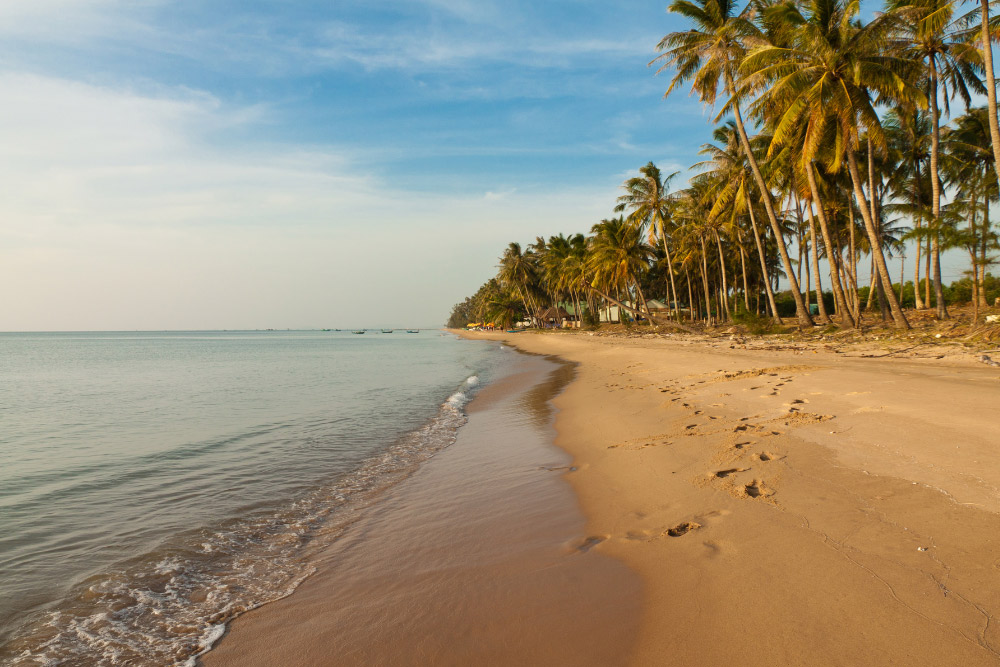
Phu Quoc's beaches sit on three stretches of coast. Long Beach, also called Bai Truong, runs down the west coast beside Duong Dong. Bai Dai is a separate beach on the northwest coast between Mui Ganh Dau and Cua Can, roughly 20 km north. Sao Beach and Khem Beach are both in the southeast.
That first point bears repeating, because several pages ranking for this question print Long Beach, Bai Truong and Bai Dai as alternative names for one beach. They are two beaches, on two coasts, 20 km apart.
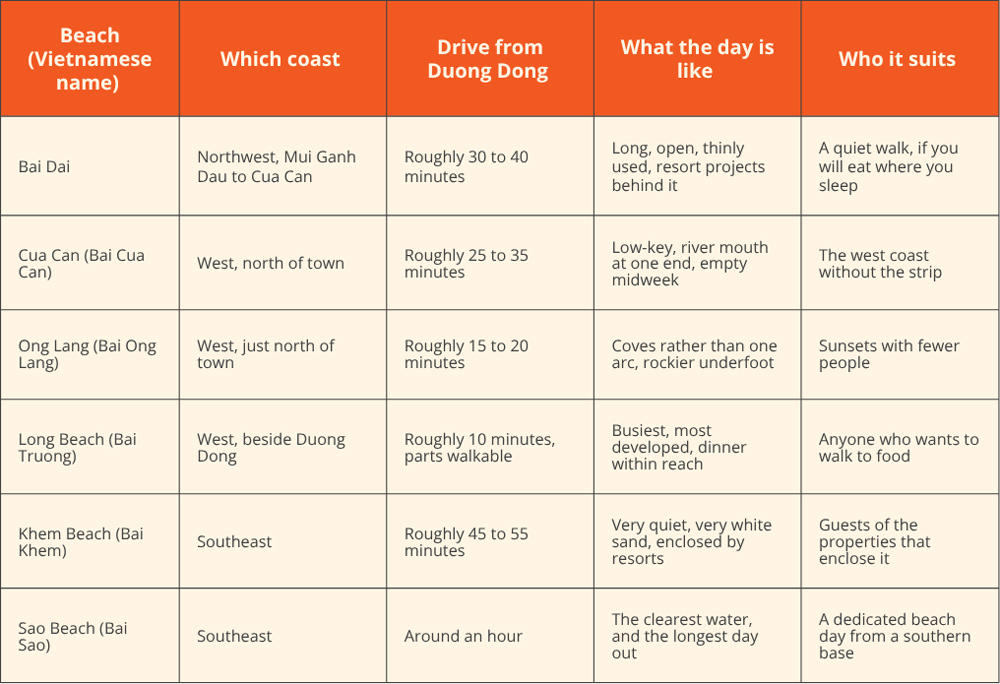
Drive times are indicative. They move with road works, with the wet-season state of the unpaved sections, and with where on the island you are sleeping, so confirm against your own hotel.

Choose Long Beach if you want to walk to dinner, Sao Beach if you want the clearest water and will accept an hour in a car, and Khem Beach if you are staying at one of the resorts that enclose it. Bai Dai suits a long, quiet walk and little else.
The ranking guides sort these beaches by beauty, which is the least useful axis — the sand is good almost everywhere here. What varies is access: what the drive costs you, and whether the sand is open to you at all.
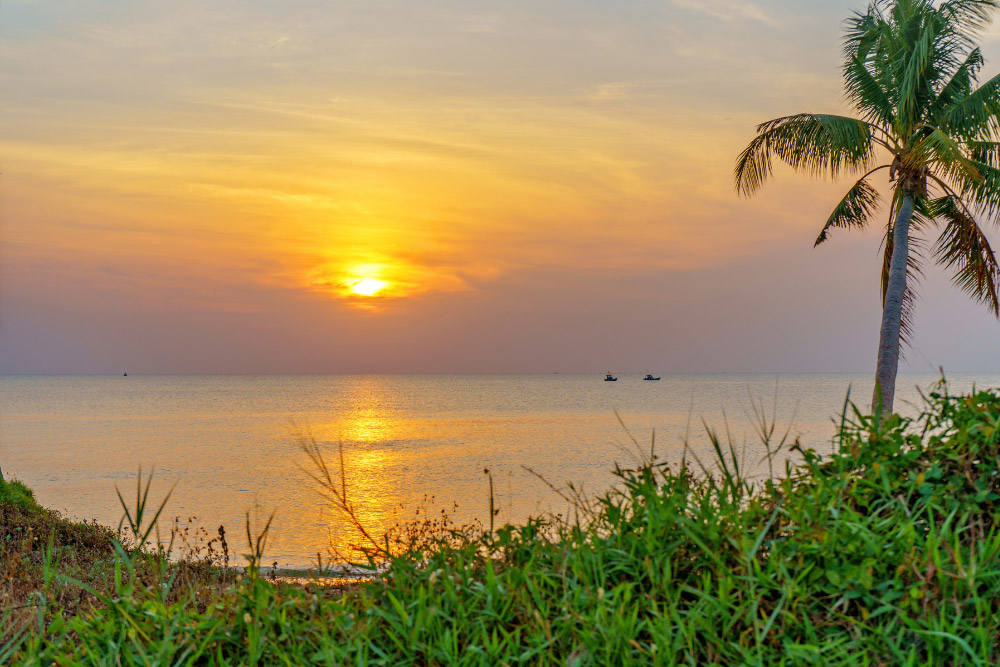
The west-coast strip beside Duong Dong is the beach you choose when you want the day to be easy. Dinner is a walk or a very short drive, the sunset happens in front of you rather than behind a headland, and the water shelves gradually along most of it. It is also the busiest stretch, and the southern end is resort frontage rather than open shore. For the island's other options within reach of the same base, what there is to do on Phu Quoc beyond the beaches covers the inland and attraction ones. Verdict: the default, and right if your evenings matter as much as your afternoons.
Bai Dai is genuinely long — roughly 15 km from Mui Ganh Dau to Cua Can, with stretches where you will see almost nobody midweek, and a wide shallow apron where the water shelves gently. The catch is the 30 to 40 minutes from Duong Dong and a coast holding very little that is not a resort, so dinner means your own property unless you drive into town. It is also under active construction in places, which is visible and audible from the sand. Verdict: a fine walk and a poor base, unless your hotel is the whole plan.
Sao has the clearest water of the six and the most committed day, at around an hour from Duong Dong with unpaved sections on some approaches. The sand is fine and pale, the shelf is shallow and calm in the dry months, and the bay is more sheltered than the west coast. It fills up midday, so the trip rewards an early start and punishes a late one. Verdict: worth the drive once, as a whole day, and not worth it twice.
Khem is the quiet one on every list, and the reason is the part the lists leave out: it sits inside resort grounds, and access is controlled by the properties enclosing it. The water is calm and shallow and the sand is the whitest on the island, but whether you can use it depends on whose guest you are. We hold no source stating the terms on which a non-guest reaches the sand, so confirm with your property rather than assuming a photograph means public access. Verdict: superb if you are staying there, not a day trip to plan on.
Each verdict mentions how the water shelves because it is the first thing parents ask, and the gradual beaches are not the convenient ones. Which Phu Quoc beaches actually suit small children is its own question, and we answer it separately.
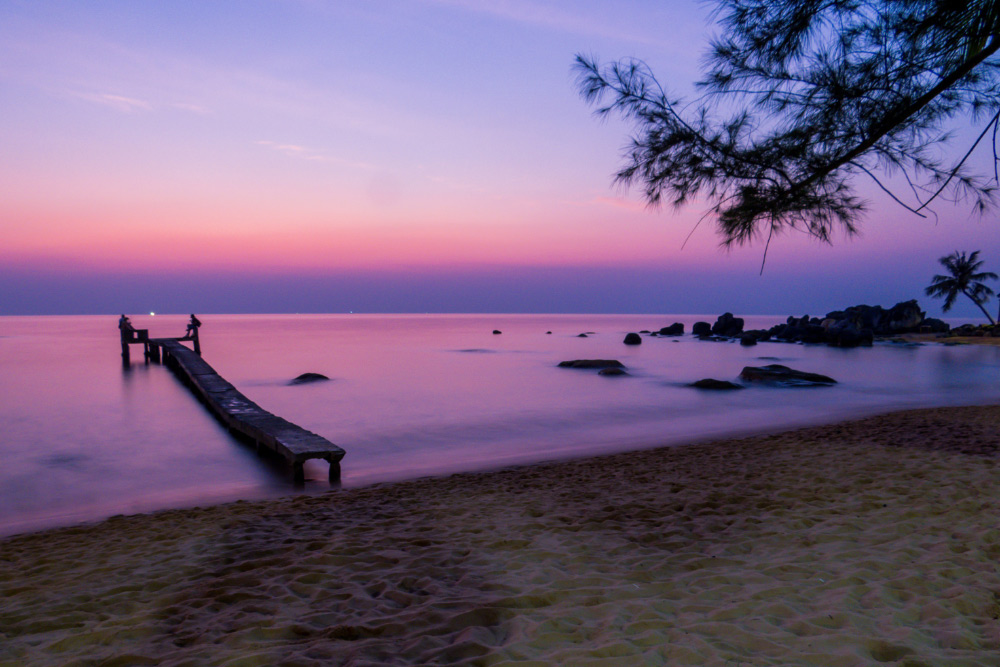
Phu Quoc's beach season runs December through March. October is not a beach month despite what several guides claim: it averages 385 mm of rain across 22 days, which makes it the island's fourth-wettest. April and November are both advertised as dry season and neither is, at 150 mm across 12 rain days and 170 mm across 13.
The ranking set contradicts itself here, and correcting it is most of the reason this page exists. One page calls October the turn of the seasons, with a calm sea and little rain. Another recommends Sao Beach in June and October, on the grounds that the rain brings calm waves. A third gives Khem a best window of May through October while calling the dry season roughly November to April in the same breath. The months above come from the Kiên Giang provincial figures and from a climate reference that states its reference period — 2000 to 2020 — which is the bar none of those pages clear.
Our dedicated guide to the best time to visit Phu Quoc sets out the rainfall and rain-day figures month by month, so you can see where your own dates fall instead of trusting a season label.
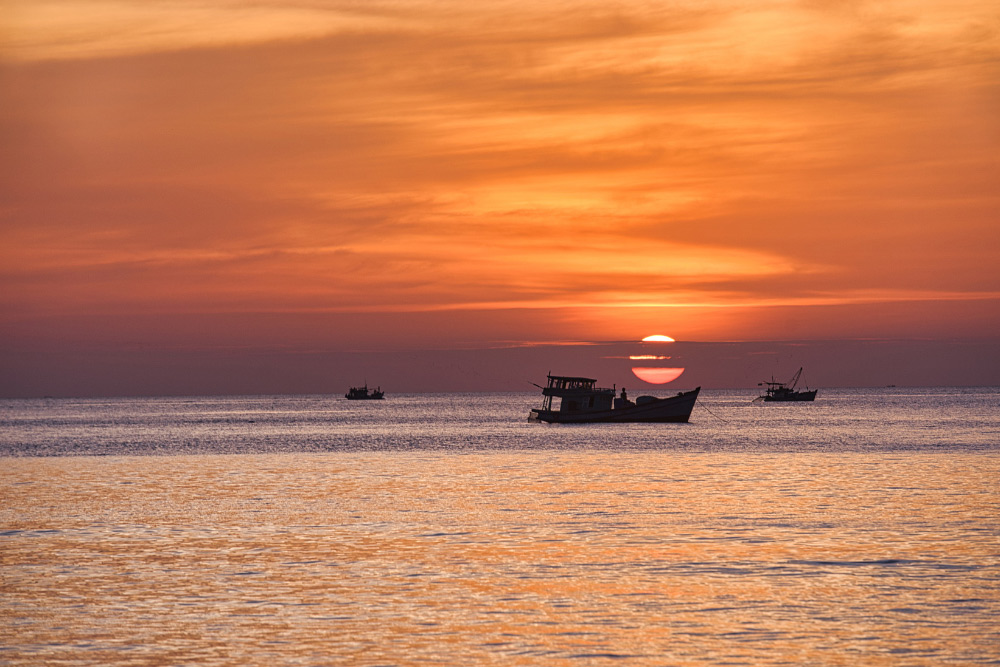
Phu Quoc's beaches come with trade-offs the ranking guides leave out: the quietest are enclosed by resorts, the clearest water is the hardest to reach, the longest beach is an active construction site, and the island's sea days are the ones the weather cancels first.
Access is the real currency here, not sand. The beach you can walk to from dinner and the beach with the best water are an hour apart, and the one that photographs best is the one you may not be allowed on. Bai Dai's build-out is not a rumor about the future — it is visible from the sand now, and on a quiet morning you can hear it. On the Sao approach, public listings checked in October 2026 put a one-way taxi from Duong Dong at around 360,000 VND; fares move with the date, the season and the operator, so treat any figure as indicative and agree it before you get in. And a beach day built around a boat has no fallback: when the sea is up, the trip is off and the day becomes whatever you can reach by road.
On litter, several guides mention plastic without naming a beach or a month. We cannot name either from the evidence we hold, so we will not imply one.
An October beach holiday is the main one. People book it because a guide told them the sea was calm and the rain had stopped, and 385 mm across 22 days is not a beach week — it is a week with some beach in it. If October is the only month you have, we will say so and build around the mainland instead.
The second is a Sao Beach day booked from a northern base. From Bai Dai or Ganh Dau that is well over an hour each way on roads that are not uniformly sealed, which turns the clearest water on the island into four hours in a car. If Sao matters to you, sleep south or central — and we would rather say so before the hotel is booked.

Several of the pages ranking for Phu Quoc beaches present Long Beach, Bai Truong and Bai Dai as alternative names for one beach. They are two beaches roughly 20 km apart on different coasts, and the consequence is concrete. Book a room "on Bai Dai" expecting Long Beach and you are a 30-to-40-minute drive from Duong Dong, where the restaurants and the night market are, on a coast where every evening out is a car ride. We place guests on both coasts, so we can tell you which stretch lets you walk to dinner and which commits you to eating where you sleep — before the room is booked, not after.
Every list names Khem as the quiet one and stops there. It is quiet because it sits inside resort grounds, which makes "the quietest beach on Phu Quoc" a question about whose guest you are. That is worth knowing before anyone books a room on the strength of a photograph, and it is what a list of fifteen beaches cannot tell you, because it is a fact about access rather than sand.
No. Bai Dai is on the northwest coast between Mui Ganh Dau and Cua Can, and Long Beach, or Bai Truong, runs the west coast beside Duong Dong, roughly 20 km south.
Sao Beach has the clearest water and the longest drive, and Long Beach has the easiest access to food and sunsets. The best one depends on where you are staying.
Access is controlled by the resorts that enclose it, so it is realistically a beach for guests of those properties. Confirm with your hotel before you plan a day there.
December through March. October averages 385 mm of rain across 22 days, despite being described as calm and dry on several guides.
Around an hour by car, with unpaved sections on some approaches, so allow a full day rather than a half.
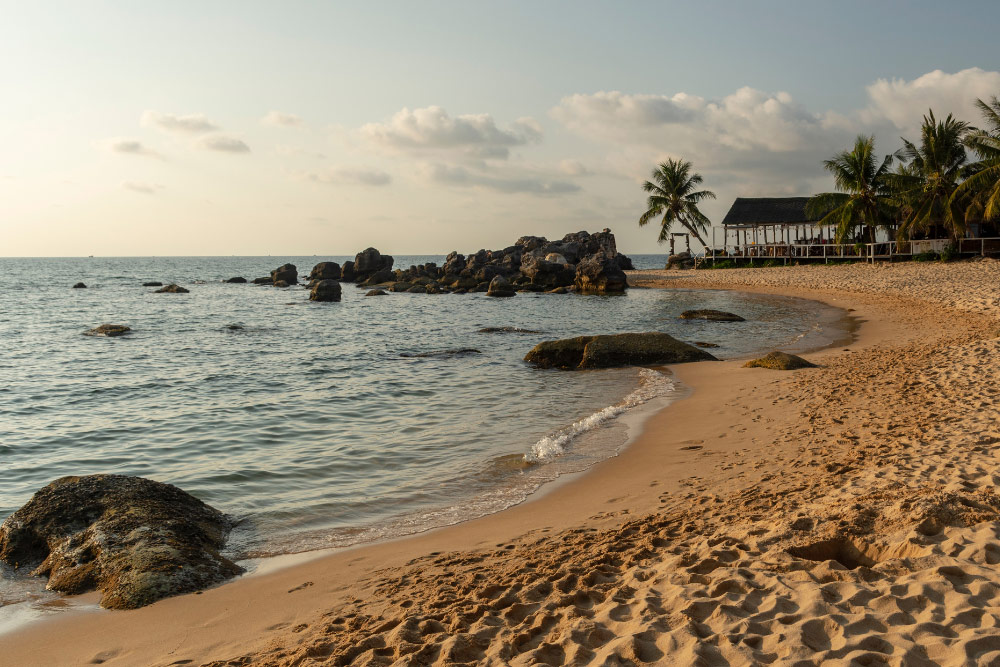
Phu Quoc's beaches do not sort by how good the sand looks in a photograph. They sort by access — how far the drive is, whether dinner is a walk or a car ride, and whether you are allowed on the shore at all — and two of the names in common use are not even the same beach. The sharpest fact in the whole set: the quietest beach on Phu Quoc is the one you are least likely to be allowed on.
Tell us the dates you are holding and what you want a beach day to feel like, and we will draft a route you can pull apart — including telling you if your dates fall in the wrong month, or your base is on the wrong coast for the beach you had in mind. A consultant builds the itinerary with you and keeps adjusting it until it fits, the guides are local to the region they work in, and someone is reachable on WhatsApp while you travel. Free quote, no obligation.
For a starting point to react to, our southern Vietnam and Phu Quoc beach holiday pairs the mainland south with an island beach stay, so you can see how many island nights a trip like yours needs. Still choosing a coastline? Our map of Vietnam's beaches is the wider view.
WhatsApp: (+84) 866.22.7878
Email: sales@asiamystika.com
Website: www.asiamystika.com
