
- SG$ Singapore Dollar
- A$ Australian Dollar
- £ British Pound Sterling
- C$ Canadian Dollar
- € Euro
- MYR Ringgit Malaysia
- US$ United States Dollar
- đ Vietnamese Dong




 About Us
 Destinations
 Travel Styles
 Travel Guide
 Blogs
Blogs

New to Da Nang Vietnam? Here’s where it is, why it is worth visiting, when to go, how to get there, how to get around, what it costs, and everything a first-timer needs in one guide.
The Place: Da Nang is a beach city on Vietnam’s central coast, roughly halfway between Hanoi and Ho Chi Minh City, and only about 30 km from Hoi An.
The Draw: Think wide sandy beaches like My Khe Beach, the fire-breathing Dragon Bridge, the Golden Bridge at Ba Na Hills, the Marble Mountains, and cheap, excellent Central Vietnamese food.
The Timing: The best time to visit Da Nang is generally February to May for warm, dry weather and calmer conditions. June to August is hotter but good for beach holidays, while October and November are the peak storm and typhoon-risk months.
The Plan: Fly into Da Nang International Airport (DAD), base near My Khe Beach, stay 3 to 4 days, and day-trip to Hoi An.
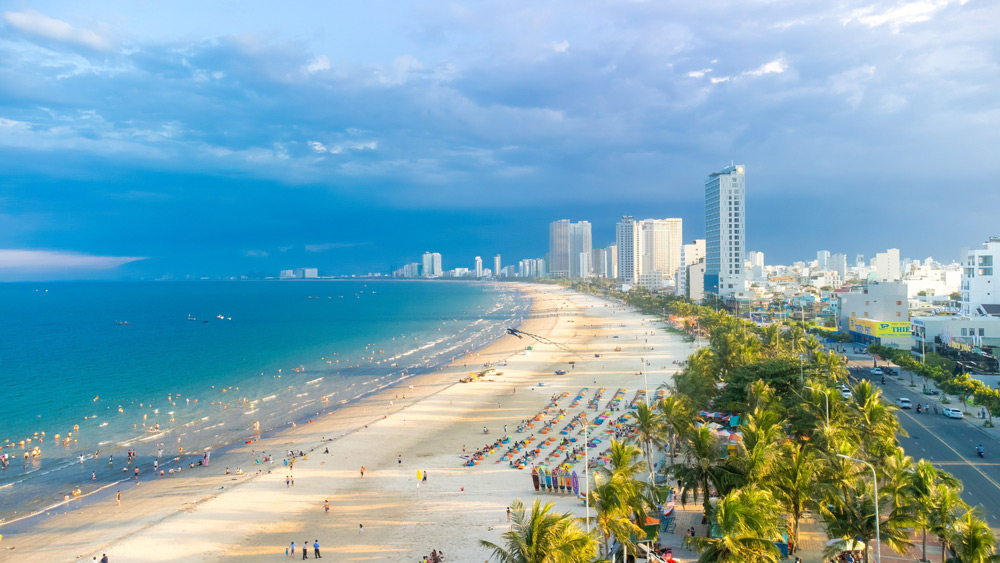
Da Nang is located on the central coast of Vietnam, between Hue to the north and Hoi An about 30 km to the south. It sits along the East Sea, where wide beaches meet a modern riverside city, green mountains and some of Central Vietnam’s best day-trip routes.
You will see the city written in several ways: Da Nang, Danang, and the Vietnamese spelling Đà Nẵng. They all refer to the same city. In English travel content, “Da Nang” is the cleanest and most common spelling, while “Danang” still appears in older travel writing, airline searches and casual searches.
Da Nang sits in the Indochina Time zone, usually written as ICT or UTC+7. This is the same time zone used in Hanoi, Ho Chi Minh City, Hoi An, Hue and the rest of Vietnam. Vietnam does not use daylight saving time, so the time stays consistent throughout the year.
1.1. Map-Style Orientation for First-Timers
If you are looking at Vietnam from north to south, Da Nang sits almost in the middle:
That central position is why Da Nang Vietnam works so well as a travel base. You can fly in easily, enjoy the beach, explore the city, visit Hoi An in the evening, take a day trip to Hue, ride up to Ba Na Hills, or see the Marble Mountains without constantly changing hotels.
For first-time travelers, Da Nang feels easy. The airport is close to the city. The beach hotel zone is simple to understand. Grab rides are widely used. Food is affordable. Hoi An is close. And the city gives you a softer landing than the intensity of Hanoi or Ho Chi Minh City.

Yes, Da Nang is worth visiting, especially if you want the best mix of city beaches, food, modern comfort, and day-trip access in Vietnam.
Da Nang is not the most atmospheric old town in Vietnam. That title belongs more naturally to nearby Hoi An. It is not the most chaotic city for street-life lovers. That would be Hanoi or Ho Chi Minh City. But Da Nang’s strength is balance. It gives you beach mornings, clean modern hotels, seafood dinners, easy transport, mountain views, and quick access to several famous Central Vietnam attractions.
For many first-timers, Da Nang is the most practical city in Vietnam. It is big enough to have good hotels, cafés, restaurants, shopping, nightlife and an international airport, but it still feels more relaxed than Hanoi or Ho Chi Minh City. It is modern without being overwhelming. It is coastal without being isolated. It is tourist-friendly without losing its local daily rhythm.
You’ll love Da Nang if:
Consider Hoi An instead if:
The best answer for most travelers is not Da Nang or Hoi An. It is Da Nang and Hoi An. Stay in Da Nang for beach and convenience, then visit Hoi An in the late afternoon and evening when the lanterns turn on.
Da Nang is famous for a strong mix of natural scenery, modern attractions and local food. Here are the key highlights every first-timer should know:
Suggested internal reading:
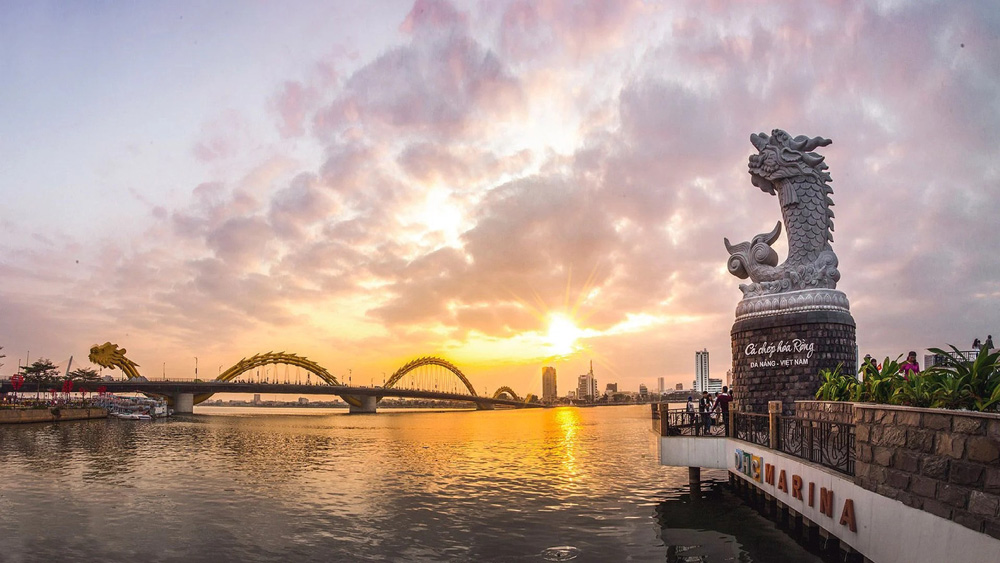
The best time to visit Da Nang is generally from February to May, when the weather is warm, relatively dry and comfortable for sightseeing. This is the sweet spot for first-timers because you can enjoy the beach, Hoi An, Ba Na Hills, Marble Mountains and city walks without the strongest summer heat or the highest storm risk.
June to August is hotter and busier, but it can still be excellent for travelers who want a beach-focused holiday. The sea is often calmer, the days are sunny, and the city feels lively. However, midday heat can be intense, so plan outdoor sightseeing early in the morning or late afternoon.
September to November is the wetter and stormier period in Central Vietnam, with October and November carrying the strongest typhoon and heavy-rain risk. That does not mean you cannot visit, but you should travel with flexible plans and avoid building the whole trip around beach swimming.
December and January can be cooler and more variable. The beach may be less ideal for swimming, but the city is still enjoyable for food, cafés, cultural stops, Hoi An, and day trips when the weather cooperates.
For a deeper seasonal breakdown, connect this article with Best Time to Go to Da Nang and Best Time to Visit Vietnam & Weather.
Most international and domestic travelers arrive through Da Nang International Airport (DAD). This airport is one of the easiest arrival points in Vietnam because it sits close to the city, the beach hotel zone and the Han River area.
From the airport:
Da Nang has direct domestic flights from Hanoi and Ho Chi Minh City, often taking around 1 to 1.5 hours. It also has international connections from several Asian hubs, including routes that may serve travelers from Singapore, South Korea, Thailand, Malaysia and other regional markets depending on airline schedules.
Travelers can also reach Da Nang by train. The Reunification Express route connects Hanoi, Hue, Da Nang, Nha Trang and Ho Chi Minh City. The train is slower than flying but can be scenic, especially around the Hai Van Pass area.
Long-distance buses are available too, but for first-timers, flights or trains are usually easier and more comfortable.
Vietnam’s e-visa system currently allows eligible foreign travelers to apply online for an e-visa valid up to 90 days, with single or multiple entry options. Always check the official e-visa portal before publishing or traveling, because visa rules can change.
For money planning, use the Vietnamese đồng (VND). As a rough live-reference point on July 8, 2026, mid-market rates were around:
Rates change daily, so use these only as planning references. For actual travel, check your bank, card provider or currency app close to departure.
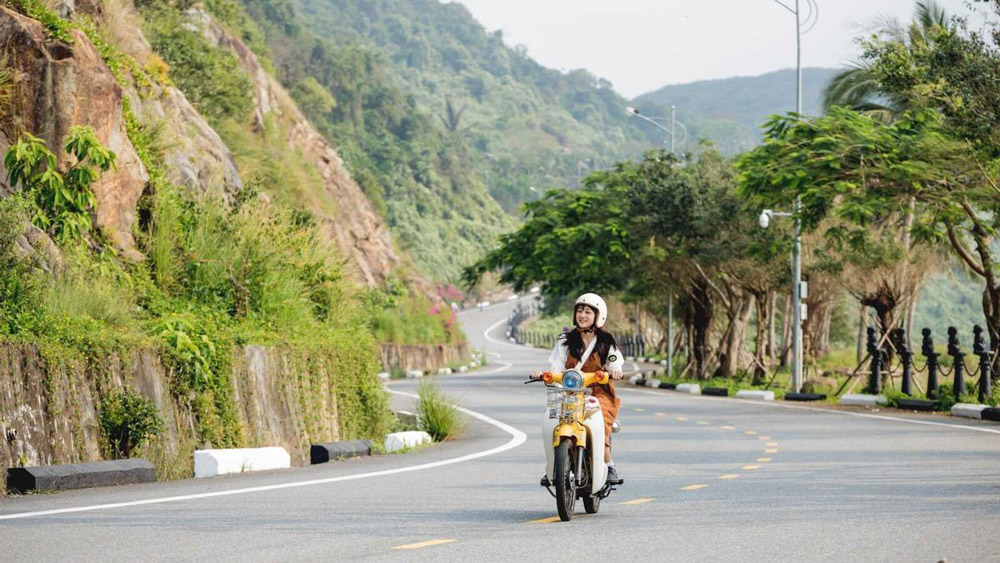
Da Nang is one of Vietnam’s easiest cities for first-timers because the basics are simple: Grab works, the airport is close, the beach is easy to understand, and popular attractions are reachable by private car or short transfers.
Inside Da Nang, Grab handles almost everything. Grab is Southeast Asia’s version of Uber, used for ride-hailing and food delivery. You can book cars or motorbike rides through the app with fixed displayed prices before you confirm.
For most travelers, Grab is easier than negotiating taxis. It works well for airport transfers, hotel-to-restaurant rides, short trips around the city, and movement between My Khe Beach, Han River, Son Tra and local markets.
Other transport options include:
For day trips outside the city, a private car often saves time and stress. This is especially true for Ba Na Hills, Hoi An, Hue, Marble Mountains, and airport-to-Hoi An transfers.
The local currency is the Vietnamese đồng, usually written as VND or shown with the symbol ₫. Cash is still useful in Da Nang, especially for small restaurants, markets, beach vendors and local cafés.
Cards are accepted at many hotels, resorts, modern restaurants and larger shops, but do not rely on cards for everything. Carry smaller notes for taxis, snacks, coffee, markets and local meals.
Useful money tips:
Da Nang is generally good value for food and transport compared with many international beach cities. A simple local meal can be very affordable, while seafood restaurants, beach clubs and resort dining can raise your daily spend quickly.
Vietnamese is the main language. English is workable in tourist areas, hotels, cafés, restaurants, tour companies and airport services, but it is not universal.
You will have an easier time if you learn a few basic phrases:
Do not worry if your pronunciation is not perfect. A smile, translation app and polite attitude go a long way.
Yes, Da Nang is safe for tourists by normal travel standards and is often regarded as one of Vietnam’s more relaxed major cities. Violent crime against tourists is rare. The bigger concerns are normal travel issues such as road safety, petty theft, overcharging, water safety and weather.
Basic precautions:
Da Nang is family-friendly and solo-traveler-friendly, but like anywhere, common sense matters.
For a first visit, 3 to 4 days in Da Nang is the sweet spot.
This gives you enough time for the beach, one or two major attractions, local food, Dragon Bridge, and a Hoi An day or evening trip without rushing.
Suggested length:
A simple first-timer formula:
That is enough to understand why Da Nang is not just a transit stop.
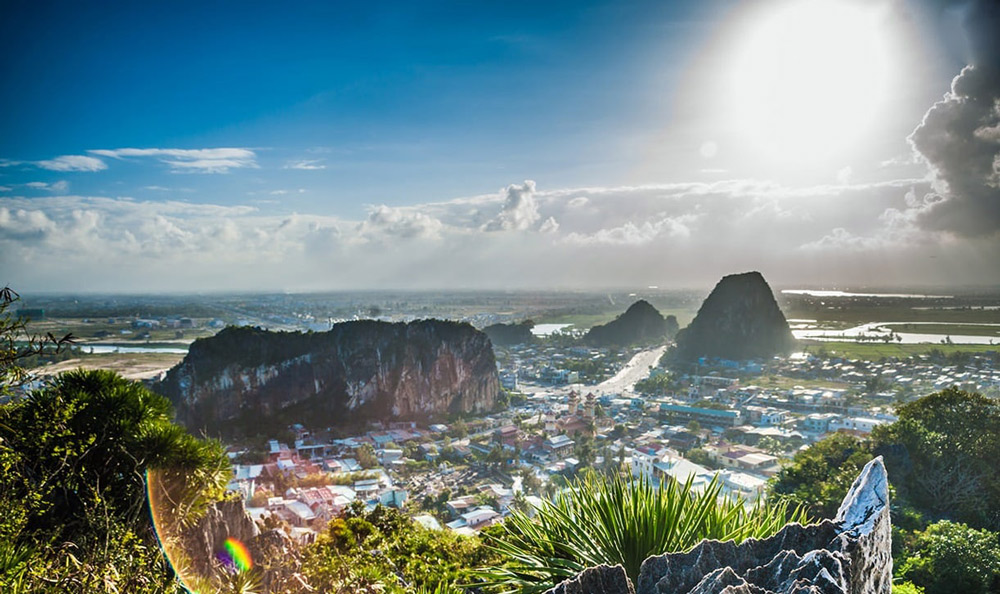
Most Vietnam itineraries treat Da Nang as the airport you land at on the way to Hoi An.
That is a mistake.
Travelers who allocate zero nights to Da Nang often regret it once they see My Khe Beach at sunrise, the Han River at night, the Dragon Bridge show, and the convenience of the city. Hoi An is beautiful, but it cannot give you Da Nang’s modern beach rhythm.
The truth is this: Da Nang is not only the gateway to the trip. It is half the trip.
Hoi An gives you lanterns, old houses, tailoring, heritage streets and riverside evenings. Da Nang gives you beach mornings, seafood, city energy, bridges, big attractions and easy day trips. One is atmospheric. One is spacious. Together, they create the best Central Vietnam experience.
If you skip Da Nang completely, you miss the modern-beach half that Hoi An cannot provide.
An Asia Mystika guide explains:
“If you do one ‘local’ thing in Da Nang, set an alarm for 5:30 AM and walk to My Khe Beach. The entire city is there — swimming, exercising, drinking coffee on tiny stools — and by 8 AM they’re gone and the beach belongs to tourists. It’s the single best free cultural experience in the city, and almost no first-timer knows it happens.”
This is one of the simplest and most beautiful things you can do in Da Nang.
Wake up early. Walk to the beach before sunrise. You will see local families swimming, older residents stretching, workers exercising before the day begins, fishermen, volleyball games, morning coffee and the city’s real rhythm.
By mid-morning, that local scene fades. The beach becomes more tourist-focused. Loungers open. Hotels serve breakfast. The sun grows stronger. The same stretch of sand feels completely different.
If you do the sunrise once, you may want to do it every morning.
For a smooth first day, do not over-plan. Try this:
That rhythm helps you land softly in Vietnam without rushing into a full-day tour right away.

Da Nang is located on Vietnam’s central coast, roughly halfway between Hanoi and Ho Chi Minh City, with Hue to the north and Hoi An about 30 km to the south.
Three to four days in Da Nang is ideal for a first visit. That gives you enough time for the beaches, Ba Na Hills or Marble Mountains, Dragon Bridge, local food and a day trip or evening trip to Hoi An.
Yes, Da Nang is safe for tourists by normal travel standards and is widely considered one of Vietnam’s easier major cities for first-time visitors. Normal precautions still apply, especially around traffic, beach safety and valuables.
Da Nang is famous for My Khe Beach, the Dragon Bridge fire show, the Golden Bridge at Ba Na Hills, the Marble Mountains, the Lady Buddha on Son Tra Peninsula, seafood and mì Quảng noodles.
Da Nang is better for beaches, modern comfort, nightlife and day trips, while Hoi An is better for lanterns, old-town charm and heritage atmosphere. Since they are close together, most travelers should visit both.
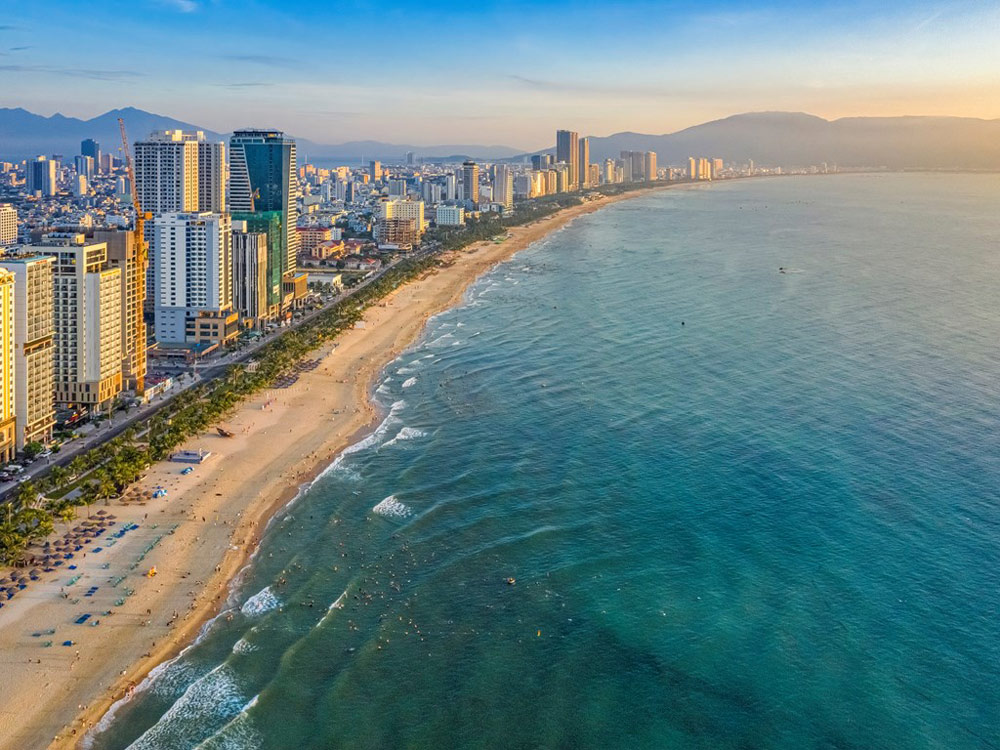
Here is the whole first-timer plan in one line:
Fly into Da Nang International Airport (DAD), base near My Khe Beach, stay 3 to 4 days, and day-trip to Hoi An.
That simple structure solves most of the planning confusion.
Da Nang is worth visiting because it gives you one of Vietnam’s best combinations of beach, food, comfort and access. You can swim at sunrise, eat mì Quảng for lunch, visit Marble Mountains in the afternoon, watch Dragon Bridge at night, and still be in Hoi An the next evening for lanterns.
It is modern, but not soulless. It is tourist-friendly, but still local at sunrise. It is a gateway, but also a destination.
The only real mistake is treating Da Nang as an airport stop and leaving too quickly.
Give it a few days. Wake up early. Eat local. Walk the beach. Use it as a smart base. Then let Central Vietnam open around you.
Stop stitching a first Vietnam trip together from twenty open tabs.
If you want to save time and effort while traveling to Vietnam, contact Asia Mystika, a trusted tour agent in Vietnam. We can help you plan a tailor-made Da Nang package with flight advice, vetted hotels, private transfers, guided day trips, Hoi An timing, Ba Na Hills planning and local food experiences in one smooth program.
Start with Asia Mystika’s Free & Easy Danang Hoian package, explore Da Nang destination ideas, or contact us directly through Asia Mystika’s contact page for a personalized Central Vietnam itinerary.
