Hotline: +84 866 227 878
- SG$ Singapore Dollar
- A$ Australian Dollar
- £ British Pound Sterling
- C$ Canadian Dollar
- € Euro
- MYR Ringgit Malaysia
- US$ United States Dollar
- đ Vietnamese Dong


 Hotline/Whatsapp: +84 86 622 7878
 Email: sales@asiamystika.com
 About Us
 Destinations
 Travel Styles
 Travel Guide
 Blogs
Blogs

Planning to explore Cat Cat Village in Sapa in 2026? Before you go, here’s what you should know. From the updated entrance policy and current opening hours to a practical “leg-saver” transport tip for the steep walk back, this guide keeps things clear and useful. Find out whether Cat Cat is just a crowded photo stop or still one of the most worthwhile cultural experiences in Sapa today.
If you spend even one hour in Sapa town, you will hear the same name repeated again and again. Cat Cat Sapa. It is the most talked-about village in the area. It is easy to reach. It is heavily photographed. And yes, it is also debated.
First, let’s clear up the name. Despite what many first-time visitors assume, Cat Cat has nothing to do with cats. The name actually comes from the French word “Cascade,” meaning waterfall. Over time, local H’Mong people adapted the pronunciation into “Cat Cat,” and the name stayed.
Now for the honest part. Cat Cat Sapa is not a remote, untouched mountain settlement. It is a well-developed cultural tourism site. There are clearly marked paths, ticket gates, photo spots, and organized performances. If you expect a hidden village lost in the mountains, you may be surprised. But if you arrive understanding that it is a curated cultural experience, you can appreciate it for what it offers.
In this 2026 guide, we will walk you through the updated entrance fee, the smartest route to protect your knees on the steep paths, and the real question. Is Cat Cat Sapa worth your time, or should you explore somewhere else?
One of the most common questions is simple: how to get to Cat Cat Village from Sapa? The good news is that Cat Cat Sapa is very close to town. The distance from the Stone Church area is only about 2 to 2.5 kilometers. On paper, that sounds like an easy walk. And going down is easy.
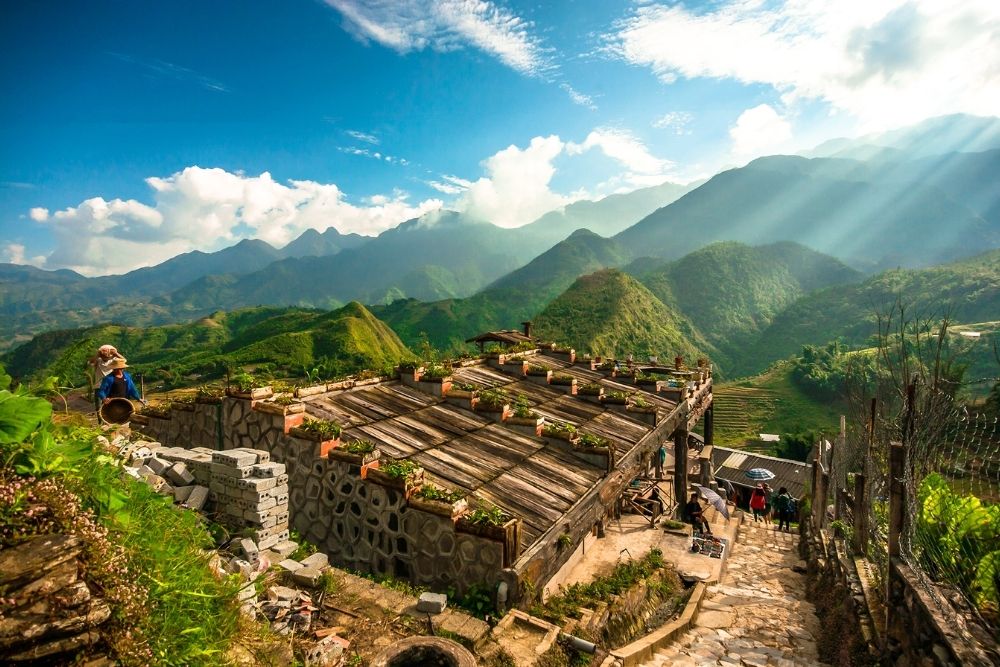
The road slopes gently at first, then descends more noticeably as you approach the village. Most visitors enjoy this part. The views of Muong Hoa Valley open up beautifully along the way. It feels scenic and relaxed. But here is where many people make the same mistake. They forget that what goes down must come back up.
The return walk is steep. After exploring for two to three hours, that uphill climb can feel much longer than 2 kilometers.
Here is the smart plan:
Take your time walking downhill. Enjoy the valley scenery and stop for photos. This is the most pleasant part of the journey.
Follow the marked path through the village. Use a Cat Cat Village map at the entrance to make sure you complete the loop and do not miss the waterfall area.
At the second gate near the exit, you will see many “xe ôm” motorbike taxis and regular taxis waiting. The typical cost ranges from US$2 to US$4 to return to Sapa town. It is a small price to save your knees. Unless you genuinely enjoy intense uphill cardio, riding back is the wiser choice.
When planning your trip from Sapa to Cat Cat village, remember this simple rule. Walk down for the views. Ride up for comfort. Your legs will thank you later.
Before visiting Cat Cat Sapa, it is important to check updated information. Many older travel blogs still show outdated prices, which can cause confusion at the entrance.
If you are wondering what time Cat Cat Village opens, the official hours are from 6:00 AM to 6:00 PM daily.
However, timing makes a big difference. Arriving around 7:00 AM is the best strategy. The air is cooler, the lighting is softer for photos, and large tour groups usually start arriving around 9:30 AM. Going early allows you to explore more comfortably and enjoy quieter paths.
The Cat Cat Village entrance fee has increased compared to previous years.
Previous price (mentioned in older articles): around US$2–3
Updated 2026 price: approximately US$5–6 per adult
Children (1m–1.3m): around US$2–3
Tickets are purchased at the main gate at the top of the village. Entry checkpoints are monitored, so there is no way to bypass the official entrance.
The price increase reflects ongoing maintenance and organized activities. The ticket includes access to cultural dance performances and supports the upkeep of walking paths, scenic viewpoints, and photography areas.
While it is no longer a budget-level attraction, many visitors still find the experience worthwhile, especially if they arrive early and explore at a relaxed pace.
Understanding the current Cat Cat Village opening hours and updated fees helps you plan properly and avoid surprises during your visit to Cat Cat Sapa.
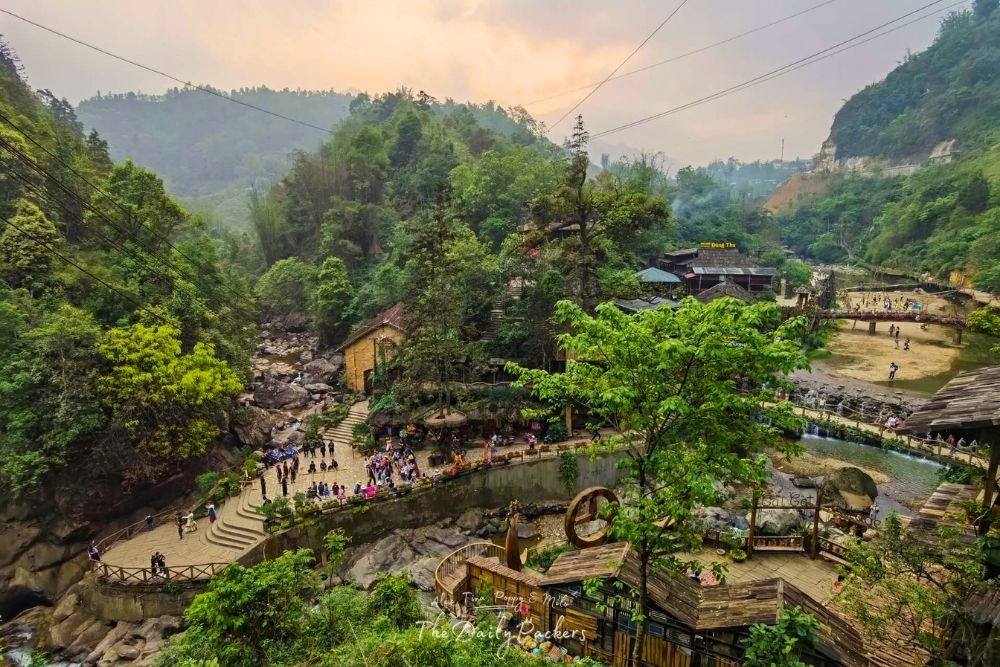
If you are wondering what is Cat Cat Village famous for, the answer lies in its well-organized walking loop. The experience flows downhill, with different highlights appearing one after another. Here is what to expect when exploring Cat Cat Sapa things to do.
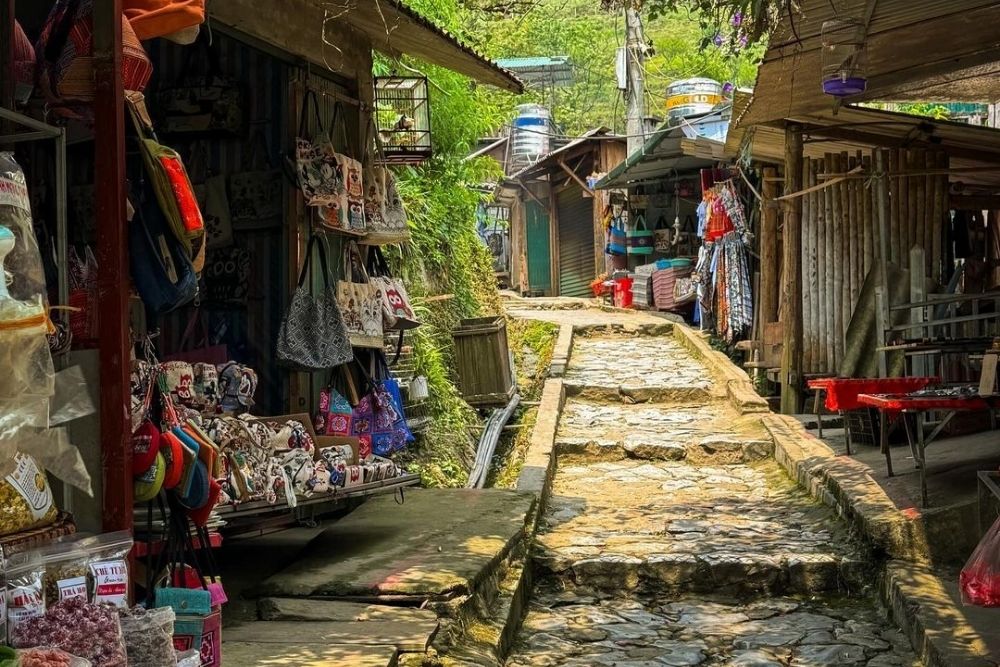
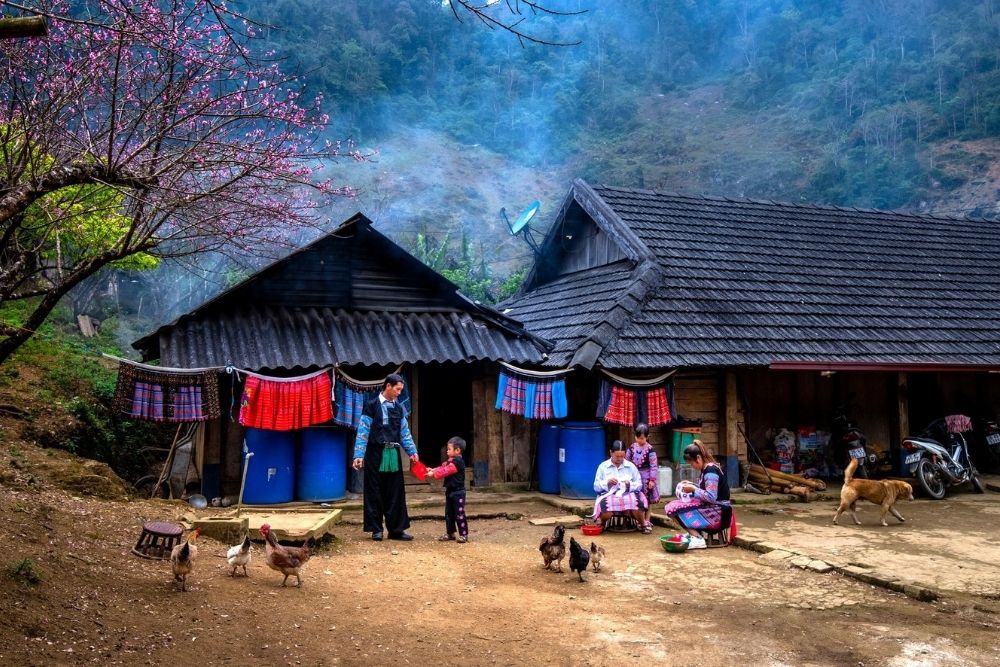
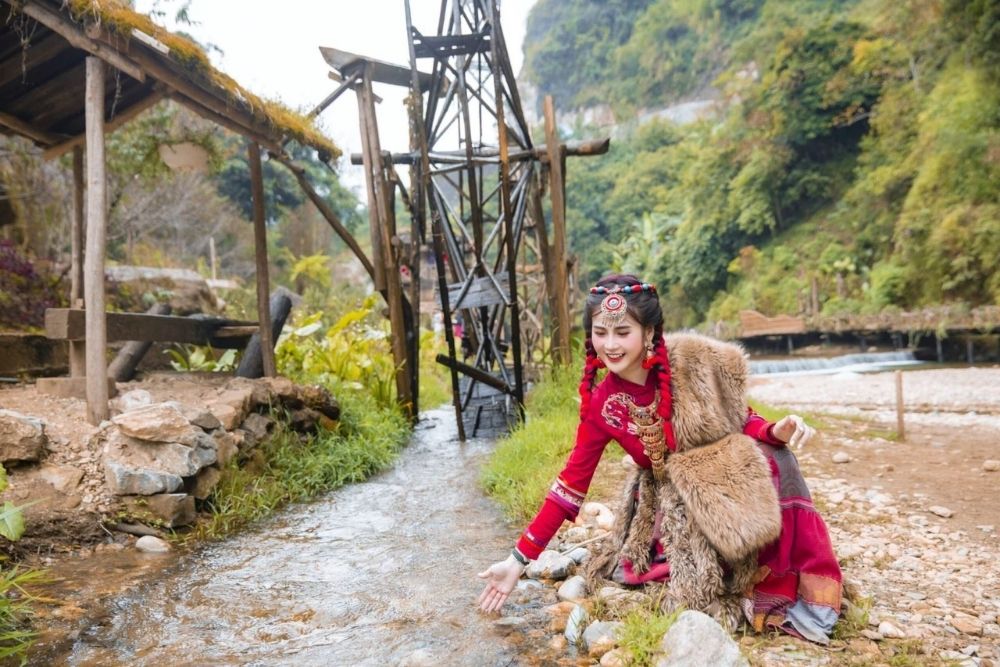
The journey begins with a long descending path filled with small stalls on both sides. You will see H’Mong handicrafts, handmade silver jewelry, embroidered textiles, and plenty of colorful displays. One of the most popular activities here is costume rental. For around five to ten dollars, you can wear a traditional H’Mong-inspired outfit or a modern “boho” version for photos. It may feel touristy, but it is easily the most common activity in Cat Cat Sapa.
Further down the trail, you will find preserved wooden houses that function as small exhibition spaces. Inside, you can observe tools used for hemp weaving and silver crafting. These stops provide a glimpse into local craftsmanship and daily life, adding cultural depth to the visit.
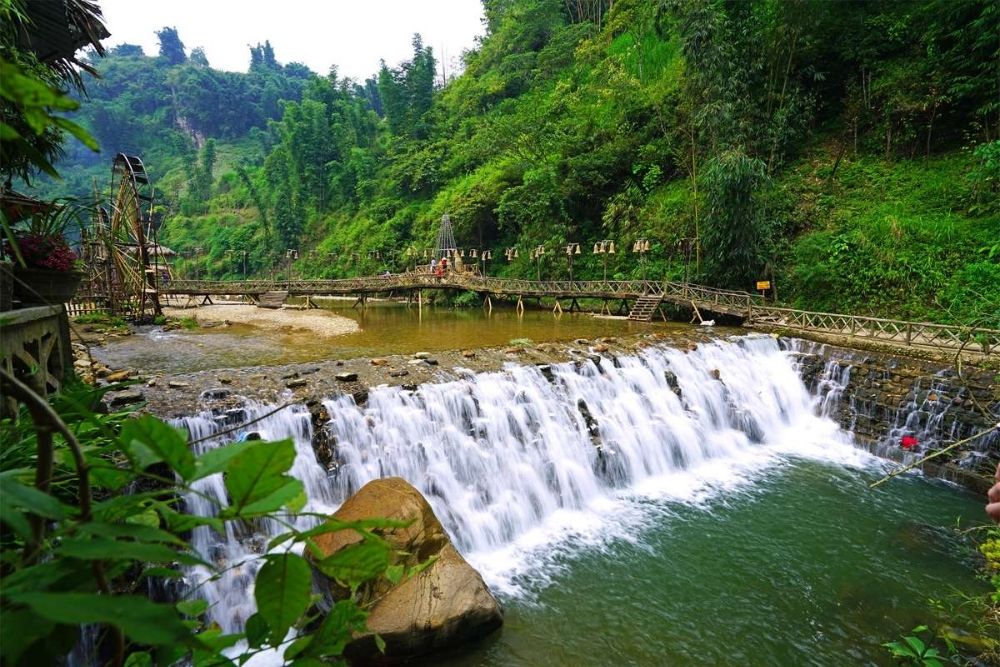
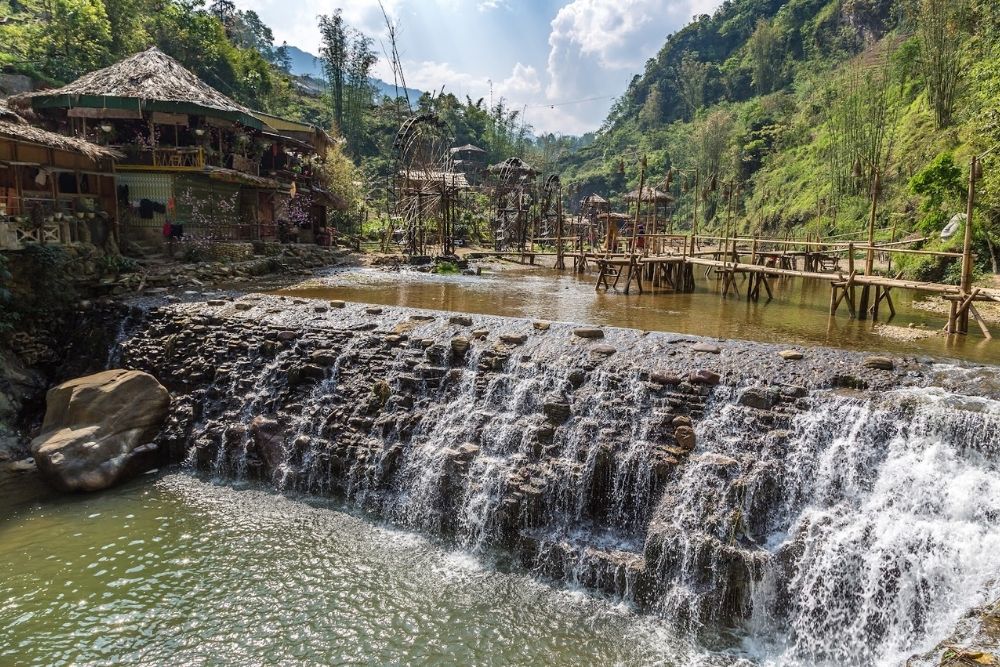
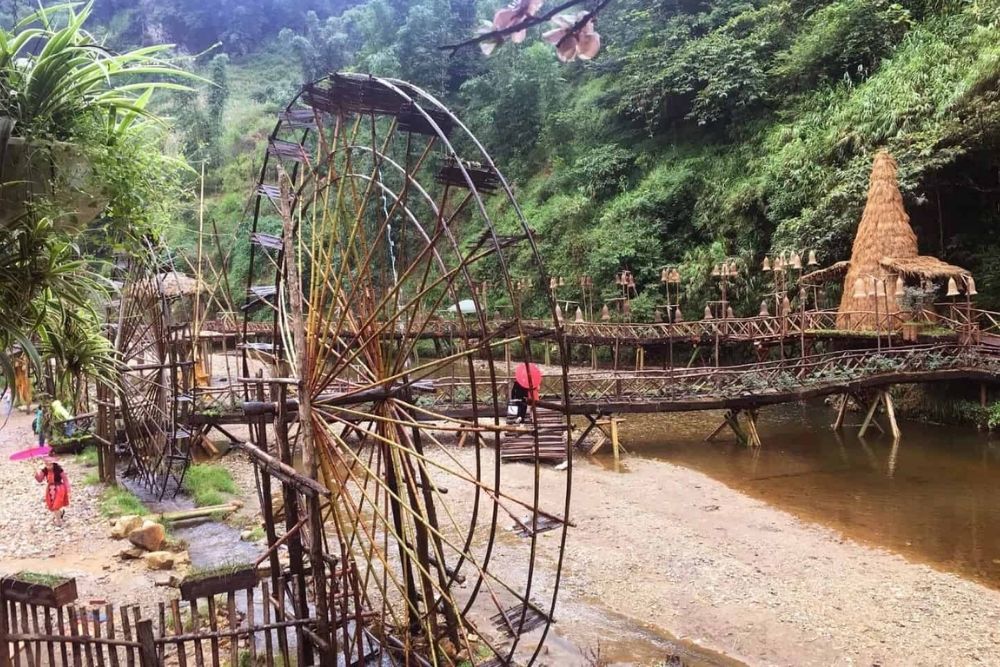
The highlight of the loop is Cat Cat Waterfall, also known as Tien Sa Waterfall. This is the main photo area and the visual centerpiece of the village. The white cascade, large wooden water wheels, and bamboo bridge create a scenic backdrop that appears in most Cat Cat Sapa photos.
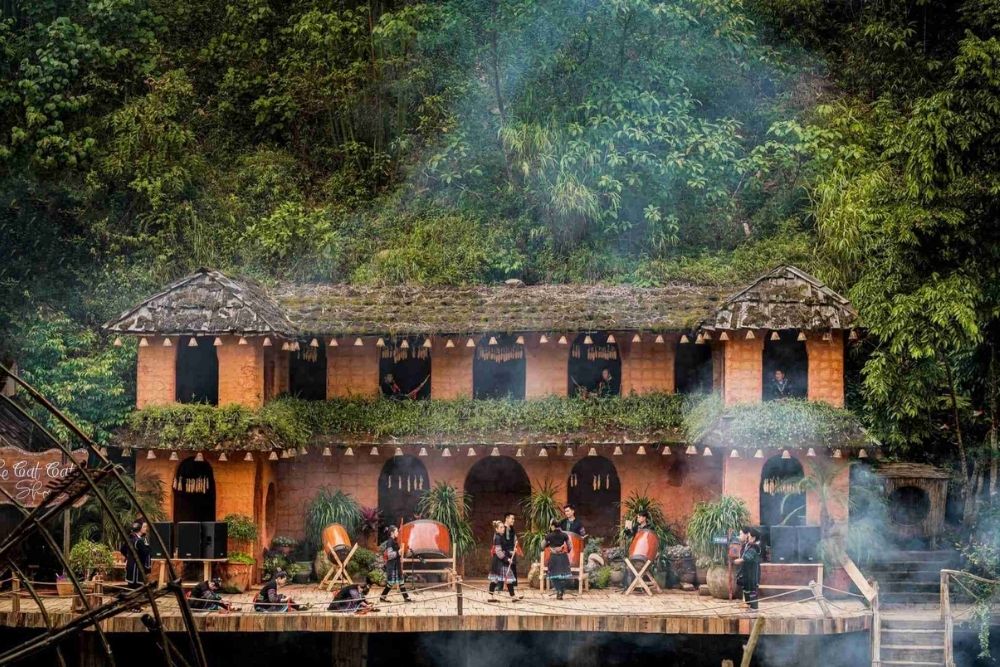
Near the waterfall area, there is a small performance stage. Short cultural shows usually take place several times a day, often around 9:00 AM and 10:00 AM. The program typically lasts about fifteen minutes and features bamboo dancing and traditional flute music. It is a simple but enjoyable addition to the walk.
The Cat Cat Village loop is easy to follow and covers shopping, culture, scenery, and entertainment in one continuous route. When planned well, it offers a compact yet varied introduction to Cat Cat Sapa.
Exploring Cat Cat Sapa is not just about scenery and photos. It is also a chance to try simple, mountain-style snacks that feel authentic and satisfying after a long walk. If you are curious about Cat Cat Sapa food, here are a few local favorites worth tasting.
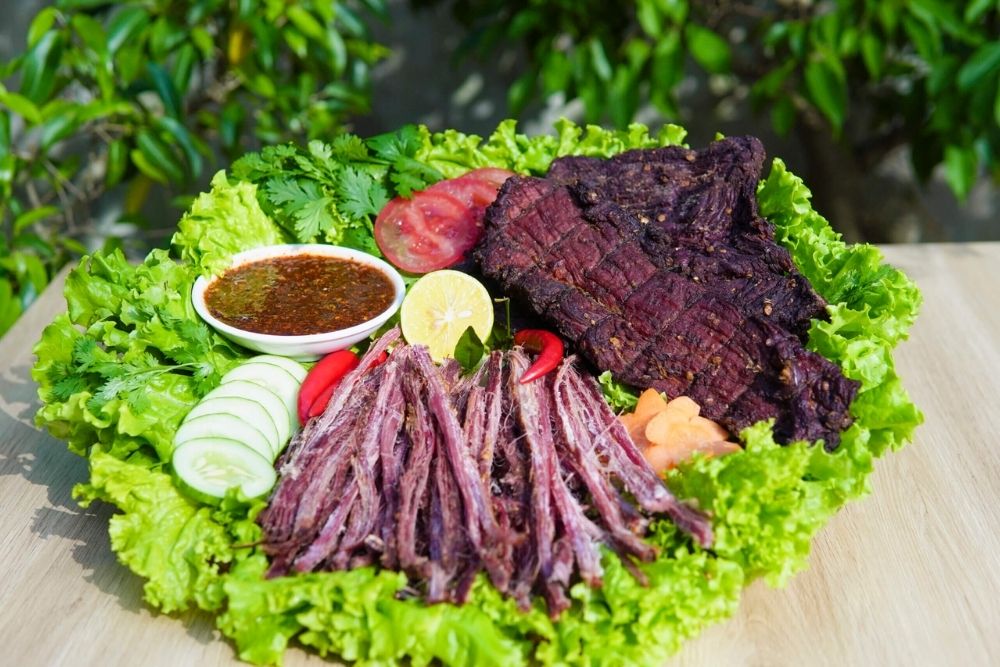
This is smoked buffalo meat, a specialty of the Northwest region. It is firm, slightly chewy, and carries a rich smoky aroma from being dried over kitchen fires. Think of it as a rustic mountain jerky with deeper flavor. It pairs well with a warm drink on a cool Sapa day.
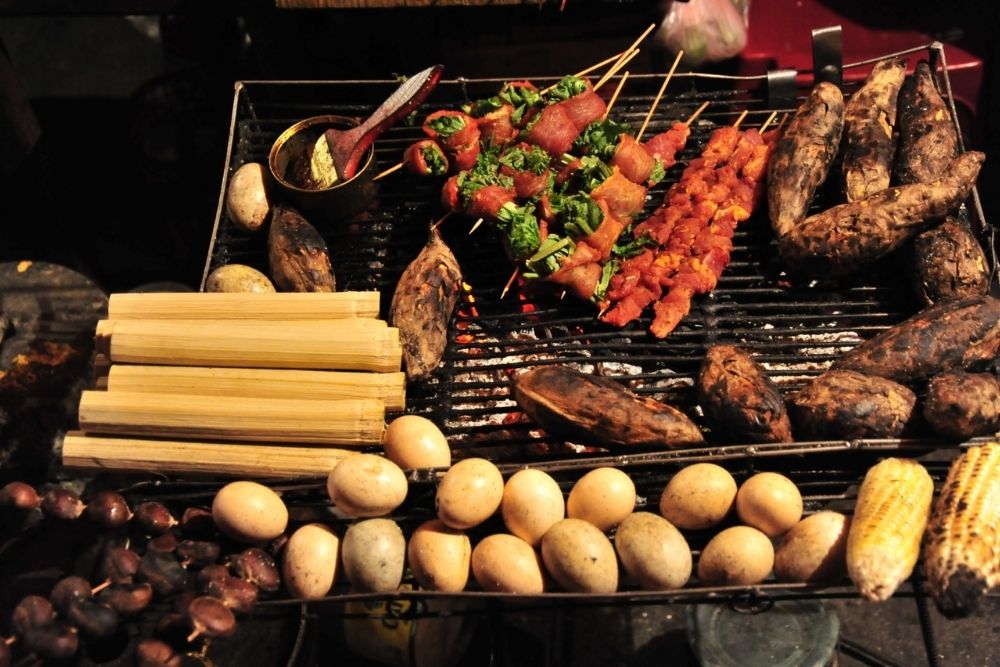
As you walk down the village path, you will notice elderly women grilling eggs and sweet potatoes over small charcoal stoves. These snacks are simple but comforting. A hot roasted sweet potato in your hands feels perfect in the mountain air.
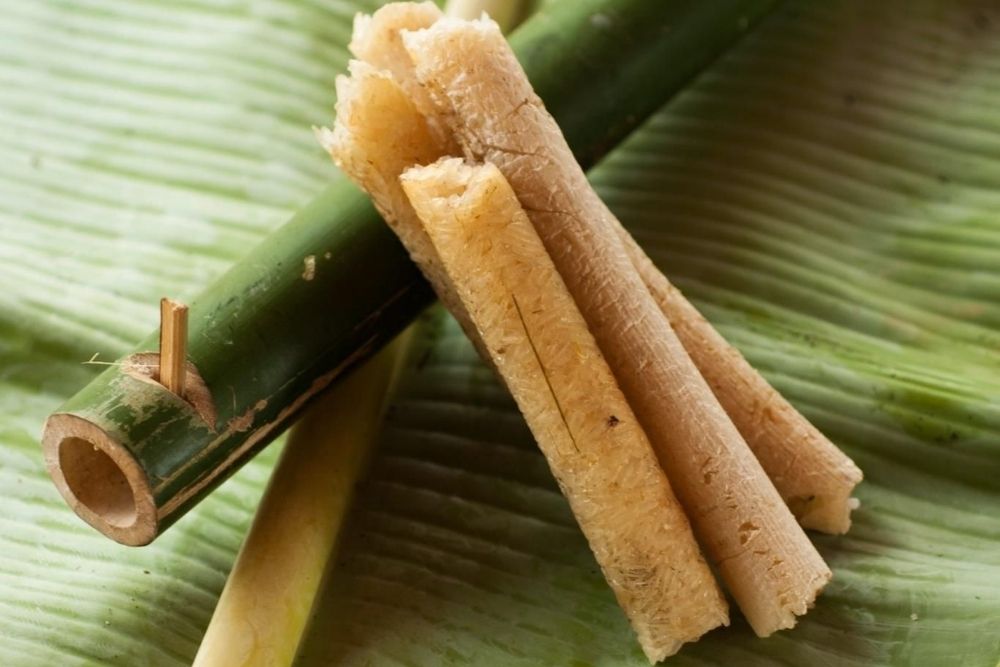
This sticky rice is cooked inside bamboo tubes, which gives it a subtle woody fragrance. It is usually served in small portions, making it easy to enjoy as a quick bite while exploring.
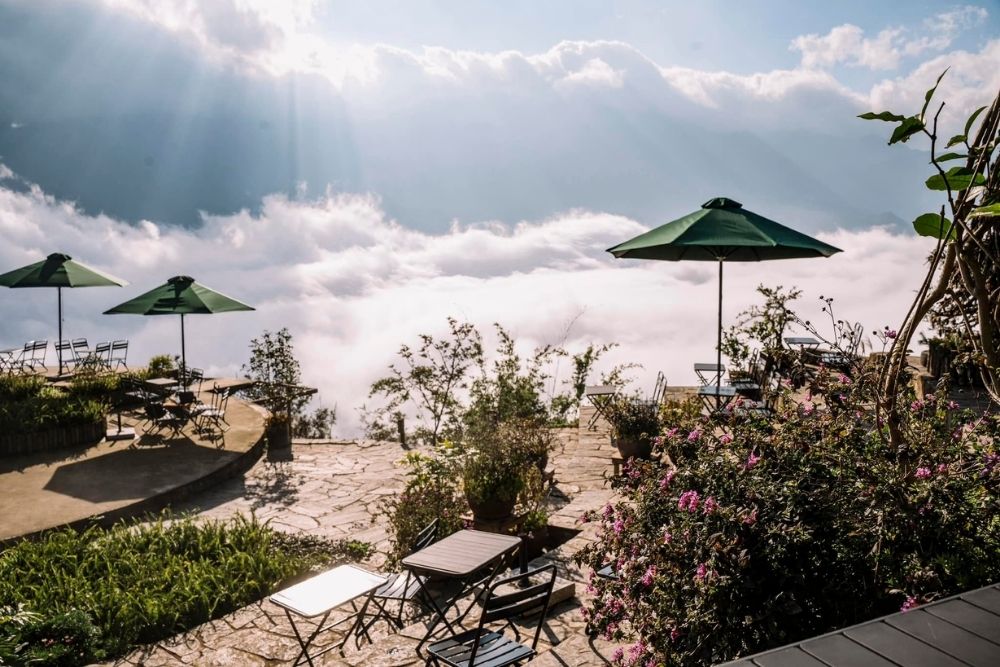
Before you start descending into the village, consider stopping at a café near the entrance. Places like Gem Valley Coffee offer wide views over Muong Hoa Valley. It is an ideal spot to relax, take photos, and enjoy a coffee before beginning the walk down.
Food in Cat Cat Sapa is not fancy, but it reflects the region’s character. Trying a few local snacks adds flavor to your visit and makes the experience feel more complete.
Few places in Cat Cat Sapa Vietnam spark as much debate as this village. Some travelers walk away impressed. Others feel underwhelmed. The truth sits somewhere in between.
Skeptics often describe the site as overly developed. They point out the paved walkways, staged photo corners, and steady flow of visitors. During peak hours, certain sections can feel crowded. If you are searching for untouched wilderness and quiet mountain life, this setting may not match your expectations.
On the other hand, many visitors value how approachable it is. The route is clearly marked and manageable for families, seniors, or anyone who does not want to commit to a long trek. The scenery is attractive, the waterfall area is photogenic, and the cultural performances offer a short but engaging introduction to H’Mong traditions. For first-time visitors to Sapa, it provides a convenient overview in just a few hours.
Visit Cat Cat Sapa if your goal is a scenic, easy half-day outing with strong photo opportunities. Skip it if you are seeking a more rustic, less curated environment. In that case, consider villages like Sin Chai or Ta Van, where the landscape feels quieter and more open.
In the end, Cat Cat Sapa is not a hidden gem. It is a well-managed attraction with clear pros and cons. Whether it feels worthwhile depends on what kind of experience you are looking for.
You can walk about 2 kilometers downhill from the Fansipan Street area toward the village entrance. The route is straightforward and scenic. If you prefer not to walk, a taxi usually costs around 100,000 VND from central Sapa.
The name is not Vietnamese. It originates from the French word “Cascade,” which means waterfall. Over time, the pronunciation evolved locally into “Cat Cat.”
Ticket booths open daily at 6:00 AM. Arriving early helps you avoid larger tour groups and enjoy a quieter experience.
No. The entire route consists of stairs, slopes, and uneven paths. It is not suitable for wheelchairs or visitors with significant mobility challenges.
Most visitors spend between 2 to 3 hours completing the full loop at a relaxed pace. This allows enough time for photos, short breaks, and watching the cultural performance.
In many ways, Cat Cat Sapa feels like the theme park version of mountain culture. It is organized, lively, and designed for visitors. Some may find it busy, but few can deny that it is visually impressive. From the waterfall to the traditional houses and scenic viewpoints, the setting is undeniably photogenic.
If you decide to go, prepare wisely. Wear comfortable walking shoes, even if you plan to rent a traditional outfit for photos. The stone paths can become slippery, especially after rain. Practical footwear will make your visit much more enjoyable.
And one last smart move. Walk down for the views, but save your energy and budget for a ride back up. Your legs will appreciate it after a full loop around Cat Cat Sapa.
Asia Mystika Travel is a Vietnamese local travel agency dedicated to bringing first-hand experience of lovely scenery, and distinctive indigenous cultures to every customer. With professional local tour guides and prestiged airline partners (4 domestic airlines and over 300+ international airlines), we offer unique local experience at an extremely reasonable price. All tours are 100% customizable, no shopping and no extra fee.
Contact us for a personalized travel itinerary according to your preferences:
WhatsApp: (+84) 866.22.7878
Planning trip: Click here
Email: sales@asiamystika.com
Website: www.asiamystika.com