 Hotline: +84 866 227 878
- SG$ Singapore Dollar
- A$ Australian Dollar
- £ British Pound Sterling
- C$ Canadian Dollar
- € Euro
- MYR Ringgit Malaysia
- US$ United States Dollar
- đ Vietnamese Dong


 Hotline/Whatsapp: +84 86 622 7878
 Email: sales@asiamystika.com
 About Us
 Destinations
 Travel Styles
 Travel Guide
 Blogs
Blogs

Discover the authentic charm of Bac Ha Vietnam beyond its famous Sunday Market. Our 2026 Bac Ha travel guide covers local culture, the legendary Bac Ha dog, and how to connect your trip with Ha Giang.
Sapa has the 5-star hotels and the cable cars.
But Bac Ha has the soul.
On a Sunday morning in Bac Ha Vietnam, the town wakes up in a way that feels raw and electric. The narrow roads fill with motorbikes and horses. Women from the Flower H’Mong community arrive wearing neon pink and green embroidered skirts that glow against the mountain mist. Smoke from grilled corn and sizzling pork skewers drifts through the air. Somewhere nearby, a buffalo snorts loudly while men gather in circles, negotiating livestock prices with serious faces.
This is not a curated photo park. This is not a polished tourist square. This is living culture.
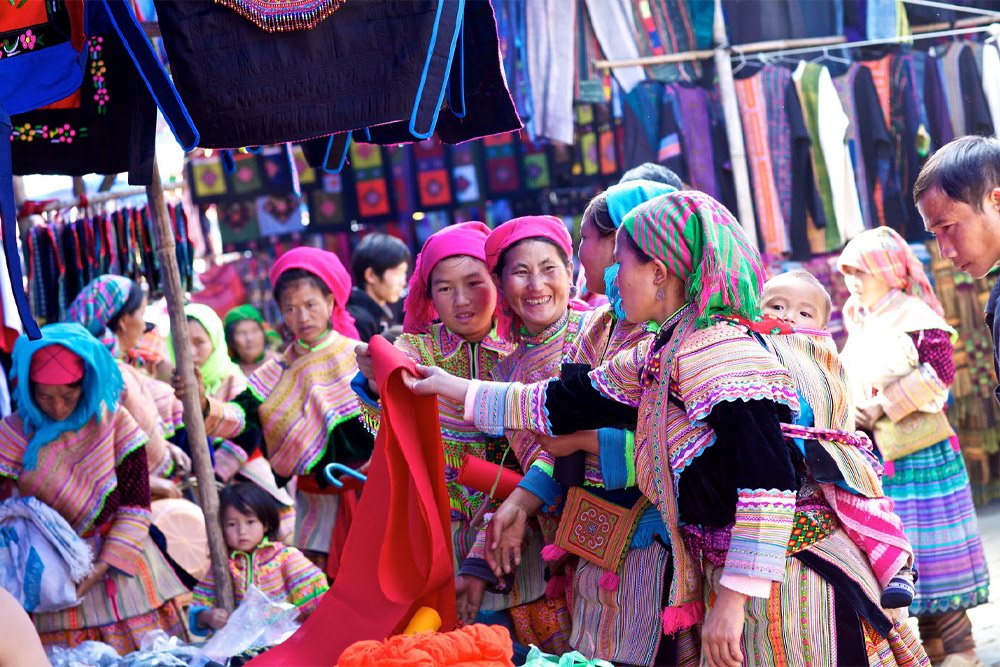
Most visitors treat Bac Ha as a quick 3-hour Sunday stop, usually on a rushed day trip from Sapa. They walk through the market, take photos, maybe try a bowl of thắng cố (traditional horse-meat stew), and leave by lunchtime.
But here’s the truth:
If you only come for Sunday morning, you’re missing half the story.
In this 2026 guide, we’ll go beyond the market. We’ll explain why staying overnight in Bac Ha Vietnam changes the entire experience, introduce you to the legendary Bac Ha dog (a powerful native mountain breed), and show you how to connect Bac Ha seamlessly with the epic Ha Giang Loop for a deeper northern Vietnam adventure.
If you’ve searched “Bac Ha market”, this is what everyone is talking about. The Sunday market is the beating heart of Bac Ha Vietnam, and the main reason most travelers make the journey.
But to experience it properly, timing is everything.
If you’re wondering “Where is the Bac Ha market?”, the answer is simple:
It’s right in the center of Bac Ha town. You genuinely cannot miss it. On Sunday morning, every road leads there. Motorbikes, horses, people carrying baskets, and entire families dressed in traditional clothing all flow toward the same central square.
There are no gates, no ticket counters, no fancy entrance signs. It feels like the entire town transforms into one giant open-air market.
Held: Every Sunday
Best time: 6:00 AM – 9:00 AM
If you want the most authentic experience, arrive early. Before 9 AM, the market belongs mostly to locals. After around 10:30 AM, tour buses from Sapa begin arriving, and the atmosphere shifts. It becomes more crowded and slightly more commercial.
So if you’re asking, “What is the best time to visit Bac Ha?” — the answer is sunrise. That’s when the real energy is strongest.
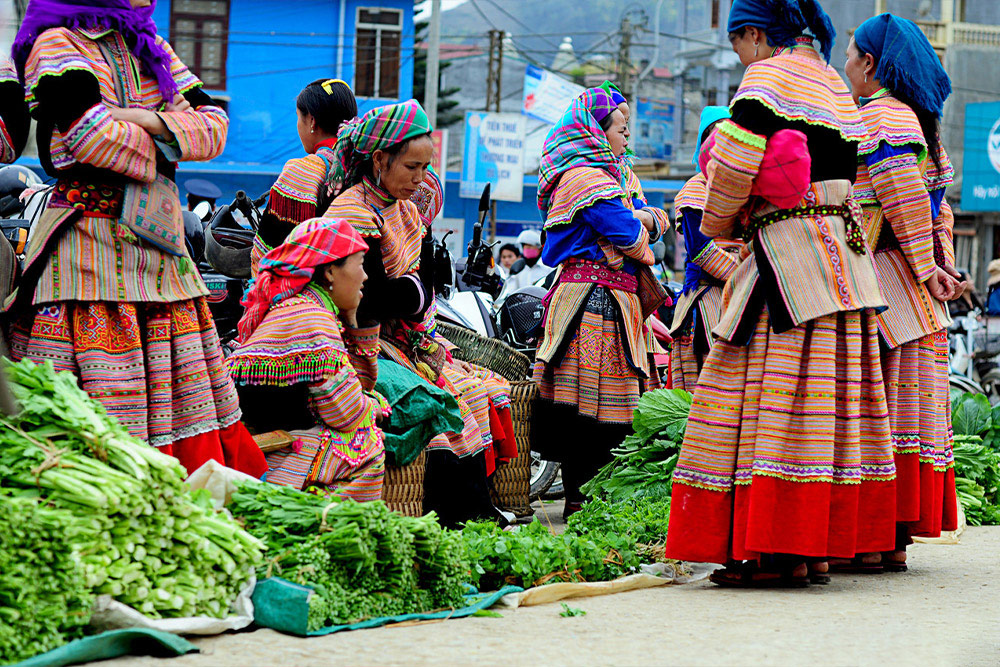
This is not just a shopping place. It’s a social gathering, trading hub, and cultural showcase rolled into one.
The “Live” Section – Buffalo & Horse Trading
One of the most fascinating areas is the livestock section. Here, you’ll see:
Buffalo tied side by side
Horses being examined and negotiated over
Farmers discussing prices seriously
It’s a rare sight in modern Vietnam. While cities have shopping malls, Bac Ha market still hosts traditional animal trading like it has for generations.
The Food Corner – Brave or Safe?
The food section is loud, smoky, and incredibly local.
If you’re adventurous, try Thắng Cố — a traditional horse meat stew cooked in a large metal pot. It’s strong, rich, and very authentic.
If you prefer something milder, order Phở Chua (Sour Pho) — a Bac Ha regional specialty. It’s cold noodles with pork, herbs, peanuts, and a tangy sauce. Light, refreshing, and easier on most foreign stomachs.
Souvenirs – Buy From the Source
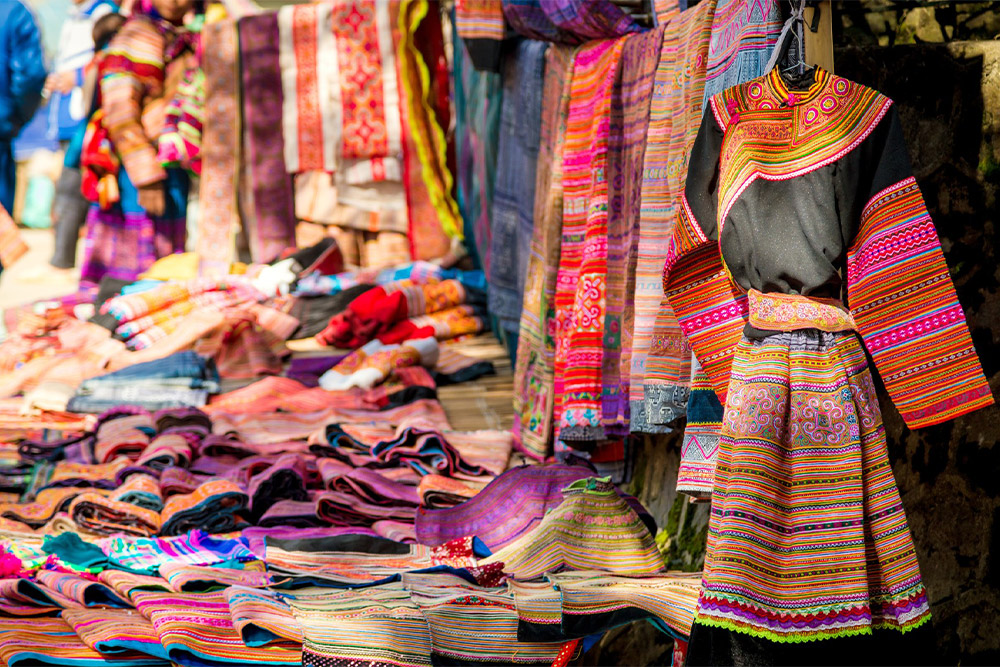
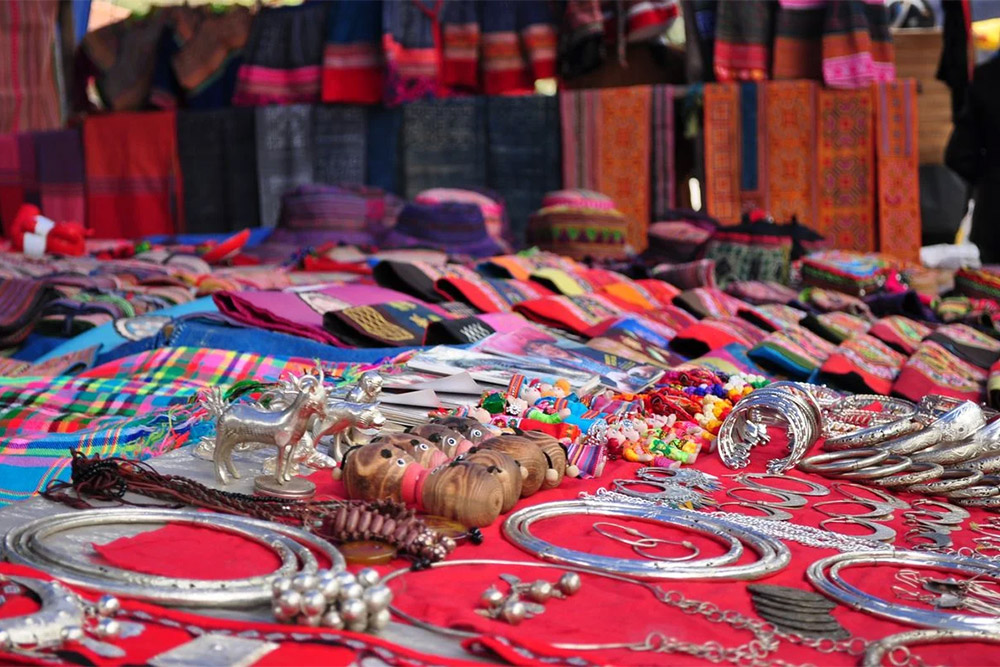
Unlike souvenir shops in bigger towns, many sellers here are the actual makers.
You can find:
Handwoven hemp fabric
Bright Flower H’Mong embroidered skirts
Bottles of locally distilled corn wine
Buying directly from the producers makes this one of the most meaningful cultural experiences in Bac Ha Vietnam.
So let’s be honest:
Is Bac Ha worth visiting?
Yes — but only if you appreciate slow travel.
If you’re looking for cable cars, nightlife, and a packed itinerary, Bac Ha Vietnam might feel too quiet. But if you enjoy small-town mornings, long walks through villages, and places where daily life hasn’t been redesigned for tourists, Bac Ha becomes incredibly rewarding.
And here’s the key: Bac Ha is not just about Sunday.
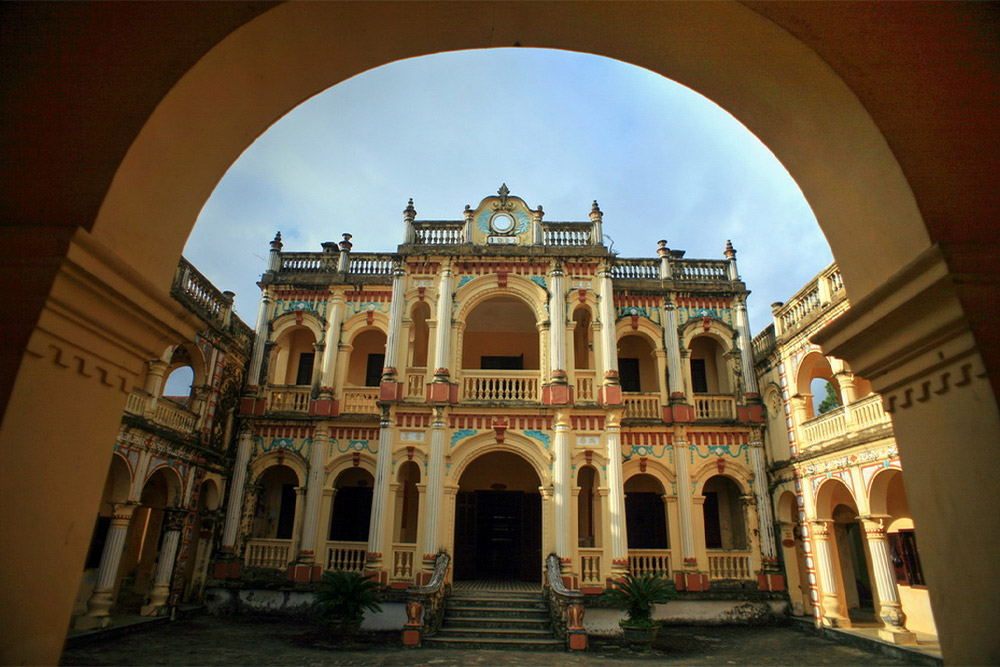
Right in town stands Hoang A Tuong Palace, one of the most unexpected sights in northern Vietnam.
Built in the early 20th century by a wealthy H’Mong king under French influence, the palace is:
Bright mustard-yellow
A mix of French colonial and Chinese architectural elements
Framed by mountains in the background
It honestly looks like a Wes Anderson film set dropped into the highlands.
It’s quiet on weekdays, which makes it one of the most underrated stops in Bac Ha Vietnam. You can walk around slowly, take photos, and imagine what power and politics looked like in the mountains 100 years ago.
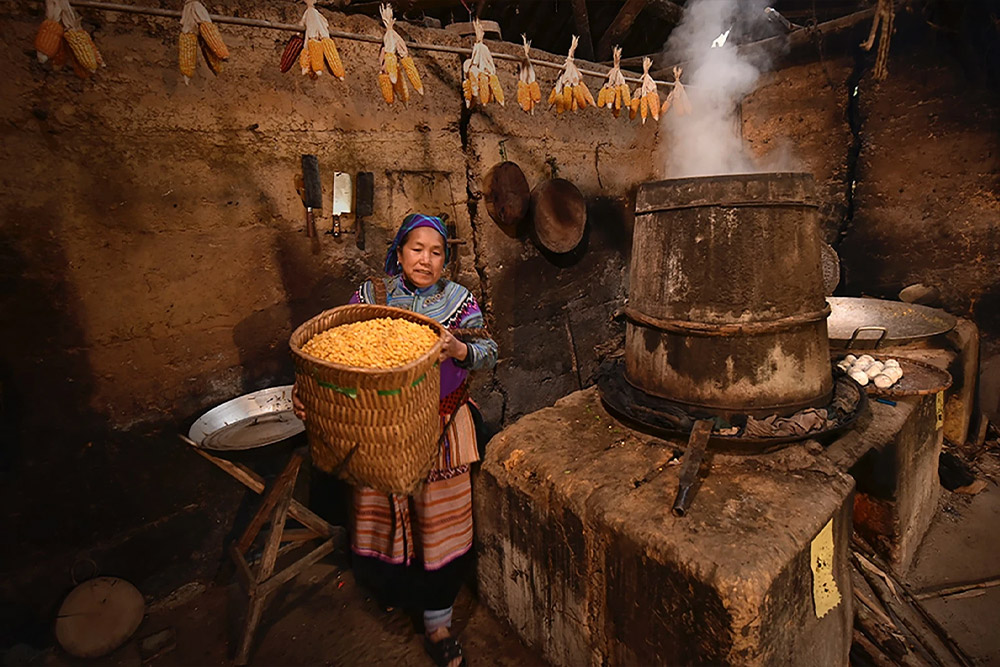
If you want a gentle countryside walk without the steep trekking of Sapa, head to Ban Pho Village.
This is where the famous Bac Ha corn wine is traditionally distilled. You’ll see:
Simple wooden houses
Large metal drums used for fermentation
Women preparing corn mash the old-fashioned way
The walk is easy. No dramatic climbs. No tourist ticket gates. Just farmland and local life.
If you’re wondering whether Bac Ha is worth visiting, moments like this — watching someone distill rice or corn wine in their backyard — are the answer.
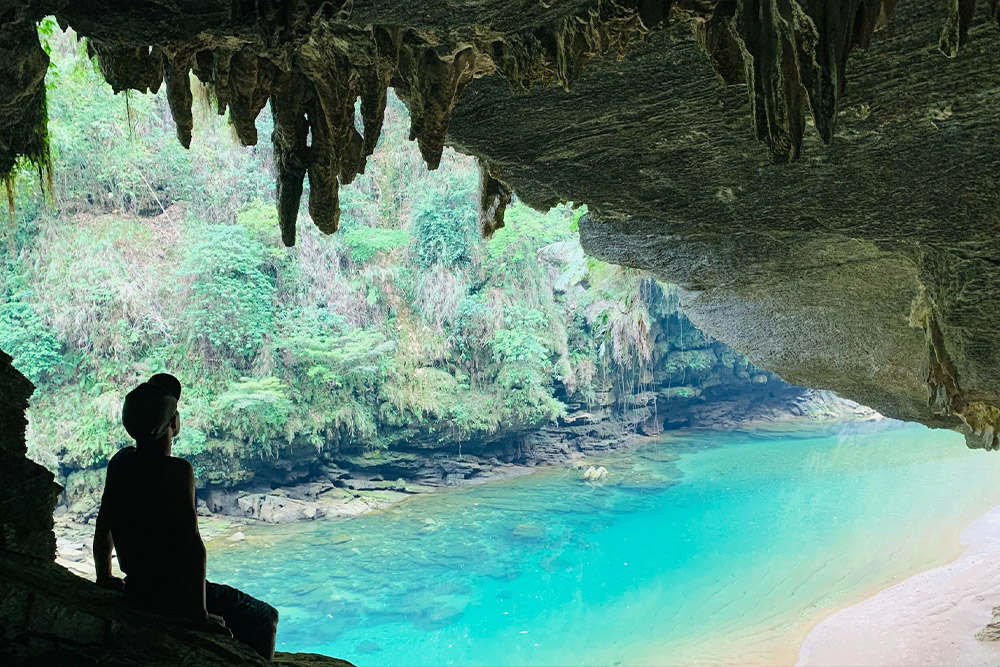
For something completely different, take a boat ride on the Chay River.
This peaceful trip is often combined with visiting the Coc Ly Tuesday Market, but even on its own, it’s worth doing.
You’ll glide along calm water between limestone cliffs and green hills before reaching Hang Tien (Fairy Cave). Inside are large chambers and natural formations that feel untouched compared to more famous cave systems in Vietnam.
It’s quiet. Cool. And far from the tour bus circuit.
So, is Bac Ha worth visiting?
If you measure a destination by how many attractions you can tick off in one afternoon, maybe not.
But if you measure it by authenticity, culture, and the chance to slow down in Bac Ha Vietnam, then absolutely yes.
Among the many surprises in Bac Ha Vietnam, one of the most fascinating is not a building or a market stall — it’s a dog.
The Bac Ha dog is considered one of Vietnam’s “Four Great National Dogs”, alongside the famous Phu Quoc Ridgeback. Native to the northern highlands, this breed has been raised for generations by the H’Mong people.
It is not a designer pet. It is a mountain survival companion.
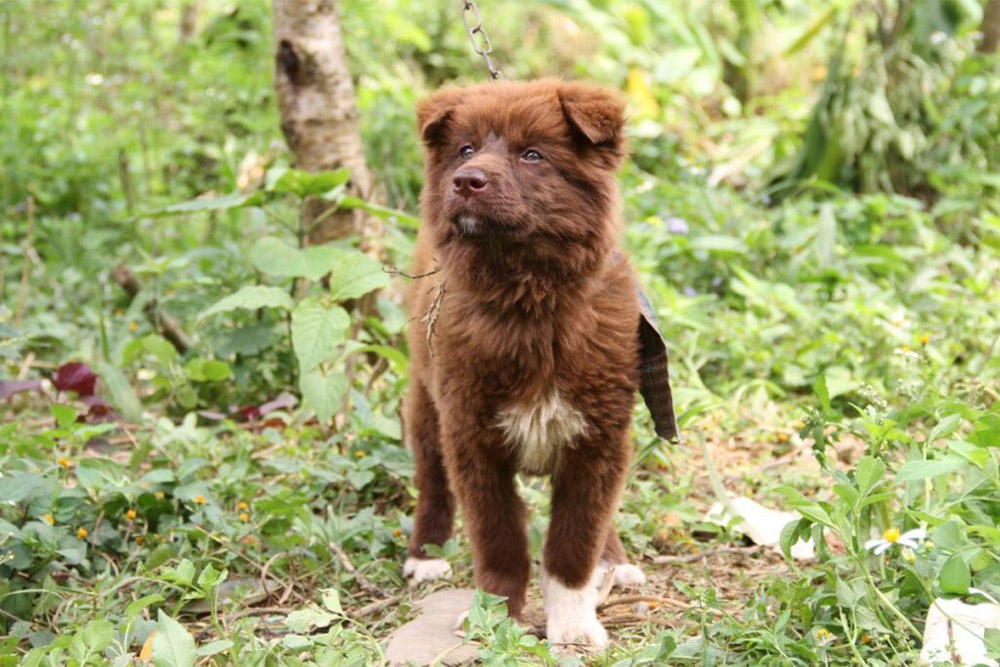
At first glance, the Bac Ha dog looks almost unreal.
Thick, fluffy fur
A curled tail
Strong build
Face that resembles a mini lion or bear cub
But behind the cute appearance is a working dog.
Characteristics include:
Extremely intelligent
Loyal to one family
Naturally protective
Highly adaptable to cold mountain climates
Historically, the H’Mong people used the Bac Ha dog for:
Guarding homes
Hunting in dense forest
Protecting livestock in remote villages
This is a breed shaped by the mountains, not by show competitions.
One particularly prized variation is the “Red Fire” Bac Ha dog — with deep reddish-orange fur. Locally, this color is believed to bring luck and prosperity, making it especially valuable.
You’ll often hear villagers proudly point out when a litter includes one.
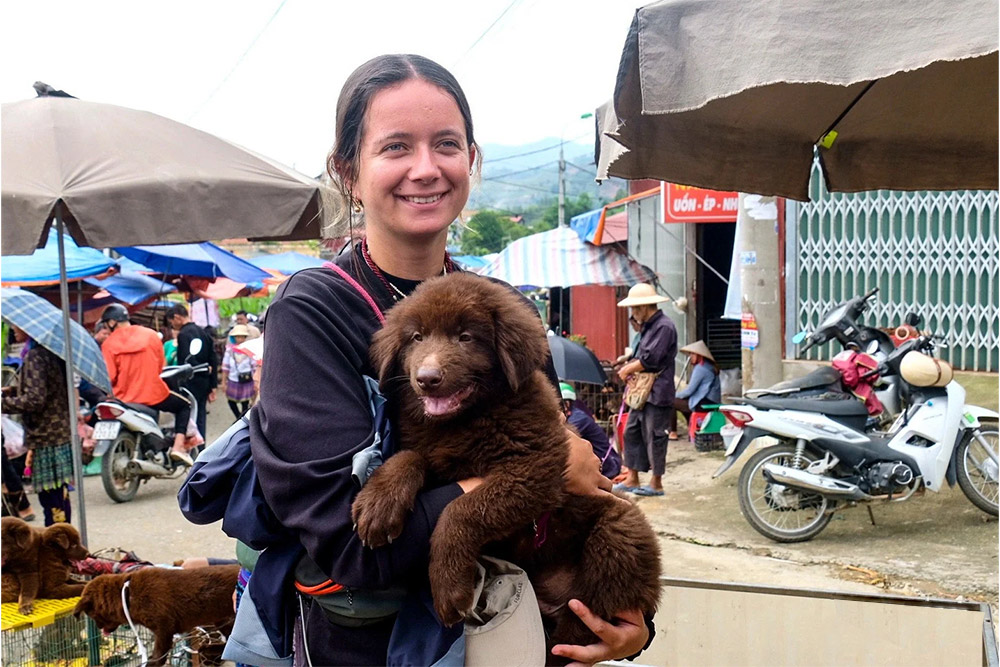
If you visit the Bac Ha Sunday Market, you may see puppies in the livestock section. It’s common to spot local families selling them alongside chickens, pigs, and horses.
However, a word of caution:
Exporting a Bac Ha dog requires complex veterinary documentation and permits
International transport regulations are strict
Many countries have quarantine rules
Unless you live in Vietnam and fully understand the legal process, it’s best not to purchase one.
Instead, enjoy taking photos and appreciating one of the most unique cultural symbols of Bac Ha Vietnam.
The Bac Ha dog isn’t just an animal. It’s a reflection of the highlands — resilient, intelligent, and deeply connected to the mountain communities that raised it.
If you’re planning to include Bac Ha Vietnam in a northern adventure, logistics matter. Bac Ha is not as plug-and-play as Sapa. That’s part of its charm — but it also requires a little planning.
From Sapa:
Travel time: 2.5 – 3 hours
By local bus or private car
The road winds through mountain passes and rural valleys
This is the most common route for travelers who visit the Sunday market as a side trip from Sapa.
From Lao Cai Station (Closest Hub):
Travel time: 1.5 hours
Lao Cai is the main railway stop if you arrive by sleeper train from Hanoi
Frequent local minibuses and taxis run between Lao Cai and Bac Ha
If you're coming by overnight train, this is the simplest way to reach Bac Ha Vietnam.
Many travelers want to combine Bac Ha with the legendary Ha Giang Loop. This creates what some call the “Northern Arc” — a deeper, less-touristy route across the far north.
But here’s the reality:
There is no direct luxury sleeper bus from Bac Ha to Ha Giang.
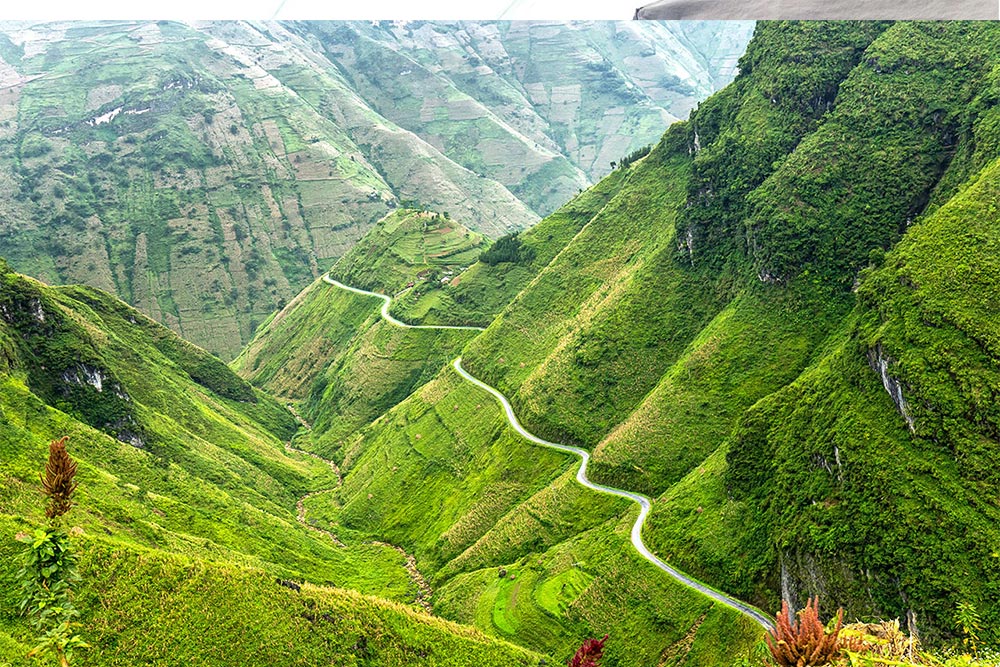
The Practical Solution:
Local Bus: Bac Ha → Lao Cai City
Short ride (about 1.5 hours)
Runs multiple times daily
Connection: Lao Cai → Ha Giang City
Approx. 6 hours
Usually two departures per day
Standard local bus (not VIP limousine level)
This journey is doable, but it’s long.
Do not attempt to travel Bac Ha to Ha Giang in one rushed afternoon and expect to enjoy it. It is realistically a full travel day. Start early. Bring snacks. Accept that this is rural northern Vietnam, not a streamlined tourist corridor.
If you treat it as part of the adventure rather than a quick transfer, it becomes a rewarding transition from one authentic region to another.
Bac Ha is quieter than Sapa. Ha Giang is wilder than both. Linking them takes effort — but that effort is exactly what keeps this corner of Bac Ha Vietnam feeling real.
One of the most searched travel questions right now is:
“Is $1000 enough for 2 weeks in Vietnam?”
For northern Vietnam — including places like Bac Ha Vietnam, Sapa, and even the Ha Giang Loop — the answer for 2026/2027 is:
Yes. Absolutely.
If you travel smart and avoid luxury resorts every night, $1000 per person is more than doable.
Accommodation: ~$350 total
Average: $20–$30 per night
Private room in a clean homestay or small guesthouse
14 nights ≈ $350
In Bac Ha Vietnam, you’ll often pay on the lower end of that range.
Food: ~$210 total
Around $15 per day
Street food breakfasts, local lunches, coffee, and casual dinners
You don’t need to survive on instant noodles. At this budget, you can eat well.
Example comparison:
A bowl of Pho in Bac Ha: ~30,000 VND ($1.20)
The same bowl in Sapa: 50,000 – 60,000 VND
Bac Ha is noticeably cheaper than Sapa.
Transport: ~$150 total
Hanoi to Sapa or Lao Cai by bus/train
Bac Ha transfers
Local buses
Grab rides in Hanoi
Public and semi-private transport keeps costs low.
Activities: ~$150 total
Entry tickets
Market visits
Cable car (if doing Fansipan)
Possibly a 2–3 day Ha Giang Loop tour (budget version)
Buffer: ~$140 left
For:
Souvenirs
Corn wine in Bac Ha
Coffee breaks
Unexpected expenses
If you avoid high-end resorts and private cars every day, yes.
In fact, in rural areas like Bac Ha Vietnam, your money stretches even further. It’s one of the most affordable destinations in the north, especially compared to Sapa’s increasingly tourist-oriented pricing.
You won’t be living in 5-star luxury.
But you’ll eat well, sleep comfortably, travel across mountains, and still have beer money left over.
Yes — but expect it to be very quiet. Weekdays are ideal if you want peaceful trekking and village visits without tourists. If your goal is the famous Sunday Market, plan your trip for the weekend.
It is located in the heart of Bac Ha district, Lao Cai province, about 70 km from Lao Cai City and roughly 2.5–3 hours from Sapa.
No. The Bac Ha dogs are protective and intelligent but generally friendly with their owners. Avoid touching unfamiliar dogs at the market without permission.
There is no direct tourist bus. You must travel from Bac Ha to Lao Cai City, then connect to a bus to Ha Giang City. Plan for a full travel day.
Choose Sapa for dramatic rice terraces, cable cars, and luxury hotels. Choose Bac Ha Vietnam for authentic ethnic markets, slower travel, and a rustic highland atmosphere.
Bac Ha is the “Wild West” of Northern Vietnam — dusty, colorful, loud on Sundays, and quietly authentic the rest of the week. It doesn’t try to impress you with glass bridges or five-star spas. It shows you livestock trading, corn wine brewing, neon H’Mong embroidery, and mountain life that still feels real.
Go if: You want to witness one of the most colorful and authentic markets in Southeast Asia and experience rural highland culture up close.
Skip if: You require luxury amenities, structured tours every hour, or dislike early mornings — because the Sunday market is alive at sunrise and nearly over by noon.
If you’d like help planning the right timing, arranging transport between Sapa, Bac Ha, and Ha Giang, or building a seamless northern Vietnam itinerary, Asia Mystika can tailor the journey to your travel style. Share your dates and preferences, and let our local experts handle the logistics while you focus on experiencing the real highlands.
