 Hotline: +84 866 227 878
- SG$ Singapore Dollar
- A$ Australian Dollar
- £ British Pound Sterling
- C$ Canadian Dollar
- € Euro
- MYR Ringgit Malaysia
- US$ United States Dollar
- đ Vietnamese Dong


 Hotline/Whatsapp: +84 86 622 7878
 Email: sales@asiamystika.com
 About Us
 Destinations
 Travel Styles
 Travel Guide
 Blogs
Blogs
 News
News

What is Sapa weather like in May? Discover real temperatures, rainfall, terrace-flooding season, trekking conditions, packing tips, and how to plan a smooth May trip to Sa Pa, Vietnam.
The Temperature: Weather in Sapa in May is warm and increasingly humid, with mild mornings around 17°C to 20°C and warm afternoons around 23°C to 26°C as summer heat builds.
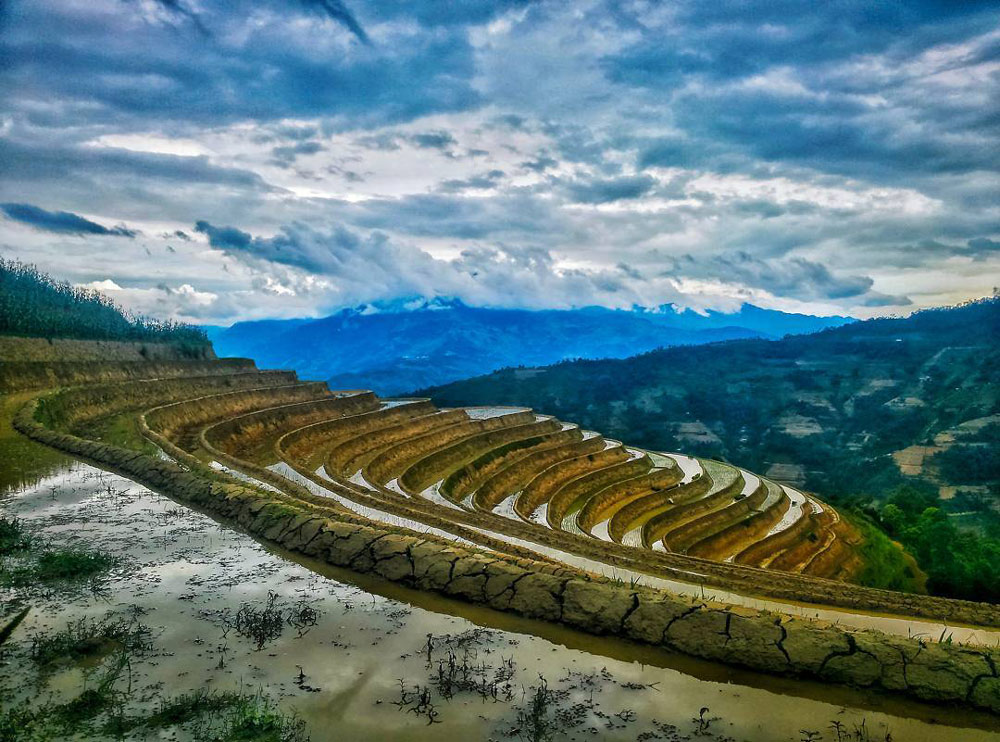
The Scenery: May is water-pouring season. Farmers flood and plant the rice terraces, turning them into mirror-like pools that reflect the sky before young rice crops sprout green.
Trekking Conditions: Rain becomes more frequent, often around 120mm to 150mm for the month. Showers usually arrive as short, intense afternoon downpours, so trails are still walkable but increasingly muddy and slippery by late May.
Visibility: Morning skies are often clear. Clouds and haze tend to build through the afternoon as showers approach, so plan viewpoint visits before midday.
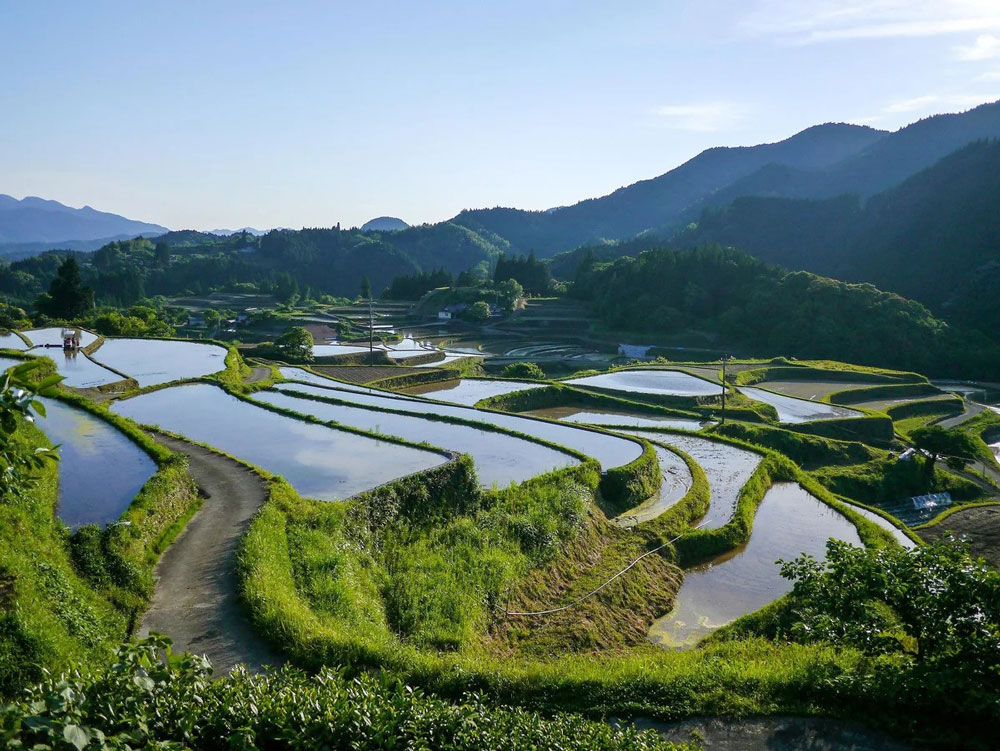
The weather in Sapa in May is warm, humid, and transitional. It marks the shift from spring comfort into the early summer wet season. Daytime temperatures often climb to around 23°C to 26°C, while overnight lows usually sit around 17°C to 20°C.
Compared with April, May feels warmer and more humid. Compared with June, July, and August, it is still more manageable. This makes May a “hinge month” in Sapa: not as dry as spring, but not yet at the peak of the monsoon.
Rainfall increases noticeably in May. However, the rain usually does not behave like an endless grey drizzle. Instead, it often arrives as sharp afternoon storms or short heavy showers. Many mornings remain clear, bright, and suitable for trekking, photography, Fansipan visits, and village walks.
This is important because travelers often see the word “rainy season” and immediately worry that their trip will be ruined. In May, that is usually not the case. The right strategy is simple: do the main outdoor activities in the morning and keep the afternoon flexible.
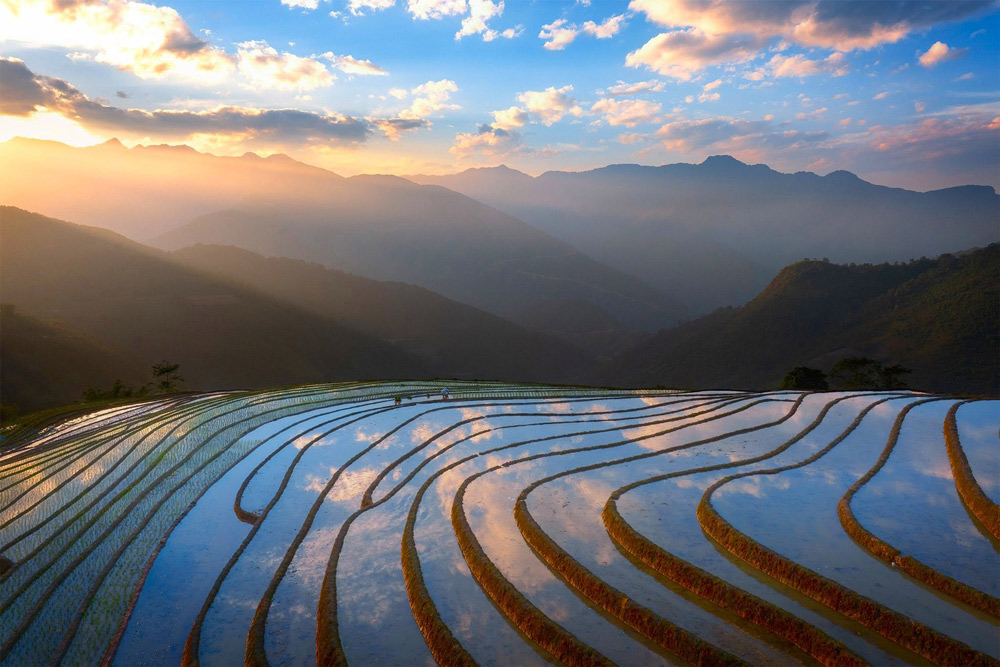
May is also one of the most beautiful months for travelers who understand what the rice terraces actually look like at this time. The terraces are not golden. They are not fully green yet. Instead, they are flooded, freshly planted, and reflective. Water fills the mountain steps, catching clouds, sky, and sunlight. In some areas, young rice shoots begin to appear, creating a delicate pale-green layer over the water.
If September is Sapa’s golden season, then May is its mirror-water season.
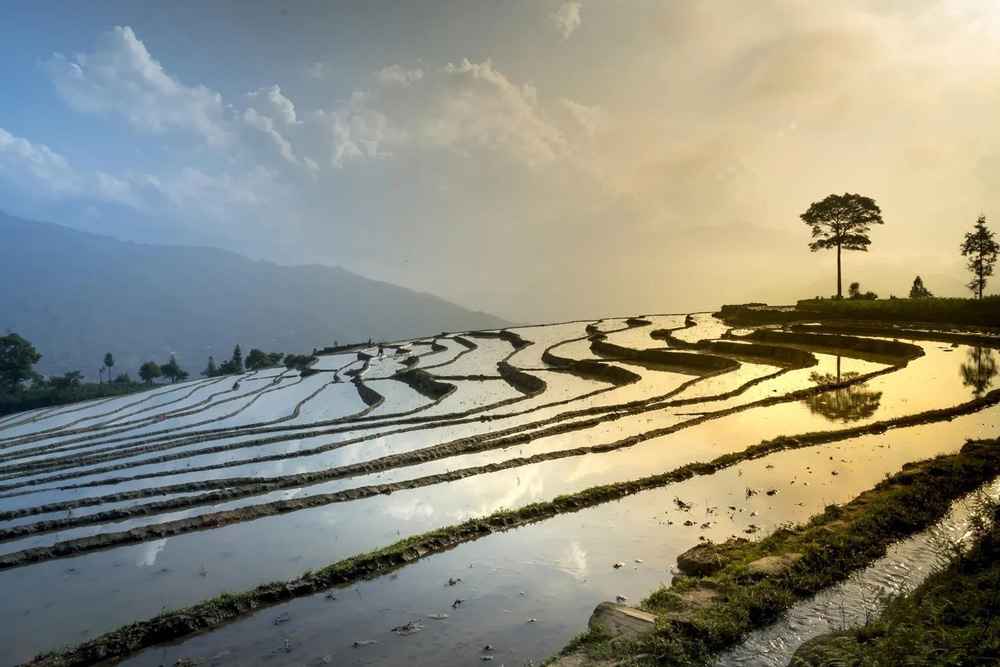
Weather in Sapa in May sits at the hinge between spring and the summer monsoon. Humidity climbs sharply from April’s drier spring air, and rainfall roughly doubles compared with the previous month as the wet season begins to establish itself.
The day-to-night swing is still comfortable. Mornings are mild, afternoons are warm and humid, and evenings remain cool enough for a light layer. You do not need winter clothing, but you should prepare for dampness and sudden rain.
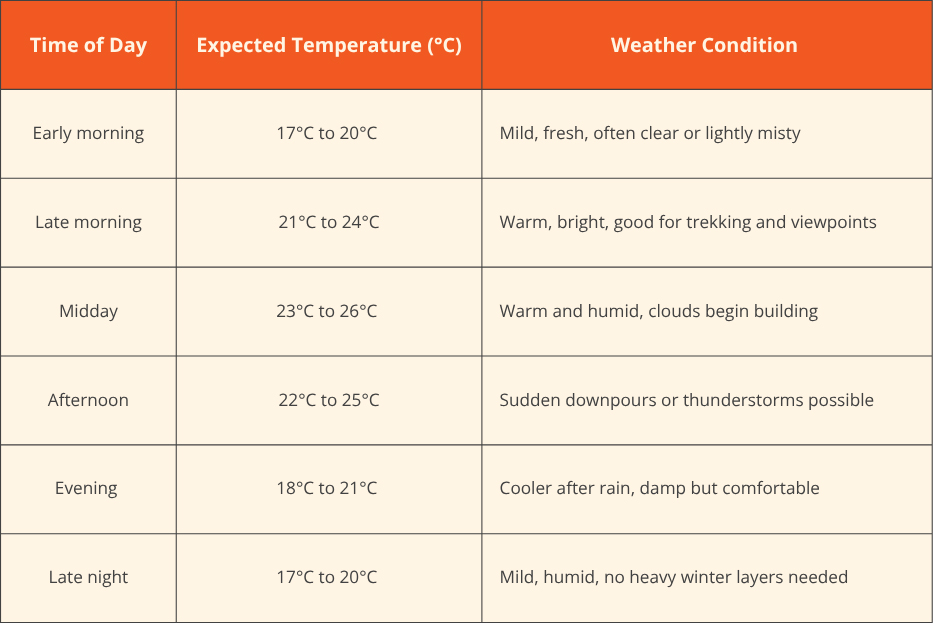
May weather is best understood as a daily rhythm.
A good day may begin with clear skies and soft light over Muong Hoa Valley. By late morning, it becomes warmer and more humid. After lunch, clouds gather over the ridges. Then a short, heavy shower rolls through, sometimes clearing within an hour. After that, the air feels fresher, the terraces shine, and the mountains may reappear with sharper color.
This rhythm is exactly why May can be rewarding. The rain does not only create inconvenience. It creates the scenery.
The water fills the terraces. The fields turn reflective. The haze clears after showers. Waterfalls become stronger. Village paths feel alive. The mountain colors deepen.
No, May is not too rainy to visit Sapa for most travelers.
Early May is still relatively dry, and even in late May, rain tends to fall in short, predictable afternoon bursts rather than continuous all-day drizzle. Most travelers simply plan treks for the morning and keep indoor, town-based, or flexible activities for the afternoon.
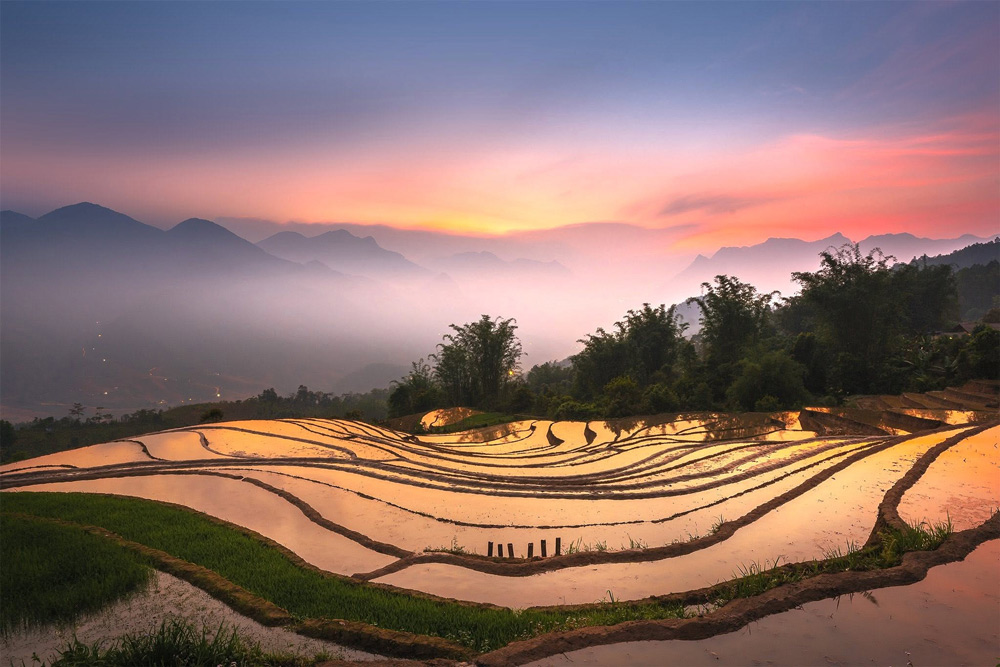
Yes, May is a good time to visit Sapa, especially for travelers who want dramatic mirror-like terraces, thinner crowds than the autumn harvest season, and a more local, less-photographed side of the mountains.
May is not the month for golden rice fields. It is not the driest month. It is not the easiest month for travelers who hate mud. But it is extremely rewarding if you want to see the farming season begin.
In the fields, May is active. Farmers begin flooding terraces, preparing soil, and transplanting young rice shoots. Depending on the exact village, altitude, and timing, the terrace color shifts through several stages:
This change makes May visually fascinating. You may walk through one valley and see several stages at once. One field is flooded. Another has new shoots. Another still looks brown. Together, they show the real agricultural rhythm of Sapa.
May also usually has fewer international travelers than September and October. This means quieter trekking routes, more peaceful homestays, and sometimes better accommodation value. The town may still be busy on weekends or public holidays, but it generally does not feel like peak harvest season.
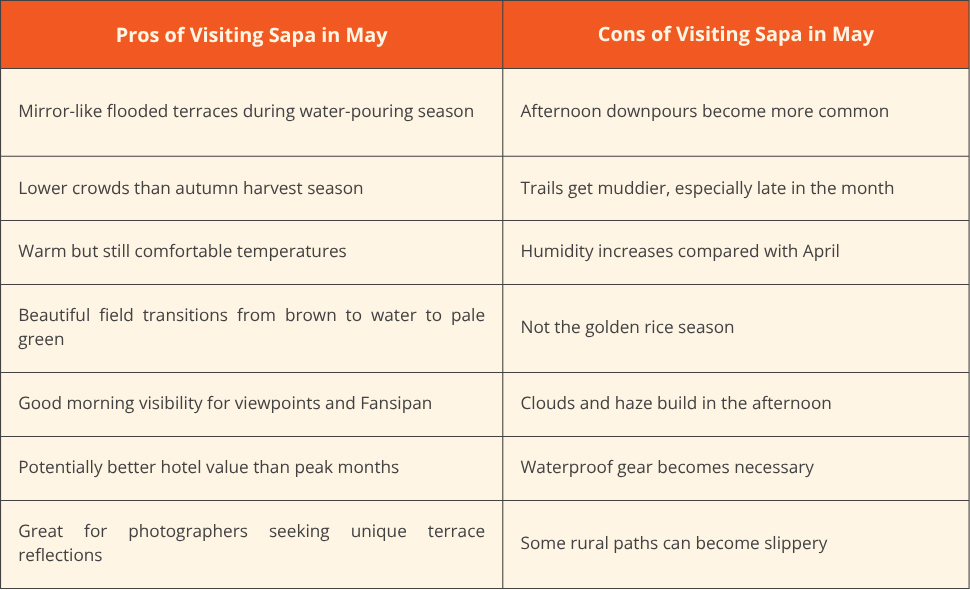
May suits travelers who like atmosphere and flexibility. It is a strong choice for photographers, couples, slow travelers, and visitors who prefer a quieter Sapa before the peak summer and harvest crowds.
The best month to go to Sapa depends on your goal.
If your goal is golden rice terraces, choose September or sometimes early October, depending on harvest timing. This is when the fields turn yellow and gold before being harvested.
If your goal is dramatic mirror-water terraces and quieter trails, May is an underrated pick. You will not see the classic golden Sapa postcard, but you will see flooded terraces reflecting the sky like glass.
If you dislike the heaviest monsoon rain and the muddiest trails, avoid July and August. Those months can be beautiful because the fields are lush green, but they are also wetter and more challenging for trekking.
Here is a quick comparison:
Skip Sapa in May if:
Choose May if you want a softer, quieter, more reflective Sapa.
Yes, 3 days in Sapa is enough in May if your itinerary includes a weather buffer.
Because afternoon showers are common, the ideal May itinerary should front-load outdoor activities into the morning. Keep village visits, markets, cafés, herbal baths, or short town walks as flexible afternoon fallback options.
A rushed 2-day trip can still work, but 3 days gives you a better chance of catching good morning weather, enjoying the mirror terraces, and avoiding pressure if one afternoon turns rainy.
Day 1: Arrival, Sapa Town and Cat Cat Village
Arrive from Hanoi by private car, limousine van, or overnight train via Lao Cai. Since travel can take several hours, keep your first day light.
Start with Sapa town. Visit Sapa Stone Church, the central square, local cafés, and viewpoints near town if the weather is clear. If you arrive early and the sky is still good, walk to Cat Cat Village in the morning or early afternoon.
Cat Cat is a good first-day option because it is close to town and easier to adjust if rain appears. If the afternoon becomes wet, return to town for coffee, hot food, or a relaxing massage.
Day 2: Early Muong Hoa Valley Trek and Ta Van Rain Buffer
Use the best weather window for your main trek. Start early, ideally around 7:30 AM to 8:00 AM. Walk through Muong Hoa Valley, Lao Chai, and Ta Van, where flooded fields and young rice shoots create some of the best May scenery.
This is the day to focus on water-pouring terraces. A local guide can help choose the safest route based on trail conditions. In May, some paths may be damp or muddy, so the exact route should depend on weather.
Plan to reach lunch or your village stop by early afternoon. If rain arrives, you are already in a safe place. Use the afternoon for a local home visit, herbal bath, café, or slow village experience rather than a long exposed hike.
Day 3: Fansipan Cable Car at First Light and Departure
Save the final morning for Fansipan if the forecast looks promising. In May, morning visibility is usually better than afternoon visibility. Clouds and haze often build later in the day, so go early.
Take the cable car in the morning, enjoy the summit area, and return before midday if possible. After lunch, depart for Hanoi or continue your Northern Vietnam itinerary.
If Fansipan is foggy or rainy, switch to a gentler town-based morning: Ham Rong Mountain, local market browsing, café time, or a Red Dao herbal bath before departure.
This pacing works because it respects May’s weather. It does not pretend rain will not happen. It simply gives you the best chance to enjoy Sapa before the afternoon showers arrive.
Most standard blogs show green rice photos regardless of month. That creates unrealistic expectations.
May has its own beauty, but travelers need to understand what they are actually coming to see.
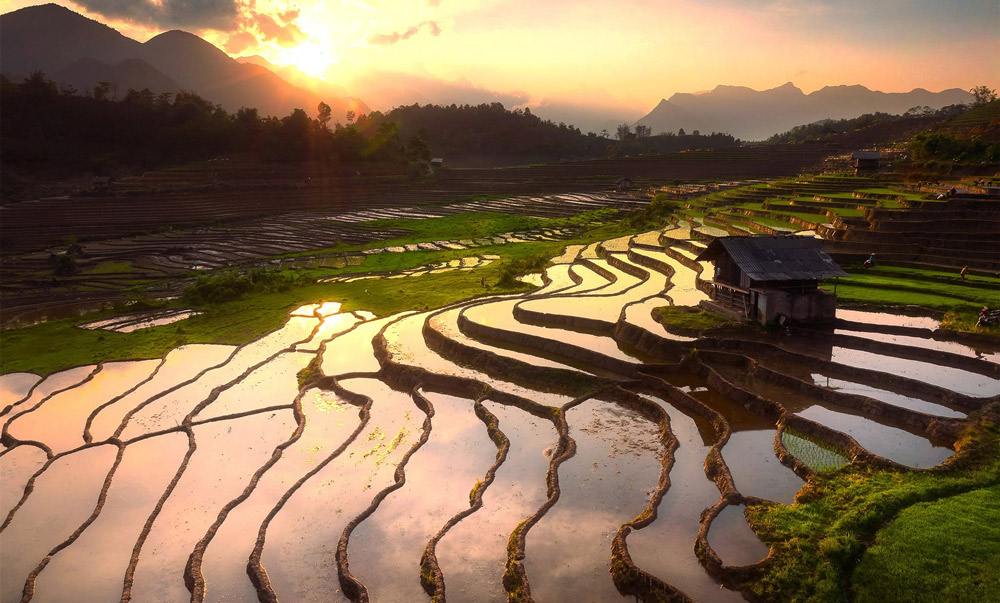
In May, the terraces are often not fully green yet. They are flooded.
This is not a disadvantage. It is the point.
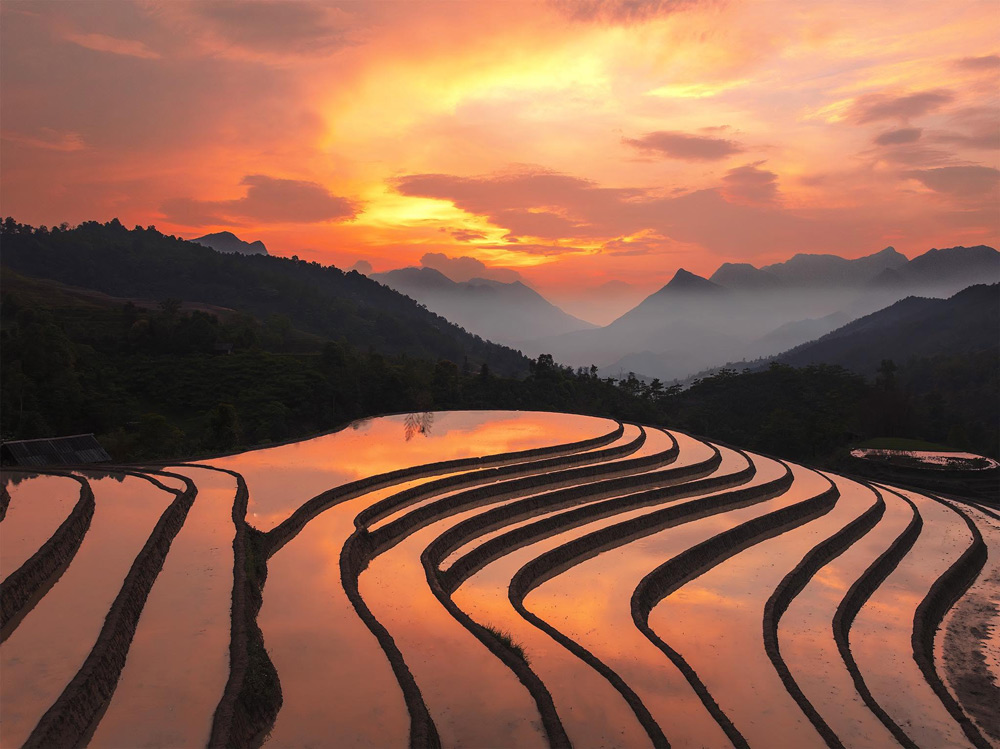
The flooded paddies reflect clouds, mountains, and sunlight like glass. From high viewpoints, the terraces can look like silver ribbons cut into the hillsides. At sunrise or after light rain, the reflections become even more dramatic. In some areas, young rice shoots add a soft green texture over the water.
This water-mirror effect photographs just as dramatically as September gold, but it is far less crowded and far less photographed by other travelers.
So instead of expecting the classic green or golden rice photos, come to May with a different vision:
This is the real charm of Sapa in May.
May rewards early travelers.
An Asia Mystika guide explains:
“In May, we schedule every long trek to start by 8:00 AM and be back in the village by 1:00 PM. The mountains build cloud fast after midday, and what starts as a light drizzle on the ridge can turn a dirt trail into a real slip hazard within twenty minutes. Start early, and you’ll likely finish your whole route before a single drop falls.”
This is practical advice.
A long May trek should not start at 10:30 AM. By then, you may lose the best light and risk being exposed when the clouds build. Start early, walk during the fresh morning window, and finish before the afternoon rain.
A smart May trekking schedule:
This is how you enjoy May without gambling your whole day on the weather.
Packing for Sapa weather in May is about handling warmth, humidity, damp trails, and sudden rain. You do not need winter clothing, but you should not pack only city clothes either.
The most important items are breathable clothing, waterproof protection, and proper footwear.
May Sapa packing checklist:
Avoid smooth sneakers, heavy jeans, and umbrellas for trekking. Umbrellas are fine in town, but on narrow trails they are awkward and can be unstable in mountain wind. A poncho or rain shell is more practical.
For Fansipan, bring an extra light jacket. The summit is colder and windier than Sapa town, even in May.
Pack light, breathable clothing for warm, humid days, plus a compact rain shell or poncho for sudden afternoon showers. A light layer is enough for cool evenings.
No, May is a quieter shoulder month. It sits between the spring blossom season and the autumn harvest rush, so trails and homestays are usually less crowded than peak months.
Rain becomes more frequent through May, usually as short, heavy afternoon downpours rather than all-day rain. Mornings are typically clearer and better for trekking.
No, May is not too rainy for most travelers. The best approach is to plan outdoor activities in the morning and keep afternoons flexible for cafés, markets, herbal baths, or short town walks.
Not fully. In May, the terraces are often flooded for planting, creating mirror-like reflections. By late May, some areas begin turning pale green as young rice shoots appear.
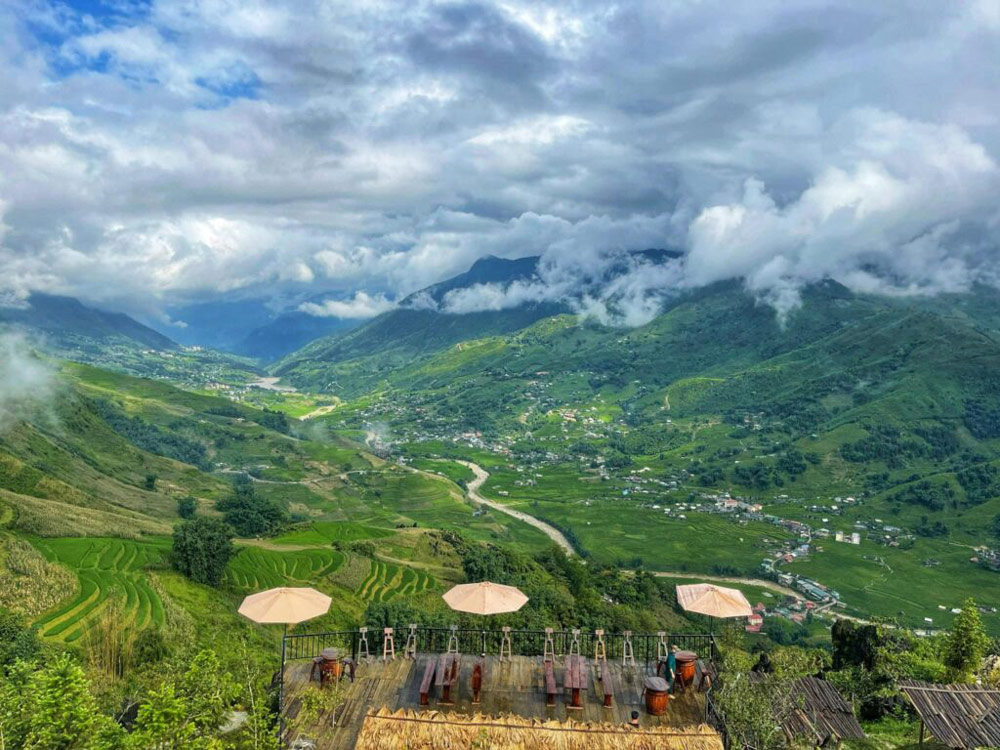
Sapa weather in May is not dry-season perfect, and it is not harvest-season golden. But that is exactly why it feels special.
May gives travelers a less-photographed side of Sapa: mirror-water terraces, early rice planting, soft green shoots, quiet trails, warmer air, and morning trekking windows before afternoon rain. It is a month of transition, and that transition is beautiful if you know what to expect.
The reward is not the famous September gold. The reward is seeing the terraces come alive. Water flows back into the fields. Farmers return to the land. Clouds reflect in the paddies. The valley slowly shifts from brown to silver to pale green.
For travelers who want atmosphere, photography, and fewer crowds, May is a strong underrated choice.
The key is planning. Start treks early. Pack waterproof gear. Wear proper shoes. Keep afternoons flexible. Choose guides who understand the daily rain window. And let the mirror terraces become the highlight of the trip.
Stop guessing at the rain schedule.
If you want to save time and effort while traveling to Vietnam, contact Asia Mystika, a trusted tour agent in Vietnam. We can arrange a morning-paced Sapa trekking package built around the daily rain window, with local guides, eco-lodges, private transfers, and flexible backup plans in one trusted place.
Start planning your water-pouring season journey with Asia Mystika’s customized Sapa tour packages, and let us make your May trip smooth, scenic, and stress-free.
