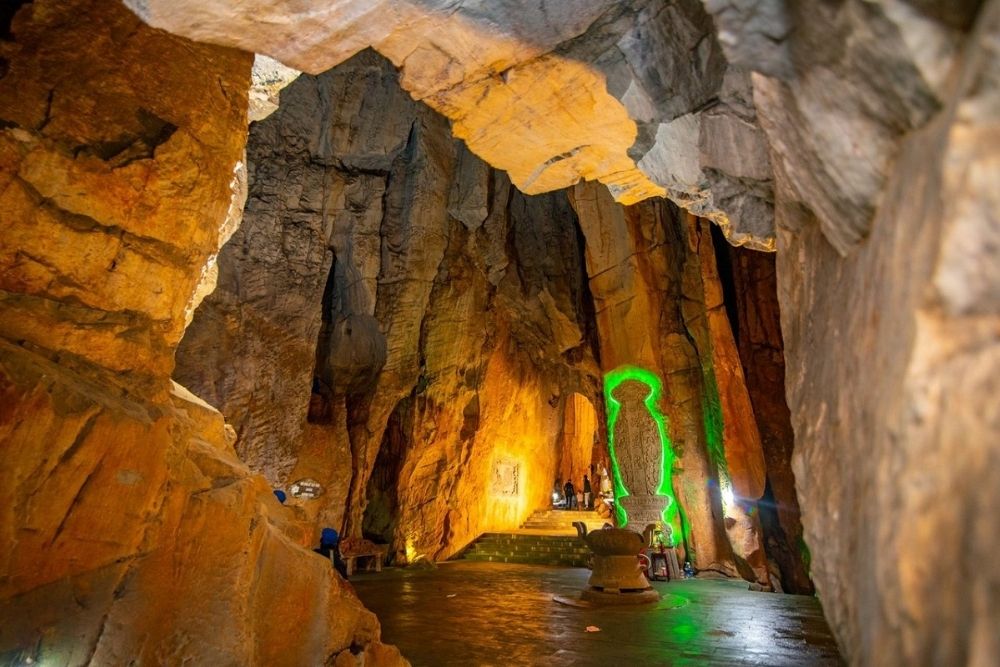
Hotline: +84 866 227 878
- SG$ Singapore Dollar
- A$ Australian Dollar
- £ British Pound Sterling
- C$ Canadian Dollar
- € Euro
- MYR Ringgit Malaysia
- US$ United States Dollar
- đ Vietnamese Dong


 Hotline/Whatsapp: +84 86 622 7878
 Email: sales@asiamystika.com
 About Us
 Destinations
 Travel Styles
 Travel Guide
 Blogs
Blogs

Marble Mountain Da Nang, locally known as Ngũ Hành Sơn, is one of the city’s most fascinating cultural and natural attractions. Rising between Da Nang and Hoi An, this group of limestone hills is home to ancient pagodas, mysterious caves, Buddhist sanctuaries and panoramic viewpoints. This guide covers entrance tickets, opening hours, transportation, must-see highlights and practical tips to help you plan a smooth and memorable visit in 2026.
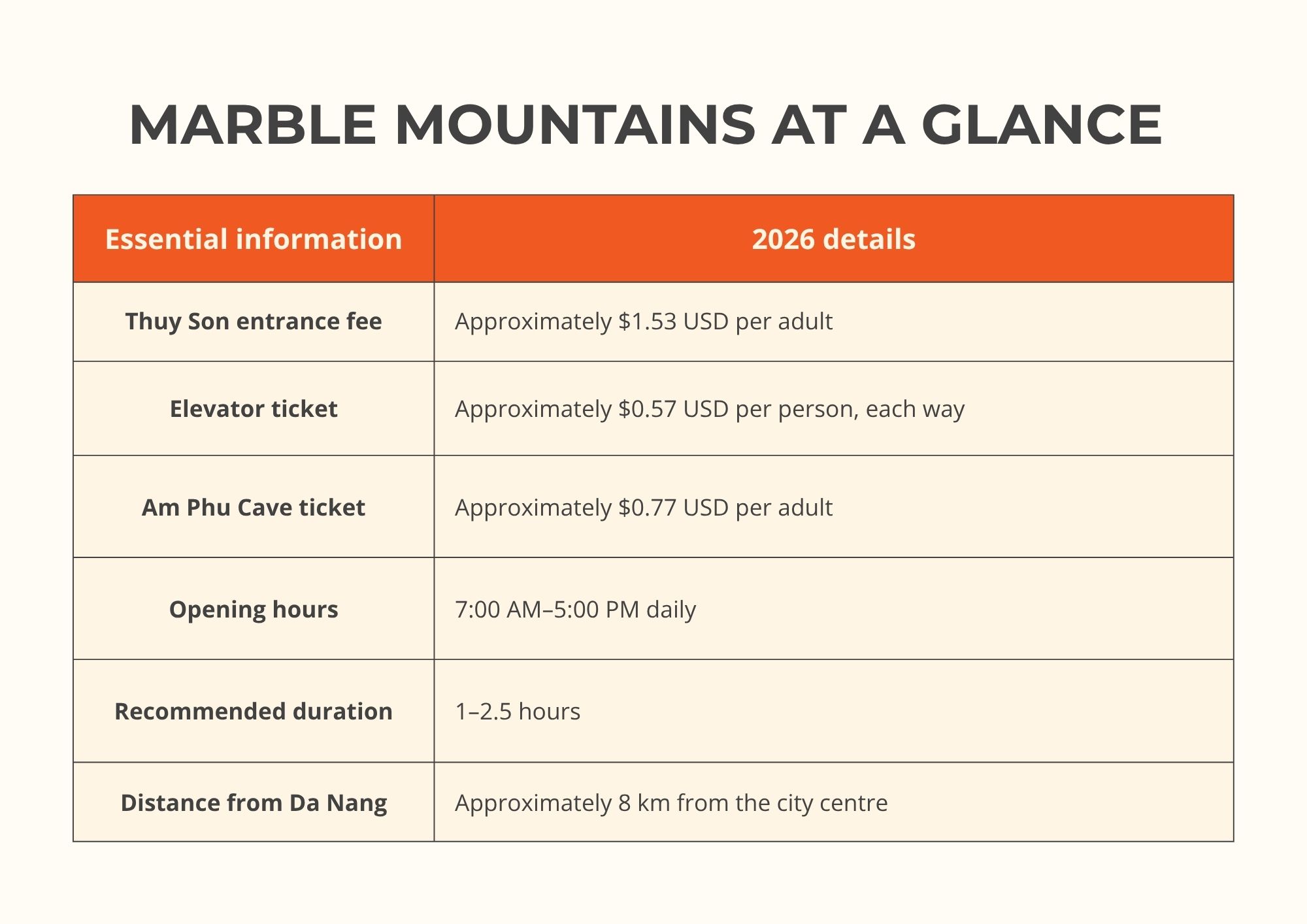
The Marble Mountains, known locally as Ngu Hanh Son, are a group of limestone and marble hills about 8 km southeast of central Da Nang. Named after the five elements, metal, wood, water, fire and earth, the site brings together sacred caves, historic Buddhist pagodas and elevated viewpoints. In 2026, admission to the main Thuy Son area costs $1.53 USD per adult, while Am Phu Cave and the elevator require separate tickets.
Although people often refer to the attraction as Marble Mountain Da Nang, Ngu Hanh Son is a wider complex associated with five elemental mountain groups. Most sightseeing takes place on Thuy Son, the largest and most frequently visited section. Here, stone stairways lead between peaceful courtyards, timeworn pagodas and caves where shafts of daylight create a striking spiritual atmosphere.
The standard Thuy Son ticket covers highlights such as Huyen Khong Cave, Linh Ung Pagoda, Tam Thai Pagoda and the mountain viewpoints. Am Phu Cave sits in a separate area and requires its own admission ticket. Its name means “hell” or “underworld,” referring to the dark chambers and Buddhist imagery used to illustrate ideas about judgement, consequence and redemption.
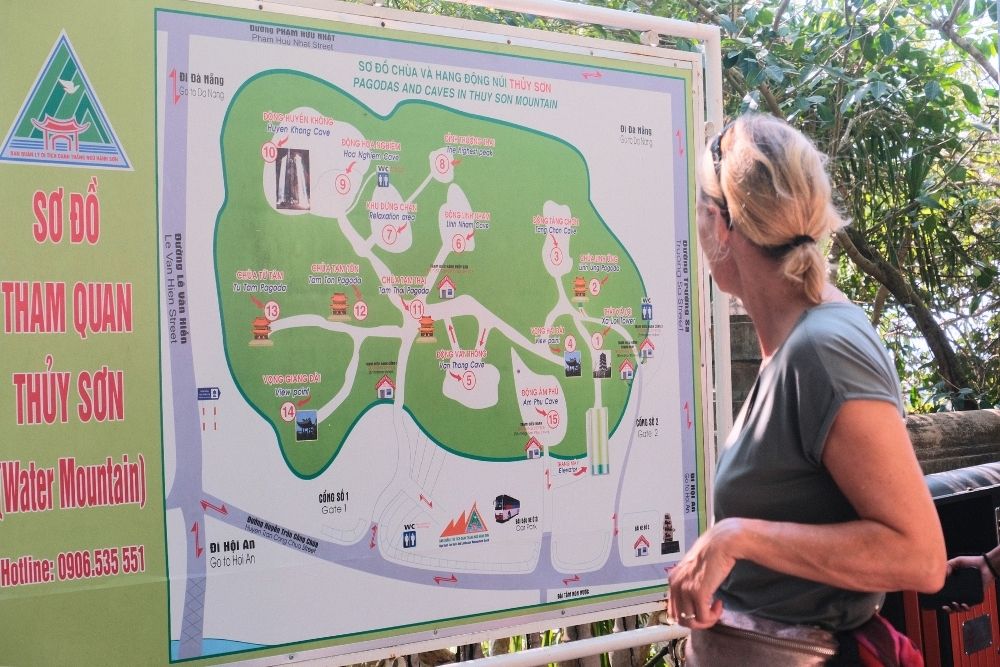
Visitors who prefer to avoid part of the climb can pay for the elevator to reach the upper sightseeing level. However, some steep or uneven steps remain between the caves, temples and viewing platforms, so comfortable footwear is still important. A practical plan is to take the lift uphill, explore Ngu Hanh Son at an unhurried pace and descend using the stone staircase.
Allow around one hour for a quick look at the principal sights or up to two and a half hours if you want to enter Am Phu Cave, pause at the pagodas and enjoy the viewpoints. With modest ticket prices and a convenient location between Da Nang and Hoi An, the Marble Mountains (Ngu Hanh Son) offer an easy way to add history, scenery and local culture to your itinerary.
The best way to explore Marble Mountain Da Nang is to follow a simple route from the base of Thuy Son to its temples, caves and upper viewpoints. The complex contains many smaller stops, but first-time visitors should prioritise the following places.
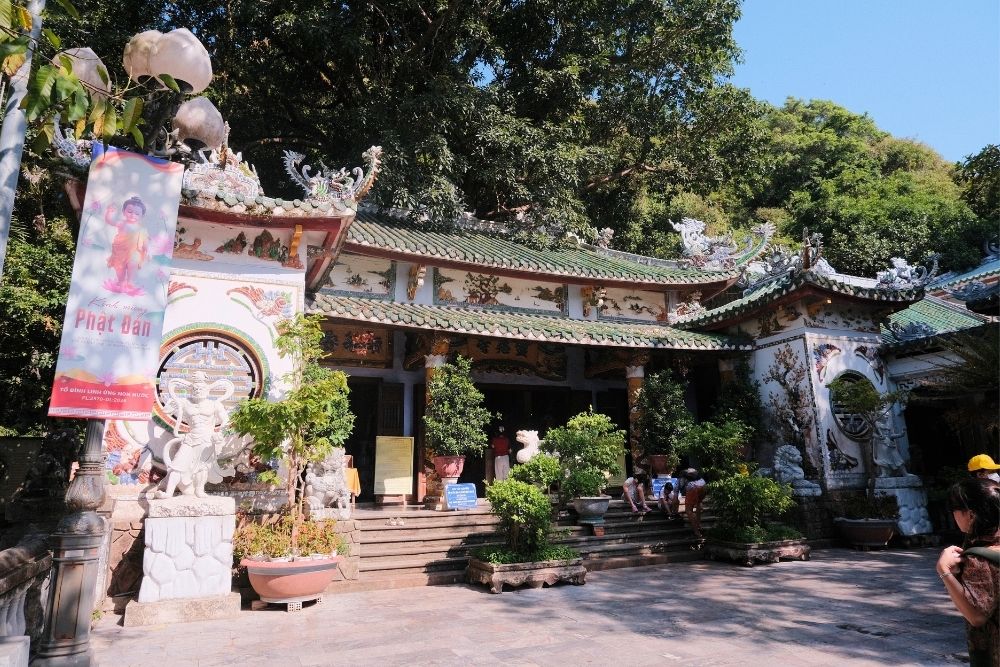
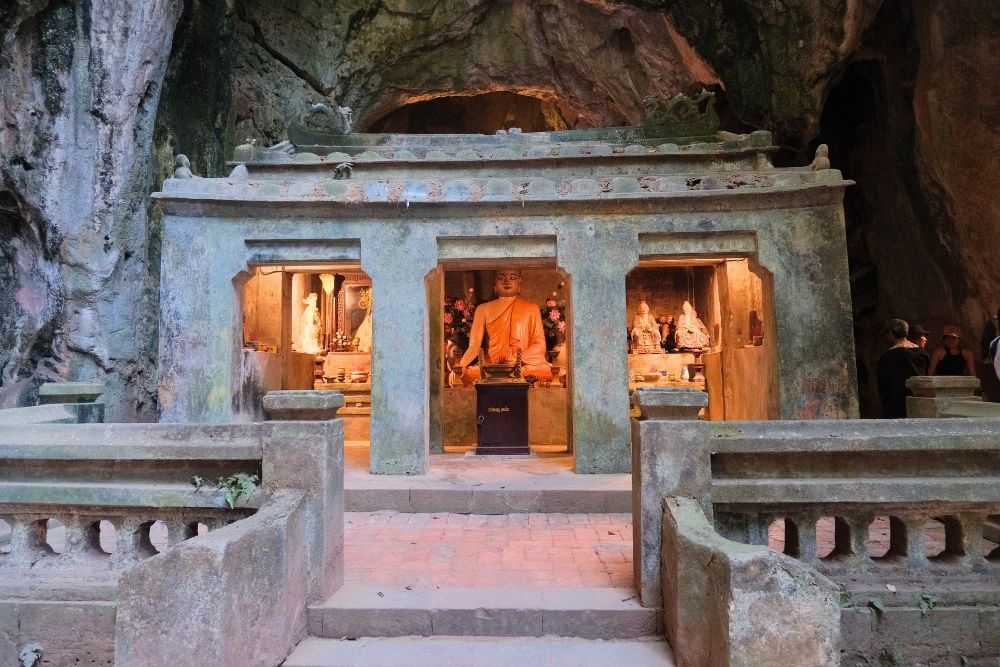
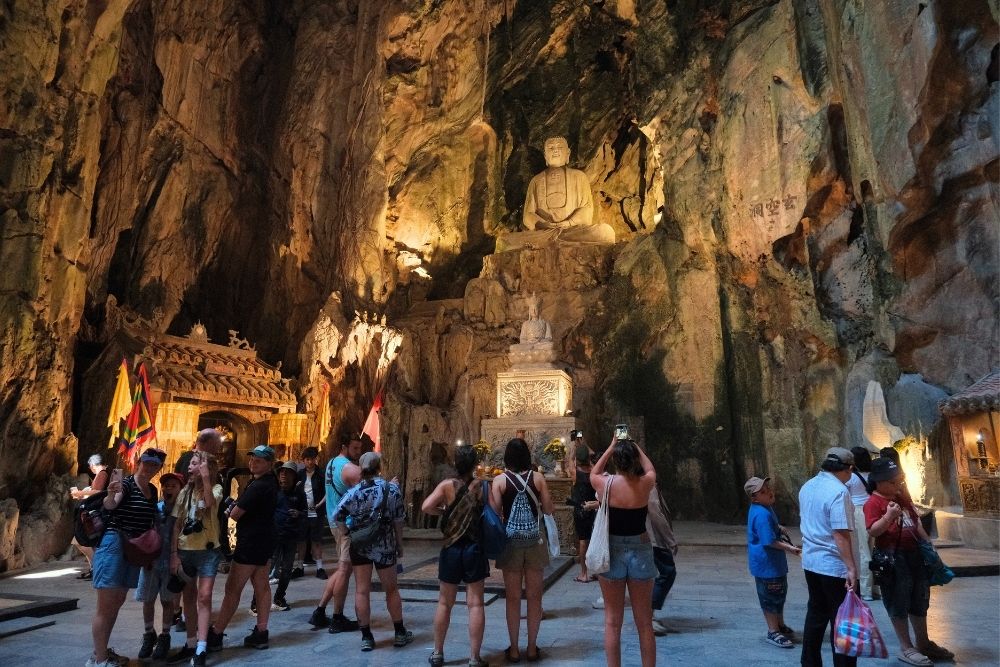
Important name note: The Linh Ung Pagoda inside the Marble Mountains is Linh Ung Pagoda–Non Nuoc on Thuy Son. Da Nang has three temples carrying the Linh Ung name: this one at Ngu Hanh Son, Linh Ung Pagoda–Bai But on the Son Tra Peninsula, and Linh Ung Pagoda at Ba Na Hills. The Son Tra temple with the famous tall Lady Buddha statue is a different attraction, so travellers should check the location carefully when planning transport.
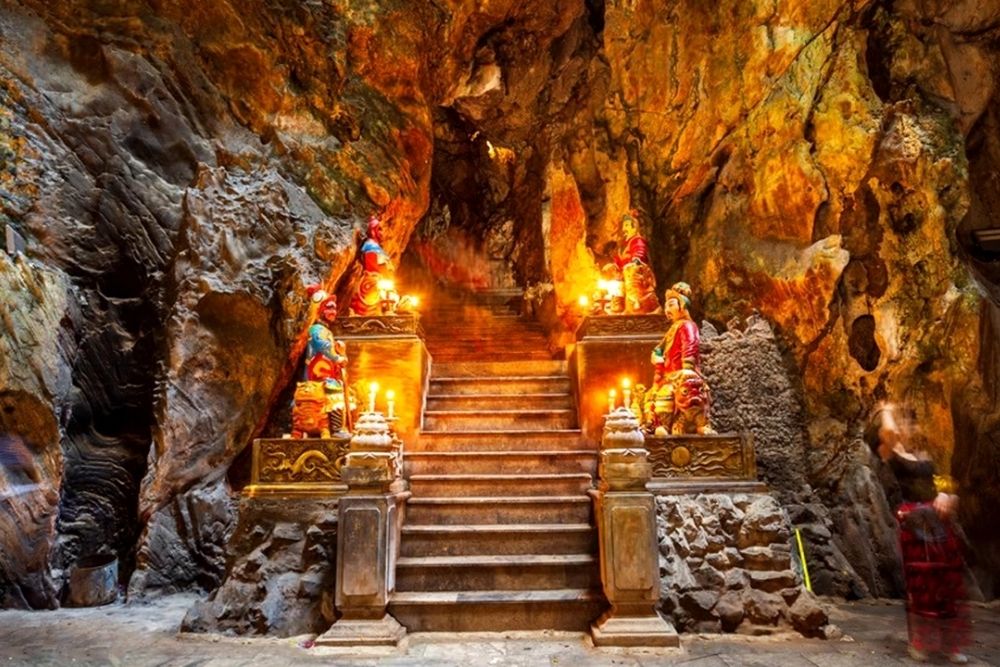
Am Phu Cave, whose Vietnamese name means “Hell Cave,” is a religious cave at the foot of Thuy Son in the Marble Mountains. It uses dark tunnels, sculptures and Buddhist imagery to portray moral judgment, karma and the underworld, before directing visitors toward a brighter route symbolising heaven and redemption.
Unlike a conventional horror attraction, Am Phu Cave is designed to communicate spiritual and ethical ideas. As you move farther inside, the passage becomes darker and more enclosed, creating a solemn atmosphere around scenes representing wrongdoing and its consequences. A separate, steeper path rises toward the illuminated “Heaven” section, turning the visit into a symbolic journey from darkness toward hope.
The experience is thought-provoking rather than genuinely frightening, although some carvings may feel intense for young children. Uneven surfaces, narrow sections and steep stairs also require care, so supportive shoes are strongly recommended.
Am Phu Cave requires a separate ticket from the main Thuy Son admission. At $0.80 USD per adult it is an inexpensive addition and well worth considering for travellers interested in Vietnamese Buddhist beliefs, local culture and unusual cave architecture.
Getting to Marble Mountain Da Nang is straightforward, especially if you are staying near My Khe Beach. A Grab car or taxi usually takes around 10 minutes, depending on traffic, while the journey from central Da Nang commonly takes about 15–20 minutes. Its convenient location also makes Ngu Hanh Son easy to combine with a relaxed beach morning or a later trip toward Hoi An.
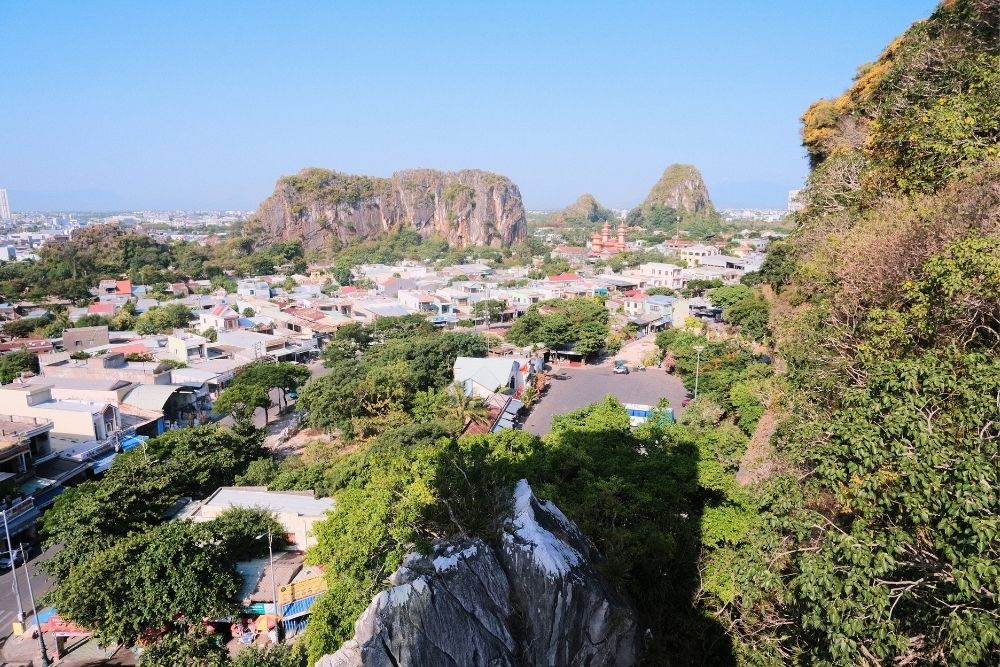
Although the elevator removes part of the uphill effort, exploring the mountain still involves narrow passages, uneven surfaces and numerous stone steps. Years of foot traffic have made some marble sections smooth and slippery, particularly after rain. Wear trainers or walking shoes with reliable grip rather than sandals with flat soles.
For a comfortable and efficient visit, follow this route:
Try to come right after opening for cooler weather, fewer crowds, and better light inside caves like Huyen Khong.
Use the Gate 2 elevator to save energy, especially in hot weather, then continue walking and climbing inside the site.
Visit Linh Ung Pagoda, Tang Chon Cave, and Huyen Khong Cave, then climb higher for views. Move carefully in narrow or dark areas and use handrails when needed.
Go down by the stone stairs instead of the elevator to see small shrines and details along the way. Watch your step on smooth or wet surfaces.
Stop by the village at the base to see local stone workshops and traditional carvings before leaving.
With an early start, suitable footwear and a well-planned route, visiting Marble Mountain Da Nang can feel adventurous without being exhausting. The combination of a short transfer, an optional elevator and a mostly downhill finish makes it a manageable cultural stop for many travellers.
A visit to Marble Mountain Da Nang is not difficult, but it is more demanding than it first appears. The main challenge is navigating smooth stone steps, narrow passages, and damp cave floors with confidence.
The steps at Ngu Hanh Son are often polished marble, not rough concrete. After rain or in humid cave areas, they can become very slippery, especially in flat sandals or worn shoes.
Good grip footwear (trainers or walking shoes) makes a big difference, turning a cautious climb into a comfortable visit. The elevator is useful both ways—up to save energy and down to avoid strain if conditions are wet.
Asia Mystika tip: Check the weather before you go. After rain, allow extra time and move slowly between sites.
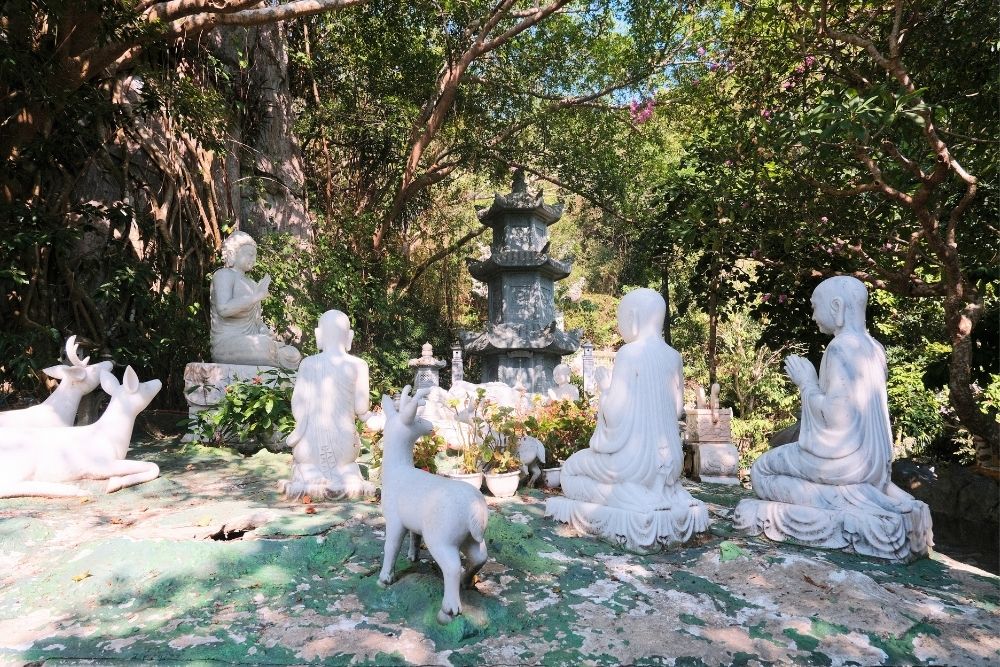
Huyen Khong Cave is most magical early in the morning. Around sunrise, light beams enter through the cave roof and illuminate the shrine and incense, creating a cathedral-like effect.
By mid-morning, the light fades and crowds increase.
“On clear mornings, sunlight creates visible beams inside Huyen Khong Cave. It looks staged, but it’s completely natural. By 10 AM, the effect is gone and tour groups arrive. That’s why we go early before 8 AM it can feel like a private space.”
To experience this, arrive at opening time and visit Huyen Khong Cave first, before the other pagodas and viewpoints.
Best approach: come early, wear proper shoes, and take your time Ngu Hanh Son is best enjoyed slowly, not rushed.
The main entrance ticket for Marble Mountain Da Nang costs US$1.50 per adult. The optional elevator is US$0.60 each way, while Am Phu Cave requires a separate US$0.80 ticket; check the latest rates before travelling.
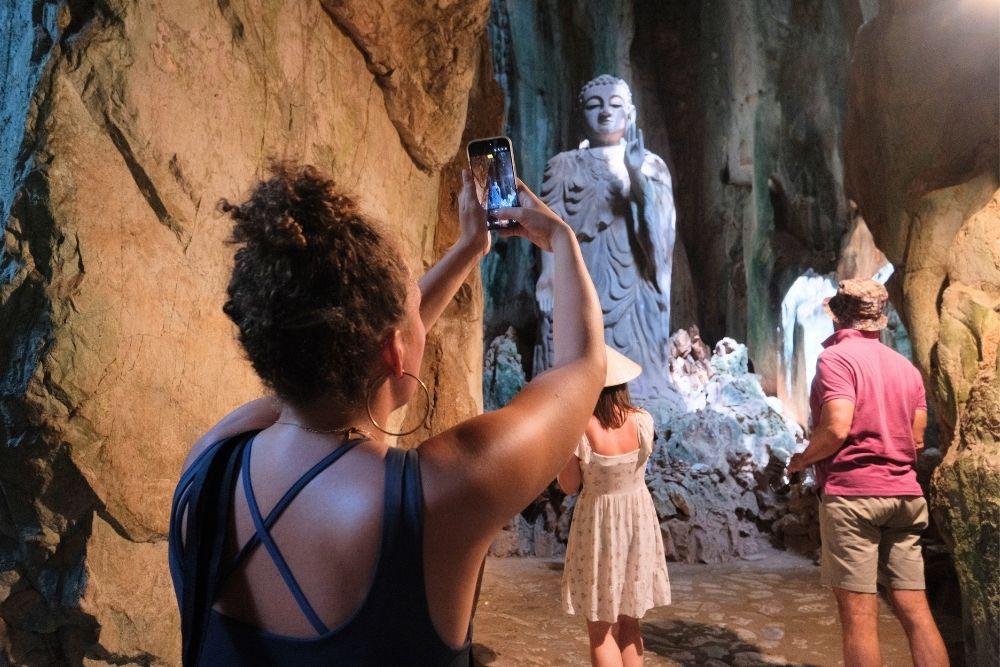
Allow 1–2.5 hours at Ngu Hanh Son. One hour is enough for the principal caves and pagodas using the elevator, while Am Phu Cave, the upper lookouts and the stairway descent can extend the visit beyond two hours.
Yes, an elevator near Gate 2 carries visitors to the main sightseeing level for US$0.60 each way. A convenient plan is to ride up, explore the caves and temples, and return on foot if the steps are dry and you feel comfortable.
Marble Mountain Da Nang is a popular and easy half-day stop near the city, best enjoyed in the early morning when the weather is cooler and the atmosphere is calmer. Inside, you’ll explore pagodas, natural caves, and viewpoints, with Huyen Khong Cave being the highlight thanks to its dramatic light and peaceful spiritual setting. After visiting, you can continue to nearby Non Nuoc village or head back to the beach for a relaxed break, making it a simple and well-balanced itinerary in Da Nang.
Asia Mystika offers convenient Da Nang tours that include Marble Mountain and other key attractions. Our trips are designed to be flexible, comfortable, and reasonably priced, with local guides and smooth logistics so you can enjoy the experience without stress. Plan your Da Nang experience with Asia Mystika and travel the easy way!
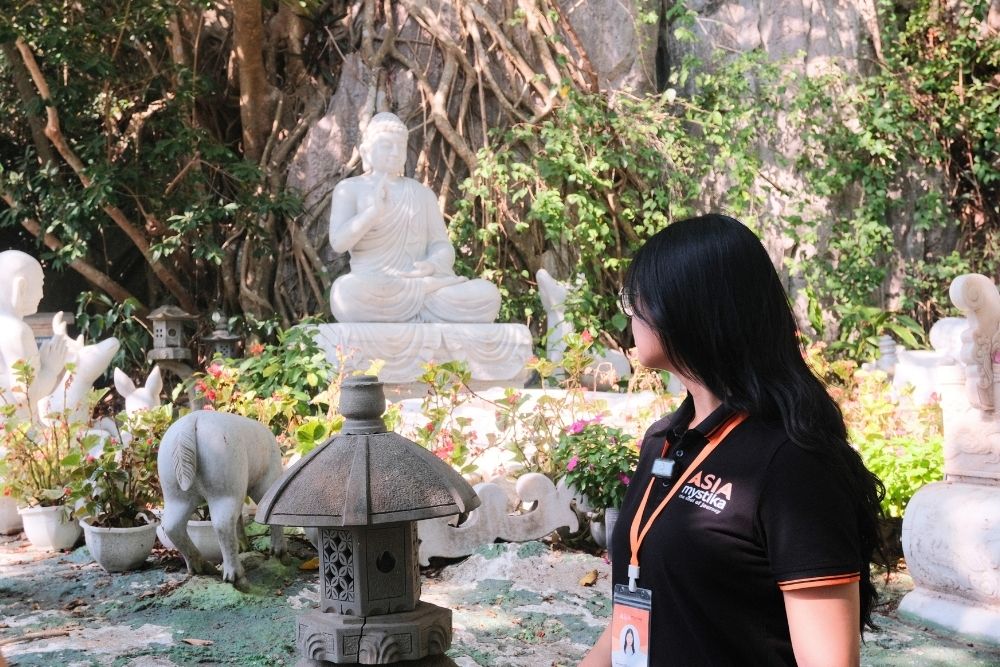
Asia Mystika Travel is a Vietnamese local travel agency dedicated to bringing first-hand experience of lovely scenery, and distinctive indigenous cultures to every customer. With professional local tour guides and prestiged airline partners (4 domestic airlines and over 300+ international airlines), we offer unique local experience at an extremely reasonable price. All tours are 100% customizable, no shopping and no extra fee.
Ready to go? Start planning your custom Sapa itinerary with us
Who we are: Learn more about the local experts at Asia Mystika
WhatsApp: (+84) 866.22.7878
Email: sales@asiamystika.com
Website: www.asiamystika.com
23 Best Things to Do in Da Nang, Vietnam 2026
Best Da Nang Hotels & Resorts 2026: Honest Reviews by Area
Da Nang Beaches: My Khe and the Best Beaches Guide 2026
My Khe Beach, Da Nang: All You Need to Know for the Perfect Getaway
Da Nang Food Guide: Street Food, Seafood and Where to Eat 2026