 Hotline: +84 866 227 878
- SG$ Singapore Dollar
- A$ Australian Dollar
- £ British Pound Sterling
- C$ Canadian Dollar
- € Euro
- MYR Ringgit Malaysia
- US$ United States Dollar
- đ Vietnamese Dong


 Hotline/Whatsapp: +84 86 622 7878
 Email: sales@asiamystika.com
 About Us
 Destinations
 Travel Styles
 Travel Guide
 Blogs
Blogs

Stay in An Thuong or on the My Khe beachfront for sand and walkable restaurants. Stay in Hai Chau for the city, the markets and the lowest price per star. Son Tra and Non Nuoc are resort decisions, not area decisions. That is the answer. The rest of this page is who each area is wrong for.
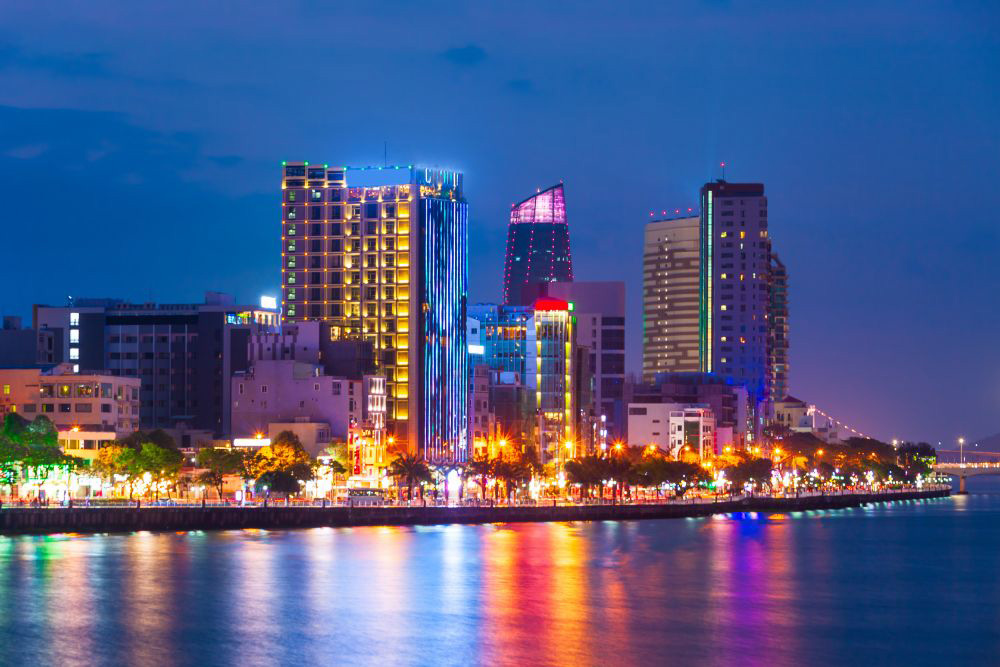
For a first trip, the default is My Khe / An Thuong. For a trip built around food, markets and being able to walk home from dinner, the default is Hai Chau. That is the decision. If you have twenty browser tabs open comparing five neighborhoods, you are solving the wrong problem.
Here is the shortcut:
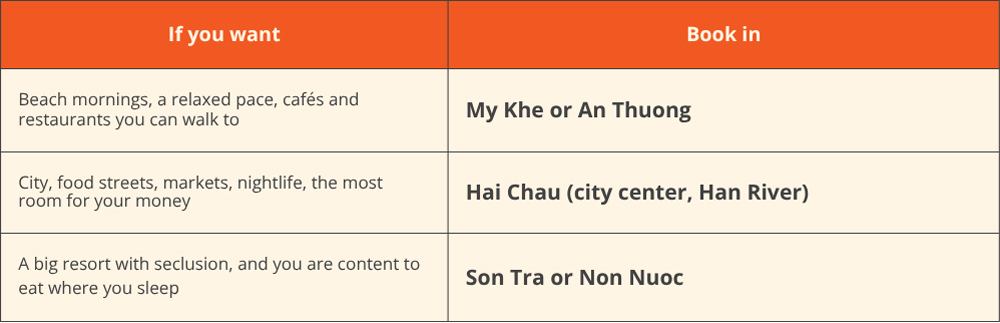
Read that table again and notice what it does not say: it does not say five areas are five good options. Da Nang is really a two-zone decision — the beach side or the city side — and the other three areas are a resort decision you make after you have decided the trip is a resort trip. Most pages ranking for this query will hand you five profiles of roughly equal length and roughly equal enthusiasm, and leave the choosing to you. We are going to do the opposite: every area below ends with a line saying who should not book it.
One thing worth knowing before you read on, because it changes how much the area choice matters: Da Nang International Airport sits inside the city rather than out in the countryside, which is unusual for a beach destination and means no area on this page is a long transfer from your arrival gate. Drive times from the terminal to each area: approximately 10 to 15 minutes to the downtown center or riverside, 10 to 20 minutes to My Khe Beach, and 25 to 40 minutes to the base resorts of the Son Tra Peninsula or the foot of the Marble Mountains.
If you want the wider practicalities of the city your area sits in — getting around, what the districts are called, what is worth your time — start with our Da Nang destination guide, then come back and pick a side of the river.
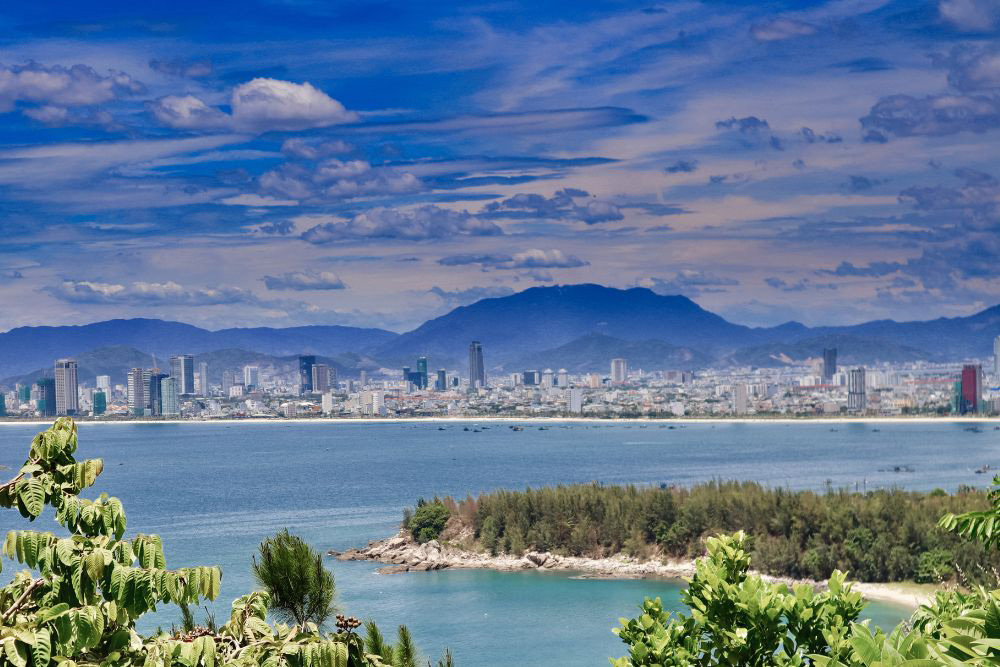
The Han River splits Da Nang into two halves, and which half you sleep on sets your default evening for the whole stay.
West of the river is Hai Chau — the city center. Markets, food streets, offices, the Dragon Bridge, and hotel rooms that cost less per star than anything with sand in front of it. No beach.
East of the river is the coast — My Khe, An Thuong, and further out Son Tra and Non Nuoc. Sand, a wide beach road, resorts and beach hotels, quieter streets, and a shorter, thinner list of places to eat that are not attached to a hotel.
Crossing between them is a Grab ride over one of the bridges. Off-peak that takes 5 to 10 minutes; in the evening rush it takes 15 to 20 minutes. What matters is that the crossing is genuinely routine. Nobody who books Hai Chau is locked out of the beach, and nobody who books My Khe is locked out of the night market. You are choosing what is outside your door at 8am and 8pm, not what you are allowed to do with your days.
The verdict: if you would rather walk to breakfast on the sand and take a Grab to dinner, book the coast. If you would rather walk to dinner and take a Grab to the sand, book Hai Chau. The second sentence describes more people than the internet admits.
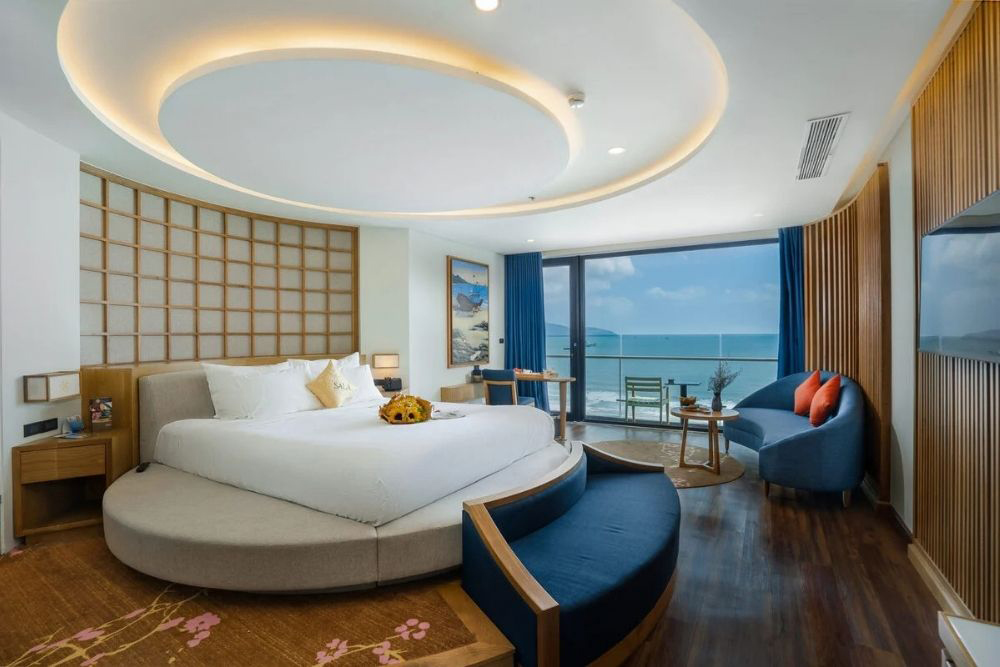
Same structure for each, so you can read them side by side. Landmarks are there so you can place each area without opening a map. When you have picked one and want to compare actual buildings, that is a different job and it lives on our Da Nang hotel and resort reviews, by area.
What it is. The long stretch of hotels and resort towers facing the sand along Vo Nguyen Giap, the coastal road. This is the postcard: you wake up, you cross to the beach, you swim before breakfast.
Landmarks: Vo Nguyen Giap runs the length of it; the beach itself; the Han River bridges are behind you to the west.
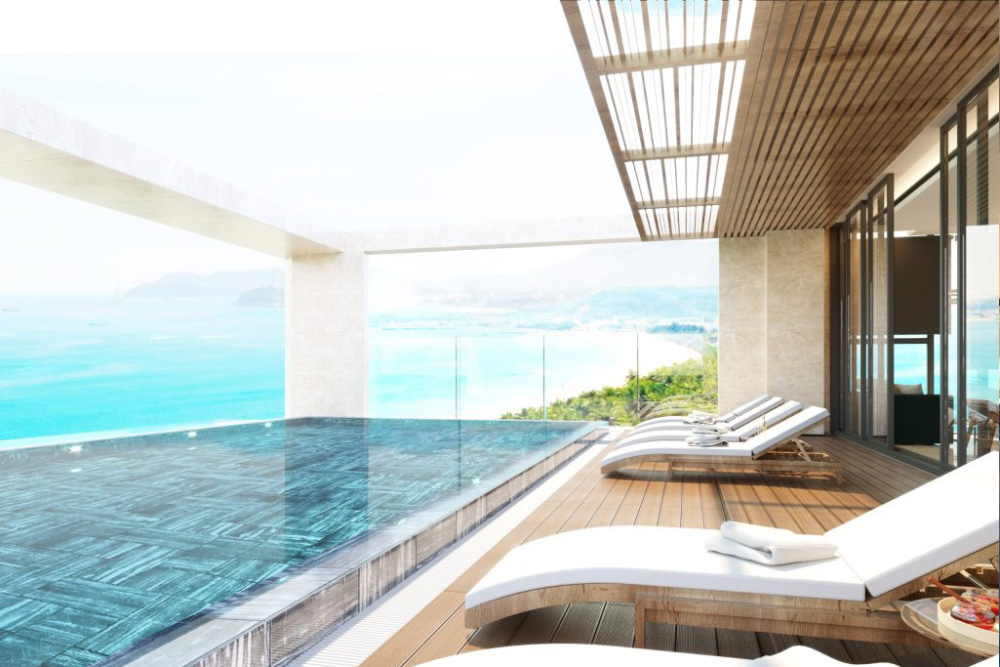
Right for: anyone whose mental picture of this trip is sand at 7am. Swimmers. Anyone who wants a sea view and is happy to pay for it.
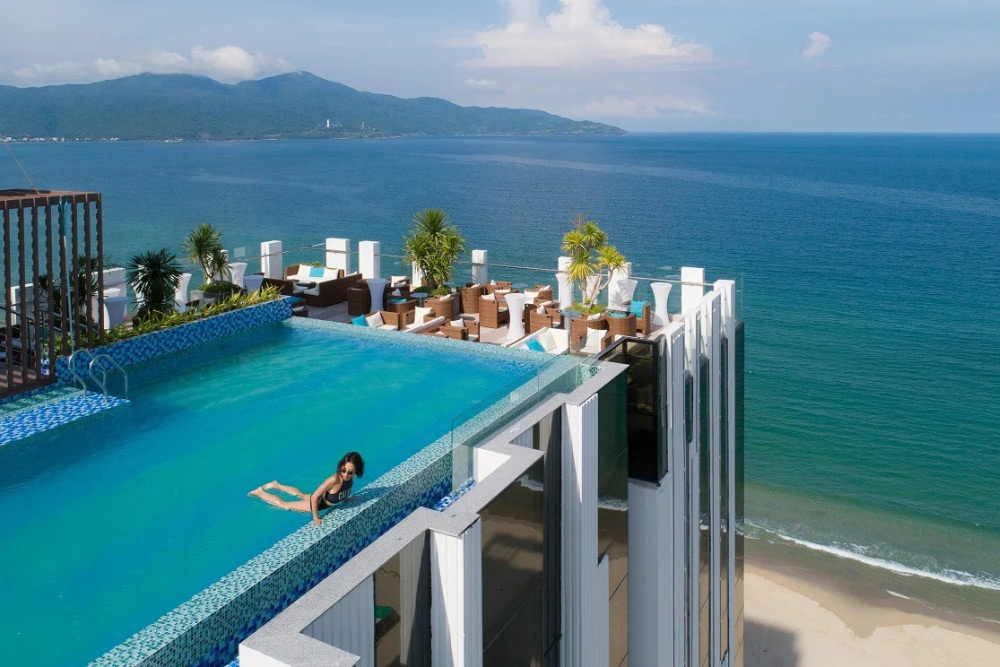
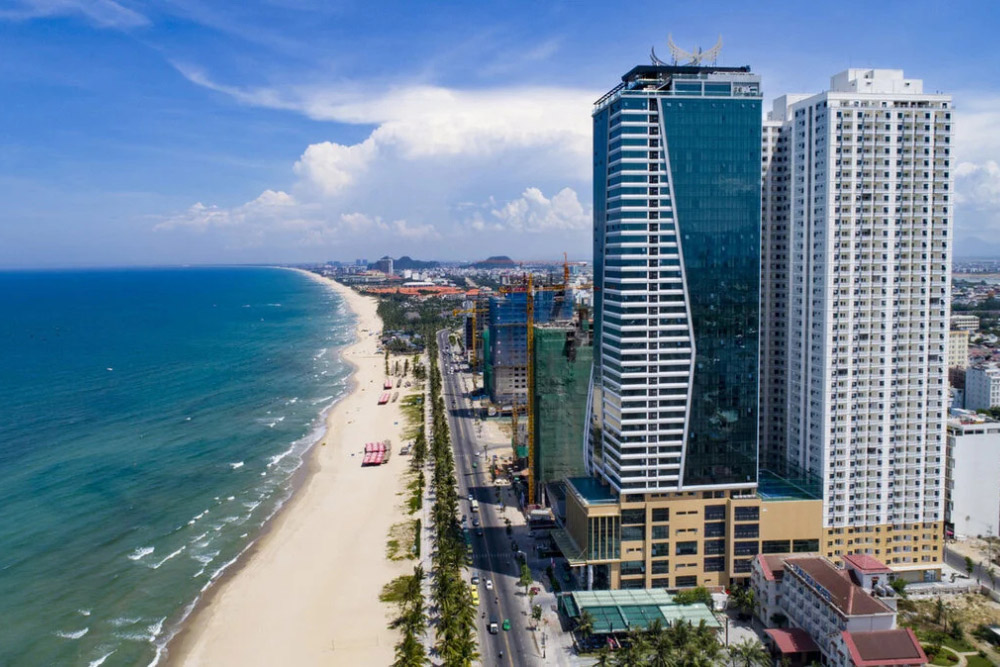
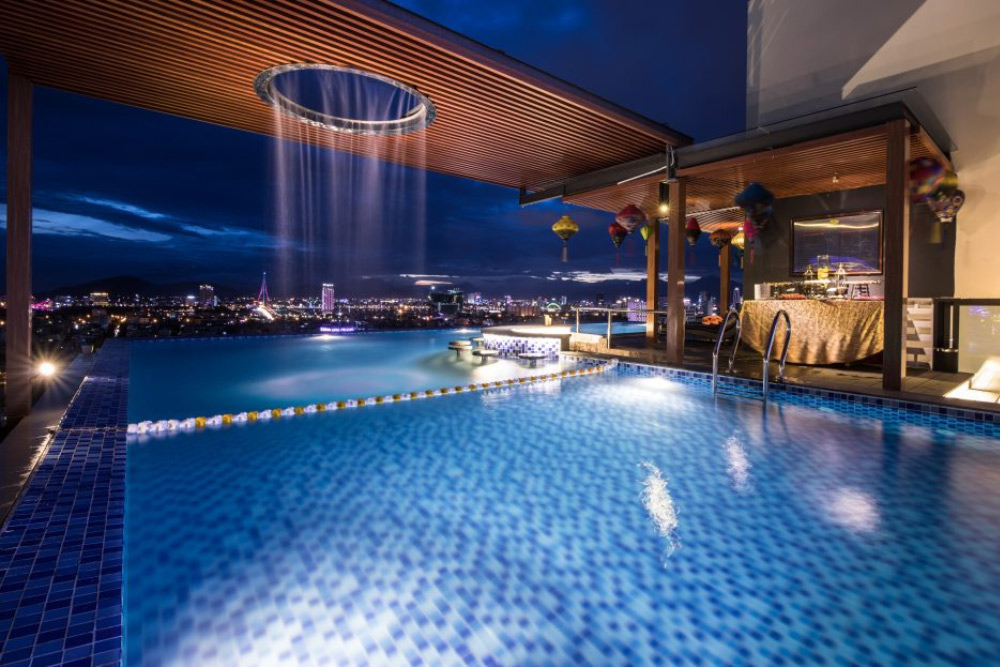
The thing the photographs do not show. Vo Nguyen Giap is a wide coastal road, and a great many listings marketed as "beachfront" are on the inland side of it. That is a road crossing with luggage, with a stroller, with a four-year-old, every single time you want the sea. Before you book, find the building on a satellite map and check which side of the road it is on. Also check what floor the sea view starts at — in several towers here the lower floors look at the building next door — and whether the pool is in the shade of its own tower by mid-afternoon, which is common on this strip.
Wrong for: anyone on a budget, because this is the highest price per star in Da Nang and a lot of that money is buying the view rather than the room. Also wrong for anyone who wants to walk to a wide choice of dinner — most of the restaurants are behind you, not beside you.
What it is. The walkable grid of streets immediately behind the southern end of the My Khe beachfront: small hotels, apartments, cafés, restaurants and bars, all within a few blocks of each other and a short walk from the same sand.
Landmarks: sits directly inland of the southern My Khe beach; Vo Nguyen Giap is its eastern edge; the Marble Mountains are further south down the coast.
Right for: first-timers, couples, backpackers, digital nomads, and anyone who wants the beach without being marooned on the beach road. It is the shortest distance in Da Nang between a bed, the sand, and a restaurant that is not inside a hotel.
Wrong for: light sleepers who book blind. Noise here varies street by street rather than area-wide — some blocks are cafés that close at ten, others have bars that do not. Ask which street before you commit, and ask which side of the building the room is on.
What it is. The working center of Da Nang, west of the river. Markets, food streets, river- view high-rises, and the densest concentration of places to eat that are not a hotel restaurant.
Landmarks: the Han River, the Dragon Bridge, Han Market.
Right for: food-led travelers, second-time visitors, anyone on a tighter budget, and anyone who wants to walk home from dinner rather than order a car. Room for room, this is the most you will get for your money in the city, and river-view rooms here typically cost less than equivalent rooms facing the sea.
Wrong for: anyone whose mental image of Da Nang is waking up over sand. There is no beach here and no amount of "it's only a short ride away" will fix that if the beach is why you came. Book Hai Chau for what it is, not as a cheaper version of My Khe — it is a different trip.
What it is. The forested headland north-east of the city, with a handful of large resorts on its slopes and coves. Dramatic, secluded, and the most cinematic place to stay in Da Nang.
Landmarks: the Son Tra headland itself; the Lady Buddha statue visible from much of the city; the coast road out from My Khe.
Right for: honeymooners and couples who want privacy and have deliberately chosen a resort holiday. People staying a week or more who want three or four days of doing nothing built into the trip.
Wrong for: anyone who wants to walk to dinner — there is no walkable restaurant scene here, so you are eating resort food or ordering a car for every meal, including breakfast if you skip the buffet. It is also wrong on a first, short Vietnam trip. If Da Nang is three nights inside a two-week route, Son Tra will eat those three nights in transit and you will have seen a lobby.
What it is. The southern resort strip, running toward Hoi An, with the Marble Mountains immediately inland. Wide beach, large properties, pools, gardens, space.
Landmarks: the Marble Mountains; Non Nuoc Beach; the coast road south toward Hoi An.
Right for: families who want pools and room to spread out, and travelers who are treating Da Nang as a rest stop rather than a city to explore. It is also the most convenient base if Hoi An is the real target of the leg (drive time: approximately 20 to 30 minutes to Hoi An Ancient Town).
Wrong for: a three-night trip where the food streets also matter. You will be in a car for every meal you do not eat at the hotel, and three nights is not enough to absorb that. If your plan is "resort days plus one big night out in the city", Non Nuoc will quietly turn that into "resort days".

The fourth column is the one that is usually missing. Every area costs you something.
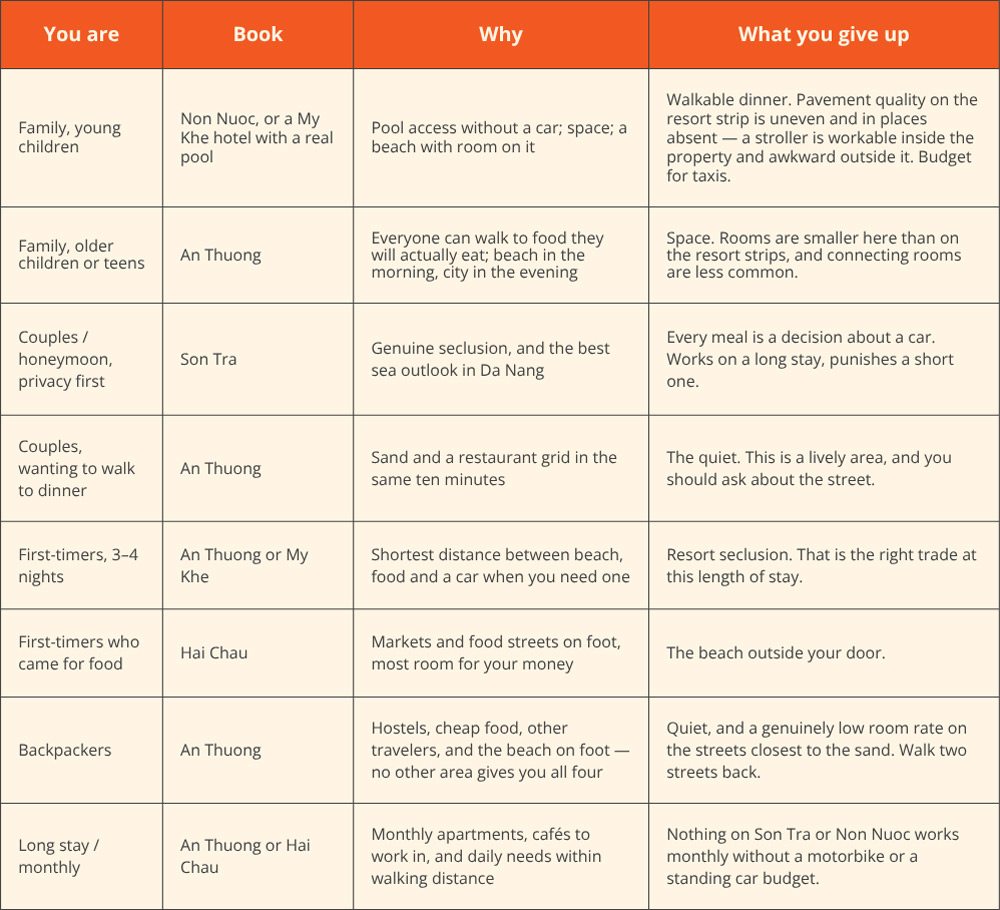
Backpackers, one honest paragraph. An Thuong is where the hostels are and where other travelers are, and you can walk to the sand. The honest part: the streets closest to the beach are priced for tourists, and the value is one or two streets inland, which is a two-minute walk. Hai Chau is cheaper again and has better street food, but you will be commuting to the beach. If your budget is genuinely tight and the beach is not the point, take Hai Chau; if the beach is the point, take An Thuong and walk back from the front row.
Whether your chosen area suits the number of nights you actually have is a separate question, and our 1, 2 and 3-day Da Nang itineraries answer it directly — a Son Tra booking and a one-day stopover are not compatible plans. Once the area is settled, the property comparison lives in our Da Nang hotel and resort reviews, by area.
Rates move, so treat the table below as a shape rather than a quote, and confirm current pricing for your dates before you budget.
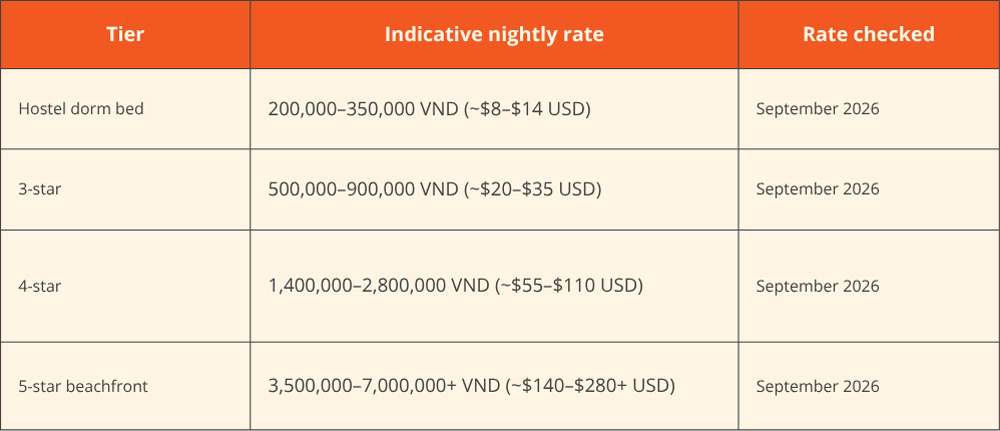
What is stable is the relationship between the areas, and it is worth more than the numbers: for the same star rating, Hai Chau is the least expensive place to sleep in Da Nang and the My Khe beachfront is the most expensive. An Thuong sits between them and shifts sharply depending on how many streets back from the sand you are. If a rate on the beach road looks like a Hai Chau rate, check which side of Vo Nguyen Giap the building is on.
Two things push prices up, and both are predictable.
The June–August summer peak. Domestic Vietnamese holidays land here and the coast fills. Our internal work puts the premium at 20% to 30% above shoulder-season rates — the figure is carried from earlier research and has not been re-checked, so confirm it for your dates rather than budgeting from it.
The Da Nang International Fireworks Festival (DIFF). The festival brings a second spike, concentrated on the river and on the nights of the displays. Dates: May 30 to July 11, 2026 (spanning select weekend nights across the summer). Premium: 30% to 50% spikes on riverfront and central hotel rooms, with tickets and surrounding accommodations booking out weeks in advance. If your dates are flexible by a week and you are not coming for the fireworks, moving them is the single most effective change you can make to this trip's budget.
Both of these are month questions before they are area questions, and our guide to when to go to Da Nang is the right place to settle the month first.
This is the part most area guides leave out, and it is the part most likely to make your booking wrong.
Da Nang's sea is not swimmable year-round. Our own beach reporting puts the calm, generally safe window at roughly May to August, and September to December brings rough surf, strong currents and frequent red-flag closures — days when the beach is not shut as a formality but because going in is dangerous. Central Vietnam also sits in a typhoon belt (peak months: September to November with October carrying the highest frequency and severity), and a typhoon week does not care which side of the river you booked.
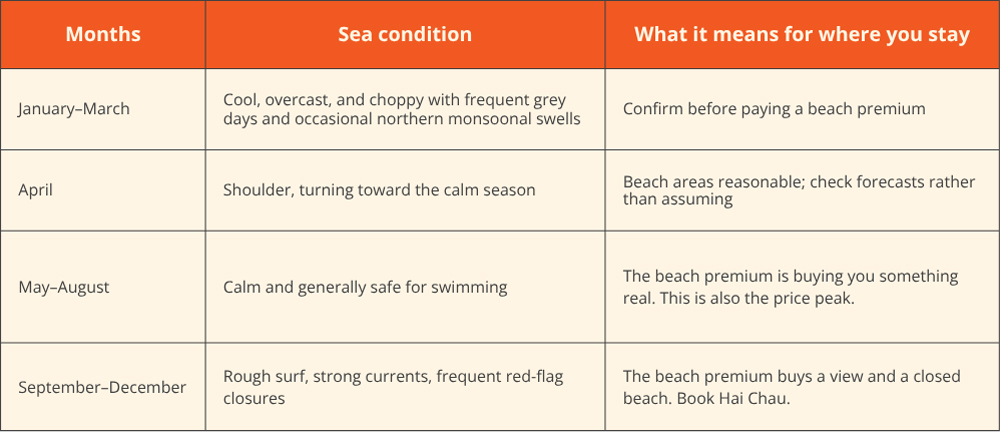
Say it plainly: from September to December, paying the My Khe beachfront premium is usually a mistake. You are paying the highest price per star in the city for a beach you may not be allowed to enter, and the extra money would buy you a materially better room in Hai Chau, where everything you would actually do in those months — markets, food streets, the river — is on foot. The booking error we would most like to save you is reserving the beach strip for a November trip on the strength of a photograph taken in June.
This does not mean do not come. Da Nang in October is a good city with a bad sea, and the food, the river and the day trips are unaffected. It means the beach should stop being the thing you pay a premium for, and the area choice should follow.
If you want to know which stretch of coast holds up best and when, our guide to which Da Nang beach is swimmable when goes month by month.
We book rooms in these areas every week, for travelers on 10 to 15-day Vietnam routes where Da Nang is usually three or four nights. That is a different vantage point from having visited once, and here is what it produces.
The two-zone truth. Area guides give you five or six neighborhoods presented as equal options, and that is why they do not help. For a first trip this is a two-zone decision — My Khe / An Thuong versus Hai Chau — because Son Tra and Non Nuoc only make sense once you have already decided to build the trip around a resort. Do not study six areas. Make one beach-or- city call, then let your budget choose the building.
The second-row trick. The best rooms in An Thuong are not on the beachfront. Move one or two streets back and the rate drops — by 20% to 30% lower, a figure carried from earlier internal research and not re-checked, so confirm it for your dates — for a two-minute walk to the same sand, and you are inside the café grid rather than across a main road from it. When a budget and an An Thuong room have to be made to fit, this is the first place we look.
The mismatch we raise before anyone books. If Da Nang is a three-night stop and you are choosing Son Tra or Non Nuoc for the photographs, work the days forward before you pay: every meal is a car ride, breakfast included on any morning you skip the buffet, and the city you flew into stays a view from the coast road. That is a conversation we would rather have with you now than on your second morning. The resorts are not the problem — the mismatch between a resort location and a three-night city stop is. If Da Nang is a leg rather than the destination, stay where you can walk.
What we tell clients not to do. Two things, consistently. Do not book the beach strip for a September-to-December trip on the strength of a summer photograph — see section 6, and it is the correction we would most like to save you. And do not split three nights across two areas. It sounds efficient and it is not: you lose most of a day to the change-over, you unpack twice, and you get a worse room in both places than one longer booking would have bought. Pick a side of the river and stay on it.
Where the partnership actually helps. We hold negotiated rates with hotels across all five areas, which is most useful in the two places where the money is easiest to waste: getting a genuinely sea-facing floor rather than a nominal sea-view category on the My Khe strip, and getting a quiet-side room in An Thuong. Both are upgrades you cannot reliably buy from a booking page, because the page does not know which floor the view starts at or which side of the building faces the bar.
An Thuong or the My Khe beachfront for a first trip, because you get the sand and a walkable choice of restaurants in the same ten minutes. Choose Hai Chau instead if food, markets and value matter more to you than waking up near the sea.
Non Nuoc if pools, space and a quiet beach are the priority and you accept a car for every meal out; An Thuong if you would rather everyone could walk to dinner. Pavements on the resort strips are uneven, so a stroller is easier inside the property than outside it.
An Thuong or Hai Chau, and do not move hotels. Son Tra and Non Nuoc are wrong at this length — you would spend the visit in transit and see very little of Da Nang.
From May to August, yes, if swimming before breakfast is genuinely how you want to start the day. From September to December it usually is not: rough surf and red-flag closures are common, and the same money buys a better room in Hai Chau.
Non Nuoc is the closest, then My Khe and An Thuong, then Hai Chau, then Son Tra. Drive times: approximately 20 to 30 minutes from Non Nuoc, 30 to 40 minutes from My Khe and An Thuong, 40 to 50 minutes from Hai Chau, and 45 to 55 minutes from Son Tra. Every area on this page is a comfortable day trip from Hoi An, so it should not be the deciding factor.
It depends on the street, not the area — some blocks are quiet after ten and others are not. Ask which street the hotel is on and which side of the building the room faces before you book, and the problem largely disappears.

The whole decision comes down to one sentence: book the coast if you want to wake up near the sand and take a car to dinner, and book Hai Chau if you would rather walk to dinner and take a car to the sand — and from September to December, book Hai Chau regardless.
If Da Nang is three or four nights inside a longer Vietnam route, the area question is really a routing question, and it is easier to answer alongside the rest of the trip than on its own. Our Bests of Vietnam 15-day tour shows where those nights usually sit and what they connect to on either side.
Tell us the dates you have in mind and what you want out of the trip, and we'll draft a route you can pull apart. We will tell you if your dates are wrong for the beach, and we will say so before you have paid for a sea view. Free quote, no obligation. You can reach us on WhatsApp at +84 866227878 or at sales@asiamystika.com.
