 Hotline: +84 866 227 878
- SG$ Singapore Dollar
- A$ Australian Dollar
- £ British Pound Sterling
- C$ Canadian Dollar
- € Euro
- MYR Ringgit Malaysia
- US$ United States Dollar
- đ Vietnamese Dong


 Hotline/Whatsapp: +84 86 622 7878
 Email: sales@asiamystika.com
 About Us
 Destinations
 Travel Styles
 Travel Guide
 Blogs
Blogs

Travelling to Da Nang over Vietnamese Lunar New Year — what closes, what stays open, how prices and transport change, and whether it is worth it.
QUICK ANSWER:
Tet is Vietnamese Lunar New Year and the country's most important holiday, falling in late January or February depending on the lunar calendar. In Da Nang, many small restaurants, family-run shops and some tour operators close for several days around the first days of Tet, while hotels, major attractions and international restaurants generally stay open. Domestic transport books out and prices rise sharply. Travelling during Tet is entirely possible and often atmospheric, but it requires booking well ahead and accepting that some days will be quieter than you expected.
Tet Nguyen Dan is Vietnamese Lunar New Year, the country's largest annual holiday, falling between late January and mid-February depending on the lunar calendar.
Tet — or Tết Nguyên Đán — is much more than a long public holiday. It marks a fresh beginning for Vietnamese families: homes are cleaned and decorated, ancestral altars are prepared, relatives return home, and the first days of the new year are centred around family visits, remembrance, good wishes and hopes for prosperity. For travellers, this explains why the city can feel festive and beautifully decorated while some everyday businesses are unusually quiet at the same time.
For anyone planning Vietnam Lunar New Year in Da Nang, the date needs to be checked every year. In 2027, the first day of Tet falls on February 6. The Ministry of Home Affairs has proposed that public-sector employees take seven consecutive days off from February 4–10, combining the five statutory Tet leave days with weekend compensation. At the time of writing, however, that remains the proposed schedule rather than the final approved calendar.
The official holiday dates also do not tell the whole story for travellers. In practice, the Tet slowdown begins before the first day of the lunar year as people travel home, shop for celebrations and prepare family meals. Some independent restaurants and shops may close a day or two before New Year's Eve and remain shut through the first few days of Tet, while others reopen gradually after mùng 3 or mùng 5 — the third or fifth day of the lunar year. This is why visiting Vietnam during Tet requires more planning than simply checking the government holiday calendar.
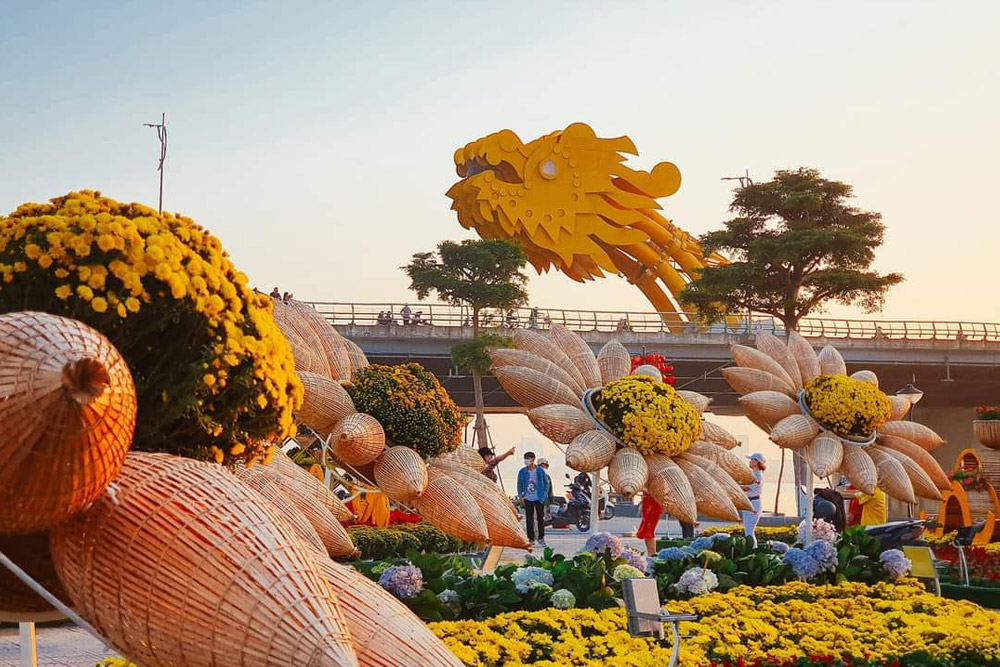
At the same time, Da Nang itself does not simply shut down. The city organised flower displays, fireworks, cultural events and extended Dragon Bridge performances around the Tet period, showing how tourism and public celebrations continue even while normal local routines slow down. Tet events and attraction schedules will be announced closer to the holiday, so these should be checked again before travel.
One naming point is also worth clearing up. Tet, Tết Nguyên Đán and Vietnamese Lunar New Year all refer to the Vietnamese celebration. Travellers sometimes search for “Da Nang Chinese New Year,” but in Vietnam the correct local term is Tet. Although Lunar New Year is celebrated across several Asian cultures, Vietnamese Tet has its own customs, foods and family traditions.
If your trip overlaps with Tet, don't judge your dates by the official holiday alone. Plan for the few days before Tet and the first several days afterward to feel different from normal Da Nang — quieter in some neighbourhoods, busier around transport hubs, and much more festive along the riverfront and public celebration areas.
The closures that affect visitors most are small family-run restaurants and shops, many of which shut for several days from Tet eve onward.
This is where Tet in Da Nang feels most different from an ordinary week. Small restaurants, street-food stalls, cafés and family businesses are the most likely to close because their owners and staff are celebrating with relatives. There is no single citywide timetable: some businesses stop trading on Tet Eve and return after the first two or three days, while others take a longer break. The same applies to independent shops, tailors and smaller market stalls. Larger supermarkets and tourist-oriented businesses are more likely to remain available, sometimes with reduced hours. Da Nang's own Tet planning shows this gradual slowdown clearly: the city's Tet flower market operated until 9 PM on Tet Eve before closing for the holiday.
Tours and private transport also need more forward planning. Large hotels and established tourism companies generally maintain services, but some independent guides, drivers and smaller operators take time off to return home. Vietnamese labour rules allow private employers to arrange their own Tet leave around the statutory holiday, so availability can differ considerably from one provider to another. If you need an airport transfer, private car or specific excursion during the first days of Vietnam Lunar New Year in Da Nang, confirm it before arrival rather than assuming you can arrange it on the day.
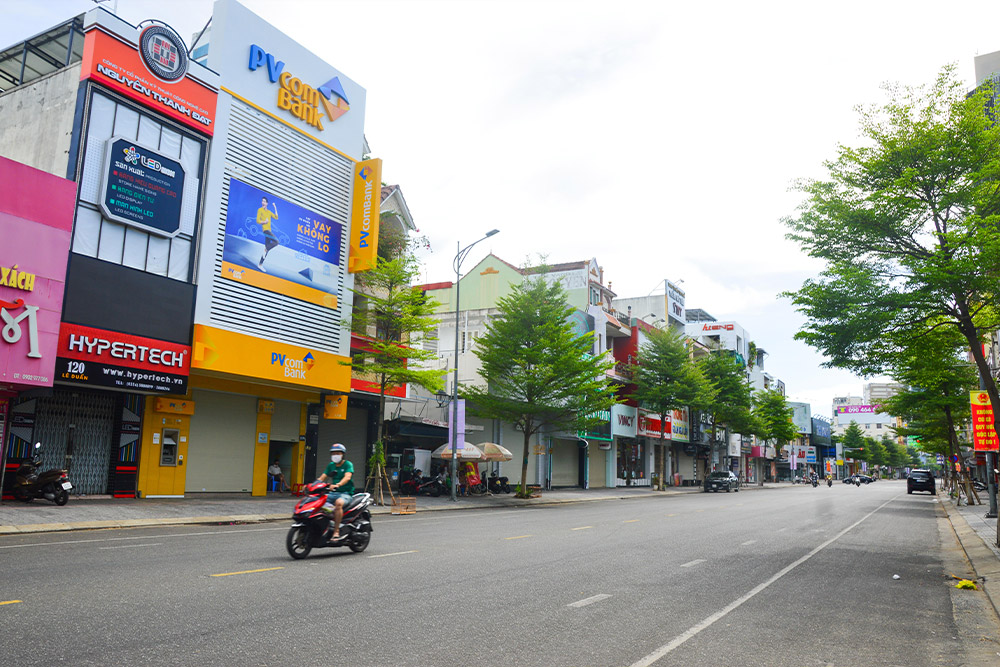
Banks, government departments and administrative offices are much more predictable: they close according to the official Tet holiday schedule. Da Nang's public-sector holiday ran from Tet Eve through the fourth day of the lunar year, with essential departments required to maintain duty staff where necessary. Similar multi-day closures should be expected each year, although the exact dates change with the lunar calendar.
Even tourist attractions can adjust their operations. During Tet, for example, ticket sales and guided visits at several Hoi An heritage sites were temporarily suspended from Tet Eve through the third day of the new year, while some other attractions offered free entry instead. This is why checking individual attraction schedules matters if you are visiting Vietnam during Tet, especially during the first three or four days.
The important point is that Da Nang does not shut down during Tet — it thins out. Hotels, major attractions, shopping centres and many businesses serving travellers continue operating, while the smaller local places you might normally discover spontaneously become less predictable. Plan your essential meals, transfers and must-do activities ahead of time, then leave some space to enjoy the quieter streets and festive atmosphere that make Da Nang Tet feel so different from the rest of the year.
Hotels, major attractions and international restaurants generally operate through Tet, and Ba Na Hills and the Marble Mountains stay open and get busier.
The good news is that Da Nang Tet is not a shutdown period for tourism. Hotels and resorts continue operating, and larger properties usually keep their restaurants, front desks and guest services running throughout the holiday. This also means hotel restaurants and international dining venues are among the safer choices if you do not want to spend Tet hunting for an open local restaurant.
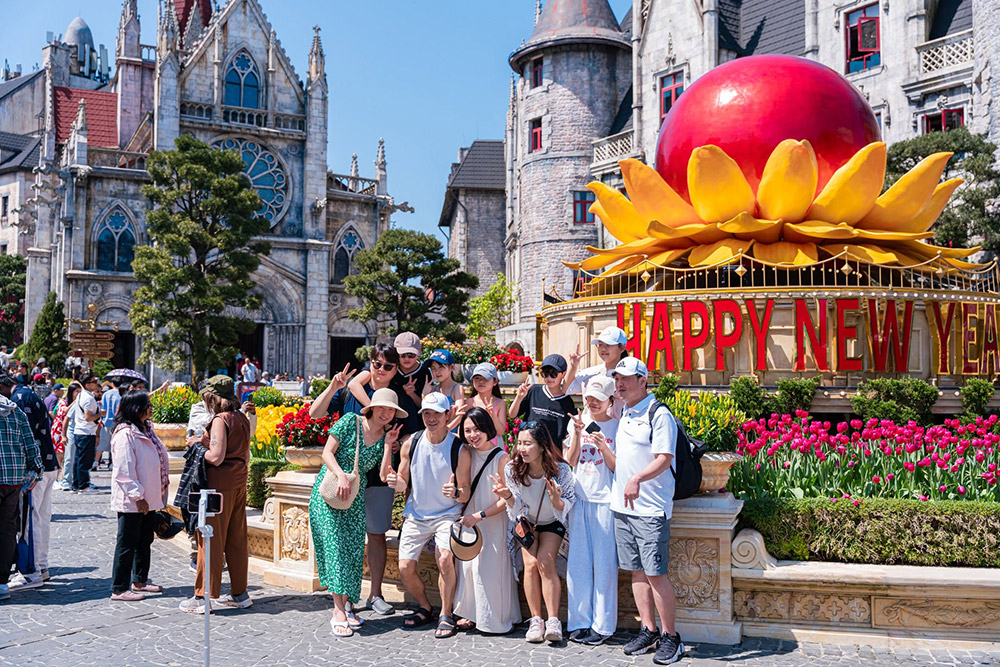
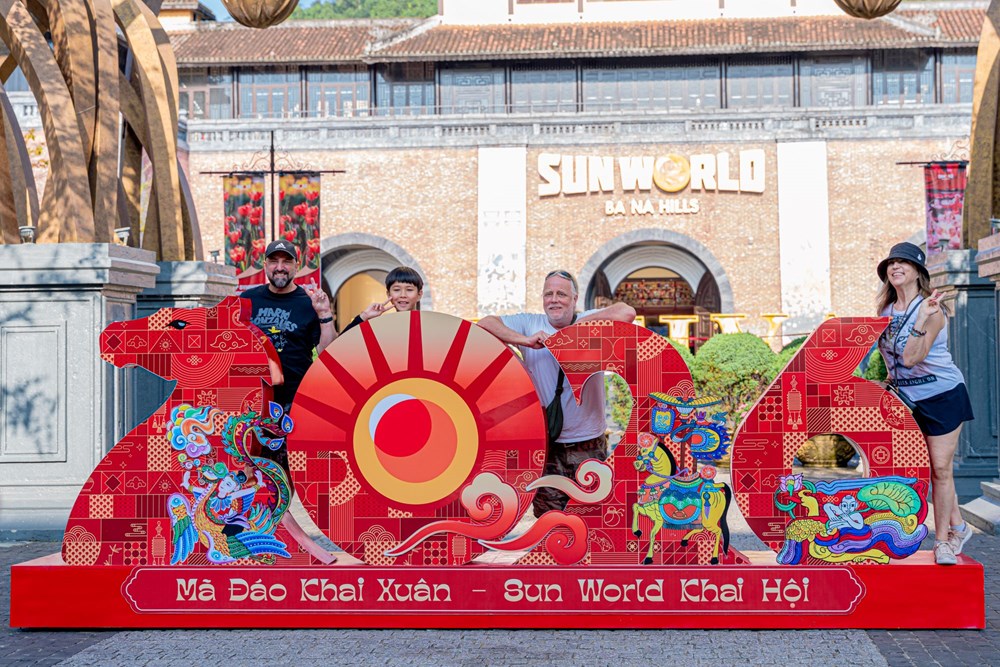
Major sights remain part of the holiday experience too. During Tet, Da Nang kept many tourism sites, museums and cultural attractions open, while Sun World Ba Na Hills ran seasonal activities such as its spring flower festival. The Marble Mountains and Son Tra Peninsula also continued receiving visitors during the holiday period, and both appeared on sightseeing programs used by international visitors arriving in Da Nang over Tet. The trade-off is crowds: these are exactly the places both residents and tourists visit for a day out during the New Year break, so go early if you prefer a quieter experience.
Convenience stores, shopping centres and larger supermarkets are also much more dependable than small neighbourhood shops. Individual branches may shorten their hours on Tet Eve or the first day of the new year, so buy essentials beforehand rather than assuming your nearest store will follow its normal schedule.
Ride-hailing services such as Grab continue to operate, but availability and prices can change when demand rises and fewer drivers are working. Grab may apply a specific Tet surcharge in Da Nang, including an additional fee on car and motorbike trips. So if you are visiting Vietnam during Tet, allow extra time for airport transfers and important reservations, and do not rely on getting an instant low-cost ride at the busiest moments.
One place that becomes more active rather than quieter is the pagoda. Visiting a temple at the beginning of the lunar year is an important Vietnamese tradition, and places such as Linh Ung Pagoda on Son Tra can attract large numbers of people coming to pray for health, peace and good fortune. On the first day of Tet, visitors gathered at pagodas across Da Nang from early morning, including Linh Ung. For travellers, this can be one of the most meaningful parts of Tet in Da Nang — just expect crowds, dress respectfully and remember that you are entering an active place of worship rather than simply another sightseeing stop.
So while smaller businesses may disappear from your usual travel routine for a few days, the main tourism infrastructure stays very much alive. Book the big things early, use hotels and major attractions as reliable anchors, and leave room to experience the temples, spring displays and public celebrations that you would never see on an ordinary week in Da Nang.
Tet is peak domestic travel season, so accommodation and internal flights price at their annual high and sell out early.
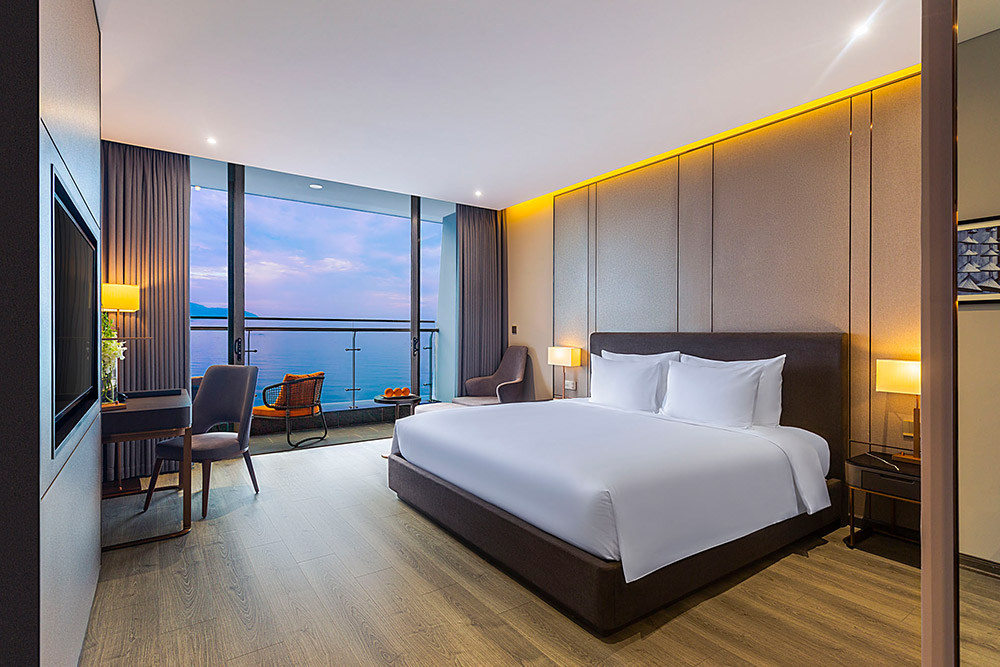
Hotels and resorts in Da Nang usually charge more around Tet, especially for beachfront properties, family rooms and popular dates around the first days of the new year. Domestic flights also become less flexible as demand rises, with cheaper fare classes disappearing first and busy routes sometimes approaching full capacity.
Train tickets can be even harder to secure. Tet trains carry large numbers of Vietnamese travelling home before the holiday and returning afterward, and the most convenient sleeper berths and departure dates often sell out well in advance. Vietnam Railways typically opens Tet sales months ahead, with peak services capable of filling long before departure.
A useful rule for Tet holiday Vietnam travel is to book accommodation and domestic flights at least 6–8 weeks ahead, and earlier if your dates cannot move. For trains, book as soon as the official Tet timetable and tickets are released rather than waiting until the final weeks.
You may also see Tet surcharges at restaurants, private transport services and tours that continue operating through the holiday. These are separate from tipping: a small tip for good service is appreciated, but it is not compulsory.
If you are still working out how Tet prices fit into your overall budget, see our Vietnam travel cost guide for accommodation, food, transport and daily spending.
The days before Tet are the most visually rewarding — flower markets, kumquat trees and preparation everywhere — while the first days themselves are quiet and family-focused.
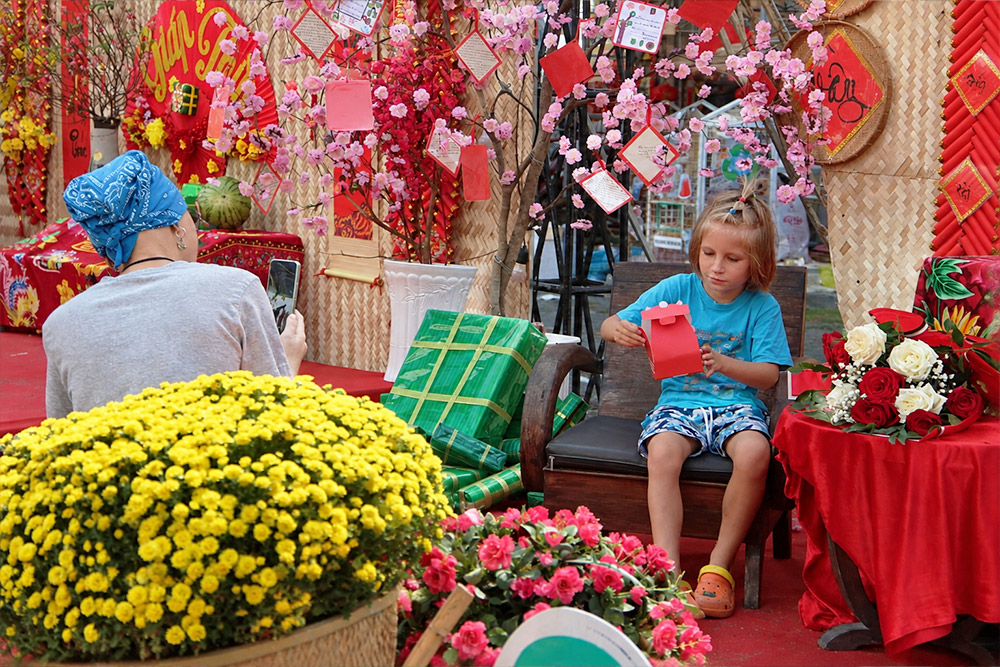
If you want to see Tet in Da Nang at its most energetic, arrive several days before Lunar New Year. Streets and markets fill with yellow apricot blossoms, chrysanthemums, kumquat trees and red decorations, while families shop for food, flowers and gifts. This is often the best period for visitors because everyday city life is still active, but the atmosphere already feels completely different from a normal week. Da Nang's official tourism information describes these final days as a period of busy markets, home decoration and family preparation.
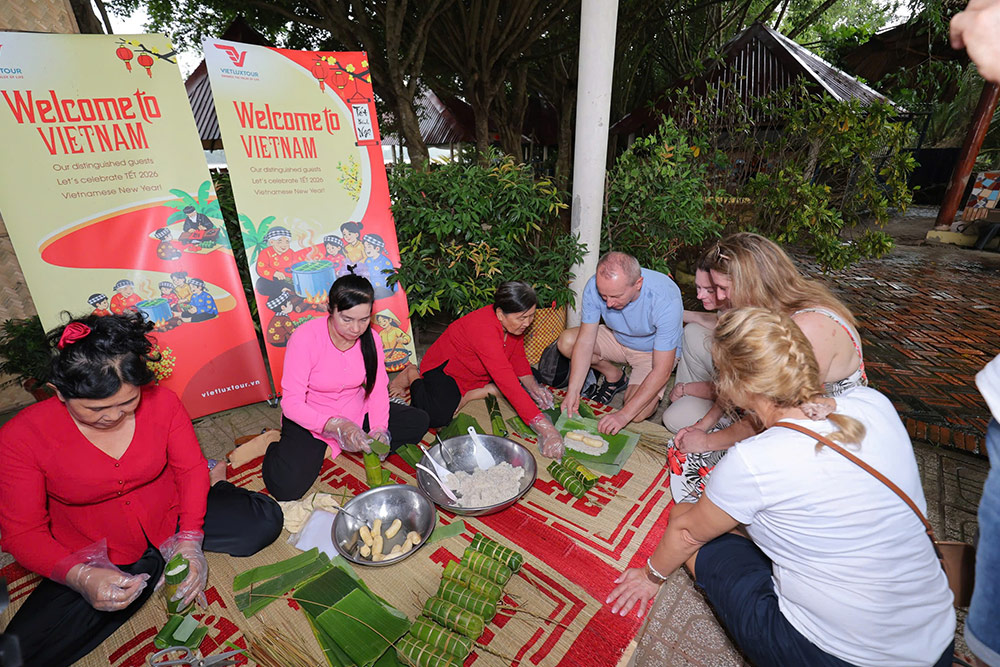
Tet Eve marks a clear change of pace. After the final shopping rush, families return home for reunion meals and New Year rituals. The first three days of Tet are usually much quieter, with time focused on relatives, ancestral remembrance and visits to pagodas. Temples such as Linh Ung can become particularly busy as people pray for health, peace and good fortune for the year ahead. For visitors, this quieter side of Tet is worth experiencing rather than treating it as a lack of activity.
Public celebrations add another layer. Da Nang typically organises spring decorations, cultural performances and New Year's Eve fireworks, although locations, times and programs are announced separately each year and should be checked before travel.
If you are invited into a Vietnamese home, follow your host's lead and remember that Tet is primarily family time. A simple “Chúc Mừng Năm Mới” means “Happy New Year” and is always appropriate. You may also see lì xì, the custom of giving lucky money in red envelopes, especially to children and younger family members. There is no expectation for foreign visitors to participate unless they are close to the family, so a warm greeting and respectful curiosity are usually enough.
If your dates are flexible, compare the holiday period with the rest of the year in our Best Time to Visit Da Nang: Weather by Month guide before deciding when to travel.
Tet suits travellers who want cultural atmosphere and can book far ahead, and frustrates those relying on spontaneous street food and independent day tours.
The right answer depends less on Da Nang itself and more on how you like to travel.
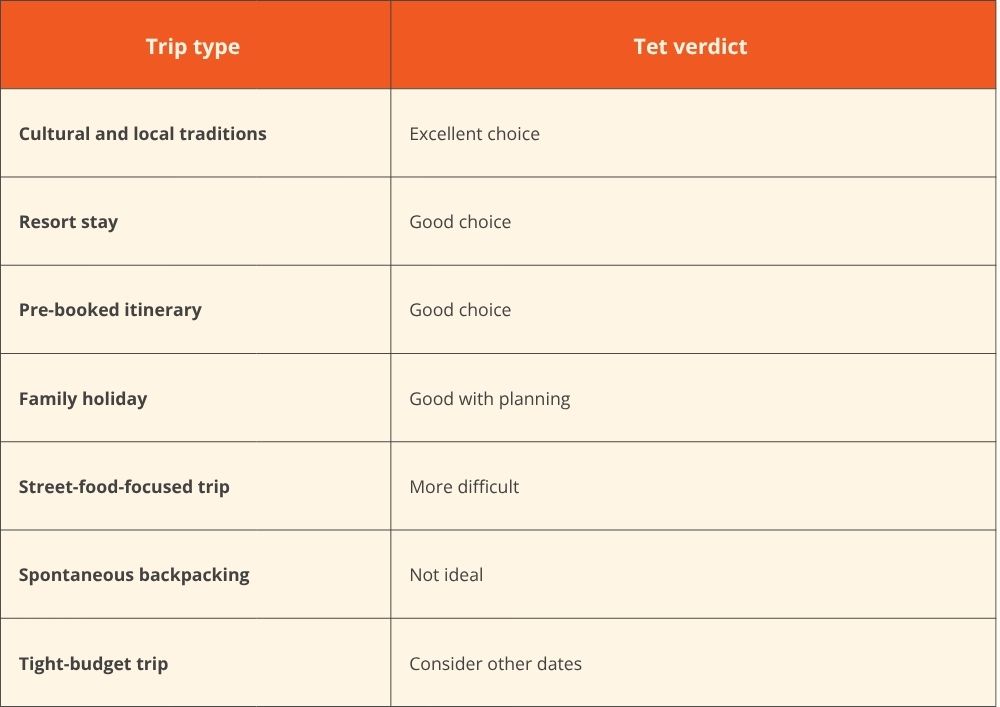
Tet works particularly well if you want to experience Vietnamese traditions, visit pagodas, see spring decorations and spend a few relaxed days at a resort. It also suits travellers who are happy to organise accommodation, transfers and Da Nang day tours before arriving. Planning ahead removes most of the uncertainty caused by smaller businesses and independent operators taking time off.
It is less suitable if your ideal trip involves deciding everything on the day. Some favourite street-food stalls may be closed, transport costs can rise, and last-minute tours or train tickets become harder to find. Travellers watching every dollar may also find that Tet holiday Vietnam travel offers less value than quieter weeks because flights and accommodation are in high demand.
For families, the answer is mixed but generally positive. Resorts, major attractions and festive displays give children plenty to enjoy, but crowded transport and fewer spontaneous dining options can make the trip harder if nothing has been booked beforehand.
Weather is one advantage. Tet falls in the cooler early part of Da Nang's dry season, when conditions are generally mild with less rain than the autumn wet-season peak, although occasional drizzle is still possible.
If you like the idea of travelling at this time but not the closures and peak demand, consider arriving just after the first few days of Tet. Local businesses gradually reopen, transport pressure eases, and you can still catch some of the New Year atmosphere without dealing with the holiday at its quietest.
Want the atmosphere without the Tet logistics? Asia Mystika can time your Da Nang stay around what is open, pre-book the important parts and build the trip around the experiences that work best during the holiday.
Everything that would normally be arranged on arrival — drivers, restaurants, tours — needs to be locked in before Tet begins.
Book your accommodation and domestic flights several weeks to a few months ahead, especially if your dates fall close to Tet Eve or the first days of the new year. Domestic travel demand rises sharply around the holiday, and the most convenient flights can fill early.
Do the same with private drivers and tours. Confirm the date, pickup time and price in writing before the holiday starts rather than relying on last-minute availability. If food is important to your trip, ask your hotel which nearby restaurants will remain open and reserve any must-try places that accept bookings. For excursions, our Best Day Tours from Da Nang guide can help you decide which trips are worth securing first.
It is also sensible to withdraw some Vietnamese dong before Tet. ATMs and digital banking continue operating during the holiday, but bank branches close and smaller restaurants, markets and local vendors may still prefer cash.
Finally, keep the first three days of Tet lighter than usual. Instead of filling every hour with fixed tours, leave space for pagoda visits, riverside walks, flower displays or resort time. That flexibility matters because individual businesses can reopen on different days.
“Guests worry the city will be shut and it is not — but the little places they were looking forward to will be. What I do is fix the eating in advance, and then take them to the flower market in the days before Tet. That is the part they remember, and most visitors miss it entirely.”
— Asia Mystika guide, Da Nang.
Tet falls between late January and mid-February, with the date changing each year according to the lunar calendar. In 2027, the first day of Tet falls on February 6.
No. Hotels, major attractions and many tourist-oriented restaurants remain open, while smaller family-run restaurants, shops and local services are more likely to close for several days.
Yes, if you are interested in Vietnamese culture and are willing to book ahead. It is less suitable for travellers who depend on spontaneous street food, last-minute tours and a tight budget.
Usually, yes. Tet is one of Vietnam's busiest domestic travel periods, so flights and popular accommodation can become more expensive as availability falls.
Yes, Ba Na Hills generally operates during Tet and often runs seasonal spring activities, making it a popular holiday attraction. Check its official operating hours shortly before your visit, as schedules can change.
For the best choice of hotels and domestic flights, aim to book several months ahead, especially if your dates fall immediately before or after Tet. Transport demand becomes particularly high around the peak travel days.
Da Nang during Tet is worth considering if you want to see the city at its most culturally distinctive and you are comfortable planning ahead. Come before Tet for flower markets and the build-up, stay through the holiday for pagodas and New Year traditions, or arrive just afterward for an easier balance between festive atmosphere and normal opening hours.
The main rule is simple: don't leave the important parts of a Tet trip until you arrive. Secure your hotel, transport, key meals and must-do experiences in advance, then leave some flexibility for the quieter first days of the new year.
Need a local to take care of the Tet logistics? Asia Mystika can build your Central Vietnam itinerary around what is open, the busiest travel days and the experiences worth prioritising.
Explore Central Vietnam Tailor-Made Trips or contact Asia Mystika and tell us your travel dates.
