 Hotline: +84 866 227 878
- SG$ Singapore Dollar
- A$ Australian Dollar
- £ British Pound Sterling
- C$ Canadian Dollar
- € Euro
- MYR Ringgit Malaysia
- US$ United States Dollar
- đ Vietnamese Dong


 Hotline/Whatsapp: +84 86 622 7878
 Email: sales@asiamystika.com
 About Us
 Destinations
 Travel Styles
 Travel Guide
 Blogs
Blogs

Considering a Da Nang honeymoon? Here is why it suits couples who want more than a beach, which resorts to look at, and the evening most guests remember long after the private dinner.

Most honeymoon destinations make you choose. Either you get a beach and very little to do, or you get things to do and no beach.
Da Nang does not force that choice, and that is its real argument. You have a long swimmable beach with international resort accommodation along it, and within an hour you have a UNESCO-listed old town, a mountain resort, a famous coastal pass and a peninsula full of viewpoints.
For couples, that matters more than it sounds. A week of pure beach suits some honeymooners perfectly and leaves others restless by day four. Da Nang gives you the option to do nothing for three days and then do something, without changing hotels or countries.
It is also short-haul from Singapore and one stop from most Indian and Gulf cities, which makes it a realistic honeymoon for couples who do not have three weeks.
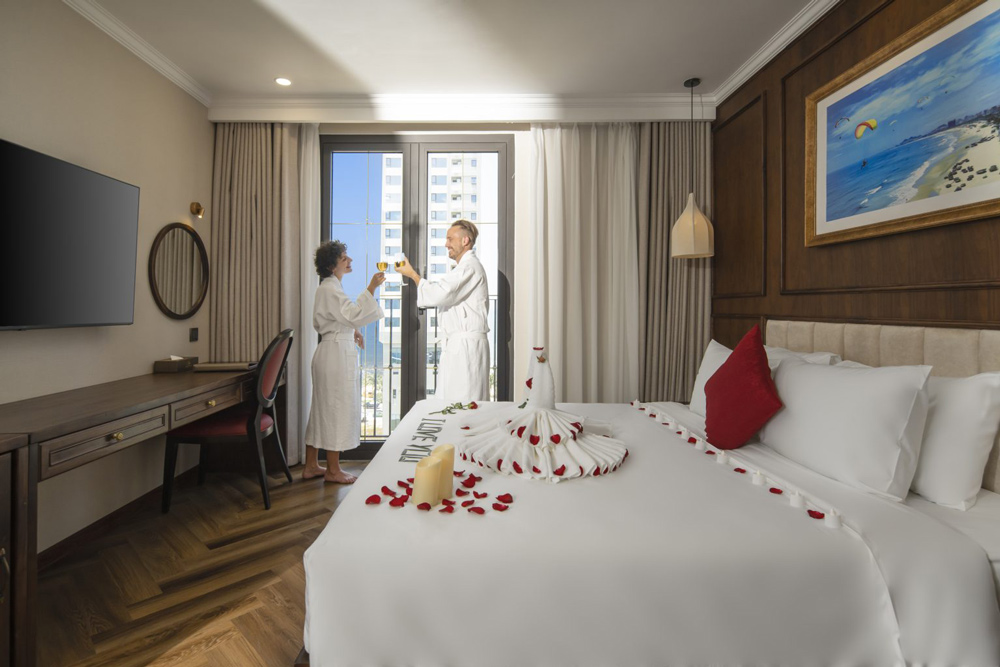
Da Nang's honeymoon accommodation divides into three broad options, and the right one depends on how much you plan to leave the property.
The main resort area, running along Vo Nguyen Giap street on the eastern side of the city. International-standard properties, direct or near-direct beach access, and restaurants and cafés within walking distance.
This is the practical choice for most couples. You can walk out for dinner rather than taking a taxi every evening, which matters more over a week than it sounds.
Set slightly back from the beach or toward the Non Nuoc end at the southern edge of the city, near the Marble Mountains.
More privacy, more space, usually a private pool — and a taxi ride for anything outside the resort. Best for couples who genuinely intend to stay put.
Our most common recommendation for honeymooners: three or four nights in a Da Nang beach resort, then two or three nights in a Hoi An boutique property.
You get the beach and the resort comfort first, then the atmosphere, the food and the lantern-lit evenings. It also gives the trip a shape, rather than seven identical days.
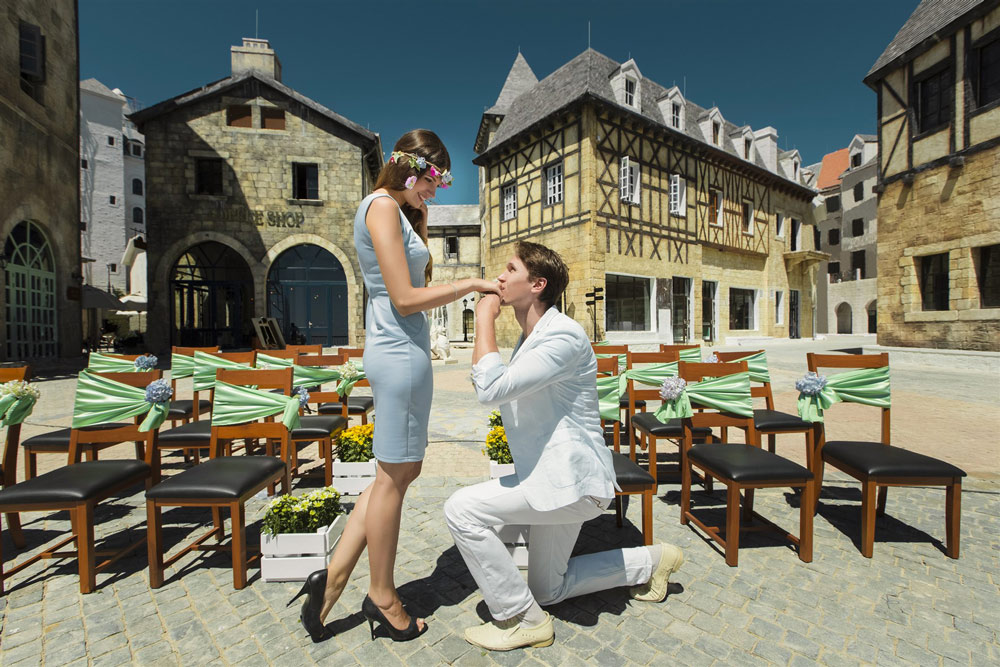
The most memorable experiences here are rarely the most expensive ones. In our experience, these are what couples actually talk about afterwards.
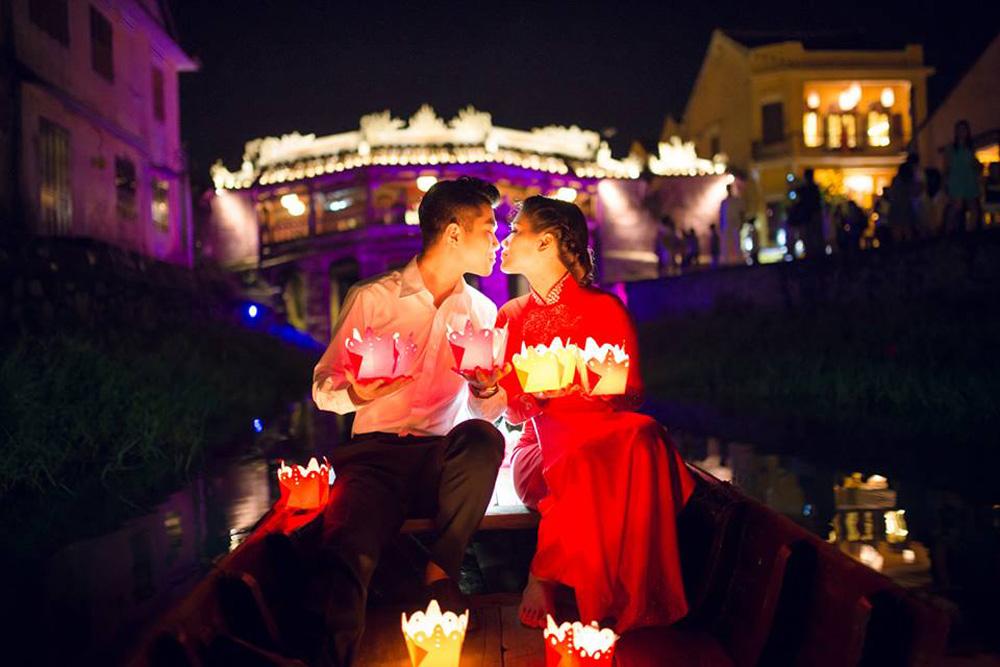
If you do one thing on this list, make it this. Hoi An's Ancient Town is 45 minutes from Da Nang, and it transforms in the evening — silk lanterns lit along the streets, the Thu Bon River filling with floating candles, and the day-trip coaches long gone.
Arrive around four in the afternoon, wander before dinner, eat by the river, and stay until nine or ten. It costs almost nothing and it is the evening most couples remember.
Check whether your dates coincide with the monthly full moon lantern festival, when the town switches off its electric lights entirely.
Da Nang's beach belongs to local families before six in the morning. Whole households swim, older residents exercise on the sand, and the water is at its calmest of the day.
It is not a curated experience and that is precisely why it is worth setting an alarm for once. Coffee afterwards at a beachfront café and back to bed by eight is a very good morning.
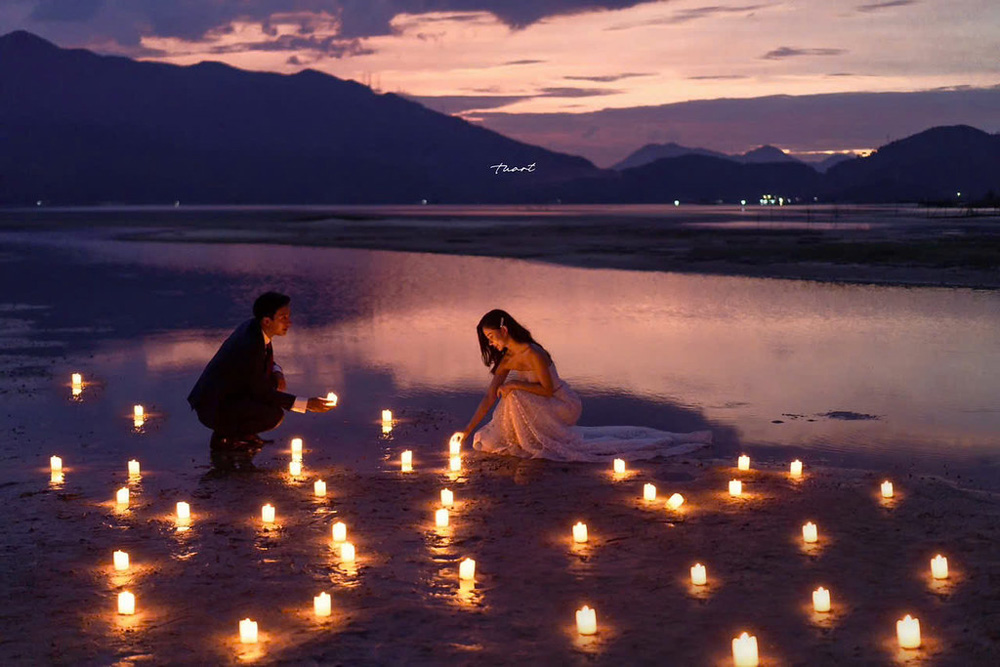
Several resorts arrange private dinners on the sand or in-villa. These are lovely and they photograph beautifully.
Two honest notes: book well in advance, and be aware that they are weather-dependent. Have a plan B, and do not build the whole trip around one evening.
The Son Tra Peninsula rises directly northeast of the city, and Ban Co Peak at its summit gives the widest view over Da Nang, the bay and the coastline toward the Hai Van Pass.
Go by private car in the late afternoon, stopping at the Lady Buddha statue at Linh Ung Pagoda on the way up. The roads are steep and narrow, so a driver who knows them is worth having.
The classic version of this is a jeep or motorbike tour. For a honeymoon, a private car with a driver is the better call — air conditioning, luggage space, and the freedom to stop wherever the view is good.
The northern descent toward Lang Co Bay is the part worth lingering over. Go in the morning, before the summit clouds over.

This matters more for a honeymoon than for most trips, because a beach-led week in the wrong month is a genuinely disappointing week.
February to April — the sweet spot. Warm, dry, the sea calming after the monsoon, and before the summer heat arrives. This is what we recommend for most honeymoons.
May to August — hot and dry. The best sea conditions and the peak beach season. Also the hottest, and the busiest with domestic visitors. The DIFF fireworks festival falls in this window, which is either a bonus or a crowd, depending on your view.
September to December — the wet season. Rough seas, reduced lifeguard cover, fogged mountains and the possibility of flooding in Hoi An. Rates drop considerably, and for a culture-and-food honeymoon it is a reasonable trade. For a beach honeymoon it is not.
Around Tet — Vietnamese Lunar New Year, in late January or February — expect higher rates and some closures.

For most couples we would take seven nights across two bases over ten nights across three. Honeymoons are not the trip to spend packing.

An Asia Mystika guide explains:
“Couples always ask for the private beach dinner, and it is lovely — but the thing they talk about afterwards is usually Hoi An at night, walking by the river with the lanterns on the water. That costs nothing and I build every honeymoon around at least one of those evenings.” — Billy — Asia Mystika guide, Da Nang.
There is a pattern here worth noticing. The arranged, photographed, paid-for moments are good. The unarranged ones are the ones that last.
Our advice is to book one special evening — the private dinner, the spa afternoon — and leave enough unstructured time that the other kind can happen. A honeymoon scheduled hour by hour is not a honeymoon.
The single best structural decision for a Da Nang honeymoon is to split the stay with Hoi An.
Seven nights in one beach resort is a lot of the same view. Four nights of beach followed by three nights in a small riverside town gives the trip a shape — and Hoi An is where the evenings are.
It costs you one 45-minute transfer. It is worth it.

Yes, particularly for couples who want a beach resort base with real things to do nearby rather than a pure island stay. Hoi An is 45 minutes away and the mountains are closer still.
Five to seven nights, ideally split between a Da Nang beach resort and two or three nights in Hoi An. Seven nights across two bases is the comfortable version.
February to April is the sweet spot — warm, dry, calming seas and before the summer heat. May to August has the best sea conditions but is hotter and busier.
Phu Quoc for a pure island beach stay with better sand and stronger resorts. Da Nang if you want a beach base with a UNESCO town, mountains and culture within an hour.
Yes, along the beach strip and toward Non Nuoc at the southern end.
Hoi An's Ancient Town in the evening when the lanterns are lit, sunrise at My Khe Beach, sunset at Ban Co Peak on the Son Tra Peninsula, and the Hai Van Pass by private car.
Many do — room upgrades, flowers, private dining. Mention it at booking rather than at check-in, and get any promises in the reservation notes. Some properties ask for a marriage certificate.
Both. Three or four nights in a Da Nang beach resort followed by two or three in Hoi An gives the trip a shape, and Hoi An is where the evenings are.
Here is the whole thing in one line:
Seven nights, February to April, split between a Da Nang beach resort and two or three nights in Hoi An — and leave at least one evening completely unplanned.
Da Nang suits couples who want a beach without giving up everything else. It is comfortable, inexpensive relative to its quality, easy to reach from across Asia, and it sits 45 minutes from one of the most romantic small towns anywhere.
Book the one special evening. Then let the rest of it happen.
A honeymoon is the one trip most worth handing to someone who does this every week. The room category that actually has the view, the restaurant table by the river rather than three streets back, the driver who knows when the light is good at Ban Co Peak — none of that shows up on a booking site.
If you want to save time and effort while traveling to Vietnam, contact Asia Mystika, a trusted tour agent in Vietnam. We are based here. We book the resorts we have seen, arrange the private dinners and the transfers, and plan the surprises so that you do not have to plan anything at all.
Tell us your dates and what you are picturing, and we will build the rest around it.
