
- SG$ Singapore Dollar
- A$ Australian Dollar
- £ British Pound Sterling
- C$ Canadian Dollar
- € Euro
- MYR Ringgit Malaysia
- US$ United States Dollar
- đ Vietnamese Dong


 About Us
 Destinations
 Travel Styles
 Travel Guide
 Blogs

Phu Quoc gives 30 days visa-free to any nationality — but only on the right entry route, and only on the island. Check whether it applies before you book flights.
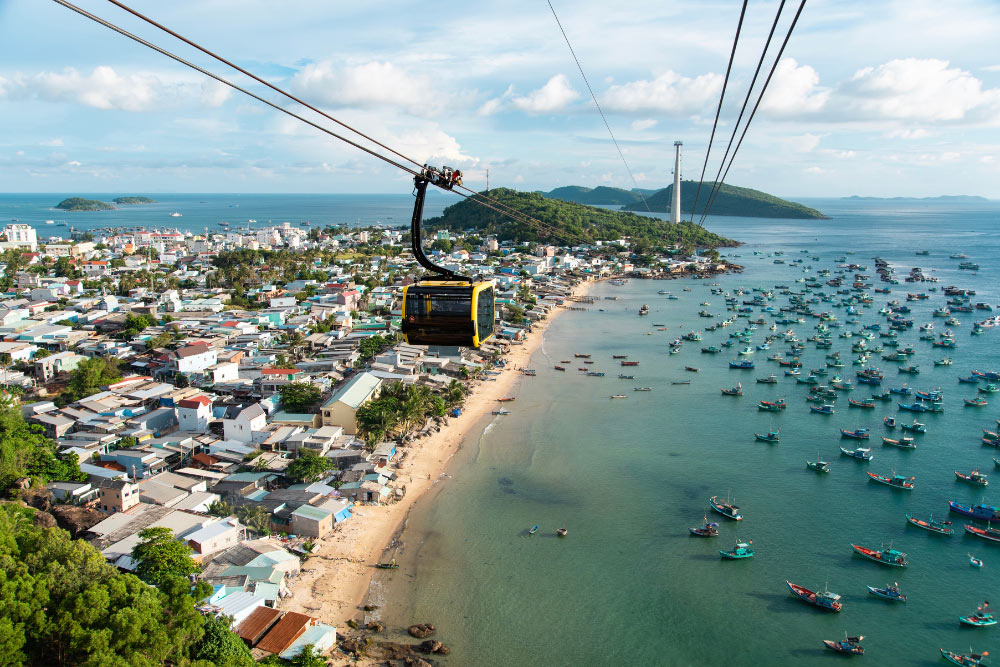
The Phu Quoc visa exemption gives any nationality up to 30 days on the island with no visa and no e-visa application, but only if you arrive from outside Vietnam and stay on Phu Quoc. It is the wrong tool if your passport already holds a longer nationwide exemption, or if your trip includes mainland Vietnam.
That is the whole rule, and it is also why so many pages about it are wrong. The generous half — any nationality, no paperwork, no fee — gets repeated everywhere. The two conditions attached to it decide whether you walk out of the airport or get turned around at a desk, and they are the half that goes missing.
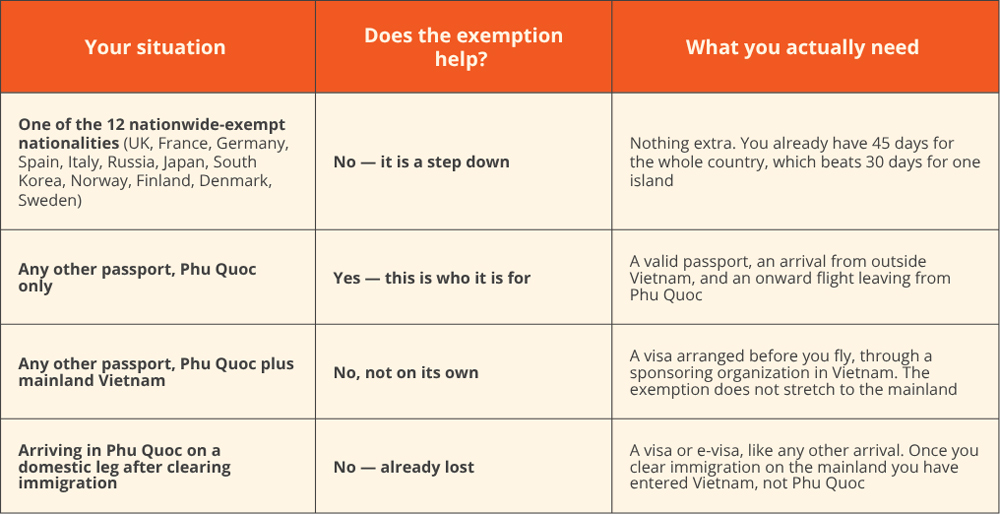
Phu Quoc is the only place in Vietnam with an exemption of this kind. Not the only island — the only place. There is no nationality restriction on it at all, which is unusual: it covers passports Vietnam exempts nowhere else, and it covers Vietnamese nationals traveling on a foreign passport. Set against that, Vietnam separately exempts citizens of 12 countries for 45 days across the whole country, and if you hold one of those passports this page describes something narrower than what you already have.
We checked this page against the Vietnamese foreign ministry's visa-exemption list on 15 October 2026. Immigration rules change, and they change without much warning, so confirm your own case against the rule in force on the day you fly rather than against any travel page, ours included.
Length of stay: up to 30 days. Treat anything longer as a visa question to settle before you fly, not something to sort out on the island.
Nationalities: all of them. There is no eligible-country list to check, which is the most useful thing about it.
Application: none. No form, no e-visa, no approval letter, no pre-registration. You show up with a passport and the right itinerary behind you.
What it costs: nothing for the exemption itself, because there is nothing to apply for. Your costs are the flights, and a separate visa for the rest of Vietnam if you decide you want one.
A lot of pages, including an older page of our own, call Phu Quoc the only island in Vietnam with visa-free entry. That reads as though the rule attaches to islands and other islands might follow. It does not: the exemption attaches to Phu Quoc specifically, and no other Vietnamese destination carries one. Con Dao does not. Nha Trang does not. If you are picturing an island-hopping trip that stays visa-free by staying offshore, that trip does not exist.
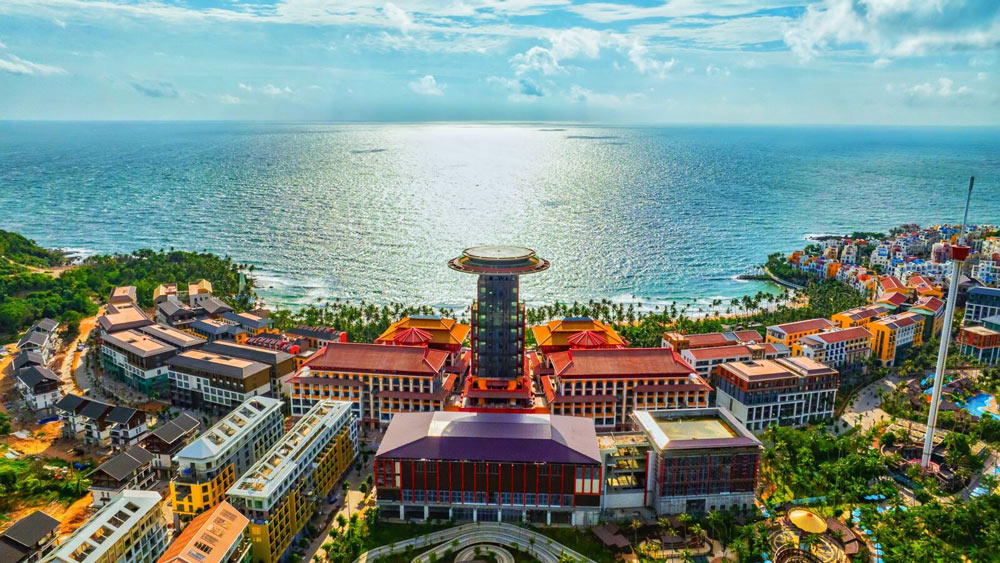
Two routes qualify for the Phu Quoc visa exemption: an international arrival direct into Phu Quoc, or an arrival at another Vietnamese international gate where you stay inside the transit area and fly on. If you clear immigration at Hanoi or Tan Son Nhat you have entered Vietnam, not Phu Quoc, and you need a visa.
This is the part our own site has been missing, and it is the part that costs money when it is missed. Two opposite misreadings circulate. The first is that only a direct flight into Phu Quoc counts, which makes people pay for a visa they did not need or abandon a workable routing. The second is that any connection through Saigon counts, which is the expensive one — it sends a traveler to a gate with no visa on an itinerary that requires one.
The distinction is not about which airport you touch. It is about whether you pass through immigration. Stay inside the transit area and you have transited Vietnam. Walk through passport control and you have entered it, and at that moment the exemption is no longer the thing that admitted you.
Qualifies. You fly Singapore to Phu Quoc, or Bangkok to Phu Quoc, or arrive by sea with Phu Quoc as your first Vietnamese point of entry. Your immigration formalities happen on Phu Quoc, and the 30 days starts there. This is the clean case and it is the one to aim for if you can.
Qualifies. You fly into Tan Son Nhat from abroad, remain inside the transit area, and board a connecting flight to Phu Quoc without collecting bags or passing through passport control. You have transited, not entered, and the exemption still applies when you land on the island.
Does not qualify. You fly into Hanoi from abroad, clear immigration, spend a night in the city or simply exit and re-check in for a domestic flight, and continue to Phu Quoc. You entered Vietnam at Hanoi. The exemption was never engaged, and you needed a visa or e-visa for that arrival.
Before you pay for the ticket, send the actual flight numbers to your airline or to us and ask whether the connection can be flown airside with no Vietnamese visa. That is the one question worth asking out loud, and it is cheaper to ask now than at a check-in desk.
The rule permits airside transit. It says nothing about whether your particular connection can physically be flown airside, and that is a separate question with two separate ways of going wrong.
The first is the airport. Whether an international arrival can reach a domestic departure gate without clearing immigration depends on how that terminal is arranged and on how your tickets are issued — one booking with bags checked through behaves differently from two bookings you bought separately.
The second is the airline. A carrier can refuse to board a passenger whose ticket shows a Vietnamese first point of entry and no Vietnamese visa, regardless of what the rule allows, because the carrier is the one that pays if the passenger is refused on arrival. That refusal happens at your departure airport, before you have left home, and arguing the rule at the desk does not help.
So treat the two-route rule as what you are entitled to, and treat the specific routing as something to confirm. They are not the same thing and the gap between them is where people get stuck.
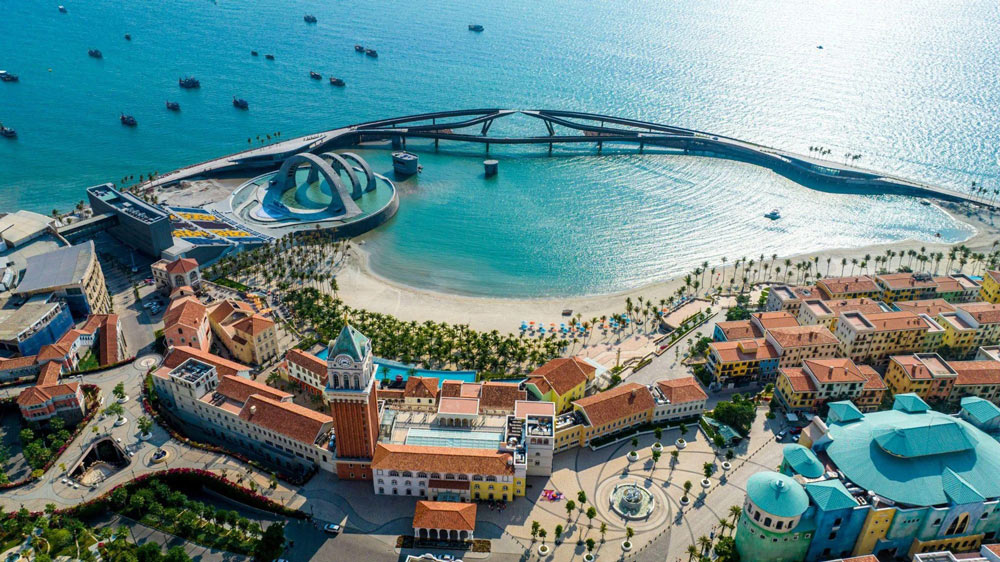
The Phu Quoc visa exemption admits you to Phu Quoc and nowhere else in Vietnam. Reaching the mainland needs a visa arranged in advance through a sponsoring organization in Vietnam, and you cannot file an e-visa from the island to get around it.
This is the second thing most pages leave out, and for the kind of trip we usually build it is the more consequential of the two. If your Vietnam plan is Phu Quoc and nothing else, the exemption is all you need. If it is Phu Quoc plus Hanoi, Phu Quoc plus Hoi An, or Phu Quoc at the end of a north-to-south route, the exemption covers one leg and leaves the rest uncovered.
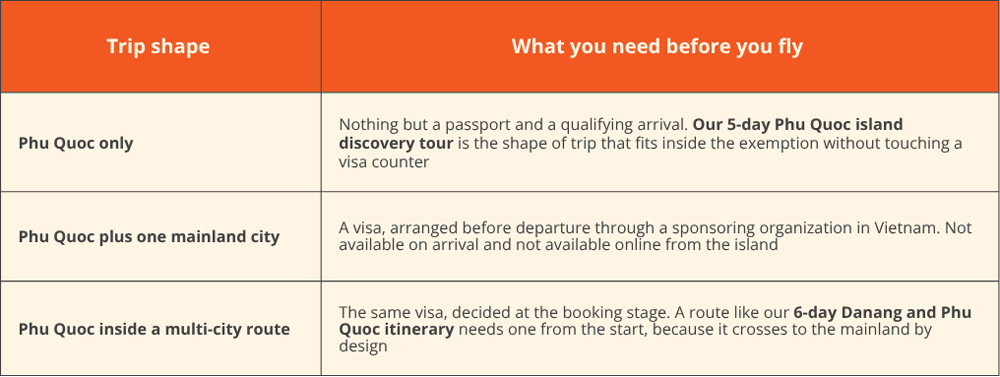
The mechanism is the awkward part. A visa for someone who came in on the island exemption is not a counter transaction and not a web form. It runs through an inviting or sponsoring body inside Vietnam, which means a Vietnamese organization has to be part of the application. Practically, that means it is arranged before you fly, by someone on the ground here, and it is not something you can start on a Tuesday afternoon in Duong Dong because the trip got more interesting than you planned.
It also means your onward flight should leave from Phu Quoc. If you came in on the exemption and have no mainland visa, the island is where the trip ends, and the ticket out needs to reflect that.
There is one narrow path and it only helps a specific group. A traveler who holds one of Vietnam's nationwide exemptions, and who arrived in Phu Quoc and then wants to leave the island early, can be re-documented at the control point rather than needing a fresh visa — the old temporary-residence paperwork is canceled and new paperwork is issued against the nationwide exemption instead.
We will not put a number on how early is early enough. The figure written into the rule matches an older nationwide exemption period, the nationwide period has since changed, and we could not confirm whether the two were reconciled. Not stated here, and we will not imply one. If this is your situation, ask at the control point or ask us, and plan the trip as though the island is the island.
For most European travelers, and for anyone planning more than Phu Quoc, the Phu Quoc visa exemption is not the right instrument. A 45-day nationwide exemption or a standard e-visa gives you more time and the whole country.
Nobody writing about this says so, and it is the most useful sentence on the page. The 12 nationwide-exempt nationalities — Russia, Japan, South Korea, Norway, Finland, Denmark, Sweden, the UK, France, Germany, Spain and Italy — hold 45 days for all of Vietnam under an arrangement running to 14 March 2028. For those passports the Phu Quoc exemption is worse on both axes at once: fewer days, one island instead of a country.
For the travelers we build multi-week private trips for, the honest answer is usually that this exemption is irrelevant: the moment the route leaves the island, the visa question is back. Where it genuinely wins is a passport with no other Vietnamese entitlement on a trip that really is island-only — and there it wins outright, because it costs nothing and asks for nothing.
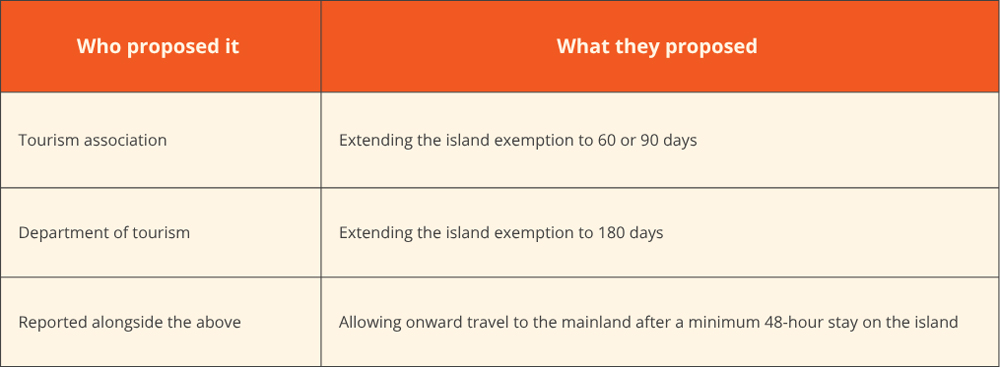
Vietnamese tourism bodies have proposed extending the Phu Quoc visa exemption well beyond 30 days and allowing onward mainland travel after a minimum island stay. None of it is in force, and travelers should plan on the current 30-day island rule.
These were reported on 8 April 2026 by a provincial government information portal in Vietnam, crediting the provincial newspaper. They are proposals in the ordinary sense of the word: bodies with an interest in tourism asking the government to change a rule. Nothing in the list below has been adopted, none of it has a commencement date, and none of it changes what happens at a Phu Quoc immigration desk today.
Plan on 30 days and on the island, book flights on that basis, and if any of this is adopted it will be a pleasant surprise rather than a plan that has to be rebuilt.

Every page that mentions transit stops at the words "transit qualifies" and leaves you to assume your own connection works. Two things break it independently of the rule: the airport's own international-to-domestic arrangement, which decides whether you can reach a departure gate without passing through immigration, and an airline declining to board a passenger whose first Vietnamese point of entry is Hanoi and who holds no visa, because the carrier pays for a refused arrival.
The practical version: send us or the airline the actual flight numbers and ask whether that specific connection stays airside, before the ticket is paid for. We do this for travelers we are routing anyway, and it takes one message.
Competitor pages treat the exemption as free upside you discover on arrival. It is the opposite — it is a constraint you commit to when you buy the tickets. Because a mainland visa needs a sponsor and has to be arranged in advance, "we will add Hoi An once we are there" is not a move available to someone who flew in on the exemption.
Island-only and island-plus-mainland are two different visa decisions, and the cheap mistake is making them in the wrong order: picking flights first and discovering the constraint second. If you are still deciding, what there actually is to do on the island is a better place to start than a visa page, because it tells you whether a week there holds your interest.
Travel sites state a six-month passport validity requirement for Phu Quoc as settled fact. That floor belongs to a different exemption category, not to this one. The defensible version, and the one we will put our name to: this exemption does not itself set a six-month rule, your airline may apply one of its own, and you should renew a passport inside six months of expiry regardless of what any rule says.

Up to 30 days, for any nationality, as long as you arrive from outside Vietnam and stay on the island.
Only if you stay inside the transit area and connect straight on. If you clear immigration at Hanoi or Tan Son Nhat you have entered Vietnam and you need a visa.
No. It covers Phu Quoc only, and the mainland needs a visa arranged in advance through a sponsoring organization in Vietnam.
All of them — there is no nationality restriction. But 12 countries, including the UK, France, Germany, Spain and Italy, already have 45 days for the whole country, so the island exemption is a step down for them.
No application and no e-visa for the island itself. You need a valid passport, and your onward flight should leave from Phu Quoc.
Extensions to 60, 90 or 180 days have been proposed by Vietnamese tourism bodies and reported in April 2026, but none is in force. Plan on 30 days.
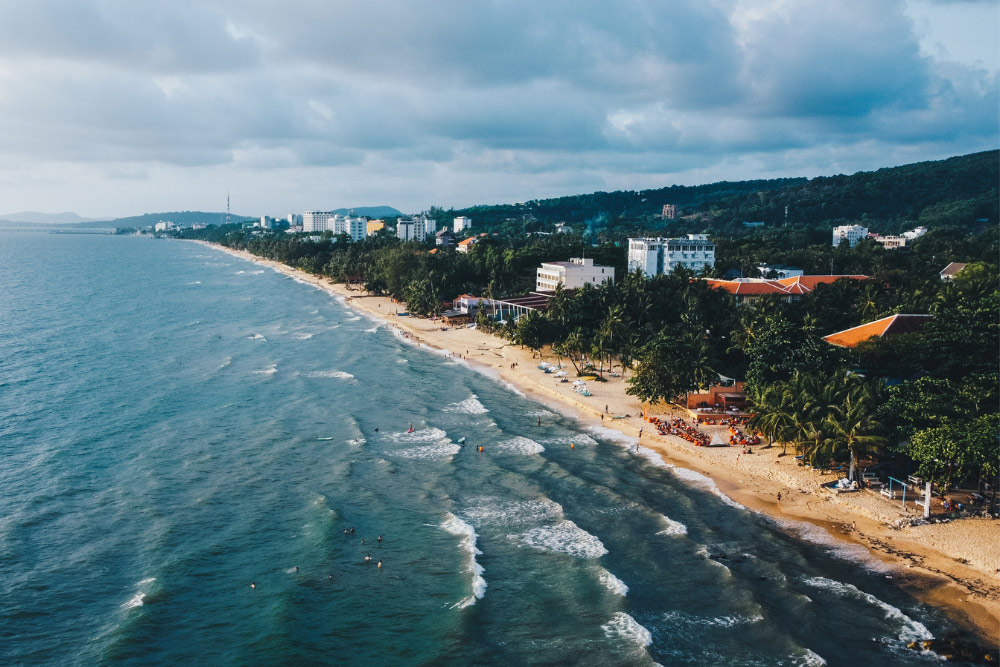
The Phu Quoc exemption is generous and narrow at the same time, and which of the two you get is not decided on the island. It is decided twice at the booking stage: once by the passport you hold, and once by the shape of the trip you commit to. Hold a nationwide-exempt passport and the island rule is beneath you. Hold anything else on an island-only week, and it is the easiest entry into Vietnam there is.
Get it wrong in the small way and you change a flight. Get it wrong in the large way and you are standing at a desk in Hanoi being told you entered Vietnam twenty minutes ago and the island rule does not apply to you. That gap closes with one message to an airline or to us. This page was checked on 15 October 2026; immigration rules change, so check yours again closer to departure.
Tell us your dates, the passport you are traveling on, and the routing you are looking at, and we will say plainly whether the exemption covers it or whether you need a visa arranged first. Free quote, no obligation, and you can reach us on WhatsApp. If the trip really is island-only, the 5-day Phu Quoc island discovery tour stays inside the exemption and needs nothing arranged in advance. If you want the mainland as well, the 6-day Danang and Phu Quoc route is the comparison worth making — and it needs a visa from the start, which we will tell you before you book rather than after.
WhatsApp: (+84) 866.22.7878
Email: sales@asiamystika.com
Website: www.asiamystika.com
