
- SG$ Singapore Dollar
- A$ Australian Dollar
- £ British Pound Sterling
- C$ Canadian Dollar
- € Euro
- MYR Ringgit Malaysia
- US$ United States Dollar
- đ Vietnamese Dong




 About Us
 Destinations
 Travel Styles
 Travel Guide
 Blogs
Blogs

An honest look at accessibility in Da Nang — which attractions work with limited mobility, what the pavements are really like, and how to plan around it.
QUICK ANSWER:
Da Nang is one of Vietnam's easier cities for older travellers and those with limited mobility, though it is not a step-free destination. The beachfront promenade is flat and wide, resorts are modern and generally lift-served, and the main excursions have workarounds — a glass lift at the Marble Mountains and a cable car at Ba Na Hills. The real difficulty is street-level: pavements are uneven, frequently obstructed by parked motorbikes, and crossing roads takes confidence. A private car with a driver who waits removes most of the problem. ↻ LIVE — verify every access claim in person before publish.
Da Nang's modern infrastructure makes it more manageable than most Vietnamese cities, but Vietnam broadly has limited accessible infrastructure and expectations should be set accordingly.
For travellers researching Da Nang accessible travel, the most important thing to understand is that the city is improving, but it is not a fully step-free destination. Vietnam's streets were not originally designed around universal accessibility, so visitors with wheelchairs, walkers or limited mobility will still encounter challenges in everyday situations. The experience is usually less about whether you can visit Da Nang, and more about planning the right routes, transport and attractions in advance.
Compared with many other Vietnamese destinations, Da Nang is a more comfortable choice for seniors because much of the city has developed with wider roads, modern hotels and a relatively flat coastal landscape. The beachfront area, especially around My Khe Beach, offers a more relaxed environment with broad walking areas and fewer hills. Many newer hotels and resorts also have elevators and facilities that are easier to navigate, making the city a practical base for a slower-paced holiday.
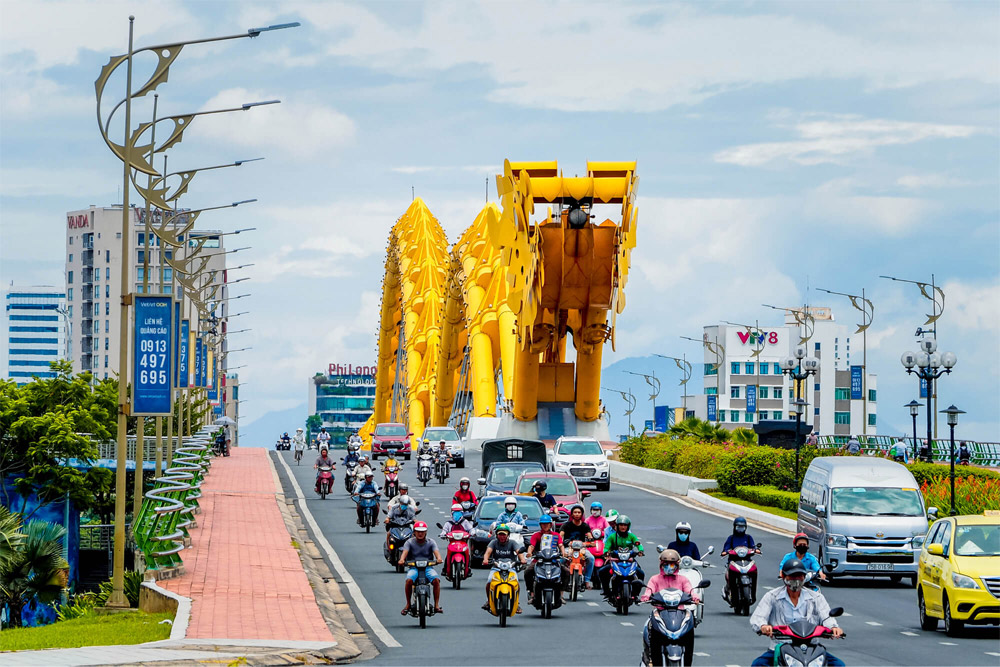
The biggest challenges usually appear at street level. Sidewalks can be uneven, narrow or occupied by parked motorbikes, food stalls and other obstacles. Kerbs are not always designed for easy wheelchair access, and crossing busy roads can feel overwhelming because traffic in Vietnam moves differently from many Western countries. For Da Nang elderly travel, having a private vehicle and a patient driver can make a significant difference, reducing the need to navigate difficult streets independently.
The surrounding destinations also require realistic planning. Hoi An Ancient Town has beautiful pedestrian streets but many historic buildings, narrow entrances and uneven surfaces that can be challenging for some visitors. Hue offers excellent cultural experiences, but its large heritage sites often involve walking across expansive grounds. Da Nang itself is generally the easier base, allowing travellers to explore Central Vietnam while returning each evening to a more convenient and comfortable environment.
If you are visiting Da Nang for the first time, our Da Nang, Vietnam: First-Timer's Travel Guide (2026) covers the essential areas to stay, transport options and must-see experiences before planning your trip.
A private car with a driver who waits is the single most effective accessibility decision in Da Nang, because it removes pavements and road crossings from the day entirely.
For travellers planning Da Nang wheelchair accessible trips or Da Nang for seniors, transport choice can have a bigger impact than the attraction itself. A private car allows you to travel at your own pace, avoid difficult pavement conditions and spend less time navigating busy streets. Having a driver who understands your schedule also means you do not need to worry about finding transport again after each stop, which is especially helpful when visiting multiple attractions in one day.
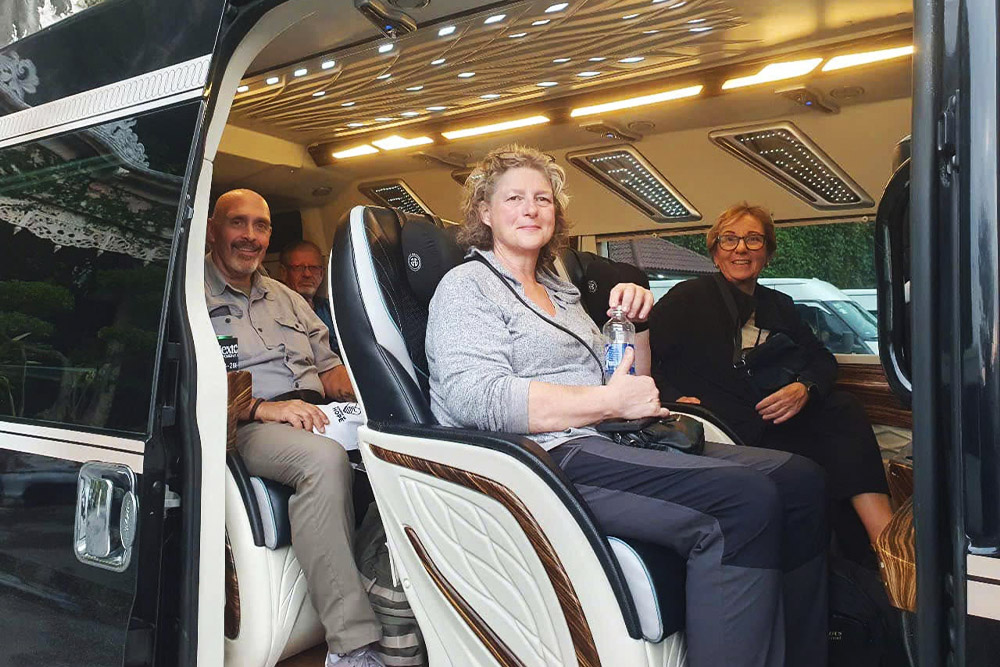
Ride-hailing apps such as Grab are widely used in Da Nang and can be convenient for short journeys, but standard services do not guarantee wheelchair-accessible vehicles or drivers trained to assist passengers with mobility needs. Availability of suitable vehicles can change, so travellers requiring specific support should arrange transportation in advance rather than relying only on on-demand options.
Traditional taxis can work well for many older travellers, but passengers travelling with wheelchairs, walkers or larger mobility equipment should confirm vehicle size and storage space before booking. The ability to fold and store equipment will often determine whether a regular car is suitable or whether a specially arranged vehicle is needed.
Walking depends heavily on where you are. The beachfront area is one of the easier places to explore because it is relatively flat and open, making it suitable for a relaxed seaside stroll. However, outside the main tourist zones, pavements can become uneven, narrow or interrupted by parked motorbikes, meaning longer walking routes may be tiring or difficult for visitors with limited mobility.
Distances in Da Nang are another reason private transport works well. The city is spread out: the airport and city centre are close together, while areas such as My Khe Beach, Son Tra Peninsula, Marble Mountains and Ba Na Hills require separate journeys. Instead of changing transport several times throughout the day, a private vehicle creates a smoother experience with fewer physical challenges.
With Asia Mystika, your Da Nang journey comes with a private car and local driver who stays with you throughout the day, giving you more flexibility to rest, adjust the schedule and enjoy each attraction at a comfortable pace.
Need a smoother way to explore Da Nang? Plan your accessible journey with Asia Mystika.
The Marble Mountains glass lift and the Ba Na Hills cable car both remove major climbs, but neither delivers a fully step-free visit once you arrive.
For Da Nang accessible travel, the best approach is not asking whether an attraction is “accessible” or “not accessible” — it is understanding how much assistance, walking or preparation each place requires. Many of Da Nang’s highlights can still be enjoyed by older travellers and visitors with limited mobility, but some require a slower pace, alternative routes or support from a companion.
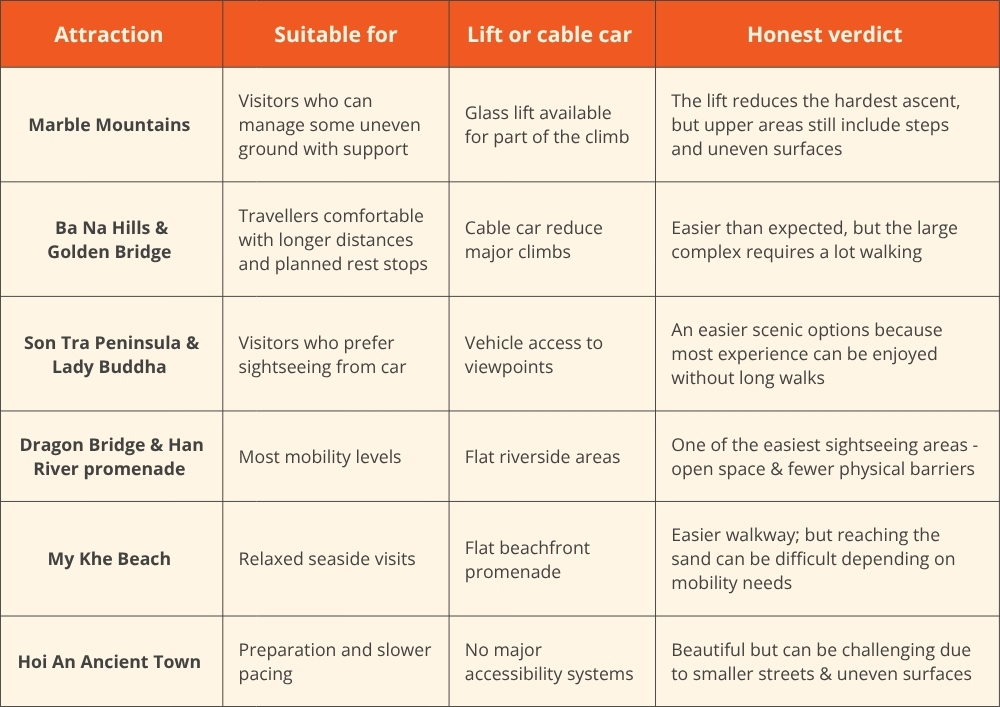
The Marble Mountains are a good example of why realistic planning matters. The glass lift helps visitors avoid much of the steep climb, making the attraction more manageable for many older travellers. However, reaching viewpoints and exploring the upper sections still involves steps, stone surfaces and uneven pathways. Travellers with limited mobility may enjoy the lower areas and main viewpoints without trying to cover every corner.
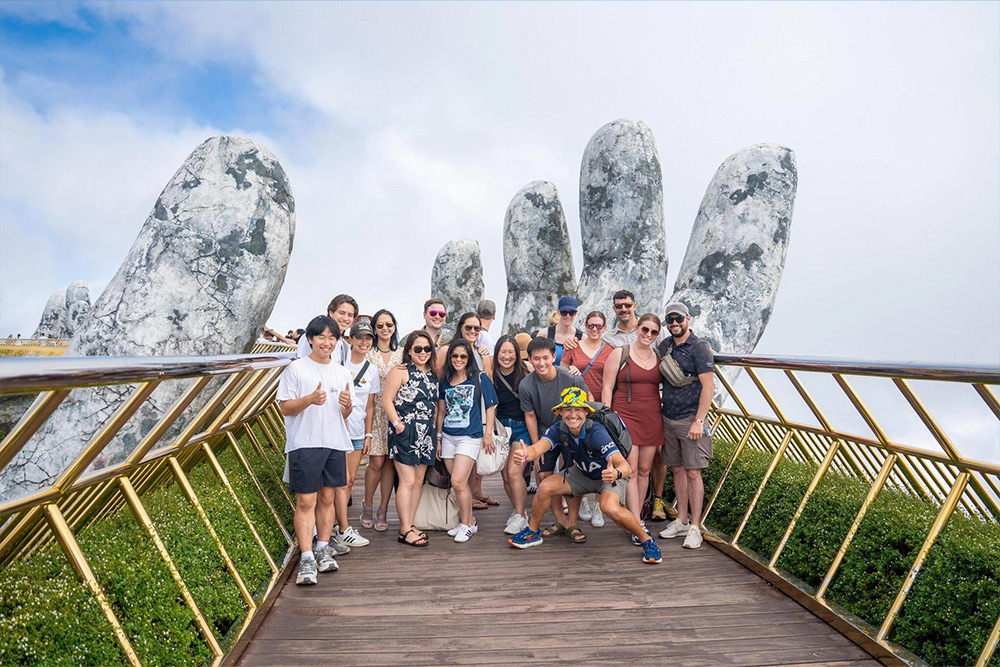
Ba Na Hills and Golden Bridge are often considered one of the more practical mountain experiences in Central Vietnam because the cable car removes the long uphill journey. However, the destination covers a large area, and visitors should expect walking between stations, gardens, restaurants and viewpoints. A comfortable pace with planned rest breaks is usually more important than speed. You can also read our detailed Ba Na Hills & Golden Bridge guide when deciding if this experience matches your mobility level.

For travellers looking for easier sightseeing, Son Tra Peninsula, Lady Buddha, Dragon Bridge and the Han River area are among the more comfortable choices. Much of Son Tra can be experienced from a vehicle, while the riverside promenade around Dragon Bridge offers a flatter environment for a relaxed outing. These are good examples of attractions that work well for Da Nang for seniors because they combine scenery with less physical effort.
The beach requires a little more explanation. My Khe Beach is excellent for enjoying ocean views, cafés and the seaside atmosphere, but a flat promenade does not always mean easy beach access. Moving from the walkway onto sand can be difficult for wheelchair users or anyone with limited balance, so expectations should be adjusted depending on individual mobility needs.
Nearby Hoi An Ancient Town is another place where planning helps. Its pedestrian streets create a calmer environment without heavy traffic, but the historic character also means uneven paving, older surfaces and occasional obstacles. Many visitors with mobility limitations enjoy Hoi An by focusing on shorter routes, cafés, riverside areas and selected highlights rather than trying to explore every lane.
The key takeaway for Da Nang wheelchair accessible travel is that the city’s attractions are often possible with the right preparation — but not always in the same way as a fully accessible destination. Choosing the right combination of sights, transport and pacing can make the experience much more comfortable.
Da Nang's international beachfront resorts offer the most reliable accessible rooms and lift access, and are the safest choice for travellers with mobility needs.
Choosing the right accommodation is one of the biggest decisions for Da Nang accessible travel. A well-chosen hotel can remove many daily challenges, while a property that looks suitable online may still have details that matter in practice, such as bathroom layout, entrance steps or the distance from the room to public areas.
For travellers looking for accessible hotels Da Nang, international beachfront resorts and larger properties are often the easiest places to start. These hotels usually have more modern designs, elevators and staff accustomed to assisting international guests. However, accessibility standards can differ, so do not rely only on the words “accessible room” or “senior-friendly” on a booking page.
Before confirming a hotel, ask for specific details:
Does the room have step-free access from the entrance to the bedroom?
Is there a lift serving the room floor?
Does the bathroom have a walk-in or roll-in shower?
Are grab rails available beside the toilet or shower area?
Is there enough space to move comfortably with a wheelchair or walking aid?
Can the hotel provide assistance with luggage or transport arrangements?
Bathroom design is especially important. A room may have a wide entrance but still be difficult to use if the shower area has a high step, limited space or no support features. Travellers with specific mobility requirements should request photos or written confirmation from the hotel before arrival.
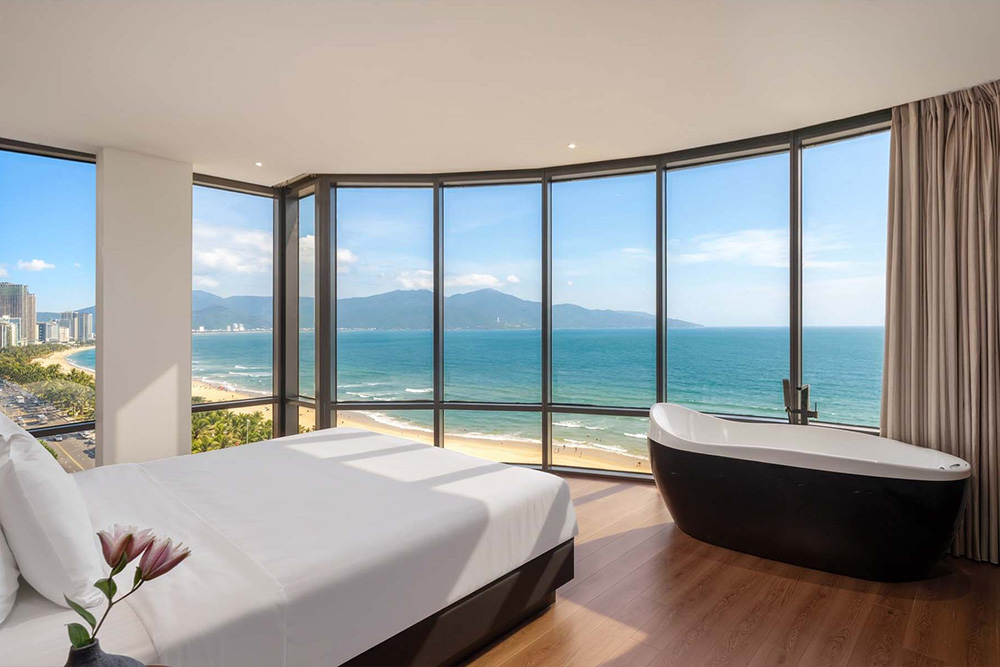
Location matters just as much as the room itself. Staying near the beachfront gives many visitors an easier daily routine because the coastal area is flatter and offers a more comfortable environment for short walks, cafés and relaxing by the sea. For Da Nang for seniors, reducing unnecessary transport time can make the whole trip feel much more enjoyable.
Pool access and resort facilities should also be checked individually. Some properties may have excellent rooms but limited pool access due to steps or layout. If swimming or resort relaxation is an important part of the holiday, ask the hotel about access before booking.
For more hotel options and recommendations, see our guide to Best Da Nang Hotels & Resorts 2026 when planning your stay.
The best accommodation choice is not simply the most luxurious hotel — it is the one that matches your mobility needs, travel style and daily comfort. Asia Mystika can help select suitable accommodation and build a Vietnam accessible travel itinerary with realistic distances, transport support and a comfortable pace.
Da Nang has international-standard clinics and hospitals, and travellers on regular medication should carry supplies rather than expect to source them locally.
For Da Nang elderly travel and visitors managing ongoing health needs, preparation is one of the most important parts of a comfortable trip. Da Nang has healthcare facilities that can support international visitors, including private clinics and hospitals with English-speaking staff, but medical services may not always work exactly like they do at home. Having your documents, medication information and insurance details ready can make any unexpected situation much easier to handle.
Travellers who take regular prescription medication should bring enough supplies for the entire journey, plus some extra in case of delays. Keep medicines in their original packaging and carry a copy of your prescription or a doctor’s letter, especially for medication that may have specific import requirements. Do not assume every brand or dosage available in your home country will be easily found in Vietnam.

Pharmacies are common in Da Nang and can provide many basic health products, but they should not be considered a replacement for bringing essential personal medication. For travellers with specific medical conditions, it is better to prepare before departure rather than trying to arrange important supplies after arrival.
Travel insurance is also an important consideration, particularly for older travellers or anyone with existing health conditions. Check that your policy includes appropriate medical treatment, emergency assistance and coverage related to pre-existing conditions if required. A low-cost policy may not always provide the level of support needed for longer stays or complex medical situations.
For visitors travelling with wheelchairs, walking aids or other mobility equipment, confirm transport arrangements before arrival. If equipment needs adjustment or repair during the trip, options may be more limited than in countries with highly developed accessibility services, so bringing essential spare parts or repair information can be helpful.
It is also useful to save important emergency contacts and your travel insurance assistance number before arriving. Vietnam's general emergency numbers are 115 for medical emergencies, 113 for police and 114 for fire services.
For a broader overview of safety preparation, healthcare and travel considerations, see our guide: Is Da Nang Safe?.
Heat and humidity are the most common practical difficulty for older travellers in Da Nang, and pacing matters more than accessibility infrastructure for most visitors.
For Da Nang for seniors, a comfortable itinerary is often less about how many places you can visit and more about how much energy each day requires. Even when attractions are technically possible to access, long walking distances, direct sunlight and high humidity can make a sightseeing day much more tiring than expected.
Da Nang has a tropical climate, so conditions vary depending on the season. The hottest period is typically during the warmer months, while the dry-season months from around February to August are generally more suitable for beach activities and outdoor exploration. The cooler months can feel more comfortable, although weather conditions and temperatures can change throughout the year. Travellers planning Vietnam accessible travel should consider not only rainfall but also how much time they will spend outdoors.

A simple way to make the trip easier is to avoid the strongest midday heat. Schedule outdoor attractions in the morning, take a longer lunch break or return to the hotel during the afternoon, then continue sightseeing later when temperatures become more comfortable. This approach works especially well for destinations such as Marble Mountains, Son Tra Peninsula and other outdoor highlights.
For many older travellers, the one-major-activity-per-day principle works better than trying to combine several distant attractions. Instead of visiting Ba Na Hills in the morning, crossing the city for lunch and adding another major sightseeing stop in the afternoon, allow more time for each experience with regular breaks. A slower pace often creates a more enjoyable trip and leaves energy for evening activities.
Rest days are also valuable, especially on longer Central Vietnam itineraries. A relaxed beach morning, café visit or hotel day between bigger excursions can prevent fatigue from building up. This is particularly helpful for travellers with mobility limitations, as recovery time can make the following sightseeing day much more comfortable.
Simple preparation also makes a difference: carry water, choose shaded routes when possible, wear comfortable clothing and plan regular places to sit. Many visitors underestimate how tiring heat can feel when combined with walking, unfamiliar surroundings and a full travel schedule.
Accessible travel in Vietnam depends far more on advance arrangement than on infrastructure, which is why an operator who confirms details ahead is worth more here than anywhere else.
A successful Da Nang accessible travel experience usually comes from good preparation rather than trying to solve challenges after arrival. The city offers many enjoyable experiences for older travellers and visitors with mobility needs, but the details matter: how far you walk, where the vehicle stops, how much time you have to rest and whether each attraction matches your comfort level.
A gentle four-day itinerary could look like this:
Day 1: Arrival and easy introduction to Da Nang
Keep the first day relaxed with airport transfer, hotel check-in and a short visit to the Han River area or beachfront promenade. This allows time to recover from travel before starting longer excursions.
Day 2: City highlights at a comfortable pace
Visit easier-access areas such as Dragon Bridge, the riverside, local cafés and selected cultural attractions. Focus on enjoying the atmosphere rather than covering too many locations in one day.
Day 3: Choose one major experience
Spend the day at a highlight such as Ba Na Hills or Marble Mountains, with enough time for breaks and a slower exploration pace. The best choice depends on each traveller’s mobility level and comfort with walking.
Day 4: Relaxation or flexible sightseeing
Leave room for shopping, a beachside morning, a spa experience or any activities that were adjusted because of weather or energy levels.
Before booking, confirm accessibility details instead of assuming they will work. Useful questions include:
Can the vehicle accommodate my mobility equipment?
How much walking is expected at each attraction?
Are there stairs, steep sections or long distances involved?
Can the itinerary be adjusted if someone needs more rest time?
Does the hotel have the room features required for my stay?
Travelling with a companion or local guide can also make a significant difference. A guide who understands the destination can help with timing, communication, restaurant choices and small practical decisions that are difficult to manage independently.
For families travelling across generations, these same principles apply. A balanced itinerary with activities suitable for different ages can make the trip enjoyable for everyone. See our guide to Multigenerational Family Trips for more ideas on planning a comfortable family holiday.
INSIDER ADVICE:
“The lift at the Marble Mountains gives people false confidence — it takes you up, but the caves and viewpoints are all steps from there. I would rather be straight with a guest beforehand and plan a shorter visit that works than have them arrive and find they cannot do it.”
— Asia Mystika guide, Da Nang.
Partially. Some areas such as modern resorts, the beachfront promenade and selected attractions are more manageable, but uneven pavements, kerbs and limited accessibility infrastructure remain common challenges.
Yes, compared with many Vietnamese destinations, Da Nang can be a comfortable choice for older travellers thanks to its flatter coastal areas, modern accommodation options and easier access to some major attractions. The main considerations are heat, walking distances and street conditions.
Yes, with preparation. The glass lift reduces the main climb, but some areas beyond the lift still involve uneven surfaces and steps.
It can be suitable with the right pace and expectations. The cable car removes the steep mountain ascent, but visitors should still expect walking between different areas of the complex.
Yes, some international resorts provide rooms designed for guests with mobility needs. However, travellers should confirm specific features such as bathroom layout, entrances and room space directly before booking.
Yes, Da Nang has medical facilities that can support international visitors, including private clinics and hospitals. Travellers with specific medical needs should prepare insurance details and medication information before arrival.
Da Nang accessible travel is possible, but the experience depends heavily on preparation. The city offers many enjoyable experiences for older travellers and visitors with mobility needs, but choosing the right hotel, transport, attractions and daily pace makes the difference between a stressful trip and a comfortable one.
Asia Mystika helps travellers plan with local knowledge, selecting suitable experiences, arranging practical transport and building itineraries around individual needs.
Tell us what you need, and we’ll help you create a comfortable Da Nang journey.
