- SG$ Singapore Dollar
- A$ Australian Dollar
- £ British Pound Sterling
- C$ Canadian Dollar
- € Euro
- MYR Ringgit Malaysia
- US$ United States Dollar
- đ Vietnamese Dong




 About Us
 Destinations
 Travel Styles
 Travel Guide
 Blogs
Blogs

Travelling from Da Nang to Hue is more than a simple transfer between two cities it can be one of Central Vietnam’s most scenic journeys. You can ride the coastal train, book a private car over the dramatic Hai Van Pass, travel by motorbike, or join a guided tour with sightseeing stops along the way. This 2026 guide compares the main transport options, typical travel times, comfort levels, and what makes the Hai Van Pass worth adding to your route.
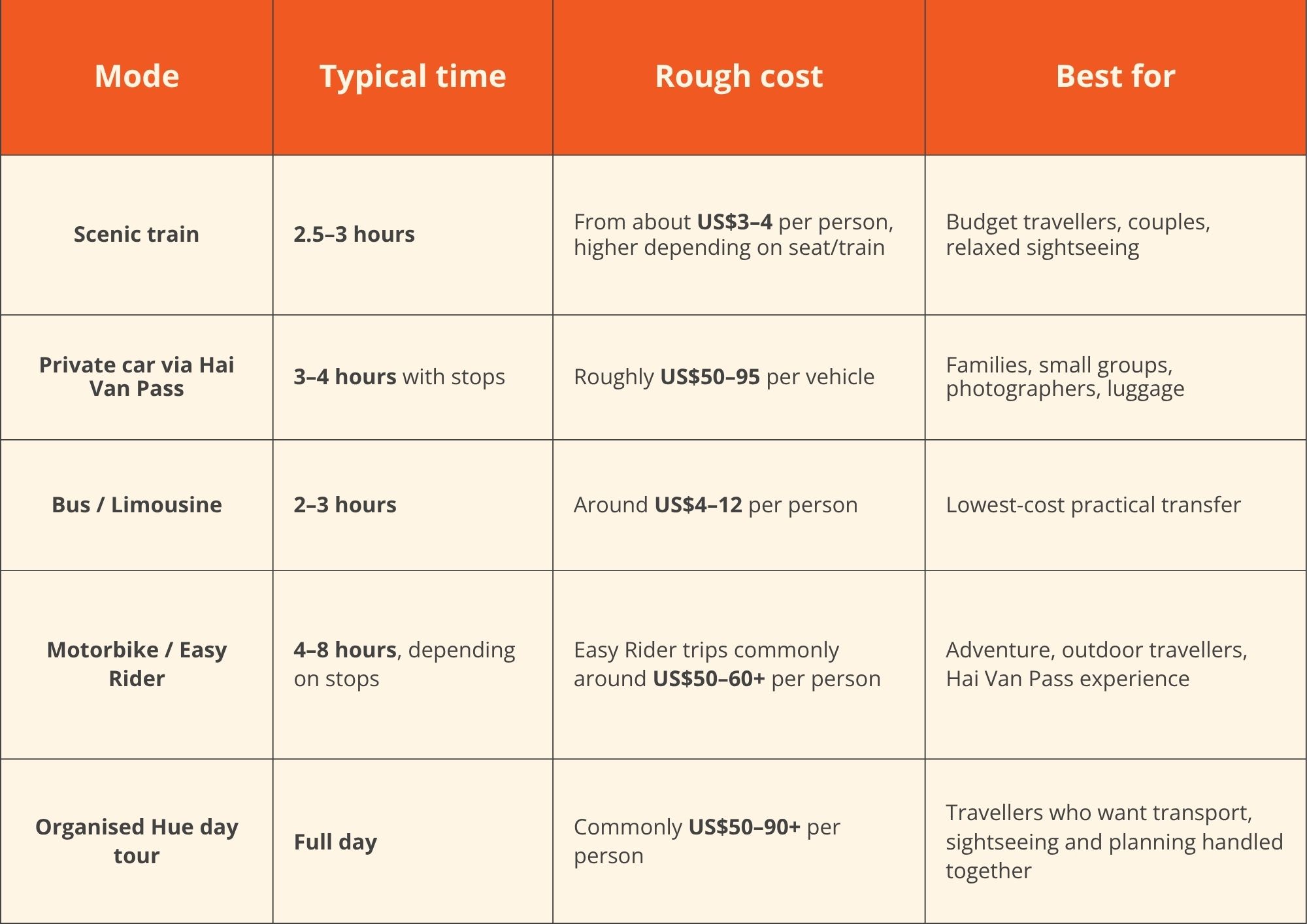
The journey from Da Nang to Hue covers roughly 95 km, and the best transport depends on whether you value scenery, flexibility, price, or convenience most. The train is the easiest scenic option, taking around 2.5–3 hours as it follows the coast and crosses the Hai Van Pass. A private car takes a similar amount of time when scenic stops are included, but lets you pause at mountain viewpoints, Lang Co Bay, and other places along the way. Buses, motorbike trips, and organised tours are also available.
If you want the best scenery for the lowest price, take the train. You still experience Hai Van’s dramatic meeting of mountain and sea without paying for private transport.
If you want to experience the pass itself, choose a private car. Being able to stop at the summit, photograph the coastline and continue when you are ready makes the transfer feel more like a half-day excursion than transportation.
And if you only have one day available, an organised Da Nang to Hue tour can combine the journey with Hue’s major sights while removing the need to coordinate tickets, drivers and return transport yourself.
The important thing is not to rush this route. Da Nang to Hue is one of those rare journeys where choosing the slower, more scenic option can be the best part of getting there.
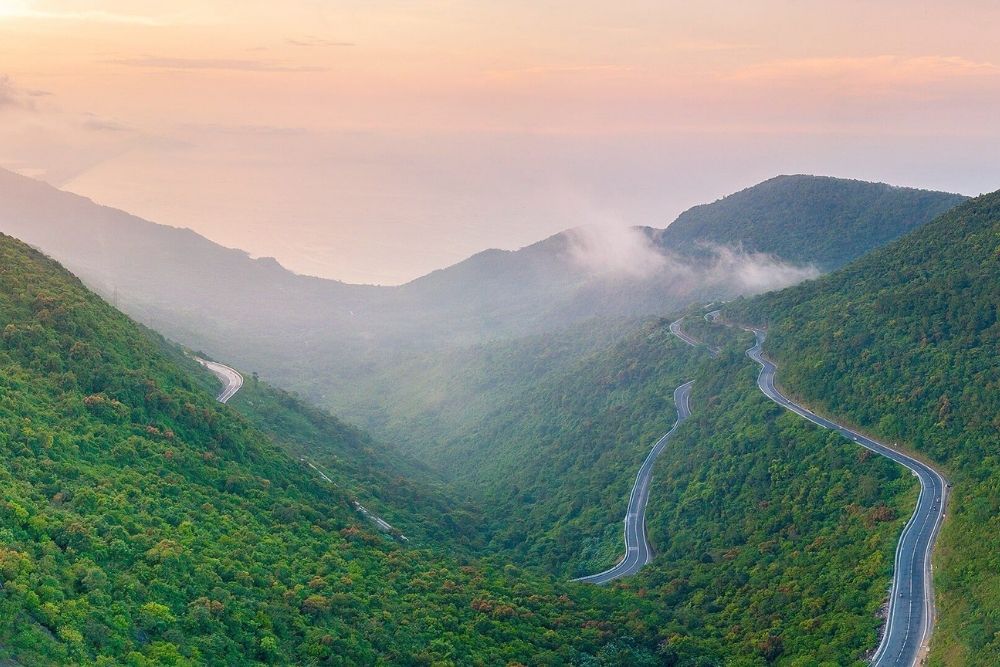
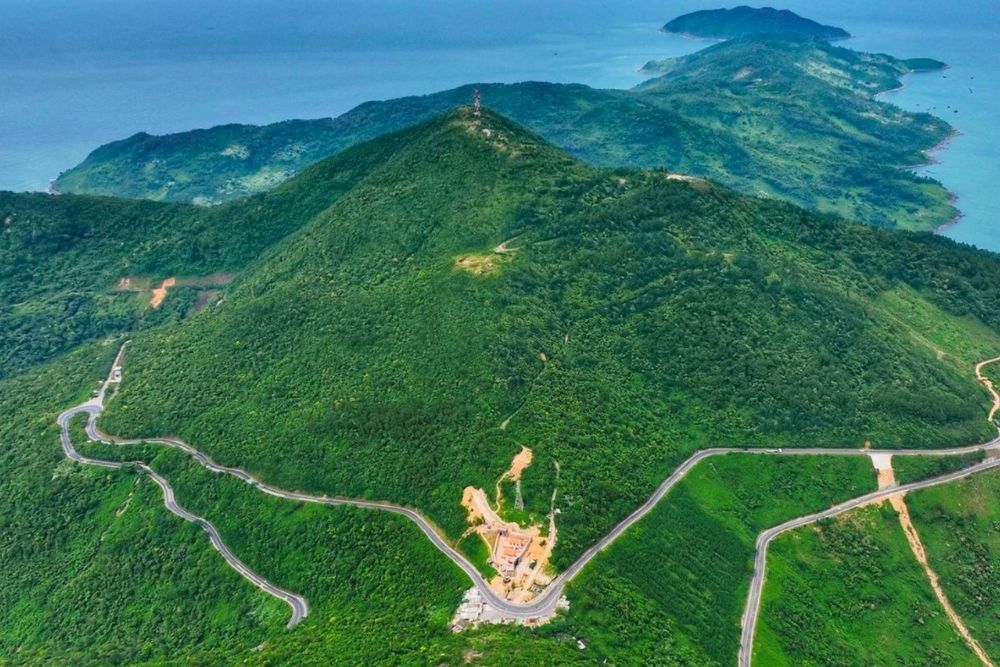
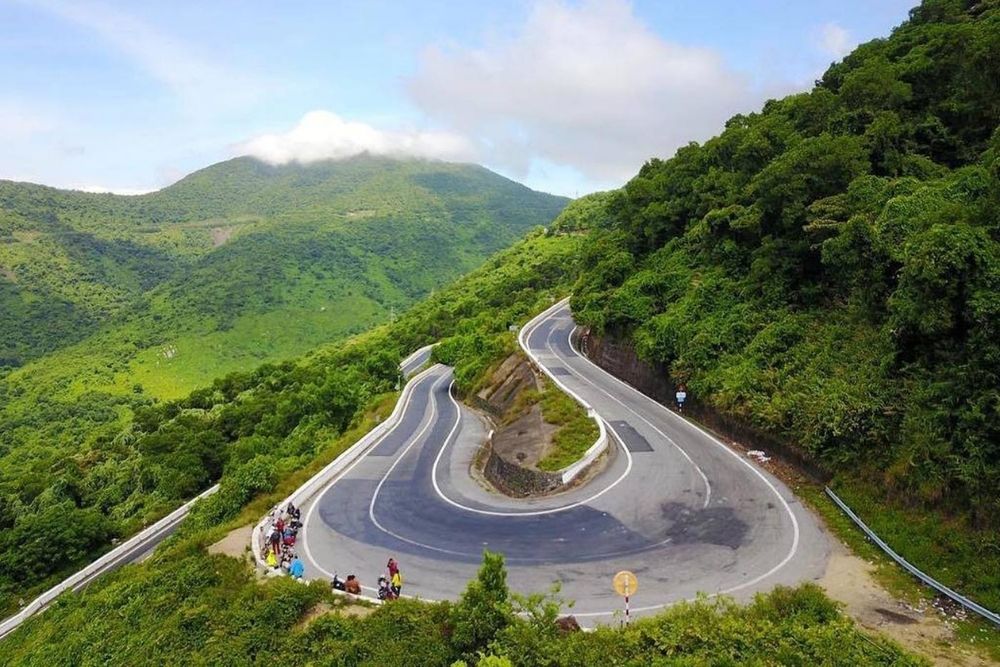
The Hai Van Pass is the spectacular mountain crossing between Da Nang and Hue, winding for roughly 20 km across the Bach Ma range. Its Vietnamese name, Hải Vân, means “Sea of Clouds” a fitting description for a road where forested peaks frequently disappear into mist while the sea remains visible far below. Instead of taking the Hai Van Tunnel and saving time, travelling Da Nang to Hue over the old pass road gives you changing views of Da Nang Bay, Lang Co Bay and the surrounding lagoons.
This is why a private car or motorbike journey feels very different from a normal intercity transfer. The road climbs to almost 500 metres above sea level, curves around the mountainside and reaches the historic Hai Van Gate at the summit before descending toward Lang Co. Vietnam Tourism describes this stretch as one of the region's standout coastal journeys, while Da Nang's official tourism portal specifically recommends asking drivers to use the pass instead of the tunnel when sightseeing is the priority.
As the road begins climbing north of Da Nang, pull over at one of the safe viewpoints overlooking Da Nang Bay and Son Tra Peninsula. Official Da Nang tourism information highlights Turtle Rock and roadside viewpoints on this southern side of the pass as popular places to appreciate the coastline before reaching the summit.
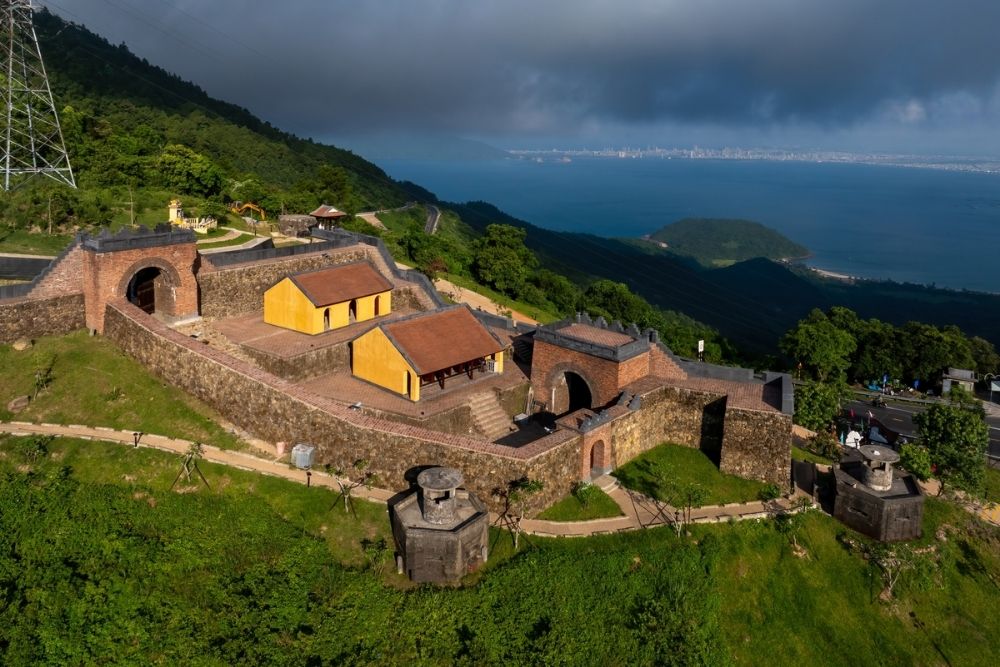
The essential stop is Hai Van Gate, the historic fortified gateway standing near the highest point of the pass at roughly 496 metres. The existing complex was developed under Emperor Minh Mang in 1826 and was restored in 2024; from here, you can look south toward Da Nang and north toward Lang Co.
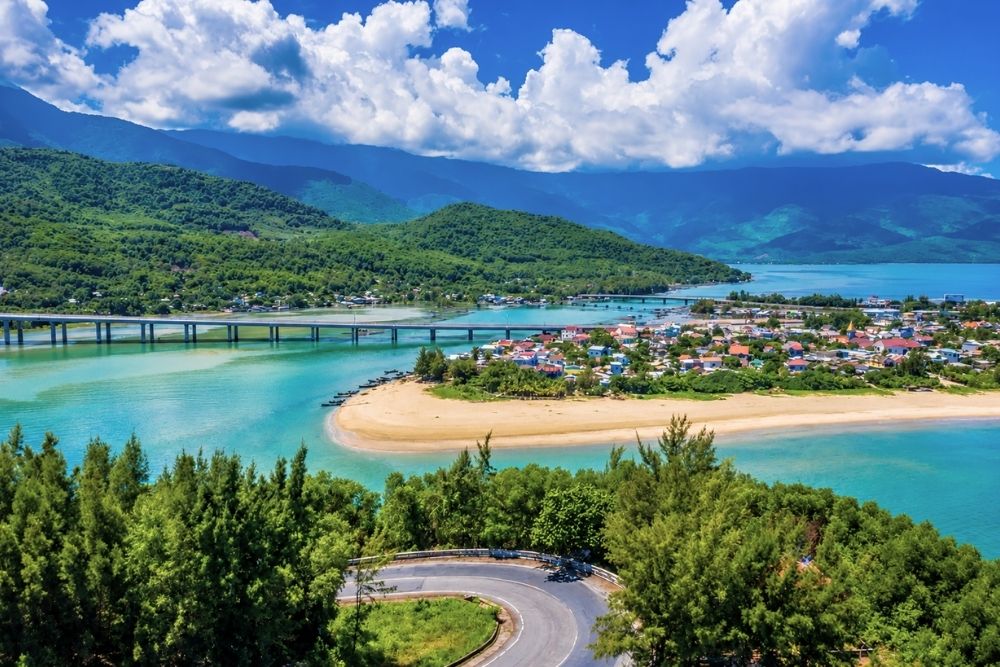
Descending the northern side reveals Lang Co, where a long pale beach curves around the bay beneath the mountains. It is one of the most photogenic transitions on the Da Nang to Hue route and an easy place to pause for coffee, seafood or simply a few minutes by the water.
Just beyond Lang Co, Lap An Lagoon adds a quieter landscape of still water and mountains. Da Nang's tourism authority specifically identifies Lap An Lagoon as one of the scenic views visible around the Hai Van–Lang Co section, making it worth adding when your driver and schedule allow.
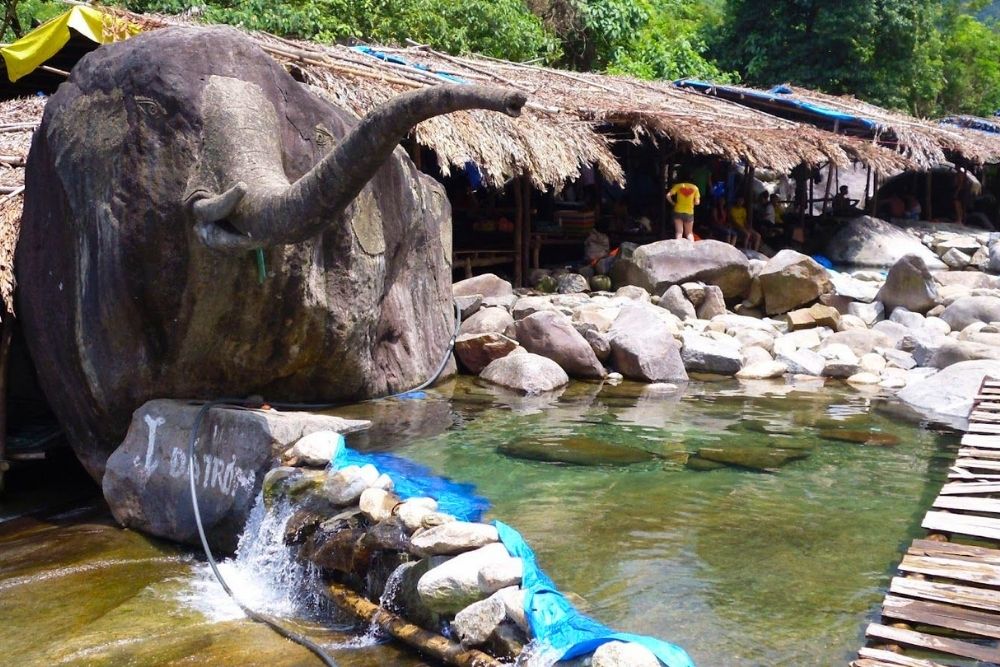
If you have extra time, continue to Elephant Springs, or Suoi Voi, a collection of freshwater pools and small cascades around 10 km from Lang Co. Vietnam Tourism recommends it as a detour rather than a standard roadside stop and suggests allowing an additional one to two hours, particularly if you plan to swim.
The key is not to pack every stop into a rushed schedule. For most travellers, Hai Van Gate, Lang Co and Lap An Lagoon create a satisfying scenic transfer without consuming the entire day. Add Elephant Springs when you genuinely have time to slow down.
That flexibility is what makes travelling Da Nang to Hue via the Hai Van Pass so worthwhile. Take the tunnel and Hue is simply your next destination; take the mountain road and the journey becomes part of the Vietnam experience itself.
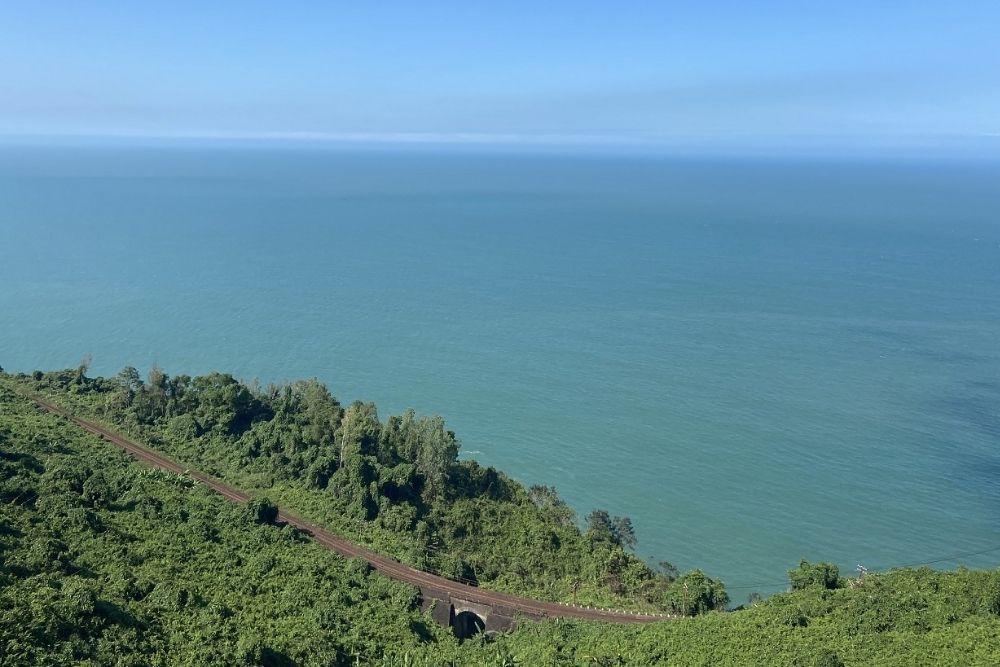
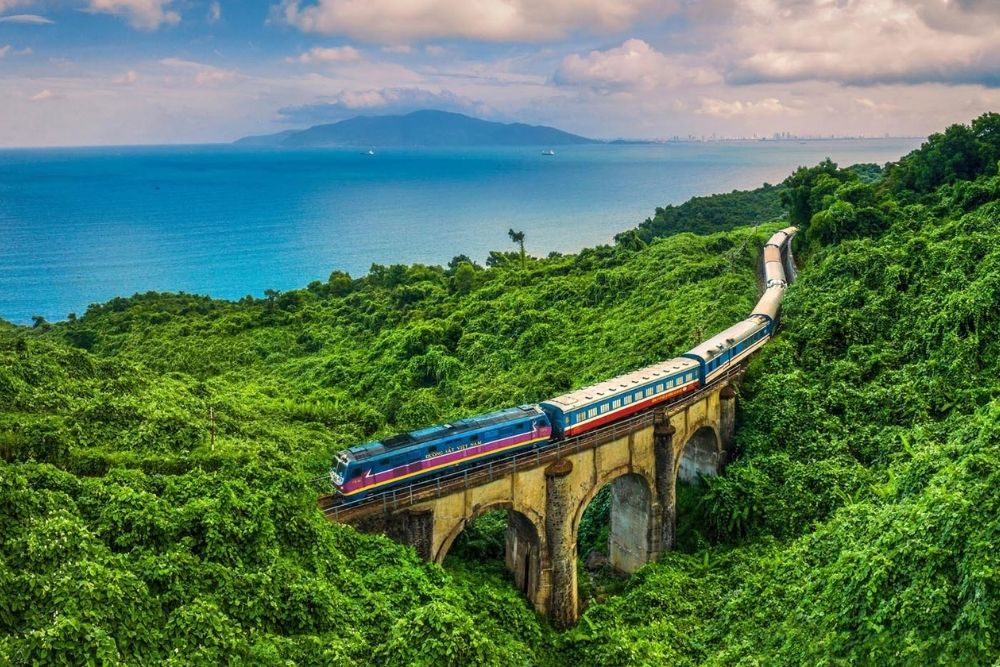
Taking the Da Nang to Hue train is one of the simplest ways to turn a transfer into sightseeing. The railway curls around the Hai Van mountains with steep green slopes rising beside the track and the sea appearing almost directly below. Standard SE services currently complete the 103 km rail journey in roughly 2.5–3.25 hours, while the tourism-focused Heritage trains may take closer to 3–4 hours because they are designed around the experience rather than speed.
For most travellers, that slower pace is a benefit. There is no mountain driving to think about and no need to arrange stops; you can simply settle into your seat and watch beaches, rocky headlands and Lang Co Bay appear beyond the window. Vietnam Railways created its Central Heritage Connection specifically around this Da Nang–Hue corridor, with dedicated HĐ services travelling across Hai Van Pass.
For scenery, avoid trains that cross Hai Van Pass before sunrise or after dark. As of August 19, 2026, current services include standard SE trains throughout the day, while the dedicated Heritage departures from Da Nang are listed as HĐ2 at 7:05 AM, arriving in Hue at 11:03 AM, and HĐ4 at 3:20 PM, arriving at 6:15 PM.
If photography is your priority, a morning or afternoon departure makes far more sense than choosing the fastest train simply to save 20 or 30 minutes.
For a journey of this length, an air-conditioned soft seat is usually the sweet spot: comfortable enough for several hours without paying extra for a bed you are unlikely to use. Standard SE trains can offer hard seats, soft seats, and in some services 4-berth or 6-berth sleeper cabins.
The Heritage service is more sightseeing-oriented. Vietnam Railways introduced it with modern air-conditioned soft-seat carriages plus a community carriage, making it particularly well suited to travellers taking the train for the journey rather than simply transportation.
When travelling Da Nang to Hue, try to secure a seat on the right-hand side in the direction of travel. This side generally gives the clearest outlook toward the sea while the railway wraps around the Hai Van coastline. Current booking guidance for the route also identifies the right side as the preferred Da Nang-to-Hue viewing side.
Do not rely too heavily on a particular seat number, however, because carriage layouts and orientation can vary. If the booking system displays a seat map, use it; otherwise, confirm the direction with railway staff when possible.
Train pricing is flexible, so there is no single fare that applies to every departure. On August 19, 2026, live listings showed standard seats from approximately $3.30 USD, with individual daytime services around $3.70–$4.50 USD and higher prices for upgraded seating or berths. The tourism-focused Heritage service is typically more expensive than ordinary SE seating.
Because fares vary with train, seat type, availability and travel date, treat published blog prices as a reference rather than a guaranteed rate.
The safest place to confirm the latest timetable and fare is Vietnam Railways' official online ticketing system, DSVN, which allows travellers to search routes, compare departures and purchase tickets electronically. Vietnam Railways also confirmed in May 2026 that its official online system supports online ticket changes and refunds for eligible bookings.
Choosing between the train and a private car from Da Nang to Hue comes down to what you want from the journey. Take the train if you prefer an affordable, comfortable ride where you can sit back and enjoy the coastline without thinking about traffic or navigation. It is the better-value option for solo travellers and couples, and the railway views around Hai Van Pass are impressive enough to make the trip feel like sightseeing rather than transit.
Choose a private car when flexibility matters more than price. Driving over Hai Van Pass lets you stop at Hai Van Gate, Lang Co Beach, Lap An Lagoon, and, if you have enough time, make the longer detour to Elephant Springs. You also gain hotel-to-hotel transport, room for luggage and the freedom to stay longer at a viewpoint when the weather is good. For families or small groups, splitting the vehicle cost can also make a private transfer surprisingly reasonable.
There is one important difference: the train lets you see the Hai Van coastline, while a car lets you experience the Hai Van Pass itself. From the railway, the cliffs and sea unfold outside your window; on the road, you can step out at the summit, feel the mountain air and choose exactly where to pause.
For many travellers, the smartest answer is actually not to choose just one. Take the train from Da Nang to Hue for the coastal rail experience, then return by private car over Hai Van Pass or reverse the order. Using one mode each way gives you both of Central Vietnam's classic journeys without repeating the same transfer twice.
There are several ways to travel between Da Nang and Hue, and the best option depends on your budget, comfort level, and whether you want to include sightseeing stops along the way. The main choices are motorbike, bus or limousine, private car, and organised tours, each offering a very different travel experience.
A private car from Da Nang to Hue typically costs around US$55–70 per vehicle (sedan) in 2026, depending on the route and number of stops. If you include detours such as Elephant Springs or additional scenic viewpoints, the price is usually higher.
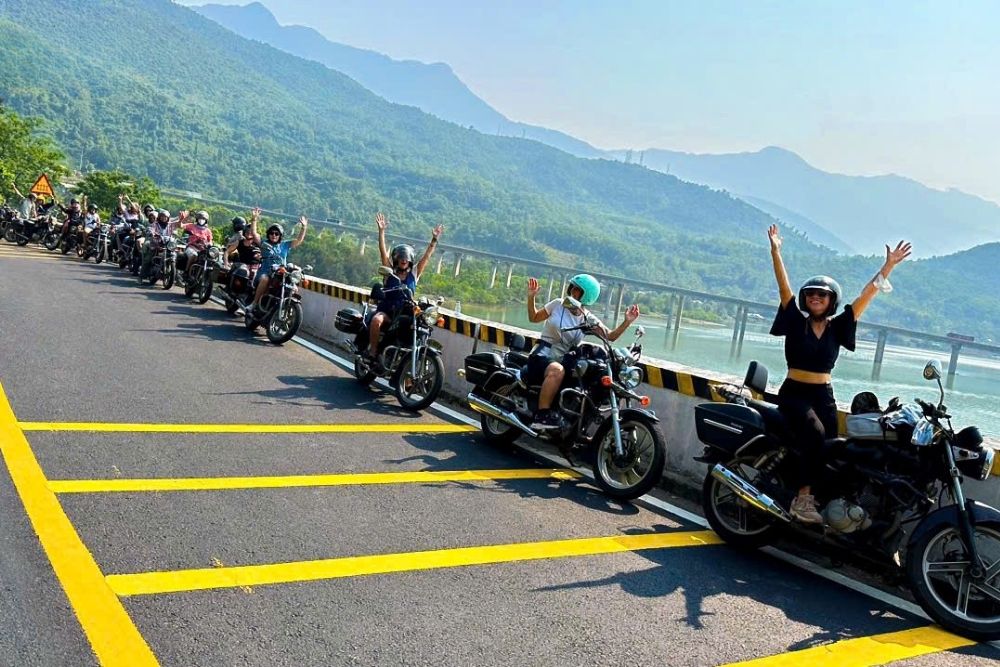
A motorbike journey over the Hai Van Pass is the most scenic and adventurous way to travel between Da Nang and Hue. This option gives you complete freedom to stop whenever you want for photos, coffee breaks, or short walks along the coastline.
You can either ride the motorbike yourself or choose an Easy Rider, where a local driver takes you as a passenger. This is a popular option for travellers who want the experience of the open road without dealing with mountain traffic or sharp bends. Easy Rider services can also help arrange separate luggage transport, so you only carry a small day bag during the ride.
This option works best when the journey itself is part of the experience rather than just a transfer. It is worth allowing extra time to enjoy stops at Hai Van Pass, Lang Co Beach, and the various viewpoints along the coast.
Buses and limousine vans are the most affordable and straightforward way to travel between Da Nang and Hue. They operate frequently throughout the day and are designed for efficient point-to-point transport.
Most services use the Hai Van Tunnel instead of the scenic mountain pass, which makes the journey faster but less visually interesting. As a result, this option is ideal if your main priority is reaching Hue quickly and cheaply rather than sightseeing along the way.
A private car is the most comfortable and flexible way to travel between Da Nang and Hue without riding a motorbike. It allows you to enjoy the scenery at your own pace while still travelling in air-conditioned comfort.
2026 pricing: a standard sedan typically costs around US$55–59 for a one-way transfer, while a scenic route that includes Hai Van Pass, Lang Co, and Elephant Springs is usually around US$69 or more. Larger vehicles such as SUVs and vans are priced higher.
The main advantages of a private car are hotel pickup and drop-off, space for luggage, and the ability to customise stops and timing. This makes it a strong middle-ground option between a tour and independent travel.
If you want to visit Hue without worrying about transport, tickets, or planning, a guided day tour from Da Nang is the simplest option. These tours combine the journey with sightseeing and are designed for travellers who prefer a structured experience.
Typical itineraries include a scenic drive via Hai Van Pass or Lap An Lagoon, followed by key Hue attractions such as the Imperial City, a royal tomb, and Thien Mu Pagoda.
2026 pricing: group tours generally range from US$40–60 per person, with budget options around US$41–42 and mid-range tours around US$49–56. Private tours are more expensive, usually starting from US$80 and going up to US$130+ per person, depending on inclusions and group size.
It is important to check what is included in the price, as some tours cover lunch, entrance fees, guide services, and hotel pickup, while others only include transport and basic guiding.
A day trip from Da Nang is best if you are based in Da Nang and want to explore Hue as part of a wider Central Vietnam itinerary. These trips usually last around 10–12 hours, giving enough time to visit major highlights before returning to Da Nang in the evening.
A one-way trip to Hue is more suitable if you are continuing your journey north toward destinations such as Phong Nha, Ninh Binh, or Hanoi. In this case, staying overnight in Hue makes more sense and avoids unnecessary backtracking to Da Nang.
If you are still planning your Central Vietnam route, Asia Mystika’s Da Nang itinerary guide can help you decide whether Hue should be a day trip or your next stop.
A simple rule is: return to Da Nang if Hue is just an excursion, but stay in Hue if it is the next stage of your journey north.
When travelling Da Nang to Hue, the vehicle you choose matters less than one detail that is easy to overlook: which road it takes. Two travellers can book almost identical transfers and have completely different journeys simply because one crosses Hai Van Pass while the other disappears into the tunnel beneath it.
The Hai Van Tunnel is practical. It shortens the journey, avoids the winding mountain road, and is commonly used by buses, limousine vans, and drivers focused on getting passengers to Hue efficiently.
The problem is that many travellers only discover this after booking.
If your bus or taxi uses the tunnel, you will miss the summit, the elevated coastline views, and the gradual descent toward Lang Co. You will still get from Da Nang to Hue, but you will not experience the famous Hai Van Pass road that made you choose an overland journey in the first place.
That is why there is one question worth asking before paying for any road transfer: “Will we go over Hai Van Pass or through the Hai Van Tunnel?”
That single answer tells you more about the experience than whether you are travelling by taxi, limousine, or private car.
For a straightforward transfer, the tunnel makes perfect sense. But if this is your first journey between Da Nang and Hue, choosing the mountain route adds relatively little distance while turning travel time into part of the holiday.
Asia Mystika tip: If you book a private transfer specifically for Hai Van Pass, make sure the itinerary states “via Hai Van Pass” and confirms whether stops at Hai Van Gate, Lang Co, or Lap An Lagoon are included. Do not assume “Da Nang to Hue by car” automatically means the scenic route.
Hai Van Pass also rewards good timing. The panorama may look spectacular at any hour when conditions are clear, but mornings often provide a better chance of crisp coastal views before heat and haze begin softening the horizon later in the day.
An Asia Mystika local guide explains: “Cross the pass in the morning if you can. By early afternoon the haze builds and the famous view over Lang Co flattens out; at 9 AM you can see the whole lagoon, the rail line curving along the cliff, and on clear days all the way down the coast. We schedule every private transfer over the pass before 11 AM, and guests assume the weather was luck. It wasn’t.”
This is especially useful if photography is important to you. A morning departure from Da Nang gives you time to reach the higher sections of Hai Van Pass before the strongest midday heat, pause at the summit, and descend toward Lang Co while there is still plenty of daylight for additional stops.
Of course, mountain weather is never guaranteed. Clouds can roll across Hai Van at any time, and that changing weather is part of what gives the “Sea Cloud Pass” its character. The point is not that an early departure guarantees a perfect view; it simply gives your scenic transfer a better setup.
The Asia Mystika approach to Da Nang to Hue is therefore simple: confirm the road, then choose the timing. Go over the pass rather than through the tunnel when scenery matters, and aim to make the crossing in the morning. Those two decisions can turn an ordinary intercity transfer into one of the most memorable stretches of your Central Vietnam journey.
The Da Nang to Hue train usually takes around 2.5–3 hours on standard daytime services, with the Hai Van section providing spectacular views of cliffs, beaches, and the sea. For the best scenery heading north, try to choose a seat on the ocean-facing side of the train.
Yes, Hai Van Pass is absolutely worth taking if you have time for the scenic road instead of the tunnel. The route adds mountain viewpoints, coastal panoramas, and views toward Lang Co, turning the journey from Da Nang to Hue into an experience rather than simply a transfer.
Yes, Hue can be visited as a day trip from Da Nang, particularly by private car or organised tour. Start early so you have enough time for the Hai Van Pass and major Hue sights such as the Imperial City before travelling back in the evening.
Travelling from Da Nang to Hue is one of those rare transfers where the route deserves almost as much attention as the destination. If you want beautiful coastal scenery without spending much, the train is the easy choice. If you want to experience Hai Van Pass properly, with time to step out, photograph the summit, pause around Lang Co, and add places such as Elephant Springs, a private car gives you far more freedom.
Whichever road option you choose, remember two simple rules. First, confirm that your driver will go over Hai Van Pass rather than through the Hai Van Tunnel. The tunnel is quicker, but it removes the mountain scenery that makes this journey special. Second, try to make the crossing in the morning, when conditions are generally cooler and you have a better chance of clearer views across the coast and lagoon.
In other words, do not let the default route decide your experience. A little planning can turn the 95-km journey from Da Nang to Hue from a routine transfer into one of the highlights of your Central Vietnam trip.
Stop letting the fastest routing option flatten one of Vietnam’s most memorable coastal roads. With Asia Mystika, you can arrange a Hai Van Pass private transfer or Hue day tour designed around the journey itself not simply getting from one hotel to another.
Plan Your Da Nang to Hue Journey with Asia Mystika and turn your transfer into a day worth remembering!
Asia Mystika Travel is a Vietnamese local travel agency dedicated to bringing first-hand experience of lovely scenery, and distinctive indigenous cultures to every customer. With professional local tour guides and prestiged airline partners (4 domestic airlines and over 300+ international airlines), we offer unique local experience at an extremely reasonable price. All tours are 100% customizable, no shopping and no extra fee.
Ready to go? Start planning your custom Sapa itinerary with us
Who we are: Learn more about the local experts at Asia Mystika
WhatsApp: (+84) 866.22.7878
Email: sales@asiamystika.com
Website: www.asiamystika.com