 Hotline: +84 866 227 878
- SG$ Singapore Dollar
- A$ Australian Dollar
- £ British Pound Sterling
- C$ Canadian Dollar
- € Euro
- MYR Ringgit Malaysia
- US$ United States Dollar
- đ Vietnamese Dong


 Hotline/Whatsapp: +84 86 622 7878
 Email: sales@asiamystika.com
 About Us
 Destinations
 Travel Styles
 Travel Guide
 Blogs
Blogs

The best time to visit Da Nang is February to May: warm, dry, calm seas and clear skies. Here is the full Da Nang weather by month breakdown, when to avoid typhoon season, and what to pack.
The Best Window: February to May is the sweet spot for Da Nang weather — warm, mostly dry days, lower humidity, clearer skies and calmer seas for beaches, sightseeing and Ba Na Hills views.
The Hot Peak: June to August is hot and busy, with beach energy, calm seas and the Da Nang International Fireworks Festival, but also higher room rates, crowds and temperatures that can feel intense.
The Months to Avoid: September to November is the main rainy season in Da Nang, with October and November bringing the highest storm risk, rough seas, possible flooding and flexible-itinerary pressure.
The Quiet Value Season: December to February is cooler, quieter and often better value. It may be too cool for long swims, but it is excellent for food, sightseeing, cafés, spa days and day trips.

The best time to visit Da Nang is February to May, when the city usually enjoys warm, dry weather, calmer seas and clearer skies. This is the most balanced window for first-time travelers because you can enjoy My Khe Beach, Marble Mountains, Son Tra Peninsula, Ba Na Hills, Hoi An day trips and food-focused evenings without the strongest summer heat or the highest storm risk.
If your dream Da Nang trip includes beach mornings, light clothes, outdoor sightseeing, clear viewpoints and easy transfers, this is the safest season to choose.
February is cool, dry and comfortable. March and April are especially lovely, with warmer days and lower rainfall. May begins to feel hotter, but it still works well for beach travelers who want sunshine before the summer peak.
The next-best answer depends on your travel style.
Choose June to August if you want a lively beach holiday and do not mind heat. This is Da Nang’s peak summer season, with warmer sea water, busy beaches, school-holiday demand and the fireworks festival period. It is exciting, but you need to plan around heat and higher prices.
Choose December to February if you prefer cooler weather, lower crowds and better hotel value. It is not the best time for long beach swims, but it is comfortable for food, cafés, sightseeing and slow travel.
Be cautious with September to November. This is the typhoon season in Da Nang, especially October and November. Some travelers still enjoy this period because prices can be low, but you need flexibility, travel insurance and live weather checks.
The simple verdict:
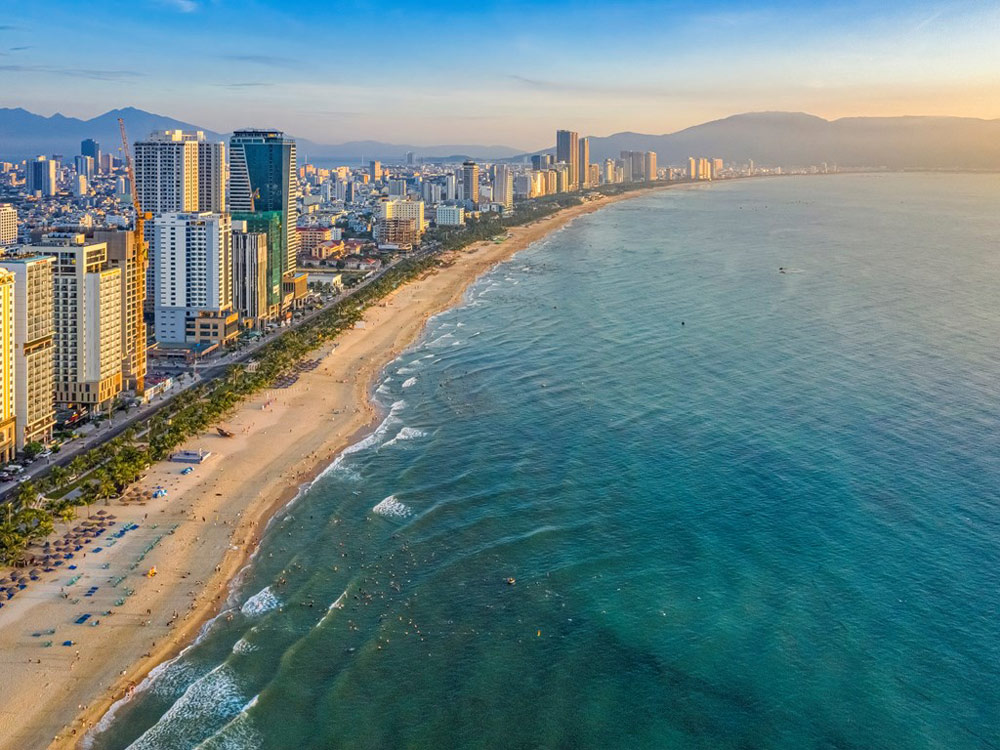
Da Nang weather follows a tropical monsoon pattern. The city has a long dry-to-hot period and a shorter but intense wet season. For travelers, it is easiest to think in four practical travel seasons:
The annual average temperature sits around the mid-20s Celsius, but the travel experience changes a lot by month. The same beach can feel calm and postcard-perfect in April, then rough and red-flagged in November. That is why the month you choose matters so much in Da Nang.
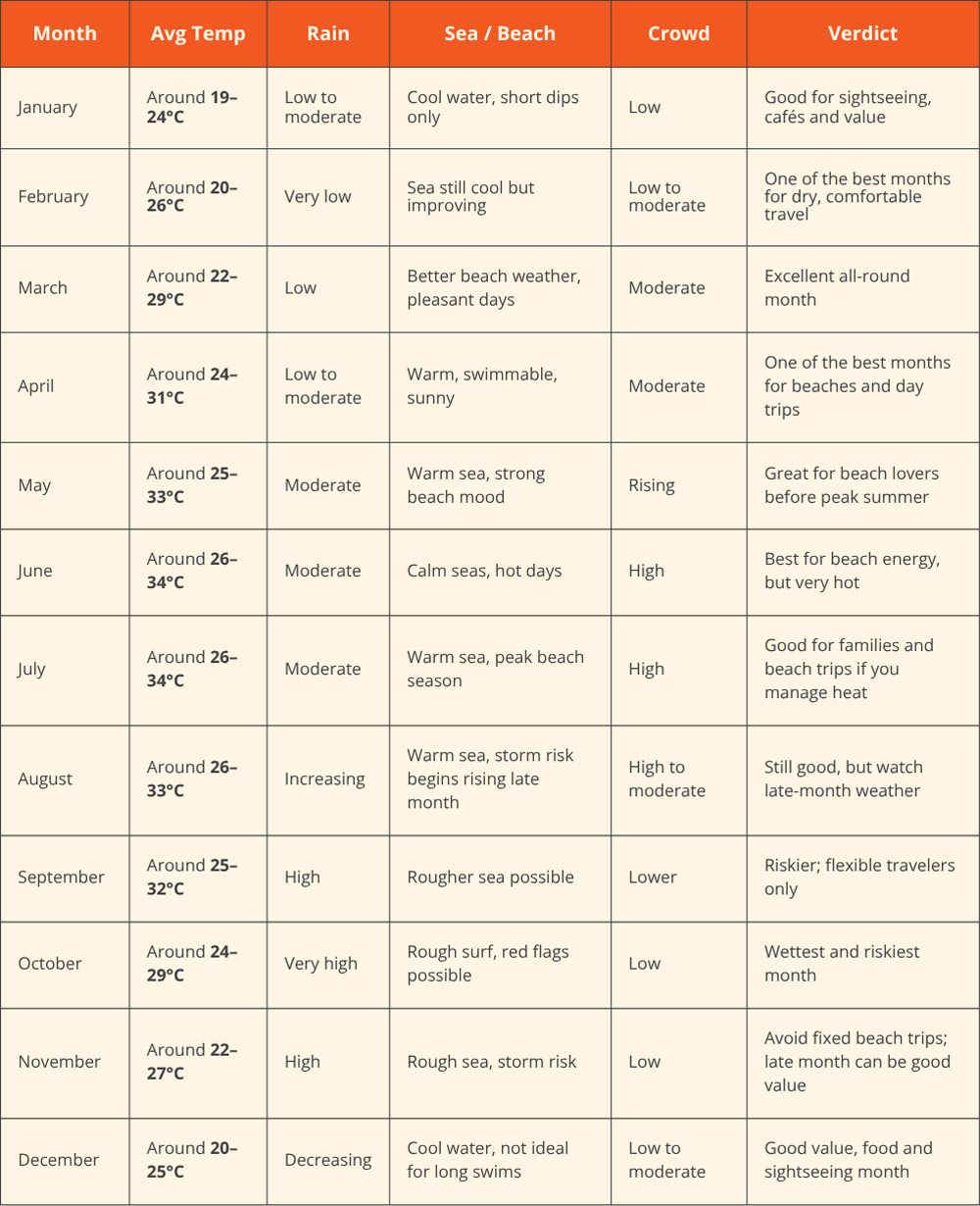
The dry season is when most first-time travelers should visit Da Nang. It begins cooler and becomes hotter as summer approaches.
January and February are cooler and relatively dry. These months are good for walking, food, cafés, spa days and sightseeing. The beach is beautiful, but the water can feel cool.
March to May is the best balance. Days are warm, skies are often clearer and rainfall is generally low. This is the prime window for Ba Na Hills, Golden Bridge, Marble Mountains, Hoi An evenings and beach mornings.
June and July are hot. They are good for beach lovers, but not ideal for travelers who dislike heat. Outdoor sightseeing should happen early in the morning or late afternoon.
The wet season does not arrive all at once. August can still feel summery, but the risk increases as the months move toward October and November.
September is the transition month. You may get good days, but rain and rough sea risk increase.
October is the most difficult month for many travelers because rainfall can be heavy and storms may affect flights, beach swimming and transfers.
November remains risky, especially in the first half, but the final part of the month can sometimes open a quiet value window if storms have passed.
December begins to improve, though it can still be cloudy or damp. It is cooler and quieter, better for sightseeing than swimming.
Typhoon season in Da Nang runs mainly from September to November, peaking in October and November. This is when storms can bring rough seas, red-flag beach closures, heavy rain, urban flooding, flight delays and changes to day-trip plans.
If you travel during this window, do not rely only on historical averages. Check the Vietnam National Center for Hydro-Meteorological Forecasting and your airline before travel, especially if a storm system is active in the East Sea. This is the riskiest period for a fixed, non-refundable beach itinerary.
For flexible travelers, September to November is not impossible. But for families, honeymooners, first-time visitors or anyone who wants guaranteed beach time, it is not the safest choice.

Yes, summer in Da Nang can be a good time to visit, especially if you want beaches, warm sea water, lively evenings and festival energy. But it is not the most comfortable season for everyone.
From June to August, Da Nang is hot. Daytime temperatures can climb into the mid-30s Celsius and feel hotter under direct sun. The beach is often at its most active, the sea is warm, and families travel during school holidays. This is also when the city’s summer events, including the Da Nang International Fireworks Festival, can make the Han River area feel exciting.
The trade-off is heat, crowds and price pressure.
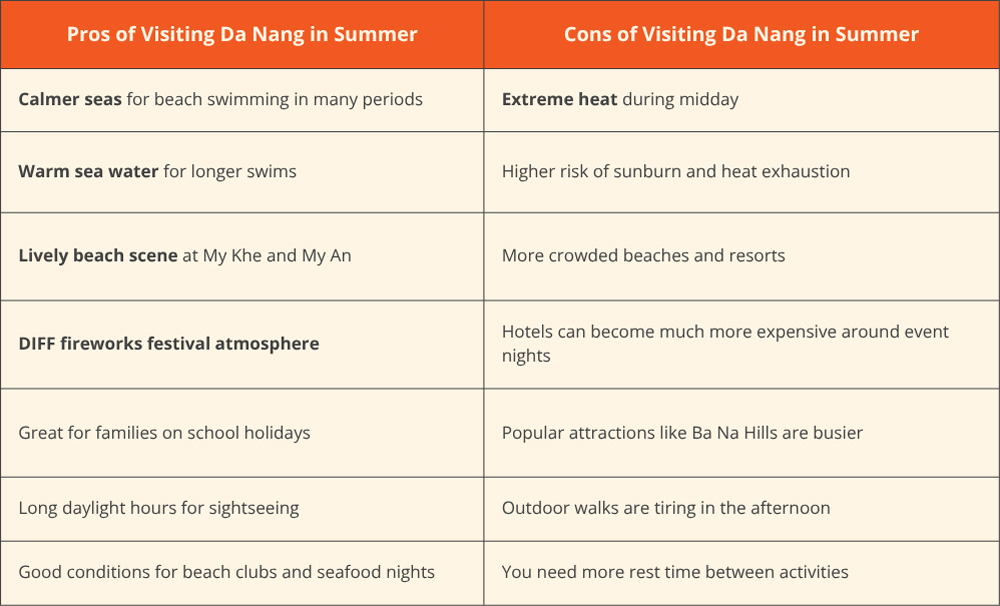
The key to summer in Da Nang is timing your day properly.
Do this:
Avoid this:
Summer can be wonderful if you build the itinerary around heat rather than against it.

Yes, winter in Da Nang is worth it if you want cooler weather, quieter beaches, lower crowds and better hotel value. It is not the best period for a classic beach-swimming holiday, but it is a very pleasant time for sightseeing and food.
From December to February, temperatures are usually cooler, often around 18–24°C. You may still get bright days, but the sea can feel chilly and the sky can be more variable. Swimming is possible on mild days, but long beach sessions are less reliable than in spring or summer.
Where winter shines is comfort. Walking around the city is easier. Food tours feel more enjoyable. Hoi An evenings are cooler. Marble Mountains are less exhausting. Spa days and cafés feel cozy. Hotels may offer better value outside holiday peaks.
Winter works well for:
Even if the weather turns wet, you do not have to lose the day. Use rainy hours for:
Da Nang is not only a beach destination. That makes winter easier than it looks.
For February to August, pack:
For September to December, add:
For Ba Na Hills, bring a light jacket year-round. The mountain can feel much cooler than the beach, especially in the morning or when clouds roll in.

Many travel guides show the same sunny My Khe Beach photo all year. That is not fair to travelers.
The truth is that My Khe in April and My Khe in November can feel like two completely different destinations.
In April, the beach can be calm, bright and swimmable. The sand feels welcoming, the sea looks gentle, and the day flows naturally from swimming to seafood to cafés.
In November, the same beach may be windy, rough and marked with red flags. The view can still be dramatic, but it is no longer the same beach holiday. It becomes a walking, surfing, café and seafood destination rather than a long-swim destination.
So do not only ask, “Is Da Nang worth visiting?”
Ask, “What is Da Nang like in my month?”
In Da Nang, the month you choose often shapes the trip more than the hotel, the budget or the specific attractions you book.
An Asia Mystika guide explains:
“Everyone writes off September to November completely, but late November is a quiet insider window: storm risk drops sharply in the final ten days, prices are at rock bottom, and the air turns pleasantly cool. We tell flexible travelers: if you can book two weeks out and watch the forecast, late November is the best-value fortnight of the entire year.”
This is not advice for everyone.
Late November is a gamble. It is not the right choice for a honeymoon that must be perfect, a family beach week, or a fixed itinerary with no backup days. But for flexible travelers who can watch the forecast and book close to departure, it can offer excellent value.
The key word is flexible.
Do not book late November expecting April weather. Book it because you can adjust, watch live forecasts and accept some uncertainty in exchange for lower prices and fewer crowds.
Ba Na Hills sits in the mountains, so its weather can differ sharply from Da Nang city. A clear beach morning does not guarantee a clear Golden Bridge photo, and a cloudy city morning does not always mean the mountain is impossible.
For the best chance:
This is where local planning helps. The best day is not always the day you originally picked.
For beach days, the flag system matters more than your weather app. Even if your app says “sunny,” the sea may still be unsafe due to currents, swell or storm aftermath.
Always follow lifeguard instructions. If the beach is red-flagged, do not swim. Walk, take photos, enjoy seafood, or choose a hotel pool instead.

The best time to visit Da Nang is February to May, when days are warm and mostly dry, humidity is lower, seas are calmer and skies are clearer for beaches, sightseeing and Ba Na Hills.
The months to avoid in Da Nang are usually October and November, the peak of the rainy and typhoon season. September also carries elevated storm risk, especially for beach-focused or fixed itineraries.
Short dips are possible on mild winter days, but from December to February the sea and air can feel cool for long swims. Winter is better for sightseeing, food, cafés, spa days and day trips than a classic beach holiday.
Yes, Da Nang is hot in July. Expect strong sun, high humidity and beach-friendly but tiring weather, so plan outdoor sightseeing early and rest during the hottest part of the day.
The rainy season in Da Nang runs mainly from August to December, with the highest risk from September to November and the heaviest rainfall usually around October.

The clean verdict is simple: February to May is the best time to visit Da Nang.
That window gives first-time travelers the best balance of warm weather, lower rainfall, calmer seas, outdoor sightseeing and clearer views. It is the easiest season for My Khe Beach, Marble Mountains, Son Tra Peninsula, Ba Na Hills, Hoi An day trips and food evenings.
Summer, from June to August, can still be excellent if you want beach energy and festival atmosphere. Just respect the heat, book early and plan around midday breaks.
Winter, from December to February, trades swimming for value. It is cooler, quieter and better for sightseeing, food, spas and cafés.
The tricky period is September to November. This is the weather-risk window. October and November can bring heavy rain, rough seas, storms, flight delays and flooding. Flexible travelers may still find value, especially late November, but fixed beach holidays should think carefully.
In Da Nang, the month you choose is not a small detail. It shapes the whole trip.
Stop gambling your one beach week on the wrong month.
If you want to save time and effort while traveling to Vietnam, contact Asia Mystika, a trusted tour agent in Vietnam. Our Da Nang specialists can match your travel dates to the real seasonal pattern, suggest the right beach window, plan around DIFF or typhoon risk, time Ba Na Hills for better views, and build a Central Vietnam itinerary with private transfers, guided day trips and weather-smart pacing.
Start planning with Asia Mystika’s Free & Easy Danang Hoian package, explore the Da Nang beaches guide, or use the Da Nang itinerary guide to connect your dates with the right activities.
Suggested Internal Links
