 Hotline: +84 866 227 878
- SG$ Singapore Dollar
- A$ Australian Dollar
- £ British Pound Sterling
- C$ Canadian Dollar
- € Euro
- MYR Ringgit Malaysia
- US$ United States Dollar
- đ Vietnamese Dong


 Hotline/Whatsapp: +84 86 622 7878
 Email: sales@asiamystika.com
 About Us
 Destinations
 Travel Styles
 Travel Guide
 Blogs
Blogs

Planning Da Nang with kids? It is one of Vietnam's easiest family destinations — a lifeguarded beach, short drives, and a mountain resort with an indoor park that rescues a rainy day.

Yes — and more so than most Vietnamese destinations.
The case is simple: Da Nang puts a long lifeguarded beach, modern resort accommodation, an international airport and several genuinely child-friendly attractions within short distances of each other. Nothing you want to do is more than about 45 minutes away.
That matters more with children than any individual attraction does. A destination where every outing costs two hours in a car is a destination where nobody enjoys day three.
The honest caveats are heat, humidity and pavements — none of which are dealbreakers, and all of which are easier if you plan around them.

My Khe Beach is the practical choice for families. It runs for kilometres along the city's eastern edge, has a wide flat promenade behind it, gentle entry into the water, and — critically — lifeguarded sections patrolled during daylight hours.
Many beachfront hotels are a short walk away, which means you can go back for a nap or a change of clothes without a taxi.
Swim between the flags. Rip currents at Da Nang's beaches are a genuine hazard, and the lifeguarded zones exist because of them. They shift with conditions.
The small coves on the Son Tra Peninsula are beautiful and have no lifeguard cover. Take the children for the view, not for a swim.
Swimming is best from roughly April to August. From around September the northeast monsoon makes the sea rough and lifeguard coverage is reduced.
Central Vietnam's midday sun is fierce. Split the day: beach from early morning until about ten, back for lunch and a rest indoors, then return from around four until sunset.
One thing worth doing once: go down at sunrise. Da Nang's beach belongs to local families before six in the morning — whole households swim, older residents exercise on the sand, and the water is at its calmest. Children find it fascinating, and it costs nothing.

Ba Na Hills is the standout family excursion from Da Nang, and it is unusual among Vietnamese attractions in being genuinely designed for children.
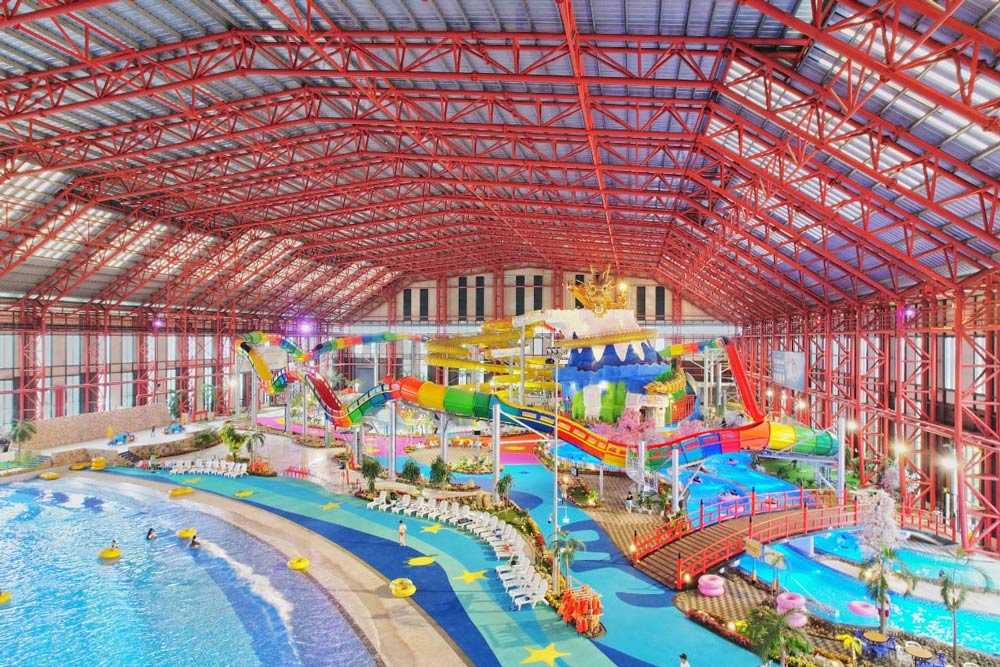
You reach it by cable car — an event in itself for most children, and a fifteen to twenty minute ride with substantial views. At the top you have the Golden Bridge, a French village square, flower gardens, and Fantasy Park, a large indoor amusement area.
That last point is the important one: Fantasy Park is indoors, which makes Ba Na Hills the one major excursion that survives rain. On a wet-season family trip, it is the day that saves the trip.

Beyond the beach and the mountain, Da Nang has more for children than most travelers expect.
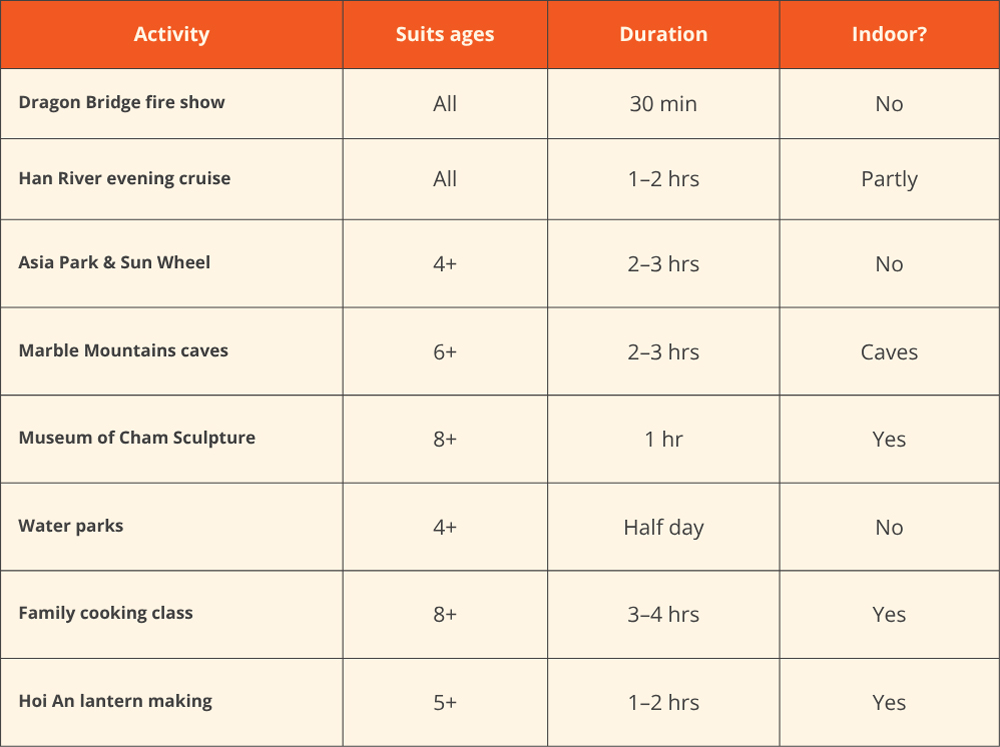
The Dragon Bridge breathes fire and then sprays water on weekend evenings, traditionally around 9pm.
It is free, it takes about fifteen minutes, and children love it. One practical tip: stand slightly back and to the north of the dragon's head. You get the whole bridge in frame — and you stay dry when the water starts.
The caves at the Marble Mountains are genuinely exciting for children aged roughly six and up — dark passages, shafts of light, Buddhist shrines carved into the rock.
A glass lift removes the main staircase, though paths at the top remain uneven and stepped. Bring a torch for Am Phu Cave, and note that its depiction of the Buddhist underworld unsettles some younger children. Judge your own child.
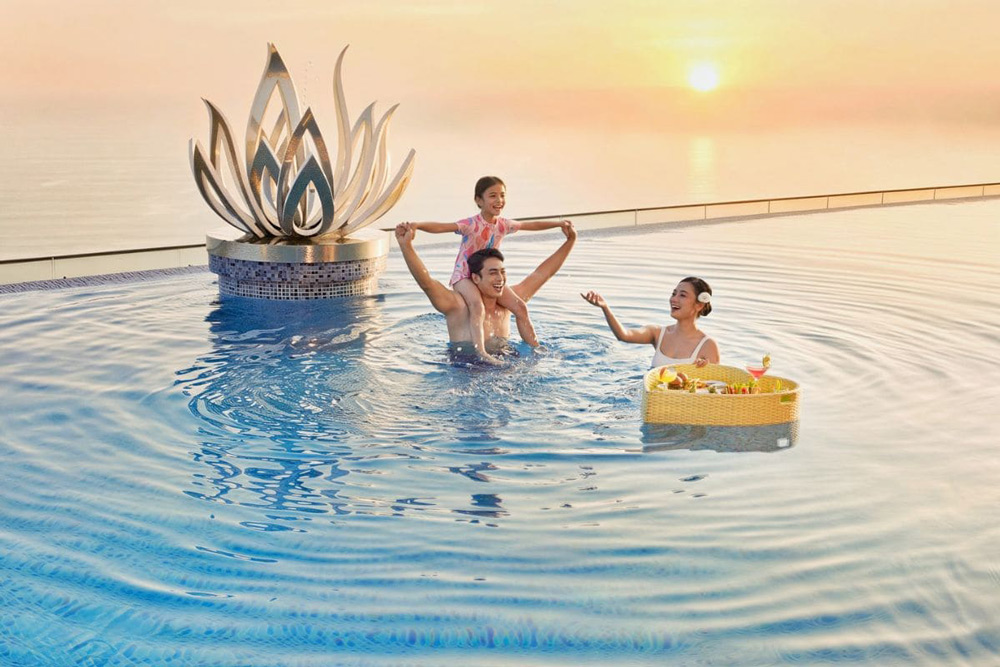
Da Nang's beachfront resort strip holds most of the family-suitable accommodation, and this is one destination where a resort genuinely earns its cost.
What to look for, and what to confirm in writing before you book:
Location trade-off worth knowing: the My Khe end is walkable to restaurants and shops. The Non Nuoc end at the southern edge is quieter and closer to the Marble Mountains, but means a taxi for every meal outside the resort.

Four things come up on every family trip here.
This is the biggest practical issue and it is easy to underestimate. Central Vietnam is hot and humid, and children dehydrate faster than adults.
Structure days around it: outdoors early and late, indoors or in the pool in the middle. Carry more water than you think you need. Sun protection matters even on overcast days.
Inside resorts, prams are fine. On the street, they are difficult.
Da Nang's pavements are uneven, frequently blocked by parked motorbikes, and crossing roads requires walking at a steady predictable pace through moving traffic — which is manageable alone and awkward pushing a pram.
The practical answer is to plan around drop-offs rather than walks. Take Grab door to door, and use a carrier rather than a pram for anything involving pavements.
Car seats are not standard in Vietnamese taxis or private cars, and availability is limited. If you need one, arrange it in advance with your transfer provider or bring your own.
This is worth sorting before you arrive rather than discovering at the airport.
Nappies, formula and baby food are available in Da Nang's supermarkets and pharmacies, though specific brands may differ from home. Bring a few days' supply of anything essential.
Da Nang has international-standard hospitals and clinics used to treating foreign patients. Check your travel insurance covers children adequately.

Vietnamese food is generally mild rather than spicy, which helps more than parents expect. Phở, plain rice dishes, grilled meats, spring rolls and bánh mì are all reliably child-friendly.
Da Nang also has a wide range of international restaurants along the beach strip, so a bad food day is easily rescued.
Two practical notes. Fresh fruit is excellent and everywhere — a good fallback. And most Vietnamese restaurants are entirely relaxed about children, high chairs are common, and nobody minds noise.
The single biggest determinant of whether a family trip to Da Nang goes well is not what you do. It is how much you do.
Pick one significant thing per day and let the rest be beach, pool and food. Here is a three-day version that works:
For four or five days, add a Hoi An afternoon-into-evening and one completely unscheduled day. The unscheduled day is not wasted — with children it is usually the one that saves the trip.
If you are travelling September to December, reorder rather than cancel. Fantasy Park at Ba Na Hills, the Cham Museum, the Marble Mountain caves, a cooking class and Hoi An in drizzle all work.
What does not work is a beach-led plan. If the beach is the point of the trip for your children, travel between February and August.

An Asia Mystika guide explains:
“The thing families do not expect is how much the pram matters. The resorts are perfect and the pavements are not — so we plan family days around drop-offs rather than walks. Get that one detail right and Da Nang is genuinely easy with small children.” — John — Asia Mystika guide, Da Nang.
Parents arrive picturing a walkable beach town and find a spread-out modern city. That is not a problem once you adjust for it — Grab is cheap, drivers are everywhere, and distances are short.
It only becomes a problem when a family plans a day assuming they can walk between three places, and discovers at the second one that they cannot.
For Ba Na Hills in particular, a private car with a driver who waits is worth the cost with children.
Ride-hailing availability at the Ba Na Hills base station thins badly in the evening, and waiting an hour in the dark with tired children at the end of a long day is the worst possible end to the best day of the trip.

Yes. Da Nang has a lifeguarded beach, resort accommodation, short transfer times and Ba Na Hills with its indoor Fantasy Park, making it one of Vietnam's most family-friendly destinations.
Yes. The cable car is an attraction in itself and Fantasy Park is indoors, making it the one excursion that works in rain. Note that tickets are priced by height, not age.
My Khe Beach, for its lifeguarded zones, gentle entry, flat promenade and facilities within walking distance. Avoid the Son Tra coves for swimming — they have no lifeguard cover.
Availability is limited and they are not standard in taxis. Arrange one in advance with your transfer provider, or bring your own.
Three to four days, at one major activity per day, alternating excursions with beach or pool time.
Inside resorts yes, but pavements are uneven and often blocked by parked motorbikes. Plan around Grab drop-offs rather than walking, and consider a carrier instead.
Generally yes — it is mild rather than spicy. Phở, rice dishes, grilled meats and bánh mì work well, and Da Nang's beach strip has plenty of international options as a fallback.
It works if you reorder around the weather — Fantasy Park, the caves, museums and Hoi An all function in rain. It does not work for a beach-led trip.

Here is the whole thing in one line:
Three to four days, one activity a day, mornings and late afternoons outdoors, and a driver on excursion days.
Da Nang asks less of a family than almost anywhere else in Vietnam. The beach is safe within the flags, the resorts are genuinely good, the food is mild, and the one big excursion is built for children and works in the rain.
Get the pacing right and it is the rare destination where the parents enjoy it as much as the children do.
Family trips do not fall apart on sights. They fall apart on pacing — one too many activities, a transfer that runs long, a wait for a taxi at the end of a hot day with tired children.
If you want to save time and effort while traveling to Vietnam, contact Asia Mystika, a trusted tour agent in Vietnam. We build family itineraries around nap times as much as opening times: private cars with drivers who wait, hotels we have checked for family rooms and pools, and days that leave room to do nothing.
Tell us your children's ages and your dates, and we will design the rest around them.
