Hotline: +84 866 227 878
- SG$ Singapore Dollar
- A$ Australian Dollar
- £ British Pound Sterling
- C$ Canadian Dollar
- € Euro
- MYR Ringgit Malaysia
- US$ United States Dollar
- đ Vietnamese Dong


 Hotline/Whatsapp: +84 86 622 7878
 Email: sales@asiamystika.com
 About Us
 Destinations
 Travel Styles
 Travel Guide
 Blogs
Blogs

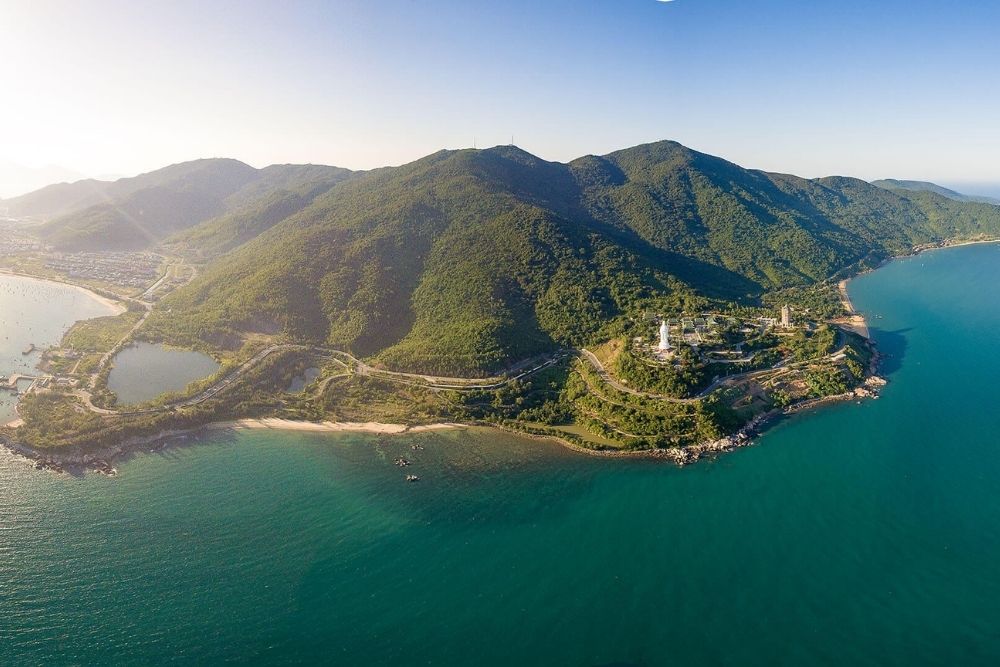
Rising above the coastline on the lush Son Tra Peninsula, Lady Buddha Da Nang is one of the city’s most recognizable landmarks. The 67-meter statue stands within Linh Ung Pagoda, overlooking the East Sea and Da Nang’s sweeping shoreline. Beyond the temple, Son Tra, often called Monkey Mountain, offers forest roads, panoramic viewpoints and opportunities to spot rare wildlife. This 2026 guide covers how to get there, what to see, the best viewpoints and practical tips for exploring Lady Buddha and Son Tra Peninsula in one memorable trip.
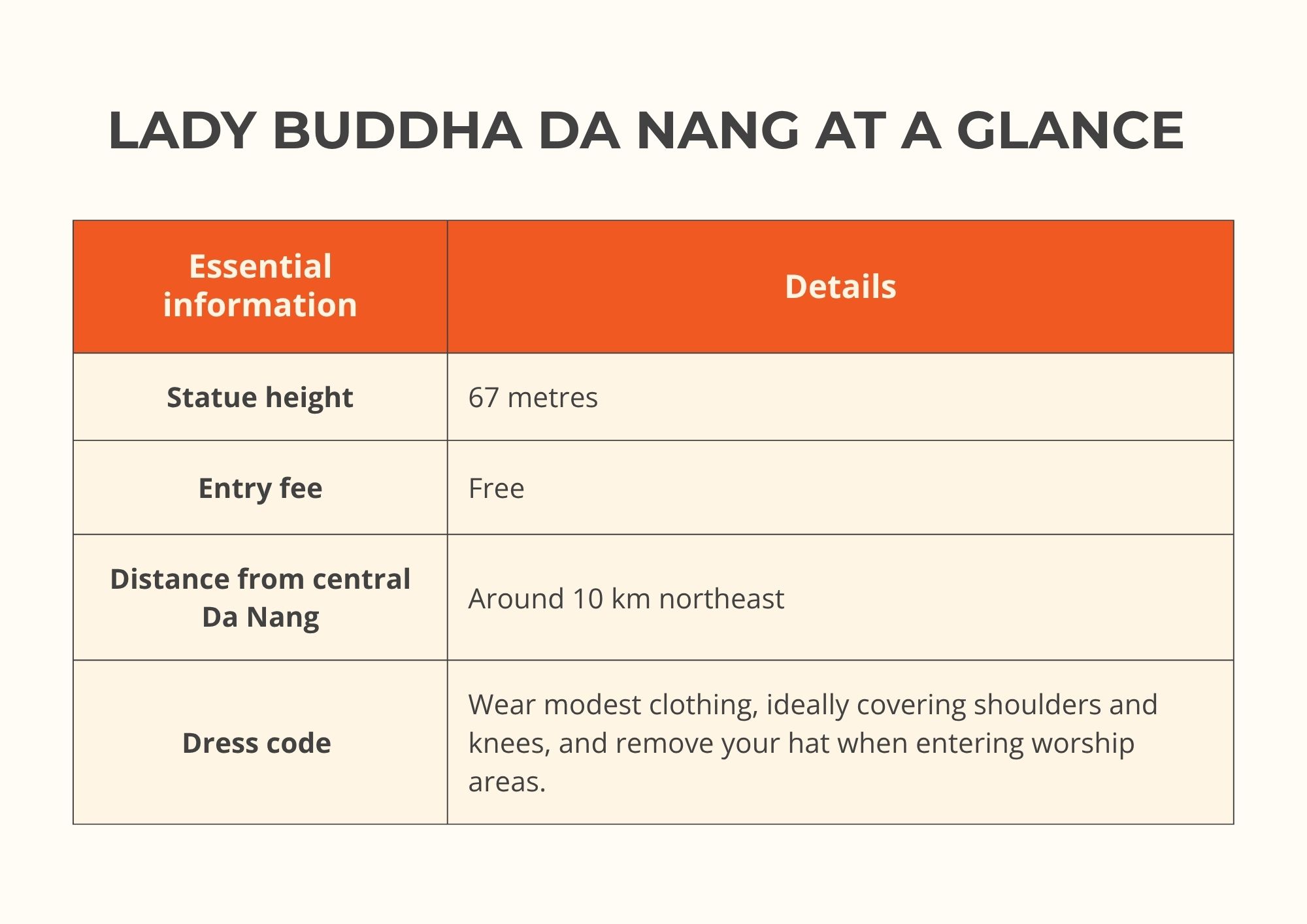
Son Tra Peninsula, also known as Monkey Mountain, is a forested headland about 10 km northeast of central Da Nang and is often described as the city’s “green lung.” Its best-known landmark is Linh Ung Pagoda at Bai But, where the 67-metre Lady Buddha Da Nang statue stands above the sea with sweeping views of the coastline and city. Entry to Linh Ung Pagoda is free.
Understanding the names makes planning much easier. Son Tra Peninsula is the wider natural area, Monkey Mountain is its popular nickname, and Linh Ung Pagoda is the Buddhist complex located on its southeastern side at Bai But. The famous Lady Buddha Da Nang is inside this Linh Ung Pagoda complex, so these names often appear together in maps, tours and travel searches.
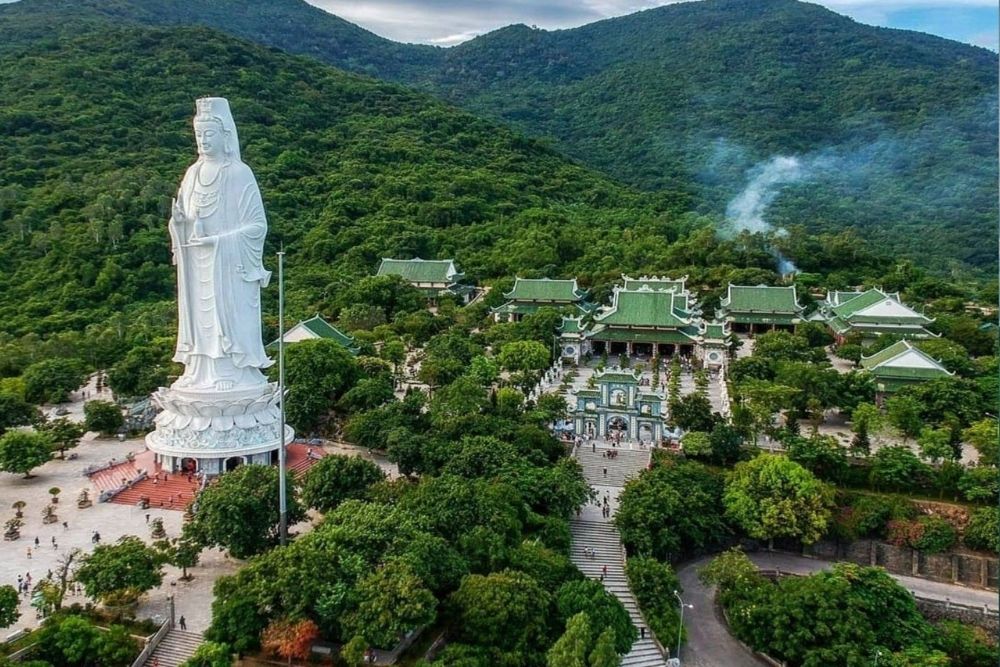
The statue itself is difficult to miss. At 67 metres tall, the white figure of the Bodhisattva Avalokitesvara, commonly called the Goddess of Mercy or Lady Buddha, rises above the temple grounds facing the water. Vietnam’s official tourism portal identifies it as the tallest Buddha statue in the country, while Da Nang’s tourism authority also describes it as the highest Lady Buddha statue in Vietnam.
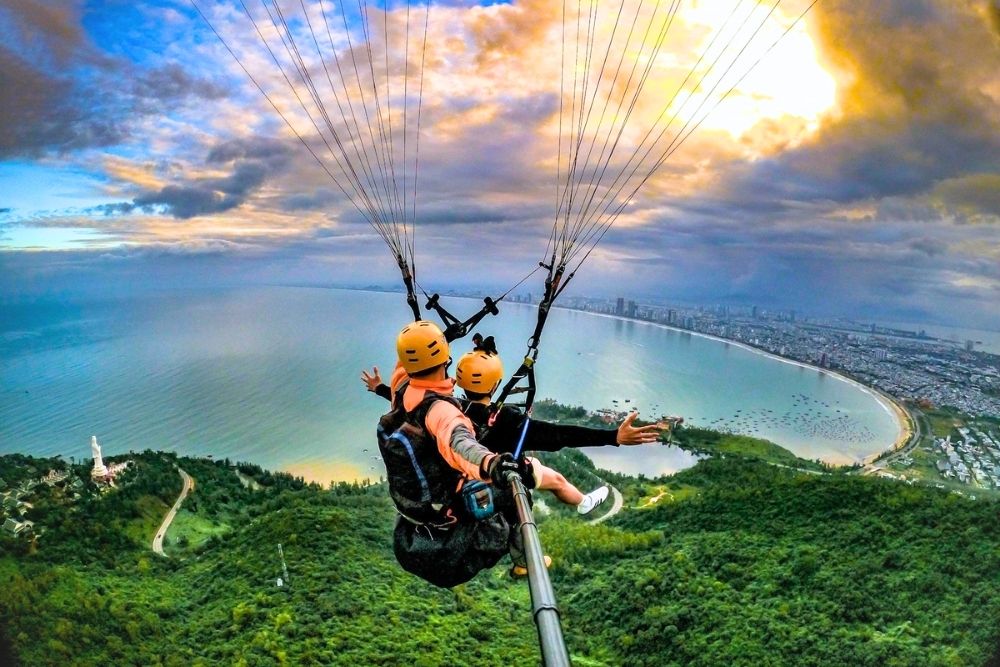
Its location is part of the appeal. From the grounds around Linh Ung Pagoda, visitors can look across the sea, follow Da Nang’s long shoreline and see the city spread out in the distance. The temple sits with forested Son Tra Peninsula behind it and the ocean in front, creating a setting that feels noticeably calmer than the busy beachfront below.
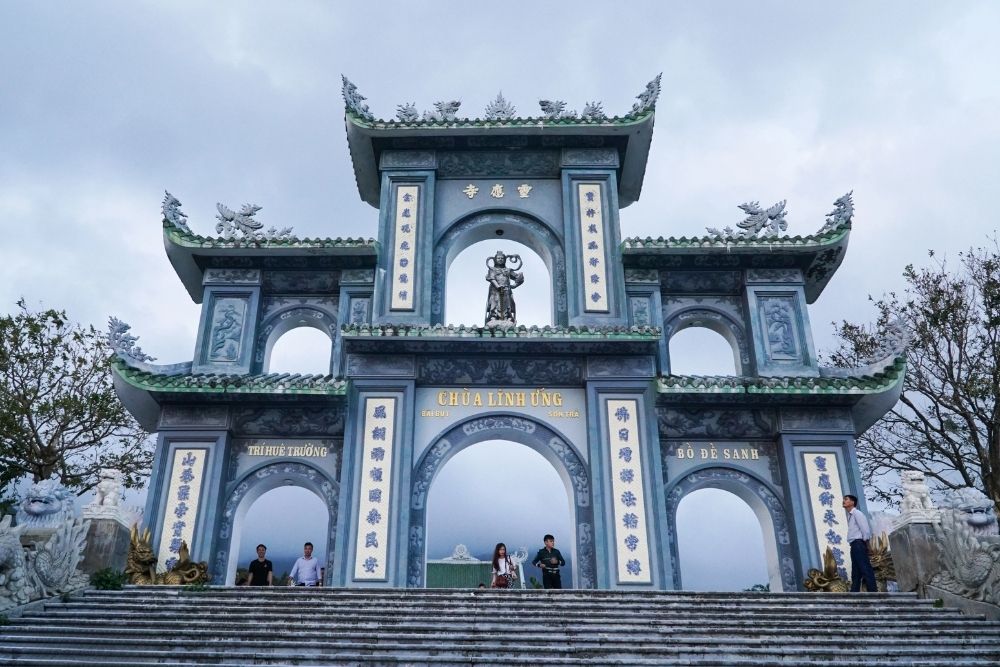
Because admission is free, visiting Lady Buddha Da Nang is an easy addition to a morning or half-day around Monkey Mountain. Allow enough time to walk through the courtyards, see the main worship hall and enjoy the viewpoints rather than treating the pagoda as a quick photo stop. And remember that Linh Ung Pagoda remains an active religious site, so respectful clothing and quiet behaviour are part of visiting well.
The name “Monkey Mountain” is widely traced to U.S. servicemen stationed around Son Tra during the Vietnam War, when the peninsula hosted American military installations and was already known for its abundant monkey population. U.S. military records from the period themselves refer to the area as “Monkey Mountain”, a name that has remained common among international visitors ever since.
The nickname still feels appropriate today. Son Tra Peninsula remains an important wildlife habitat, most notably for the red-shanked douc langur, an endangered primate with a striking combination of reddish legs, white arms and a golden-orange face. Vietnam’s official tourism portal describes it as one of the world’s most striking primates and identifies Son Tra as one of its key remaining habitats.
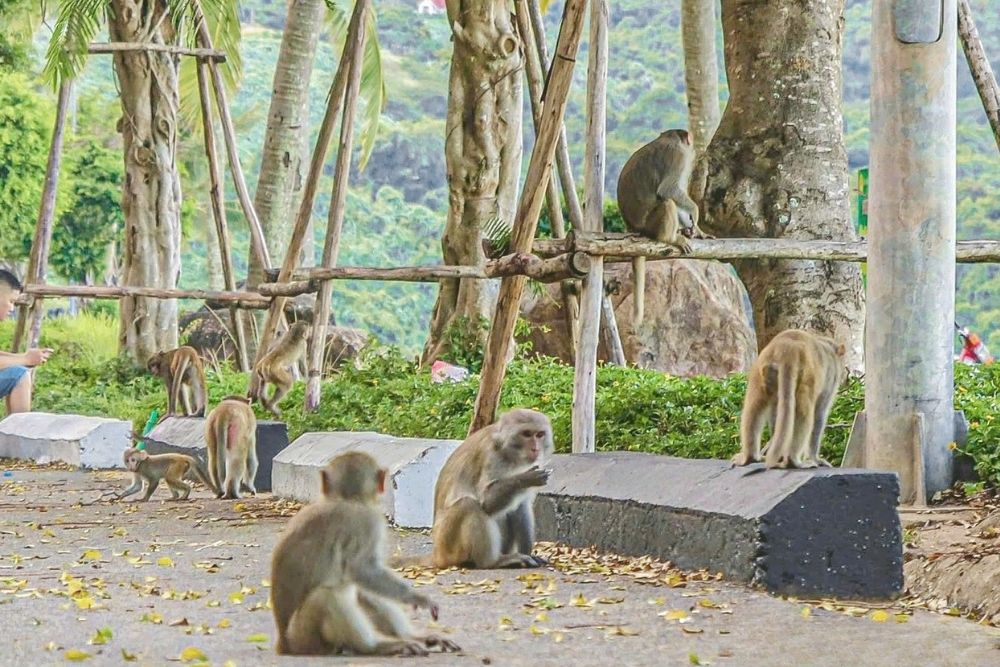
You may also encounter more familiar monkeys while travelling between Lady Buddha Da Nang, Linh Ung Pagoda and the forest roads of Son Tra. Enjoy them from a respectful distance rather than approaching or feeding them; the real reward of Monkey Mountain is seeing wildlife behaving naturally in the forest rather than gathering around visitors.
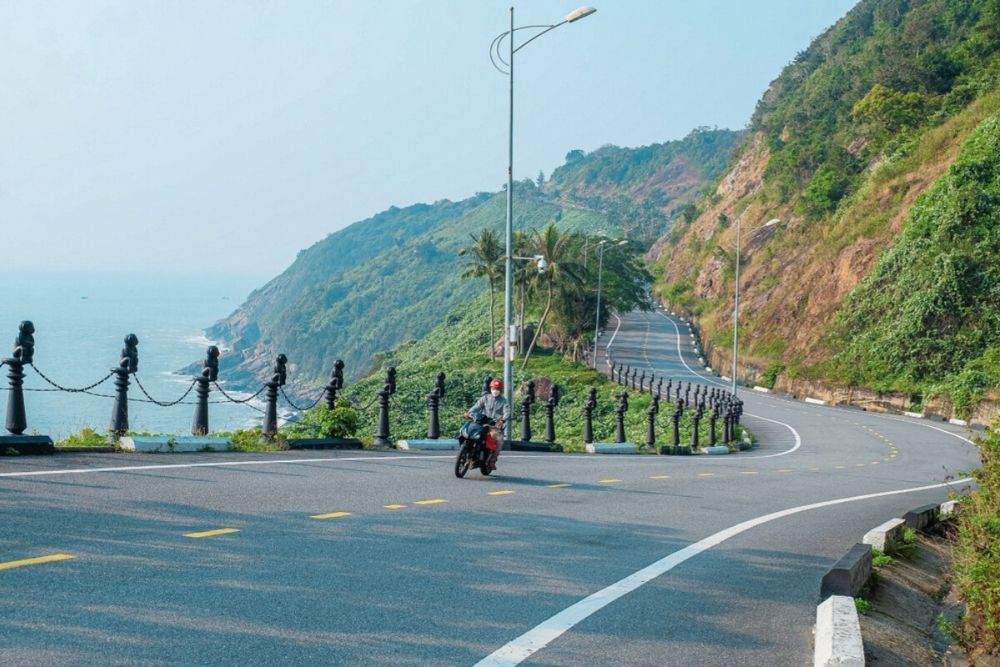
Getting to Lady Buddha Da Nang is relatively simple. Linh Ung Pagoda sits on the southeastern side of Son Tra Peninsula and can be reached by Grab, taxi, private car or motorbike along the coastal road. From the My Khe Beach area, the journey generally takes around 15–20 minutes, depending on your starting point and traffic, making the pagoda an easy addition to a morning around Da Nang’s eastern coastline.
For most travellers, a Grab or private car is the easiest option because you can arrive directly at Linh Ung Pagoda without worrying about mountain riding conditions. A motorbike gives you more flexibility for scenic stops, but reaching Lady Buddha Da Nang should not be confused with attempting a complete circuit of Monkey Mountain. The roads higher on Son Tra become steeper, narrower and subject to specific traffic controls.
Son Tra road-access warning: As of 2026, Da Nang’s official tourism guidance allows visitors to travel on only designated upper-peninsula routes. Automatic motorcycles/scooters are prohibited on several mountain sections, including the routes toward the Heritage Banyan Tree, Ban Co Peak and Suoi Om. Buses with more than 24 seats are also restricted, while the section from Ban Co Peak toward Bac Beach operates as one-way traffic. Other branch roads may be closed to ordinary visitor vehicles altogether.
The controlled sightseeing roads also have seasonal access hours. From March through September, visitors are permitted on the designated routes from 7:30 AM to 6:30 PM. From October through February, access runs from 7:30 AM to 5:30 PM.
Check local signs and current official guidance before heading beyond Linh Ung Pagoda, as weather, safety conditions or management rules can affect access.
If your main goal is simply to see Lady Buddha Da Nang, there is no need to tackle the steepest parts of Son Tra Peninsula. Take a car or Grab directly to Linh Ung Pagoda, enjoy the temple grounds and coastal views, then decide whether you want to continue farther into Monkey Mountain. Travellers planning Ban Co Peak or the quieter forest roads should treat that as a separate mountain drive and choose a suitable vehicle rather than assuming every scooter can complete the route safely.
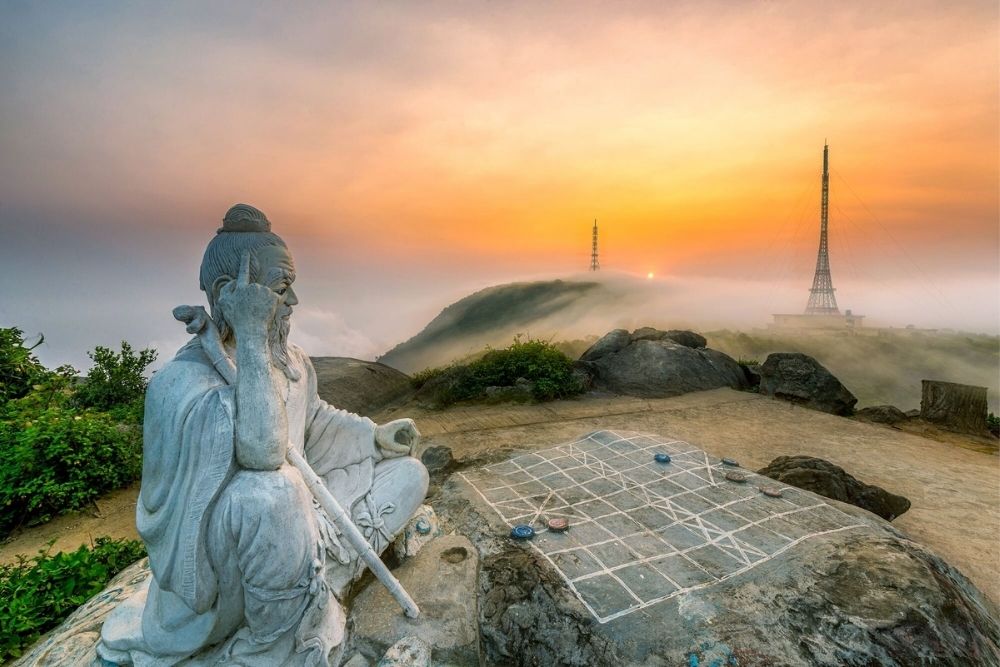
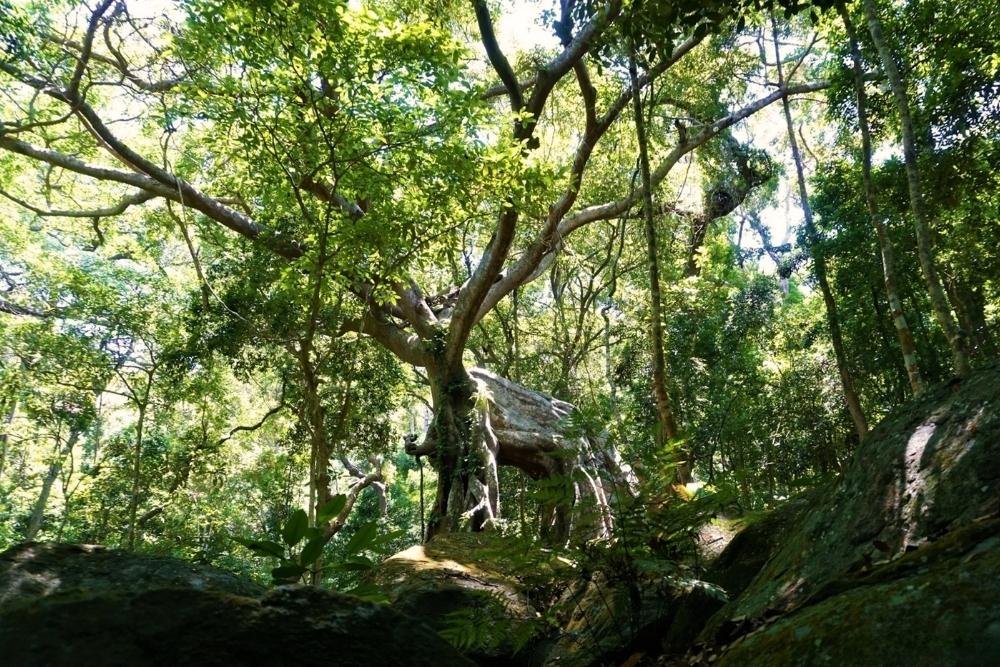
There is much more to Son Tra than Lady Buddha Da Nang. Once you have explored Linh Ung Pagoda, continue into the peninsula for elevated views across Da Nang Bay, dense tropical forest and one of Son Tra’s most remarkable natural landmarks: the Heritage Banyan Tree. Official Da Nang tourism information describes this tree as more than 800 years old, rather than a full thousand years, with a huge network of trunks and aerial roots spreading through the forest.
Begin at the temple while the grounds are peaceful, taking time to see the 67-metre Lady Buddha and the terraces overlooking the coastline. Because Linh Ung Pagoda is an active Buddhist site, choose clothing that covers your shoulders and knees and behave quietly around worship areas.
From the pagoda, continue toward the permitted mountain roads for higher perspectives over Da Nang, the bay and the surrounding hills. Ban Co Peak and Vong Canh House are among Son Tra’s established lookout areas, although access depends on your vehicle and the current road controls.
If your vehicle is suitable and the route is open, finish at the ancient banyan tree deep within the nature reserve. Current rules allow vehicles on the designated road toward the Heritage Banyan Tree except automatic scooters and buses with more than 24 seats, so travellers should not assume every rented motorbike can make the full loop.
Keep watching the canopy as you travel. Son Tra Nature Reserve supports the rare red-shanked douc langur, alongside other monkeys and forest wildlife. Spotting a douc is never guaranteed, but quieter mornings improve the experience: if you see one, stay back, keep your voice low and never offer food. Official visitor guidance specifically asks travellers not to feed or disturb wild animals.
Early morning: Choose the morning if wildlife, comfortable temperatures and quieter roads are your priorities. It is particularly suitable for travellers who want time at Lady Buddha Da Nang before continuing farther into Monkey Mountain.
Late afternoon: Visit later in the day for softer light and beautiful views back toward Da Nang and the coast. Just remember that the controlled upper routes currently close at 6:30 PM from March through September and 5:30 PM from October through February, so plan around the official gate times rather than assuming you can remain on the mountain until after sunset.
For an easy full day, spend the cooler hours exploring Lady Buddha Da Nang and Son Tra Peninsula, then return toward My Khe Beach for a relaxed afternoon beside the sea. The forested mountain and beachfront sit close enough together that you can experience two very different sides of Da Nang without spending much of the day in transit.
Check Some of Da Nang’s most heavily promoted attractions come with entrance tickets, cable cars or packaged experiences. Lady Buddha Da Nang is different. The temple costs nothing to enter, yet the terrace at Linh Ung Pagoda delivers one of the broadest and most memorable views in the city.
From the grounds around Lady Buddha, the coastline opens up in one long sweep, with My Khe Beach curving toward the city skyline and the sea stretching far beyond it. On a clear day, the scale of the view can feel more impressive than many paid observation points. That is why Linh Ung Pagoda should not be treated as a quick stop to fill a gap between bigger attractions. For travellers staying around central Da Nang or the beachfront, it is also remarkably easy to reach, often within around 20–30 minutes depending on traffic and hotel location. Late afternoon is especially rewarding. As the light softens, the city becomes less hazy, the water picks up warmer tones and the terrace feels much calmer than during the middle of the day. Asia Mystika tip: Give yourself at least 30 minutes just for the temple grounds and sea-facing terrace. Rushing through Lady Buddha Da Nang for a few photos means missing the very thing that makes the stop special: the sense of space.
The monkeys around Son Tra and Linh Ung Pagoda can be entertaining, curious and surprisingly confident around visitors. They are accustomed to people and have become very good at recognising signs that food may be nearby. An Asia Mystika local guide puts it simply: "The monkeys around the pagoda are bold, not dangerous but they’ve learned exactly what a plastic bag and a phone held at arm’s length mean. Our rule for guests is simple: nothing edible visible, bags zipped, phones gripped, and never get between a mother and her young. Follow that, and the monkeys become the highlight; ignore it, and they’ll relieve you of your banh mi in under three seconds.”
The best approach is to enjoy them without encouraging interaction. Keep snacks inside your bag, avoid waving food or plastic packaging around, and do not move closer for a selfie. If a monkey approaches, stay calm and give it room rather than trying to touch or scare it away.
This matters even more if you continue farther into Son Tra Peninsula, where encounters may feel less controlled than around the pagoda itself. Wildlife is part of what makes Monkey Mountain special, and respectful distance keeps the experience enjoyable for both visitors and the animals.
The Lady Buddha Da Nang statue at Linh Ung Pagoda stands 67 metres tall and is identified by Vietnam’s official tourism authority as the tallest Buddha statue in Vietnam. Its elevated position on Son Tra Peninsula makes it visible from much of Da Nang’s coastline.
Yes. Linh Ung Pagoda and Lady Buddha Da Nang are free to visit, but as this is an active Buddhist site, visitors should dress modestly, ideally with shoulders and knees covered.
Yes, but not every motorbike can access every part of Son Tra Peninsula. Current official rules prohibit automatic motorcycles/scooters on several designated upper routes, including roads toward Ban Co Peak and the Heritage Banyan Tree, so check access conditions before attempting a full mountain ride.
Son Tra Peninsula, Monkey Mountain, and Linh Ung Pagoda all lead to one highlight: Lady Buddha Da Nang, the 67-metre statue overlooking the coast. Entry is free, and the views over Da Nang are among the best in the city. Visit in the late afternoon to enjoy cooler air and sunset light over My Khe Beach. Don’t rush! This is one of Da Nang’s best free experiences when done slowly. Remember basic wildlife etiquette: keep food hidden, bags closed, and give monkeys space. Check road access if you plan to explore higher parts of Son Tra.
Instead of squeezing it in, time your visit properly. Asia Mystika can include Lady Buddha Da Nang in a well-planned itinerary with transport and timing set for the best light and experience. Plan Your Da Nang Trip with Asia Mystika for a personalised itinerary based on your travel style and dates!
Asia Mystika Travel is a Vietnamese local travel agency dedicated to bringing first-hand experience of lovely scenery, and distinctive indigenous cultures to every customer. With professional local tour guides and prestiged airline partners (4 domestic airlines and over 300+ international airlines), we offer unique local experience at an extremely reasonable price. All tours are 100% customizable, no shopping and no extra fee.
Ready to go? Start planning your custom Sapa itinerary with us
Who we are: Learn more about the local experts at Asia Mystika
WhatsApp: (+84) 866.22.7878
Email: sales@asiamystika.com
Website: www.asiamystika.com
23 Best Things to Do in Da Nang, Vietnam 2026
Best Da Nang Hotels & Resorts 2026: Honest Reviews by Area
Da Nang Beaches: My Khe and the Best Beaches Guide 2026
My Khe Beach, Da Nang: All You Need to Know for the Perfect Getaway
Da Nang Food Guide: Street Food, Seafood and Where to Eat 2026