 Hotline: +84 866 227 878
- SG$ Singapore Dollar
- A$ Australian Dollar
- £ British Pound Sterling
- C$ Canadian Dollar
- € Euro
- MYR Ringgit Malaysia
- US$ United States Dollar
- đ Vietnamese Dong


 Hotline/Whatsapp: +84 86 622 7878
 Email: sales@asiamystika.com
 About Us
 Destinations
 Travel Styles
 Travel Guide
 Blogs
Blogs

Traveling from Ha Long Bay to Da Nang? There is no direct route — here is how the connection actually works, how long it really takes, and the cruise-day timing mistake to avoid.
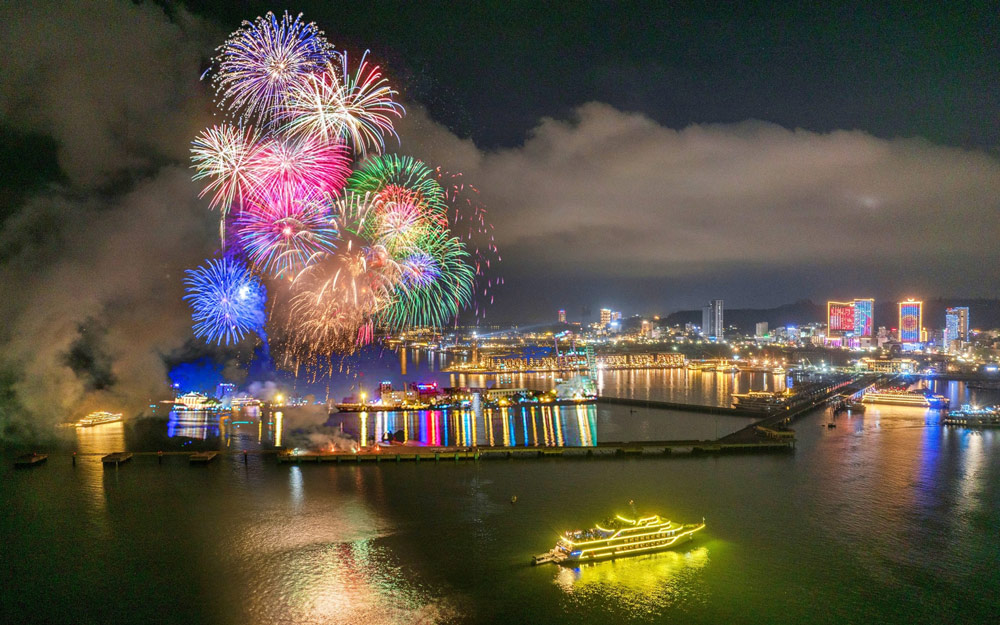
Ha Long Bay sits in Quang Ninh province in northeastern Vietnam, roughly 165 km from Hanoi. Da Nang is about 750 km south, on the central coast.
Ha Long has no commercial airport of its own and no railway heading south. Van Don Airport serves the wider province but has a limited network. Hai Phong's Cat Bi Airport is closer to Ha Long than Hanoi is, and sometimes carries Da Nang flights.
In practice, almost every traveler routes through Hanoi, because Noi Bai International Airport has the most frequent Da Nang service by a wide margin.
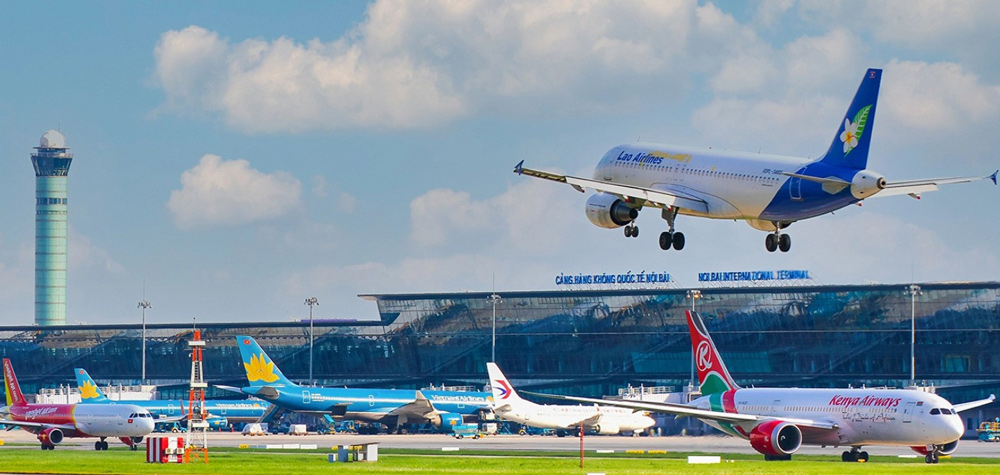
This is the route we book for the large majority of guests.
The road journey from Ha Long to Hanoi takes about 2.5 to 3 hours on the expressway.
Importantly, you do not need to enter Hanoi city. Noi Bai International Airport sits north of the city, and a driver can take you directly there, which saves both time and city traffic.
The Hanoi to Da Nang flight takes roughly 1 hour 20 minutes, on one of Vietnam's busiest domestic routes with multiple daily departures.
Total door-to-door time for the full Ha Long Bay to Da Nang journey is typically 6 to 8 hours, including the drive, check-in, the flight and transfer at the far end.
Allow a minimum of three hours between leaving Ha Long and your departure time. Traffic on the Hanoi approach is unpredictable, and this is not a connection to run tight.
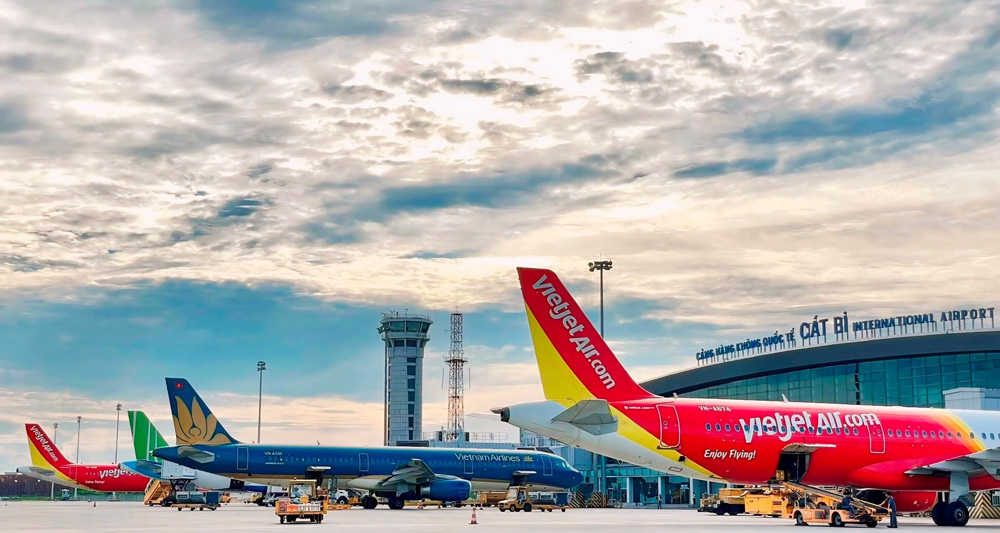
Hai Phong is Vietnam's third-largest city and sits considerably closer to Ha Long than Hanoi does — roughly 1.5 hours by road.
If Cat Bi Airport has a Da Nang flight that fits your schedule, this route can remove more than an hour from the day.
The trade-off is frequency. Cat Bi has far fewer daily Da Nang departures than Noi Bai, so your flexibility is limited and a missed connection has fewer recovery options.
Our recommendation: check Hai Phong first, but only take it if the timing genuinely works. Otherwise default to Hanoi.
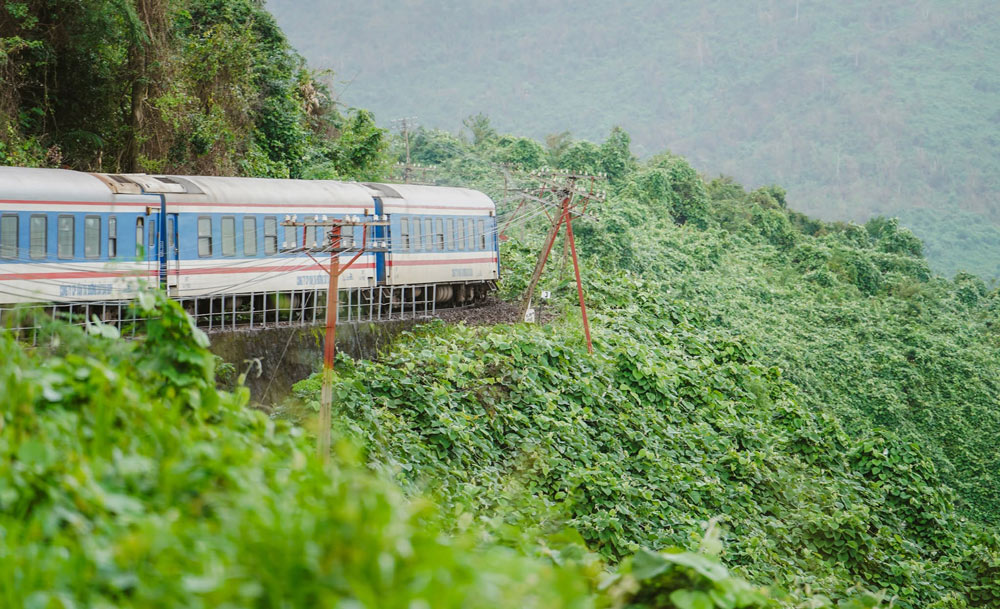
There is no rail line from Ha Long heading south. To travel by train you return to Hanoi by road, then join the Reunification Express, Vietnam's north–south railway.
The Hanoi to Da Nang rail journey takes roughly 15 to 17 hours, usually taken as an overnight sleeper.
Added to the Ha Long–Hanoi drive, that makes for a very long day and night. We would only suggest it for travelers who specifically want the rail experience, or who are continuing on to Hue and want to see the famously scenic coastal stretch below the Hai Van Pass.
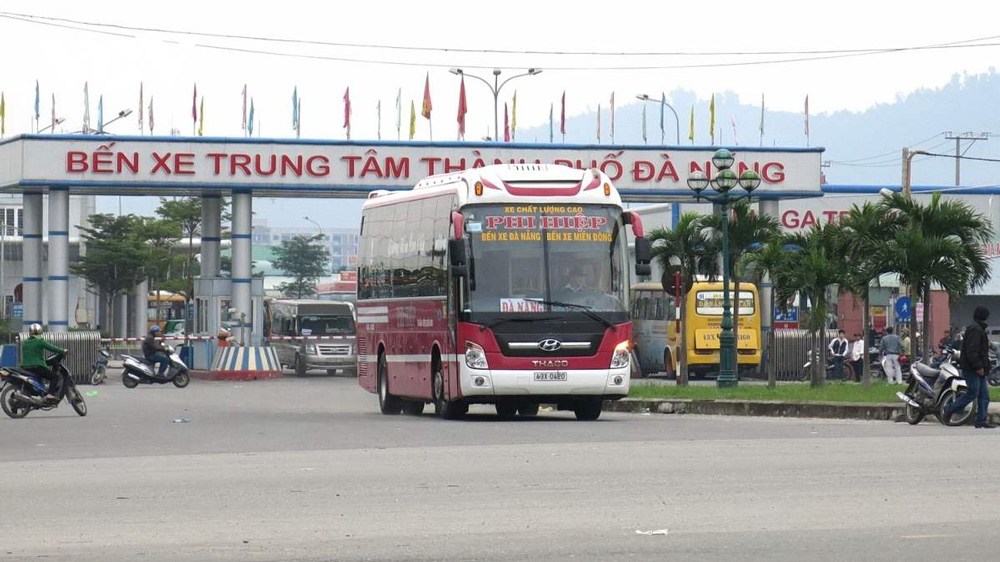
Driving from Ha Long Bay to Da Nang covers roughly 750 km and takes 14 to 16 hours. Sleeper buses run the route overnight.
This is almost never the right choice as a transfer. The only case where it makes sense is a genuine overland itinerary that stops along the way — Ninh Binh, Phong Nha and Hue all sit on or near the route and are worth days of their own.
If you are planning that kind of trip, it stops being a transfer and becomes part of the holiday. Plan it that way.

This is where most itineraries go wrong, so it deserves its own section.
Overnight Ha Long Bay cruises typically disembark late morning, usually returning to the pier somewhere around 11am.
From there you have a 2.5 to 3 hour drive to Noi Bai, plus check-in. That puts your realistic earliest departure in the mid-to-late afternoon — and only if everything runs perfectly.
Cruise disembarkation times slip. Weather delays boats. Traffic on the Hanoi expressway is unpredictable. Booking a midday flight on a cruise-return day means every one of those variables has to cooperate.
This is the detail nobody plans for, and it causes more stress than the timing does.
Most Ha Long Bay cruises ask you to bring only an overnight bag aboard, leaving larger suitcases either at your Hanoi hotel or with the cruise operator's office at the pier. That works fine — until your onward plan involves flying somewhere else entirely.
Two things to confirm before you book a cruise-day flight:
The cleanest arrangement is to keep all luggage with you at the pier, or to have your driver collect it from the hotel before meeting you. Either works — but it has to be agreed in advance, not discovered on the morning.
Ha Long cruises can and do return late. Fog delays departures. Weather shortens itineraries. Occasionally, authorities suspend sailings entirely during storms.
If your flight is the same day, you have no slack. If it is the next morning, a delayed cruise is an inconvenience rather than a lost booking.
This is the practical argument for the Hanoi overnight, and it is stronger than the comfort argument.
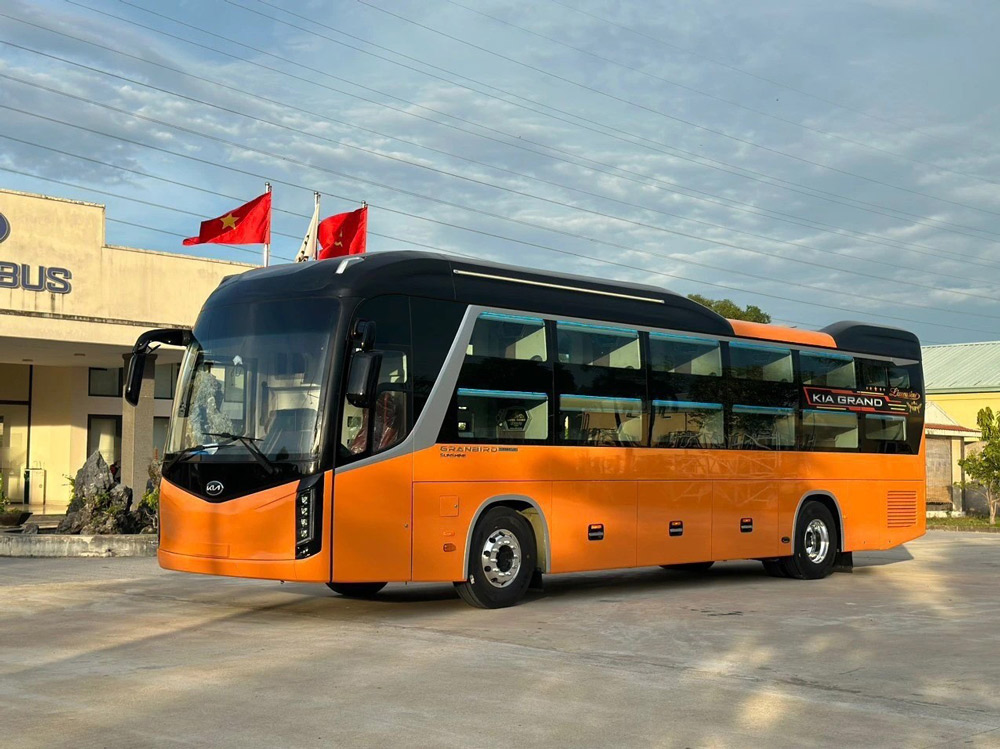
Ha Long Bay to Da Nang is a north-to-central transition, and it works best as a travel day in its own right rather than as something squeezed onto the end of a cruise.
The most common sequence we build is:
If you are also visiting Hoi An, note that it is only 45 to 60 minutes from Da Nang airport, so you can fly in and transfer straight there without an overnight in Da Nang.

An Asia Mystika guide explains:
“The mistake I see is guests booking a midday flight out of Hanoi on the day their cruise ends. The boat gets back to the pier at around eleven, then it is a three-hour drive, and every one of those hours has to go perfectly. I would rather build in a night in Hanoi and have everybody arrive in Da Nang relaxed.” — Camelia — Asia Mystika guide, Da Nang.
This is the most common structural error in north-to-central Vietnam itineraries, and it is almost always made by travelers building their own schedule from separate bookings.
The cruise operator sells you a disembarkation time. The airline sells you a departure time. Nobody is looking at the three hours of road in between — except you, and usually not until you are standing on a pier watching the clock.
Travelers resist the Hanoi overnight because it feels like a wasted night. It is not.
An evening in Hanoi's Old Quarter — street food, a walk around Hoan Kiem Lake, an early night — is a genuinely good use of the time, and it removes every timing risk from the following morning.
You then fly to Da Nang rested, on a mid-morning departure, and arrive with the whole afternoon ahead of you.
Via Hanoi in almost all cases — around 2.5 to 3 hours by road to Noi Bai airport, then a flight of about 1 hour 20 minutes to Da Nang.
Typically 6 to 8 hours door to door via Hanoi, including the drive, check-in and the flight.
No. Ha Long Bay has no commercial airport of its own. Van Don and Hai Phong (Cat Bi) are the nearest — check current Da Nang services before relying on either.
Yes, but not comfortably on the same day a cruise disembarks. Cruises return around midday, so allow a late afternoon flight at the earliest — or spend a night in Hanoi first.
Not directly. You return to Hanoi by road and join the Reunification Express, which takes roughly 15 to 17 hours to Da Nang.
Around 750 km by road, or 14 to 16 hours driving — which is why nearly everyone flies via Hanoi.
Here is the whole route in one line:
Ha Long Bay → Hanoi by road (2.5–3 hrs) → fly to Da Nang (≈1 hr 20 min) — total 6 to 8 hours, and do not attempt it on a cruise disembarkation morning.
This connection is not difficult, but it is unforgiving of optimistic scheduling. Build in the buffer, confirm your driver in advance, and the transition from Vietnam's most famous bay to its best beach city becomes a straightforward travel day rather than a stressful one.
The Ha Long to Da Nang transition is exactly the kind of connection that looks simple on a map and costs travelers a day in practice. Cruise timings, road transfers and domestic flights all have to line up — and none of the companies selling you those pieces is looking at the other two.
If you want to save time and effort while traveling to Vietnam, contact Asia Mystika, a trusted tour agent in Vietnam. We sequence north-to-central itineraries every week: cruise selection, private transfers timed to actual disembarkation, domestic flights, and hotels at both ends.
Tell us your dates and which places matter most, and we will build the route around them.
