 Hotline: +84 866 227 878
- SG$ Singapore Dollar
- A$ Australian Dollar
- £ British Pound Sterling
- C$ Canadian Dollar
- € Euro
- MYR Ringgit Malaysia
- US$ United States Dollar
- đ Vietnamese Dong


 Hotline/Whatsapp: +84 86 622 7878
 Email: sales@asiamystika.com
 About Us
 Destinations
 Travel Styles
 Travel Guide
 Blogs
Blogs
 News
News

Read our 2026 review of Sapa Clay House Mountain Retreat. We cover room prices, daily yoga classes, and compare it to Topas Ecolodge and Lady Hill Resort to see if it’s the best valley escape.
When travelers imagine Sapa, they picture waking up to clouds rolling slowly over neon-green rice terraces. Mist drifting between mountain ridges. Buffalo walking across narrow dirt paths.
But here’s the reality: finding accommodation that delivers that exact view — without sacrificing hot showers, comfortable beds, and reliable service — is harder than it sounds.
This is where Sapa Clay House enters the conversation.
Located in the peaceful Y Linh Ho / Lao Chai village area, away from the busy town center, Sapa Clay House Vietnam positions itself as a boutique mountain retreat for travelers who want immersion in nature without going fully “rustic.”
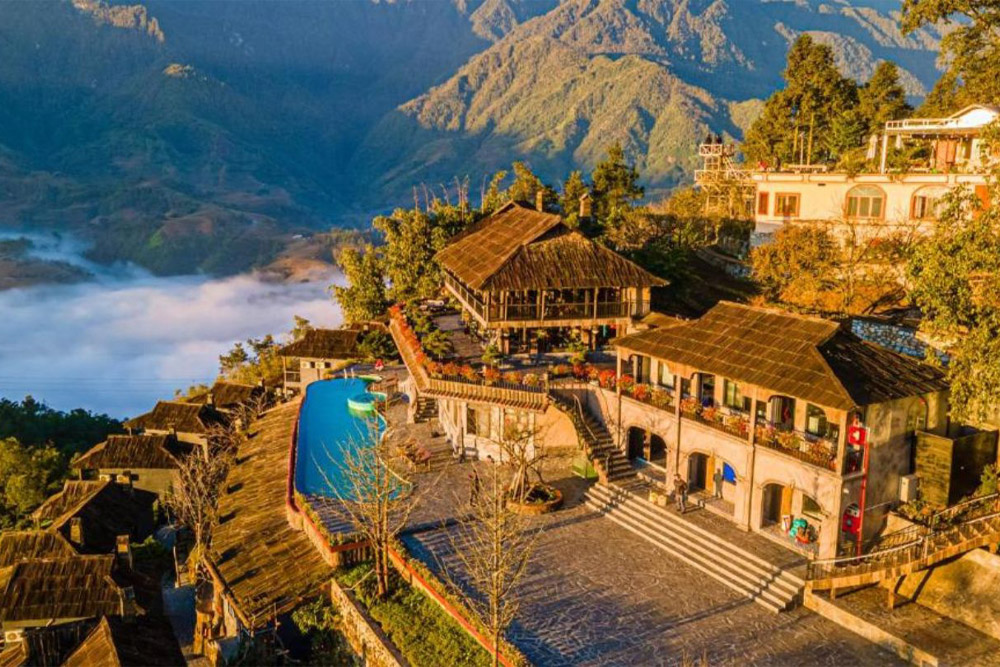
The buildings are literally constructed using traditional Ha Nhi earth and clay techniques. Thick mud walls, natural materials, and curved structures blend indigenous mountain architecture with boutique-level comfort. Instead of concrete hotel blocks, you get handcrafted clay houses built to stay cool in summer and warm in winter — a thoughtful fusion of tradition and modern design. And this matters because Sapa itself is famous for authenticity: the iconic terraced rice fields: the cultures of the Black H’Mong and Red Dao; misty mountain landscapes that look unreal.
The big question is:
Can you experience all of that while staying somewhere that feels curated and comfortable?
In this 2026 review of Sapa Clay House Mountain Retreat, we’ll break down:
Current room rates
Daily yoga sessions and wellness offerings
How it compares to heavyweights like Topas Ecolodge and Lady Hill Resort
And whether it’s actually better than staying in a standard village homestay
If you’re looking for a valley escape that balances earth-built charm with boutique comfort, this might be the one.
One of the biggest questions travelers ask is: Where is it best to stay in Sa Pa?
The answer depends entirely on what kind of experience you want.
Staying in Sapa Town means convenience. You’re steps away from cafés, restaurants, massage shops, the Stone Church, and Sun Plaza. Everything is walkable. But it’s also noisy, crowded on weekends, and can feel more like a busy hill station than a mountain retreat.
Staying in the Muong Hoa Valley — where Sapa Clay House Vietnam is located — is the opposite experience.
Here, you wake up to:
Roosters instead of motorbikes
Rice terraces instead of rooftops
Fog drifting across open mountains instead of neon signs
It’s silent. Deeply immersive. Visually stunning.
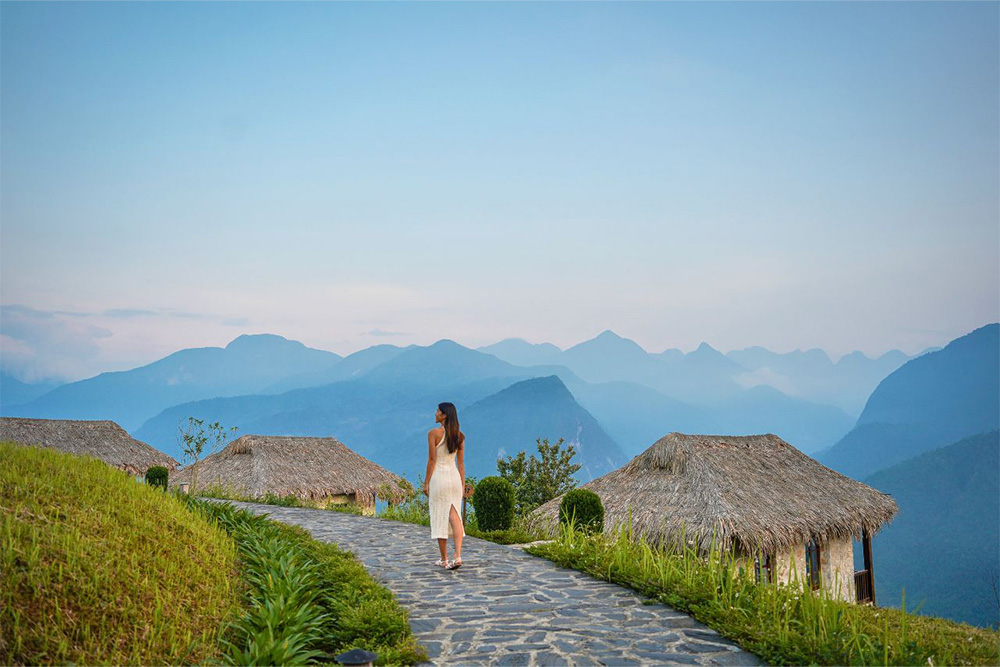
The trade-off? You’ll need a taxi (about 15–20 minutes) to reach Sapa town for restaurants or nightlife. For some travelers, that’s inconvenient. For others, that’s exactly the point.
If your goal is relaxation, nature, and waking up surrounded by rice fields, the valley wins every time.
Another common search is: “Where is the Sapa chill retreat?”
This is important.
Sapa Clay House Mountain Retreat is arguably the ultimate place to “chill” — but there is actually a separate budget hotel called Sapa Chill Retreat located in Sapa town on Hoang Dieu Street.
They are not the same property.
Sapa Chill Retreat: Budget hotel, town location, walkable to cafes.
Sapa Clay House: Boutique earth-built retreat, located deep in the Y Linh Ho / Lao Chai valley.
Many travelers accidentally book the wrong one because of similar wording. If you’re looking for rice terrace views and clay architecture, make sure you are booking Sapa Clay House, not the town-based “Sapa Chill Retreat.”
So, where is it best to stay in Sa Pa?
If you want nightlife and convenience → stay in town.
If you want silence, sunrise views, and a true mountain escape → the valley, and specifically Sapa Clay House, is the clear winner.
If you’ve searched for Sapa Clay House photos, you’ve probably already paused and thought: This doesn’t look like Vietnam.
And that’s exactly the appeal.
The design feels raw yet refined. Thick rammed earth walls, handcrafted wood beams, curved clay textures, and warm amber lighting create an atmosphere that feels grounded and intimate. Massive floor-to-ceiling glass windows open directly toward the Muong Hoa Valley, meaning your “TV” is a living panorama of rice terraces and drifting clouds.
Instead of generic hotel bathrooms, some rooms feature private wooden soaking tubs, positioned perfectly for mountain views. The materials feel intentional: pine wood, clay, stone, and woven textiles that subtly reference local ethnic patterns.
In photos, it looks cinematic. In person, it feels peaceful and surprisingly cozy.
Bamboo Huts
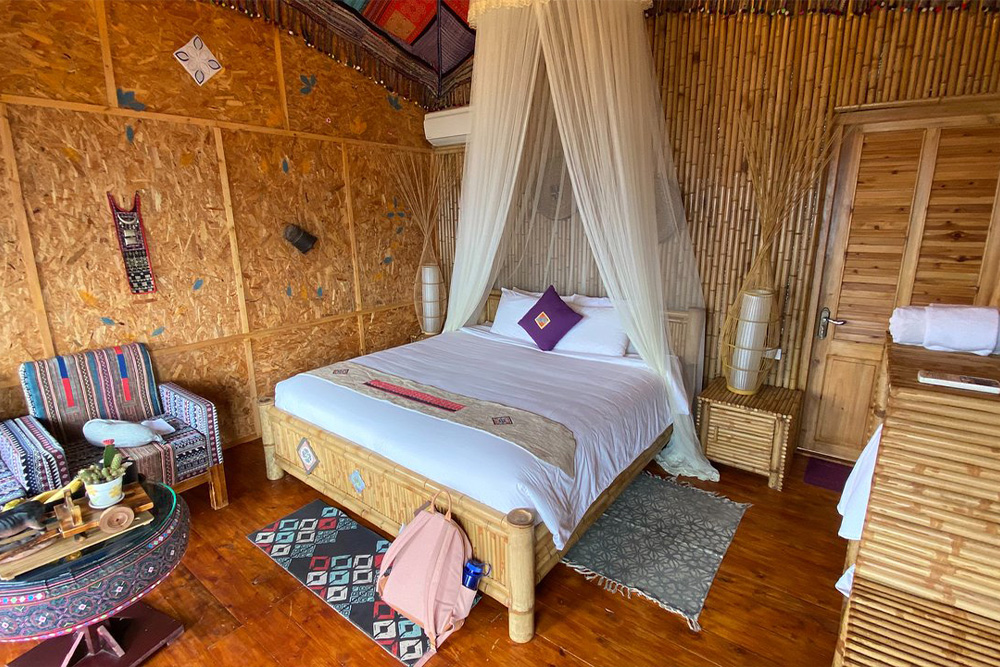
These are the most romantic options. Standalone units offering privacy, curved clay walls, pine wood interiors, and in some cases, outdoor showers. Perfect for couples looking for seclusion and sunrise views without interruption.
Executive Studio Suites
Larger and more polished. Think king-sized beds, expansive glass windows, and elevated panoramic views of the valley. These are ideal if you want more space or are traveling as a couple who appreciates comfort with scenery.
So what does this earthy luxury cost?
The Sapa Clay House price for 2026 typically ranges between:
$130 – $160 per night (lower season, weekday stays)
$180 – $220+ per night (peak season, harvest months, weekends)
Rates usually include an exceptional organic breakfast made from locally sourced ingredients — which is not just a small buffet, but a curated morning meal experience overlooking the valley.
Compared to a basic village homestay at $25–$40, it’s a major jump. But compared to high-end resorts like Topas Ecolodge, it sits in the competitive boutique-luxury bracket.
The real question isn’t whether it’s beautiful. It absolutely is.
The question is whether you value design, privacy, and curated comfort enough to justify the price.
If Sapa Clay House is about earthy architecture, it’s equally about slow living. This is where the retreat separates itself from standard homestays.
When people search for Yoga Sapa, this is one of the first properties that comes up — and for good reason.
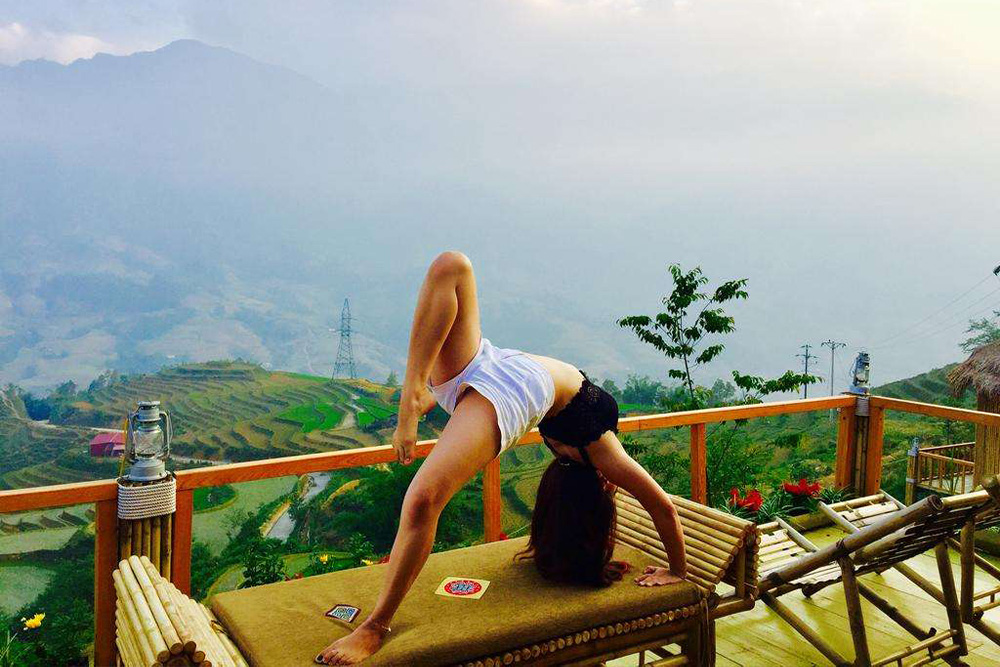
Sapa Clay House offers daily morning and late afternoon yoga and meditation sessions, often held on an open terrace overlooking the Muong Hoa Valley. Complimentary mats are provided, and the setting is unbeatable: mist lifting off rice terraces while you stretch in silence.
It’s not a rushed hotel activity. It feels intentional and grounded.
Beyond yoga, the retreat offers:
Red Dao herbal baths — a traditional medicinal soak known for easing muscle tension after trekking
Deep-tissue massages — perfect after hiking through Y Linh Ho or Lao Chai
The wellness focus makes it ideal for travelers who want Sapa without constant movement.
Because of the name “Clay House,” many travelers search for a pottery class Sapa or assume there is a ceramic-focused Sapa workshop onsite.
Here’s the reality:
Sapa is not historically known for pottery. It is known for textiles.
The region’s ethnic minorities — particularly the Black H’Mong — are famous for:
Indigo dyeing
Hemp weaving
Batik painting using beeswax
If you’re interested in authentic cultural activities, the better choice is booking an Indigo Dyeing or Batik workshop with local H’Mong women. The hotel can arrange these easily, giving you hands-on experience with techniques passed down for generations.
Sapa Clay House also offers excellent cooking classes, often using vegetables from their organic garden. It’s a more meaningful experience than generic souvenir-making — and you leave with actual skills.
In short, while the retreat isn’t a pottery school, it is a thoughtful base for wellness and authentic cultural immersion.
If your idea of a mountain escape includes sunrise yoga, herbal baths, and learning traditional crafts, this is where Sapa feels intentional — not touristic.
If you’re searching for a true Sapa luxury resort, the choice often comes down to three names: Topas Ecolodge Sapa Resort, Lady Hill Sapa Resort, and Sapa Clay House. Each delivers a very different version of “luxury.”
Let’s break it down clearly.
Topas Ecolodge is the global icon. Frequently featured in travel magazines, it’s the most internationally recognized high-end mountain resort in northern Vietnam.
Topas Advantages:
Located 45 minutes from Sapa town, completely isolated
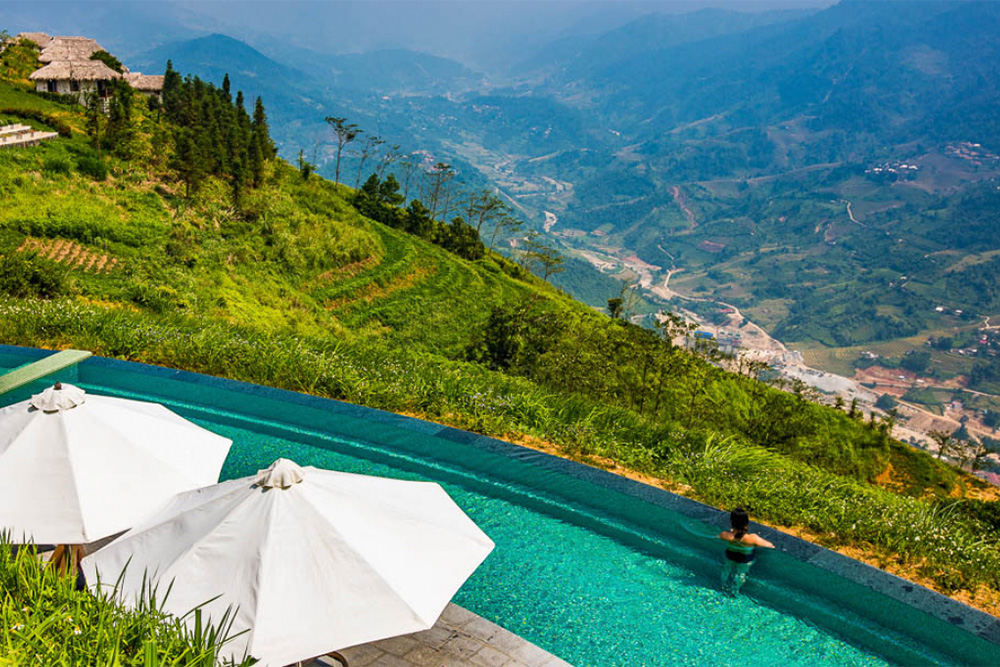
Two famous infinity pools overlooking endless rice terraces
Ultra-private setting
Premium pricing: typically $250–$400+ USD per night
Topas is about exclusivity and dramatic valley immersion. It feels remote and polished.
Sapa Clay House Advantages:
Closer to town (around 15–20 minutes by taxi)
More intimate and boutique
Family-run atmosphere rather than corporate resort scale
More accessible pricing: $130–$220+ USD per night
If you want international-level eco-luxury and don’t mind paying for it, Topas wins.
If you want boutique charm, strong design identity, and easier access to town, Clay House offers better balance.
Lady Hill Sapa Resort represents a different type of luxury. It’s a large, modern concrete resort built on a hillside near the Fansipan cable car station.
Lady Hill Advantages:
Large-scale facilities
Elevators and easier accessibility
Free shuttle bus to town (important for convenience)
Massive spa complex and Korean-style sauna facilities
It’s polished, convenient, and structured like a traditional upscale resort.
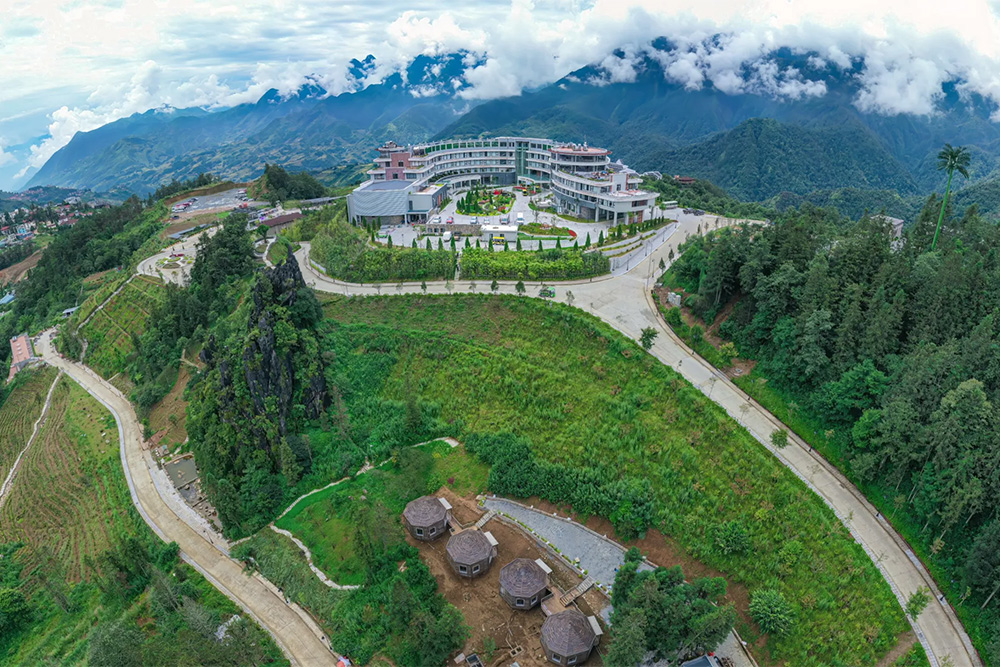
Sapa Clay House Reality:
Rustic architecture with clay and wood
Requires walking stairs and uneven pathways
No free shuttle — taxis are required for town visits
More “retreat” than “resort”
The deciding factor is lifestyle preference.
Choose Lady Hill if you want convenience, elevators, shuttle access, and easy movement between town and hotel.
Choose Sapa Clay House Vietnam if you want silence, earthy architecture, and to wake up feeling like you’re inside the valley rather than looking at it from a concrete balcony.
In the Sapa luxury resort battle, there isn’t a universal winner — only the one that fits your travel style.
Many travelers searching “Where to stay in Sa Pa homestay?” eventually discover Sapa Clay House and wonder: is this actually a homestay?
Technically, no.
Sapa Clay House is best described as a boutique eco-lodge or mountain retreat, not a traditional homestay. It may sit in the valley and use local architecture, but the experience is curated and upscale.
Here’s the difference:
A traditional homestay in Ta Van or Lao Chai usually means:
Staying inside a local family’s home
Basic bedding (sometimes mattresses on the floor)
Shared bathrooms
Very affordable pricing (around $15–$30 per night)
It’s authentic and immersive — but not luxurious.
Sapa Clay House, on the other hand, offers:
Private rooms with valley views
King-sized beds and air conditioning
Ensuite bathrooms
Organic breakfast
Yoga classes and spa services
You’re still in the rice fields, but you’re sleeping in boutique comfort.
If you want ultra-local, ultra-budget, and don’t mind simple conditions, book a real homestay.
If you want the view of a homestay but the bed, air conditioning, and cocktails of a 4-star hotel, Sapa Clay House is the smarter choice.
Sapa is famous for Mount Fansipan, the highest peak in Vietnam, dramatic terraced rice fields, and diverse ethnic minority groups such as the Black H’Mong and Red Dao.
The hotel specifically named “Sapa Chill Retreat” is located in Sapa town on Hoang Dieu Street. However, if you’re looking for a true nature retreat experience, Sapa Clay House is located in the Y Linh Ho valley.
Despite the name “Clay House,” Sapa is not historically known for pottery. It is famous for textile workshops like indigo dyeing and batik. Pottery classes are rare here compared to destinations like Hoi An or Hanoi.
In 2026, nightly rates typically range from $130 to $220 USD, depending on the season and room type.
Yes. Lady Hill offers a shuttle service to the town center, which is a convenience advantage compared to valley eco-lodges like Sapa Clay House that require taxis for transport.
Sapa Clay House Mountain Retreat sits perfectly in the middle — not too rustic, not overly commercial. It’s the “Goldilocks” option of the valley. You still wake up to rice terraces and drifting mist. But you also get king-sized beds, curated breakfasts, yoga sessions, and private bathrooms. It’s immersion without discomfort.
Sapa Clay House is best suited for couples, wellness-focused travelers, yoga lovers, and anyone who wants to escape the noise of Sapa town while keeping a boutique level of comfort. If you value design, silence, and slow mornings over nightlife and convenience, this is your place.
If you’d like help arranging transport from Hanoi, comparing Clay House with other valley retreats, or building a seamless Sapa–Halong Bay itinerary, Asia Mystika can design the entire journey around your travel style. Share your dates and preferences here, and let us handle the logistics for you while you focus on enjoying the mountain views.
