 Hotline: +84 866 227 878
- SG$ Singapore Dollar
- A$ Australian Dollar
- £ British Pound Sterling
- C$ Canadian Dollar
- € Euro
- MYR Ringgit Malaysia
- US$ United States Dollar
- đ Vietnamese Dong


 Hotline/Whatsapp: +84 86 622 7878
 Email: sales@asiamystika.com
 About Us
 Destinations
 Travel Styles
 Travel Guide
 Blogs
Blogs
 News
News

Does it snow in Sa Pa, Vietnam? Yes, occasionally. Learn when snow in Sapa happens, where to see it, how likely it is, and how to plan a winter trip around Fansipan, frost, and cloud-sea views.
The Temperature: Snow in Sapa is only possible during the coldest winter cold-air outbreaks, when overnight temperatures drop to 0°C or below, mainly from December through February.
The Scenery: When it does snow, it usually dusts Fansipan summit and the highest ridgelines first. Snow only reaches Sapa town during the most severe cold spells.
Trekking Conditions: Snow, frost, and ice can make high-altitude trails and the Fansipan summit area genuinely hazardous. Even light snow can temporarily close routes or make steps slippery.
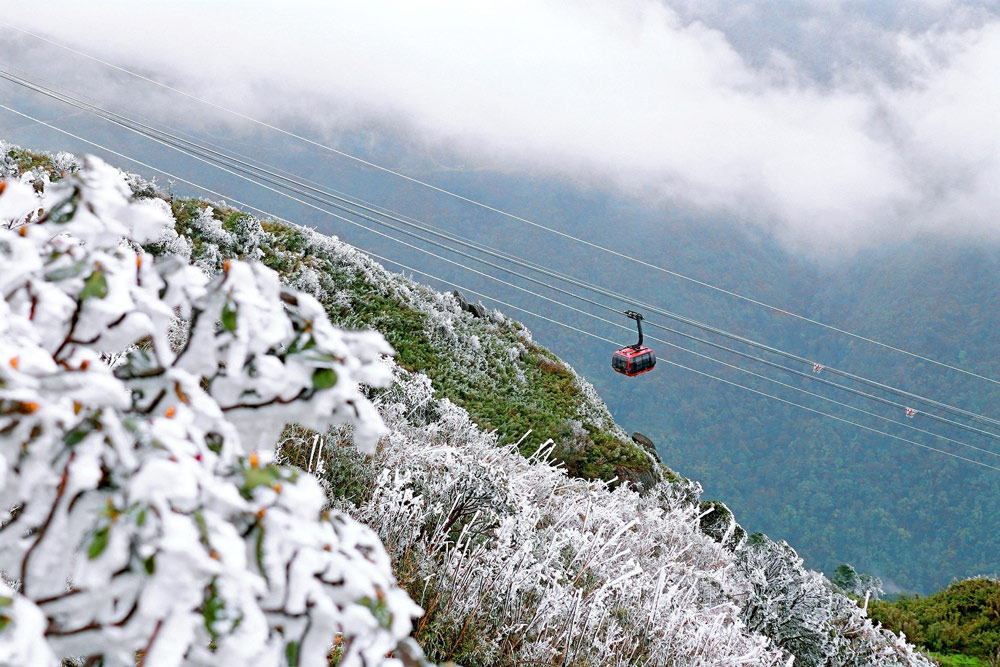
Visibility: Snow events are usually linked with heavy cloud and fog before the cold front clears. Afterward, the sky can open into strikingly clear winter views and dramatic sea of clouds scenes.
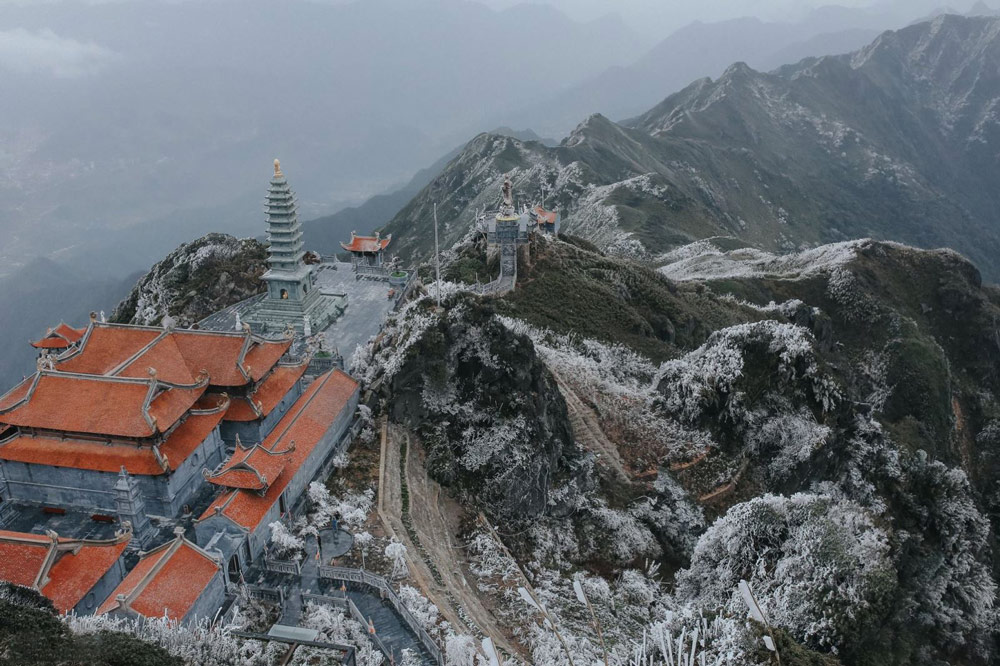
Yes, it does snow in Sapa, Vietnam, but rarely and briefly.
This is the honest answer travelers need. Sapa is one of the few places in Vietnam where snow is possible, but it is not a guaranteed winter attraction. Snow depends on a strong northern cold-air outbreak, the right moisture level, and temperatures dropping to freezing or below. These conditions are most likely between December and February, especially in January, but even then, snow does not happen every year.
The most important detail is location. When people search for Vietnam Sapa snow, they often see dramatic headlines and beautiful white mountain photos. But many of those reports refer to Fansipan summit or high ridgelines, not Sapa town itself.
That difference matters.
Sapa town sits high in the mountains, but Fansipan rises much higher. The summit is colder, windier, and much more exposed. Because of that, snow in Fansipan or frost on the summit is far more common than snow settling around hotels, cafés, or streets in Sapa town.
For travelers, this means you should not plan a trip expecting snow outside your hotel window. A smarter plan is to travel during the winter window, watch cold-front forecasts closely, and include a flexible Fansipan visit if snow, frost, or ice is likely.
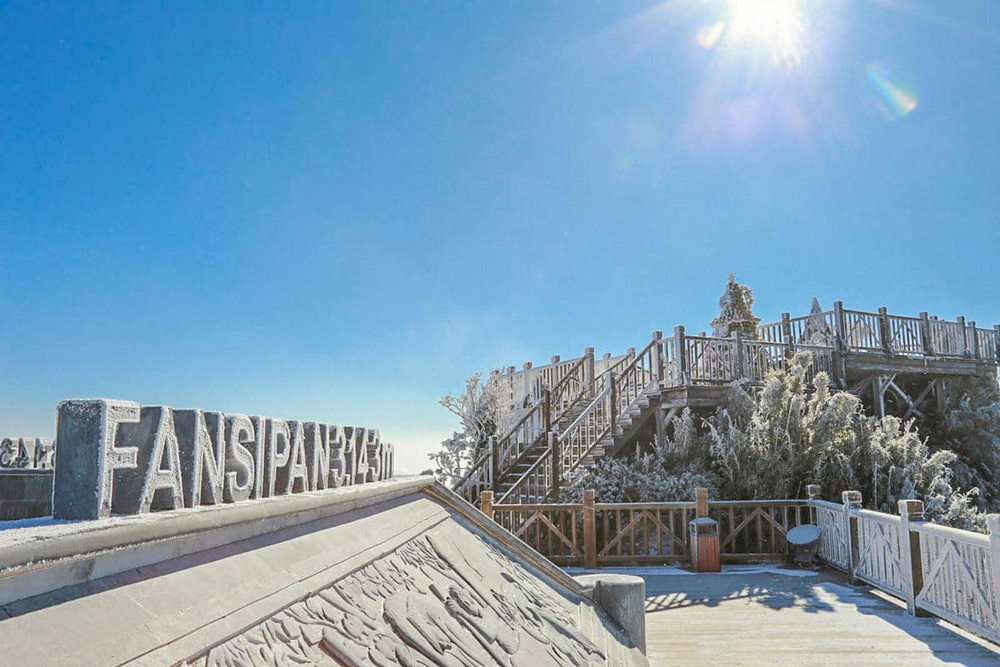
Even without snow, winter Sapa can still be beautiful. You may see foggy valleys, frosty grass, icy railings, cloud seas, crisp mountain views, and a quiet winter atmosphere that feels completely different from tropical Vietnam.
So yes, Sapa snow is real. But it is rare, short-lived, elevation-dependent, and best treated as a bonus rather than a promise.
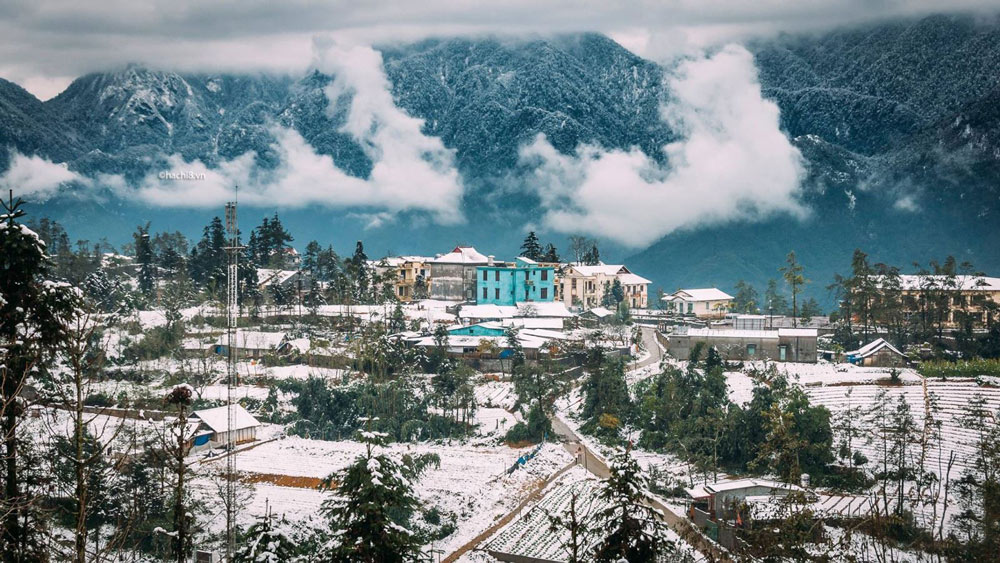
Vietnam Sapa snow events cluster in the coldest weeks of winter, usually from late December to February, with January offering the best chance. This is when northern cold-air outbreaks are strongest and temperatures can drop low enough for frost, ice, or occasional snow.
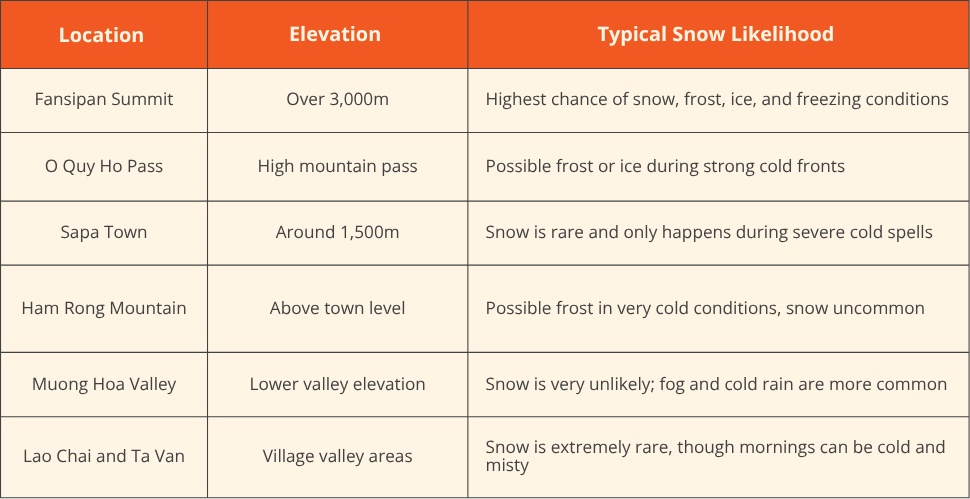
The location is just as important as the month. The higher you go, the better your chance.
Fansipan, the highest peak in Vietnam, is the most likely place to see snow or frost. Sapa town is much less reliable. Lower villages such as Lao Chai, Ta Van, Cat Cat, and Muong Hoa Valley are even less likely to see snow, though they may feel cold, foggy, and damp during winter.
A “snow in Sapa” headline often means snow at the summit or on high mountain roads. Before booking a last-minute trip, always check exactly where the report is coming from.
December is the beginning of the serious winter window. It can be cold, foggy, and damp, especially late in the month. Snow is possible during a strong cold front, but it is still not very likely in Sapa town. Fansipan and high ridges have a better chance of frost or icy scenery.
December is good for travelers who want winter mood without necessarily chasing the highest snow odds.
2.2. January
January is usually the best month for snow in Sapa Vietnam because it is typically the coldest part of the year. Northern cold-air surges are stronger and more frequent, and nighttime temperatures can drop sharply.
If you want the best chance of seeing snow, frost, or ice around Fansipan, January is the most logical month to choose. Still, snow is not guaranteed. You may get frost, icy summit railings, or cloud-sea views instead.
February remains cold, especially early in the month. Snow is still possible, but the chance gradually decreases as the weather begins moving toward spring. Late February may bring peach and plum blossoms instead of snow, depending on the year.
February is a good compromise for travelers who want cold-weather scenery but also hope for early spring color.
Snow settling in Sapa town is genuinely rare. It usually happens only during the most severe cold outbreaks, sometimes just once or twice across several years. Travelers should treat snow in town as a rare bonus, not a plannable event.
That does not mean winter is disappointing. Frost, fog, cold mountain air, and Fansipan cloud-sea views are much more realistic and can still make the trip unforgettable.
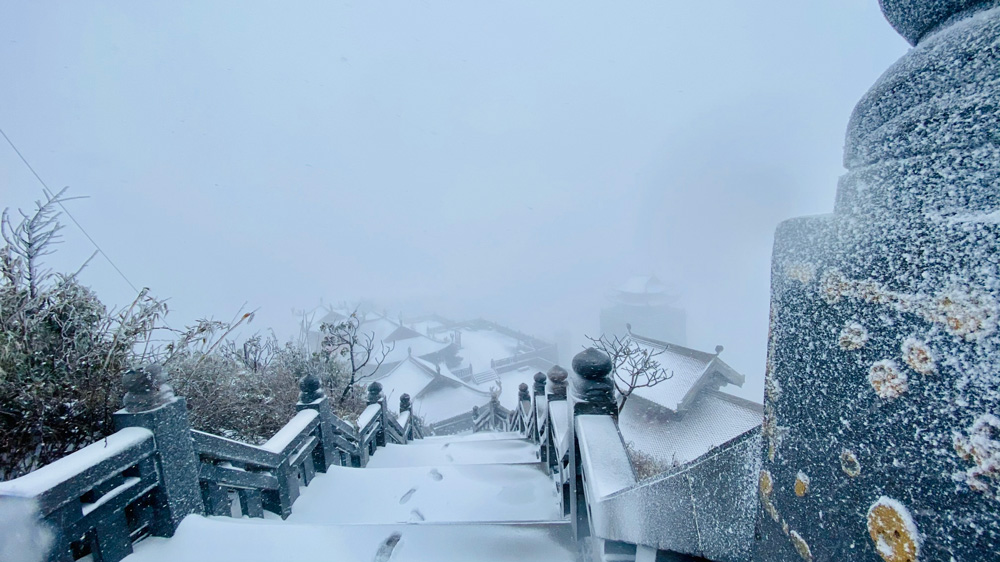
Not reliably.
This is the most important expectation to set. Snow in Sapa cannot be booked around months in advance the way harvest season can. Golden rice terraces follow a fairly predictable agricultural cycle. Snow does not. It depends on short-term weather conditions, and reliable snow forecasts usually only become meaningful a few days before the event.
In practice, snow forecasting for Sapa depends on:
This is why planning a whole Vietnam trip only around snow is risky. You may choose January and still see no snow. You may book early December and miss a cold front by one week. You may arrive after snow has already melted.
The practical approach is different: travel in the December to February winter window for a chance of snow, but build the trip around other winter highlights too. These include Fansipan cloud-sea views, hotpot, quiet villages, foggy valleys, frost hunting, herbal baths, and cozy mountain lodges.
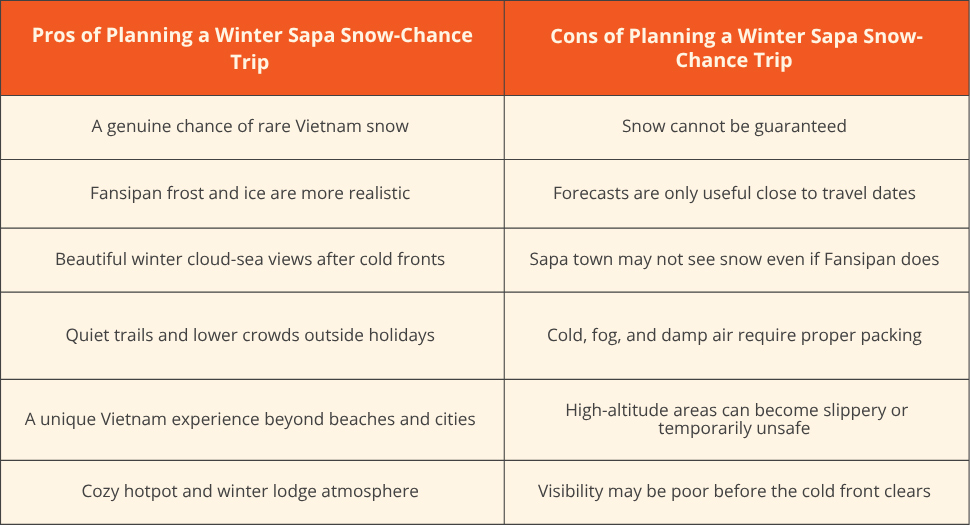
If you are flexible, winter Sapa can be rewarding whether or not snow appears. If you are only interested in guaranteed snow, Sapa may frustrate you.
January is generally the best month to see snow in Sapa, though it is never guaranteed in any single year.
Here is how the winter months compare:
Avoid planning a trip around snow specifically in November or early December. These periods can be beautiful for trekking or clear views, but they rarely offer true snow conditions.
Two days in Sapa is workable if you are timing the trip against a confirmed cold-front forecast. But if you are planning months ahead, a slightly longer 3 to 4 day winter trip gives you much more flexibility.
The problem with a 2-day trip is that snow and frost are timing-sensitive. If you arrive one day too late, the snow may have melted. If you arrive one day too early, the cold front may not have reached the mountain yet. If Fansipan is fogged in, you may need to wait for the sky to clear.
A longer stay gives you room to adjust. You can choose the best Fansipan window, enjoy village culture on foggy days, and still have a rewarding trip if snow does not appear.
Day 1: Arrive, Settle In and Check the Updated Cold-Front Forecast
Travel from Hanoi to Sapa by private transfer, limousine van, or overnight train via Lao Cai. Once you arrive, do not rush straight into high-altitude sightseeing unless conditions are perfect.
Check the latest forecast with your guide or hotel. Ask specifically about Fansipan summit conditions, not only Sapa town weather. A town forecast may show fog and cold rain, while the summit may be icy, frosty, or clearing above the cloud layer.
Spend the day exploring Sapa town, enjoying hot tea, walking near Sapa Stone Church, and preparing warm clothing for the next morning.
Day 2: Fansipan Cable Car at the First Good Snow or Frost Opportunity
If snow, frost, or clear post-front conditions are likely, use the first good window for Fansipan cable car. Do not delay too long. Snow and frost can melt quickly when the sun rises, especially on exposed pagodas, railings, and steps.
Dress warmly. Bring gloves, a beanie, thick socks, and a windproof jacket. Even if Sapa town feels cold but manageable, Fansipan can feel much more severe.
If visibility is poor, do not panic. Sometimes the cable car rises above the fog into sunshine and cloud-sea views. If the summit is completely covered, your guide may recommend waiting or swapping activities.
Day 3: Buffer Day for Village Culture, Hot Pot and Cloud-Sea Views
A third day gives you flexibility. If Day 2 was foggy, try Fansipan again. If you already had good summit views, use Day 3 for a village walk through Cat Cat, Lao Chai, Ta Van, or Ta Phin.
On cold days, build in cozy winter experiences: Sapa-style hotpot, Red Dao herbal baths, tea with a local family, or a slow walk through a misty village.
This is also a good day for O Quy Ho Pass if road conditions are safe and visibility is clear.
Day 4: Market, Departure or Final Weather Window
A fourth day is ideal for travelers who are serious about winter photography. You can use it as a final weather buffer, market day, or slow departure.
If the sky clears after a cold front, this can be your best day for mountain panoramas. If the weather stays cold and foggy, enjoy the quiet atmosphere rather than forcing risky high-altitude plans.
Many travelers see dramatic headlines about snow in Sapa and immediately imagine white streets, snowy rooftops, and hotel balconies covered in powder. That can happen, but it is not the normal experience.
The reality is more nuanced, and understanding it will help you plan better.
Search results often show titles like “Snow in Sapa!” or “Vietnam Turns White!” But the details may reveal that the snow was on Fansipan summit, not in Sapa town. Sometimes the photos show frost, ice, or hoarfrost rather than falling snow. Sometimes snow appears briefly in the early morning and melts before many visitors arrive.
This matters because Sapa town and Fansipan are not the same place.
Booking a trip “for the snow” should mean planning a Fansipan cable car visit during a cold snap, not expecting snow to fall outside your hotel window in town.
Here is the expectation shift:
If you understand this, you will not feel disappointed if Sapa town is only cold and foggy while Fansipan is frosty and dramatic.
The best winter Sapa experience is not always snow. Often, it is the cloud sea, known in Vietnamese as biển mây.
An Asia Mystika guide explains:
“We never promise snow, because we can’t. What we can promise is that a strong winter cold front almost always produces one of the best ‘sea of clouds’ views of the year from the Fansipan summit, once the front clears. We tell every guest: come for that view, and treat any actual snow as a bonus on top.”
This is exactly how travelers should approach Sapa in winter.
A strong cold front may bring fog, cold rain, and poor visibility at first. Then, once it clears, the valley can remain filled with clouds while the summit rises above them. The cable car moves from grey mist into sunlight, and suddenly you are standing above a white ocean of clouds.
That experience can be just as memorable as snow, sometimes even more reliable.
Snow and frost may look beautiful, but they can make surfaces slippery. High-altitude stone steps, temple paths, wooden decks, road edges, and trekking routes can become dangerous.
Do not hike high routes alone during freezing weather. Do not ride a motorbike to icy passes if you are inexperienced. Do not ignore temporary closures. If local authorities, cable car staff, or guides advise against a route, listen.
Winter beauty is best enjoyed safely.
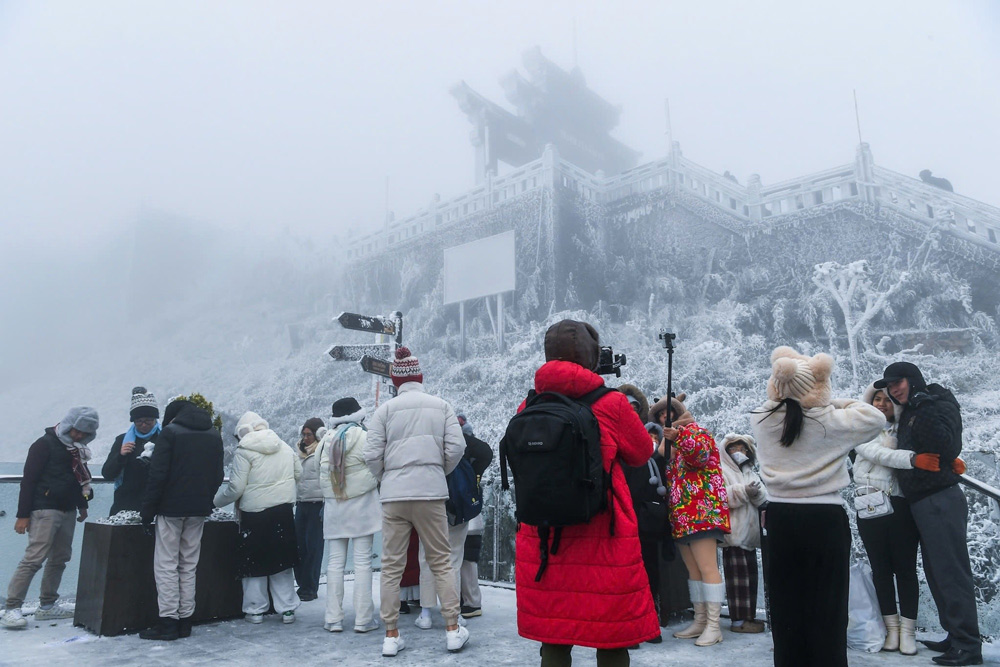
Packing for Sapa snow weather is very different from packing for a normal Vietnam trip. You are preparing for damp cold, wind chill, fog, and possibly freezing high-altitude conditions.
Even if you do not see snow, you will still be glad you packed warm layers.
Sapa winter snow-chance packing checklist:
Avoid relying only on a hoodie. Avoid sandals or thin canvas shoes. Avoid jeans for winter trekking because denim becomes cold and uncomfortable when damp.
For Fansipan, pack as if it will be significantly colder than Sapa town, because it usually is.
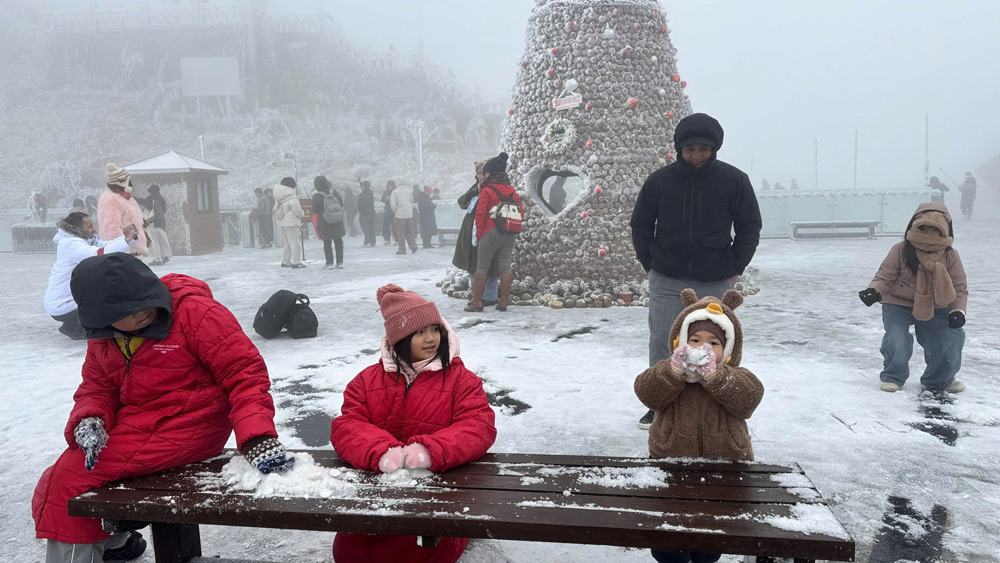
Yes, it does snow in Sapa, Vietnam occasionally, mainly during the strongest cold-air outbreaks between December and February. Snow is far more common at Fansipan summit than in Sapa town itself.
January generally offers the best chance to see snow in Sapa because it tends to bring the coldest and most frequent northern cold-air surges. However, snow is never guaranteed in any given year.
Only a few days ahead. Reliable Sapa snow forecasts depend on short-term cold-front tracking, not general seasonal averages, so travelers should check updated forecasts close to their travel dates.
Snow is much more likely on Fansipan and high ridgelines. Snow settling in Sapa town is rare and usually happens only during severe cold spells.
Yes. Even without snow, winter Sapa offers misty valleys, frost, hotpot, quiet villages, lower crowds, and dramatic Fansipan cloud-sea views after cold fronts.
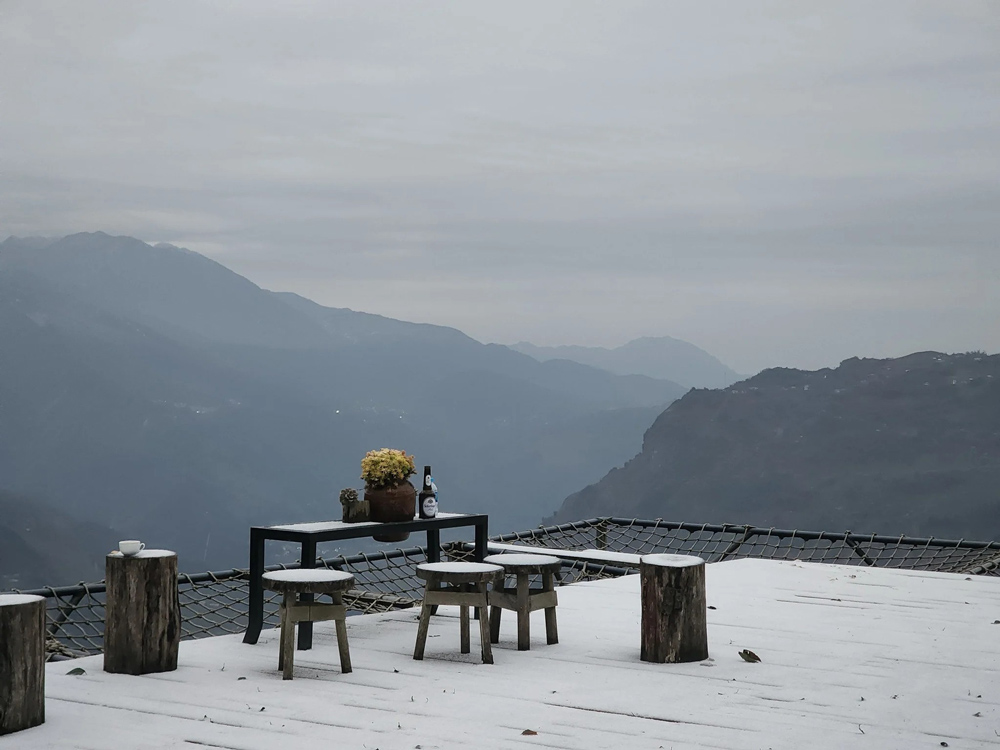
So, does Vietnam Sapa snow really happen?
Yes, but rarely.
Snow in Sapa is possible, especially between December and February, with January offering the best chance. But it is mainly a high-elevation phenomenon. Fansipan summit and the highest ridgelines are far more likely to see snow, frost, or ice than Sapa town.
That is the truth travelers should plan around.
Do not build your entire trip around snow falling outside your hotel window. Build it around winter Sapa’s broader magic: cold mountain air, quiet trails, foggy valleys, hotpot, herbal baths, frost hunting, and Fansipan’s unforgettable cloud-sea views.
If snow appears, it becomes the bonus. If it does not, your trip can still be beautiful, atmospheric, and deeply memorable.
The smartest approach is flexible planning. Travel during the winter window. Watch cold-front forecasts. Prioritize Fansipan if snow or frost is likely. Pack properly. Choose safe transfers. And let the season surprise you.
Stop planning a whole trip around a single unpredictable snowfall.
If you want to save time and effort while traveling to Vietnam, contact Asia Mystika, a trusted tour agent in Vietnam. We can arrange a winter Sapa package built around Fansipan cold-front cloud-sea views, safe private transfers, warm eco-lodges, expert local guides, and enough flexibility to catch a snow event if one arrives.
Start planning a winter trip worth taking either way with Asia Mystika’s customized Sapa tour packages, and let us help you experience Sapa’s coldest, quietest, and most atmospheric season with confidence.
