Hotline: +84 866 227 878
- SG$ Singapore Dollar
- A$ Australian Dollar
- £ British Pound Sterling
- C$ Canadian Dollar
- € Euro
- MYR Ringgit Malaysia
- US$ United States Dollar
- đ Vietnamese Dong


 Hotline/Whatsapp: +84 86 622 7878
 Email: sales@asiamystika.com
 About Us
 Destinations
 Travel Styles
 Travel Guide
 Blogs
Blogs

Planning a holiday with grandparents, parents, and children means balancing very different needs and Da Nang multigenerational travel makes that easier than you might expect. With accessible beaches, family-friendly resorts, cultural attractions, gentle sightseeing, and plenty of places to slow down, Da Nang works especially well for families spanning several generations. This guide shows you which activities suit everyone, where to stay, how to plan transport, and how to pace each day so the whole family can enjoy Vietnam together without feeling rushed.
Da Nang multigenerational travel works well because the city combines short transfer times, flexible attractions, family-friendly resorts, and an easy beachfront lifestyle. Grandparents, parents, and children can enjoy the same trip without needing to follow the exact same pace.
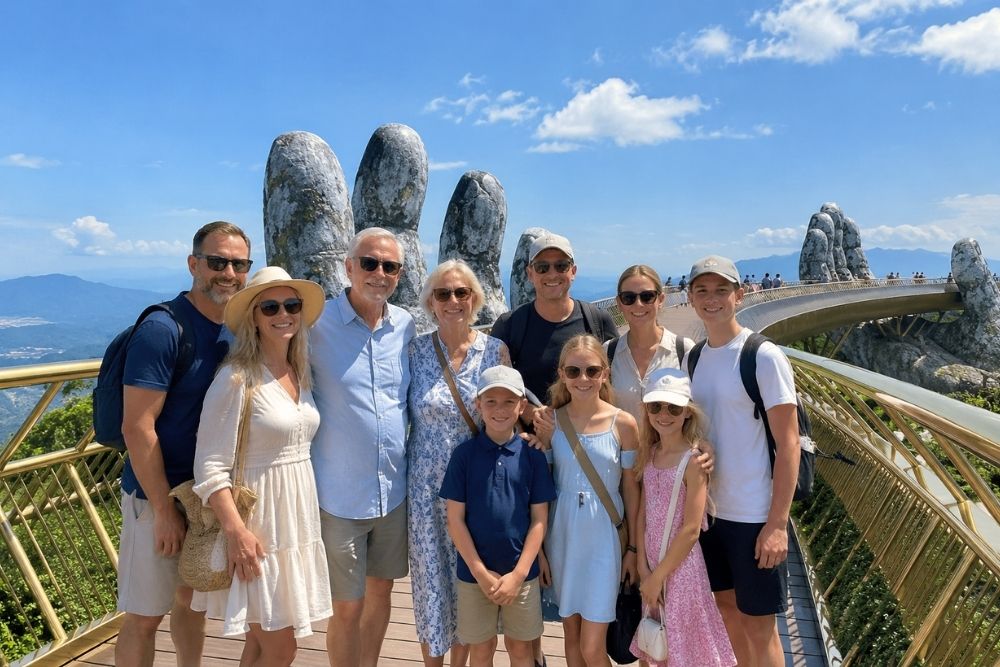
Most major sights are relatively close together, which reduces tiring travel time. Attractions such as Marble Mountains offer an elevator for part of the climb, while Ba Na Hills uses cable cars and includes indoor entertainment, giving families more options when mobility or weather becomes an issue.
Da Nang's beachfront resorts also suit larger families, with options such as connecting rooms, villas, pools, kids' clubs, and quieter spaces for older travelers. Meanwhile, My Khe Beach allows children to play, adults to swim, and grandparents to enjoy the promenade or cafes nearby.
Compared with busy Hanoi, compact but crowded Hoi An, or resort-focused Phu Quoc, Da Nang offers a particularly balanced combination of culture, beach time, sightseeing, and relaxation.
The biggest advantage is flexibility: everyone can spend time together while still having the option to rest or skip an activity when needed. For more family-specific planning advice, see our Da Nang With Kids guide.
The strongest Da Nang multigenerational travel plans are not built around keeping everyone together from breakfast to bedtime. They are built around optional participation the idea that any family member can skip an activity, rest, or choose something easier without disrupting the rest of the day.
A practical way to do this is to design each day with an obvious opt-out. For example, some relatives might visit Marble Mountains in the morning while grandparents enjoy a slower start at the resort. Later, everyone can meet again for lunch or dinner. This keeps the holiday flexible without making anyone feel that they are “holding the group back.”
Your resort should act as the family’s home base. Choosing a property with a pool, comfortable common areas, nearby food, and easy transport gives people somewhere pleasant to return to when they need a break. That matters far more with three generations than squeezing in one extra attraction.
It also helps to split the group deliberately for part of the day. Teenagers and parents may want a more active excursion, while younger children or older relatives prefer beach time, a café, or a quiet afternoon. Reuniting over meals is often more successful than forcing every person into the same sightseeing schedule.
This is why rigid itineraries tend to fail for multigenerational groups. Different ages have different energy levels, sleep patterns, mobility needs, and interests. A flexible structure makes the trip feel easier for everyone and usually creates more enjoyable family time when the group does come back together.
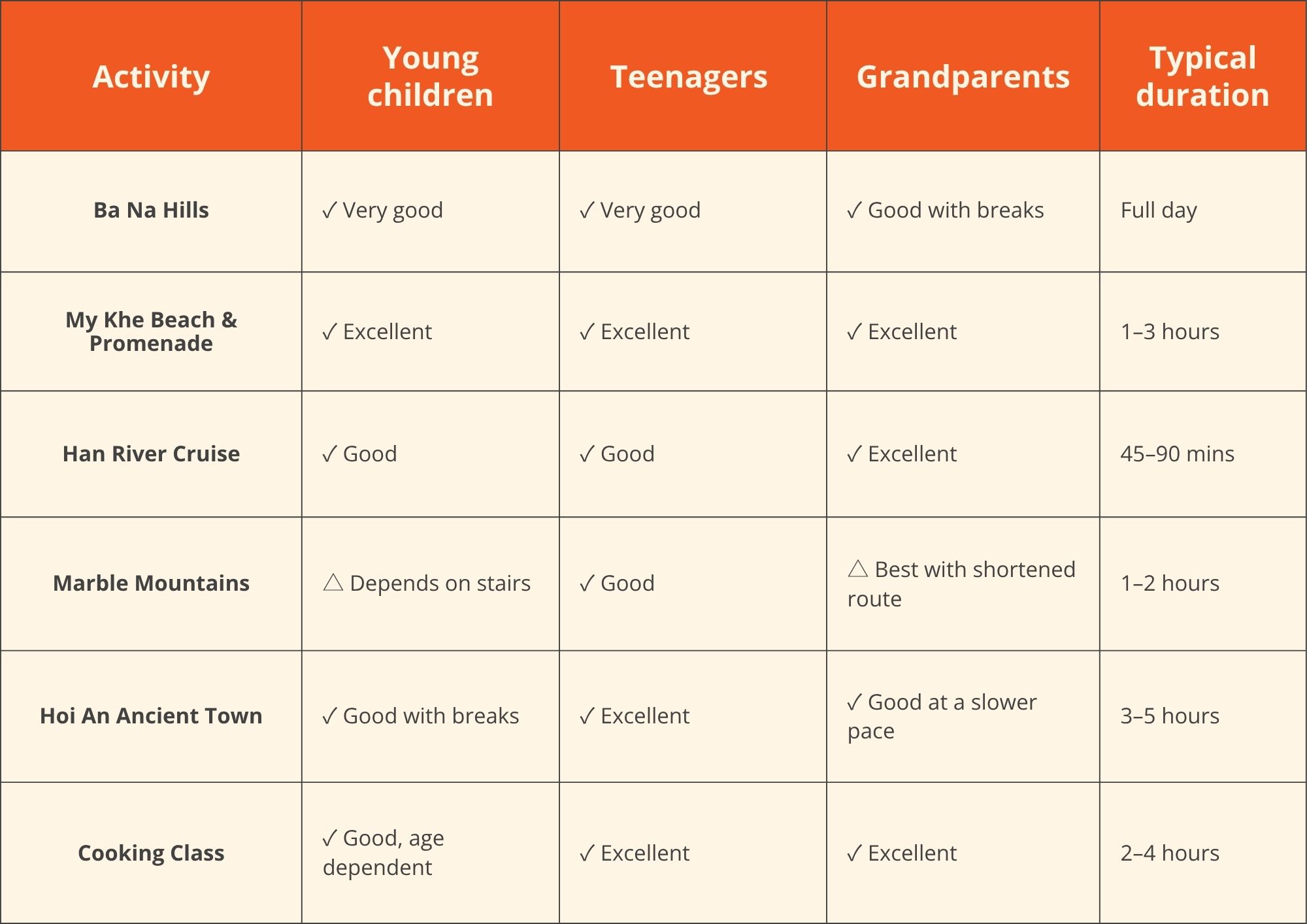
For Da Nang multigenerational travel, the best activities are those that let children stay interested, teenagers have something worth seeing, and grandparents participate without excessive walking. Ba Na Hills, My Khe Beach, and a Han River evening cruise are the strongest all-generation choices, while Marble Mountains, Hoi An, and a cooking class work well with a little planning.
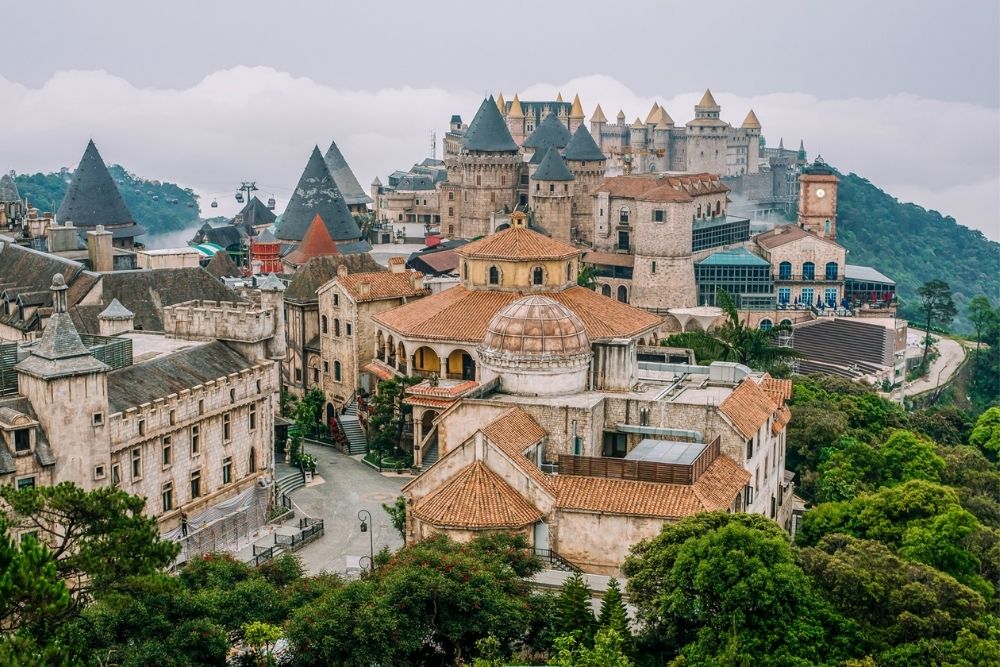
Ba Na Hills gives different generations several experiences in one place. The cable car handles the mountain ascent, younger family members have Fantasy Park and other entertainment, while older relatives can enjoy the Golden Bridge, gardens, restaurants, and scenic areas at a slower pace. Sun World continues to operate Ba Na Hills and its cable-car attractions in 2026.
It is still a large complex, so do not expect grandparents to follow teenagers through every zone. Agree on meeting points and allow part of the family to sit out an attraction when necessary.
My Khe requires almost no itinerary. Children can play on the sand, adults can swim, and grandparents can enjoy a gentle beachfront walk or simply sit near the sea. This makes it particularly useful on arrival days or after a demanding excursion.
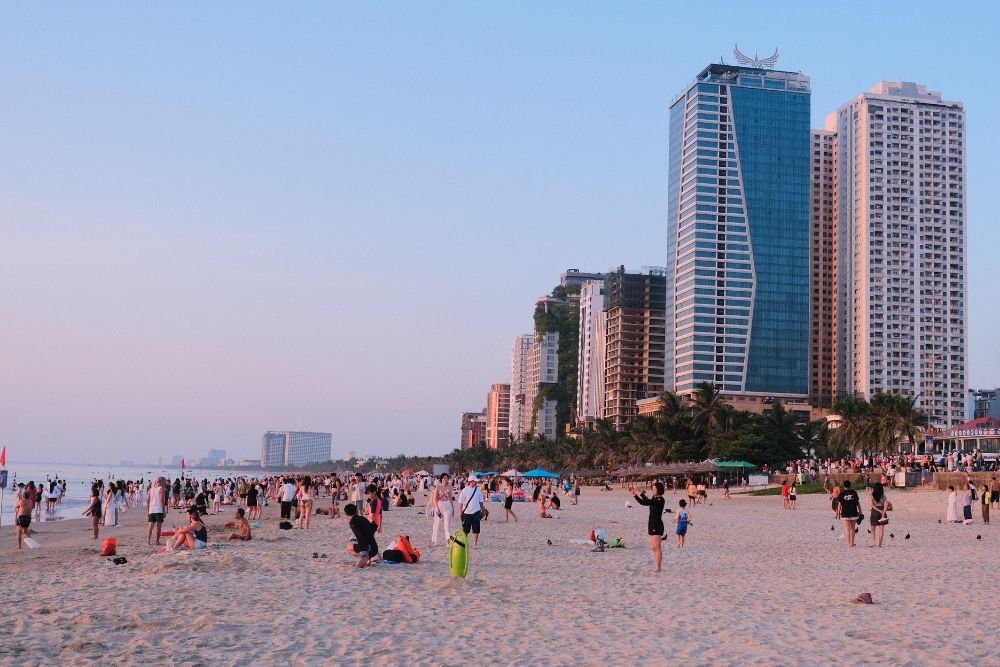
For mixed-age families, early morning or late afternoon is usually more comfortable than the hottest middle part of the day. Always follow local swimming flags and lifeguard instructions.
A Han River cruise works especially well when the family wants to sightsee without another long walk. Da Nang Tourism currently lists evening cruises from around 6:00 PM to 9:30 PM.
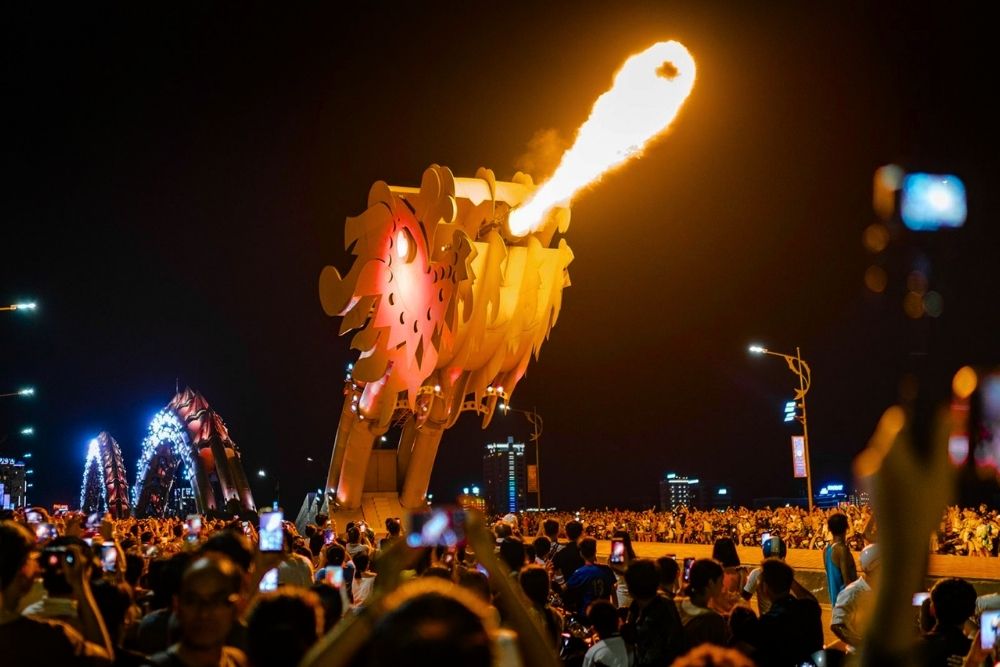
If your visit falls on Friday, Saturday, or Sunday, the Dragon Bridge fire-and-water show currently starts at 9:00 PM. A well-timed cruise or riverside evening can therefore give the whole family a memorable finish without adding another strenuous attraction.
Marble Mountains can work for three generations, but do not plan the full climb for everyone. Use the elevator for part of the ascent, concentrate on a few key pagodas and caves, and let more active relatives continue toward the higher viewpoints if they wish.
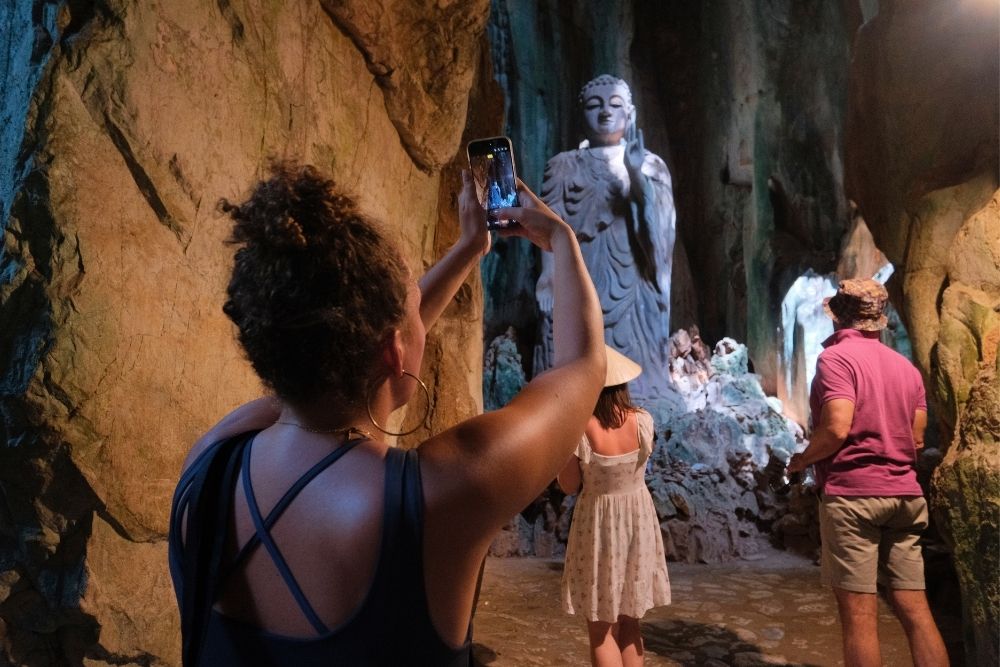
This is a perfect example of optional participation in Da Nang multigenerational travel: everyone shares the main experience without everyone needing to complete the same route.
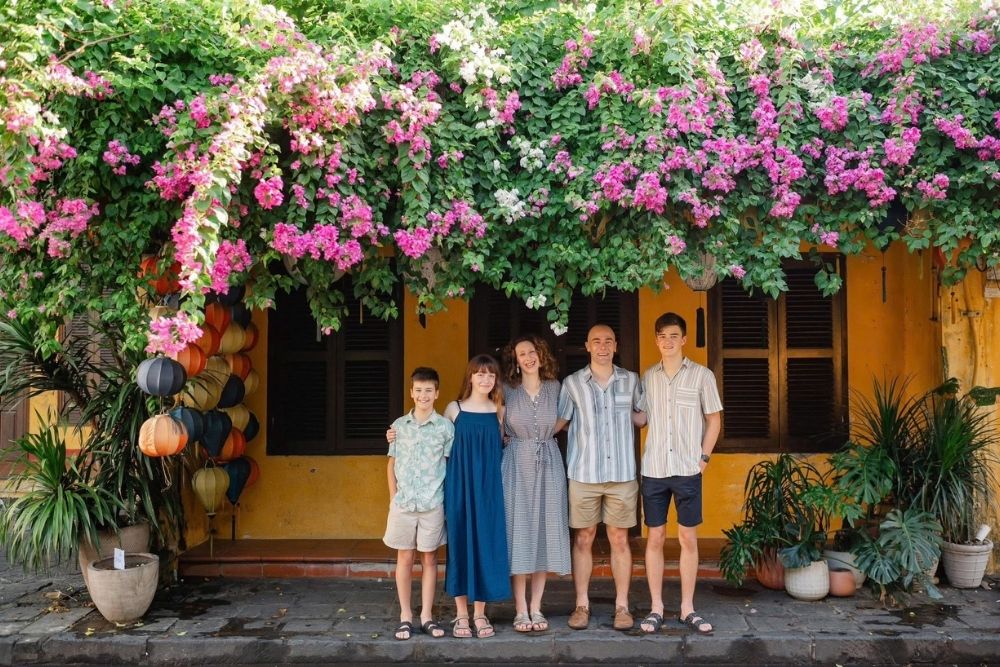
Hoi An is largely walkable, but its historic streets include uneven paving, steps, crowds, and limited vehicle access in pedestrian areas. Instead of arriving in the midday heat, visit later in the afternoon, stop frequently for cafés, and stay into the evening when the lanterns appear.
Grandparents can enjoy the architecture and riverside atmosphere while children and teenagers have shops, food, lanterns, and plenty of visual interest.
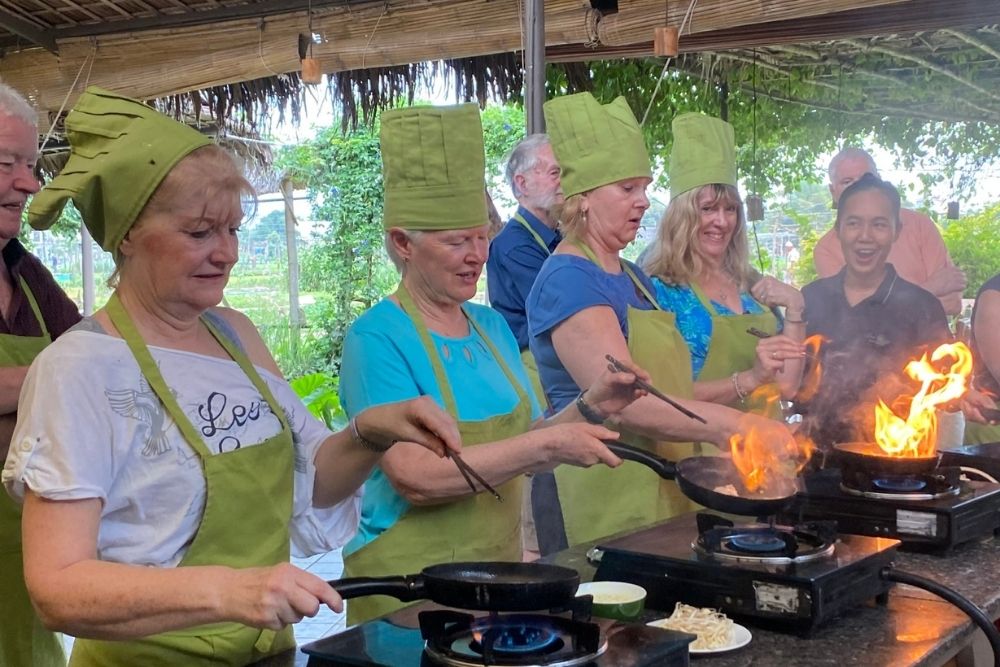
A Vietnamese cooking class is one of the rare activities where different generations can participate side by side rather than simply observe. Children can handle simple preparation, adults can learn techniques, and grandparents can join at whatever level feels comfortable.
Hoi An remains particularly well known for family-friendly cooking experiences, and Vietnam Tourism continues to include cooking classes in its suggested family itineraries.
One of the most practical ideas in Da Nang multigenerational travel is to stop treating separation as a problem. In many families, the best day is one where everyone does something suited to their own energy level, then comes back together later. Grandparents might enjoy an early beach walk, children could spend part of the day at a pool or indoor attraction, while parents and teenagers choose something more active.
Younger travellers usually cope better when the schedule includes activities designed for them rather than expecting them to follow an adult sightseeing plan all day. Resort pools, kids' clubs, indoor play areas, beach time, and family attractions can keep children occupied while older relatives rest nearby.
This is another reason a well-located resort works so well for mixed-age groups. One part of the family can stay on the property without feeling that they are missing the whole day.
Teenagers often need something more energetic than cafés and temple visits, but that does not mean the family has to plan risky or complicated activities. Beach sports, kayaking, paddleboarding, cycling, shopping, photography walks, and supervised adventure experiences can give them more freedom without requiring motorbike travel.
Planning one activity specifically around teenage interests can also reduce the feeling that every day has been designed only for younger children or grandparents.
Not everyone needs another attraction. A spa treatment, resort garden, coffee shop, beachfront promenade, or slow lunch can be just as valuable as a sightseeing stop.
For older travellers, or anyone feeling tired, these quieter choices provide a way to enjoy Da Nang without having to remain in the hotel room. They also make it easier to say, “You go ahead, we’ll meet later,” without anyone feeling excluded.
Larger families should not assume everyone needs to leave and return at the same time. Booking two vehicles, or arranging staggered pickups, can make the day far more comfortable.
For example, grandparents and young children might return to the resort after lunch, while teenagers and adults continue sightseeing. The extra transport cost can be worthwhile if it prevents the entire group from cutting an activity short or waiting around for one another.
The simplest plans work best. Decide in advance where and when everyone will meet again, keep hotel details saved on each phone, and make sure at least one person in each smaller group has mobile data or access to messaging apps.
Choose obvious meeting places such as a hotel lobby, restaurant entrance, or main attraction gate rather than vague instructions like “near the beach.”
The key to successful Da Nang multigenerational travel is not keeping everyone together every minute. It is giving each generation enough freedom to enjoy the day in its own way, then creating a natural moment to reconnect. In many families, that moment is dinner and that is often when the best stories from the day get shared.
For Da Nang multigenerational travel, choose accommodation that keeps the family close without making everyone share the same space. Connecting rooms work well when grandparents want privacy but need to stay nearby, while two-bedroom suites or residences give families a shared living area and more room for longer stays. For larger groups, a private villa can be especially convenient because several bedrooms, communal spaces, and sometimes a private pool are combined in one unit. If anyone has limited mobility, confirm accessible-room availability and its location before booking.
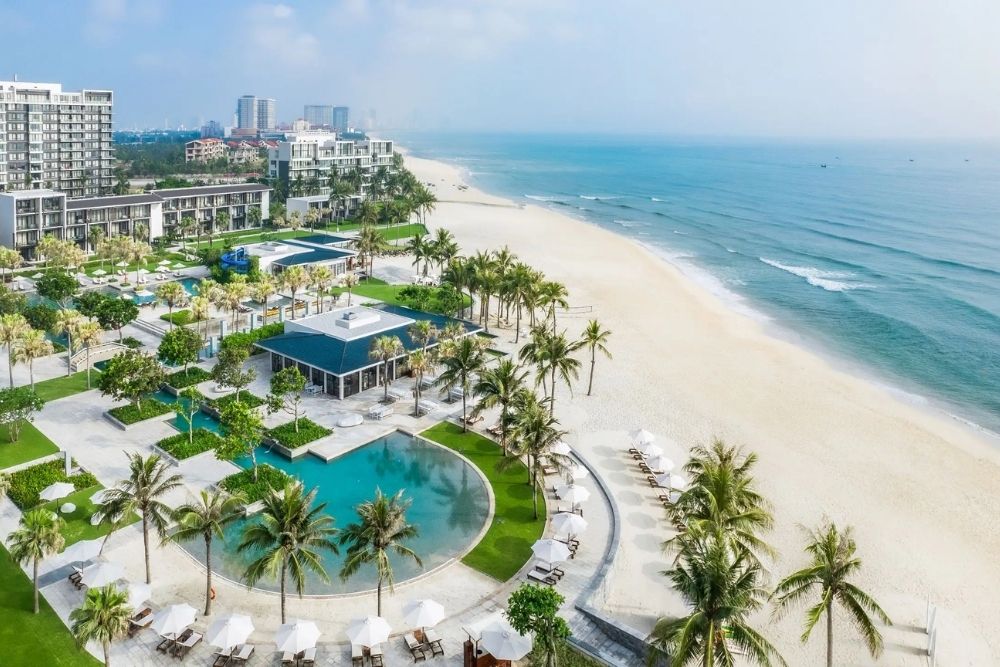
Hyatt Regency Danang Resort and Spa is a strong choice for families who want plenty of accommodation formats in one beachfront property. Its options include family-oriented suites, two-bedroom residences, and multi-bedroom villas, allowing grandparents, parents, and children to stay together while keeping separate bedrooms and routines.
The resort is particularly suitable when different generations want different things from the day. Children have access to Camp Hyatt and family pool facilities, while adults can use quieter areas, including an adults-only pool. Accessible guest rooms and routes to several key resort facilities are also listed by the property, making it worth considering when an older family member has reduced mobility.
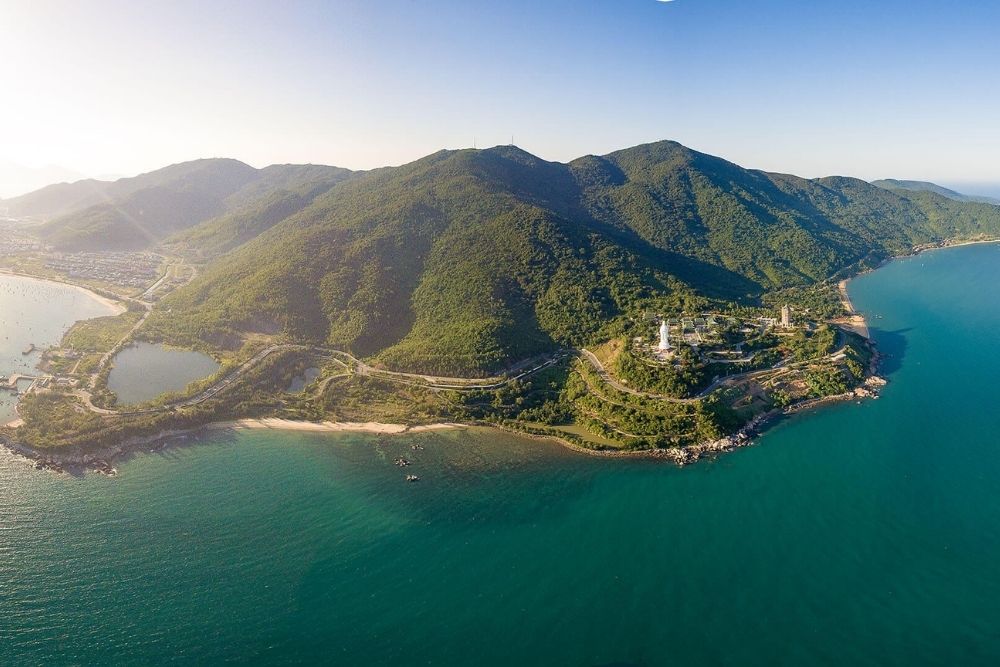
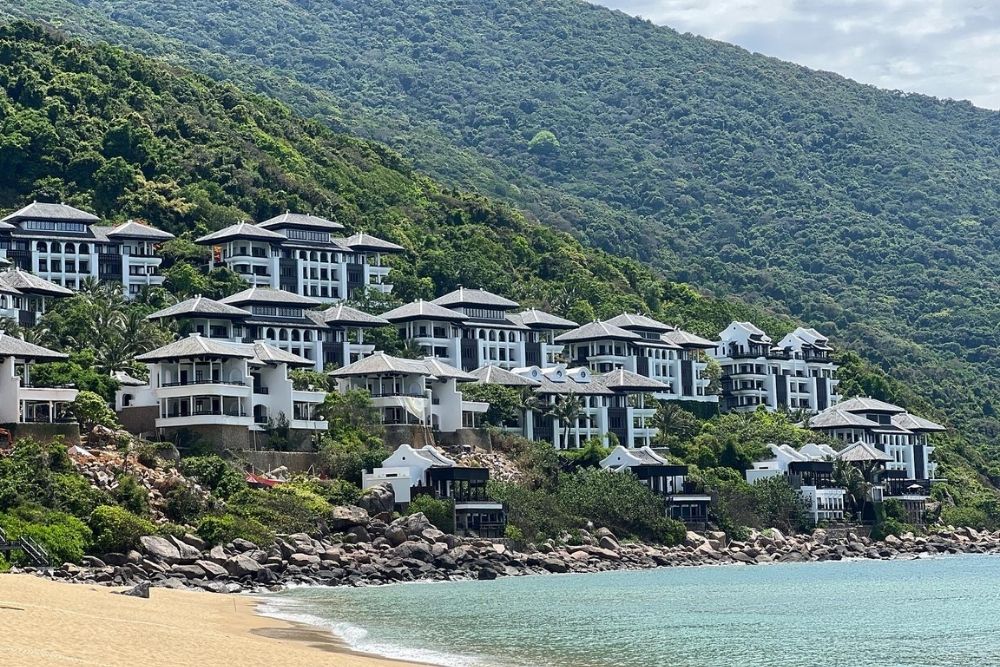
InterContinental Danang Sun Peninsula Resort suits families looking for a more secluded, premium stay surrounded by the landscape of Son Tra Peninsula. The property offers connecting-room arrangements on request as well as larger accommodation categories and villas, giving extended families more flexibility than booking several unrelated standard rooms.
Its main advantage for multigenerational groups is space and separation. Family members can spend time together at the resort while still finding quieter areas for rest, dining, or relaxation. It can be especially appealing for families who want the accommodation itself to form a significant part of the holiday rather than using the hotel simply as a place to sleep.
Before confirming accommodation for a three-generation family, ask the property:
The best property for Da Nang multigenerational travel is not necessarily the most luxurious one. It is the one that lets a grandparent rest, a child swim, and the rest of the family continue their day without creating extra logistics.
For help choosing the right neighbourhood before comparing individual properties, see Asia Mystika’s Where to Stay in Da Nang: Best Areas & Neighbourhoods 2026. For larger families, Non Nuoc is particularly worth considering because it concentrates many of Da Nang’s spacious beachfront resorts and is well suited to a resort-focused stay.
Food planning is an important part of Da Nang multigenerational travel because three generations rarely want exactly the same meal. Larger Vietnamese restaurants and resort dining rooms usually work best for mixed groups: adventurous eaters can try local dishes such as mì Quảng or fresh seafood, while children and cautious diners can choose rice, noodles, soups, grilled meats, or other familiar options from the same menu.
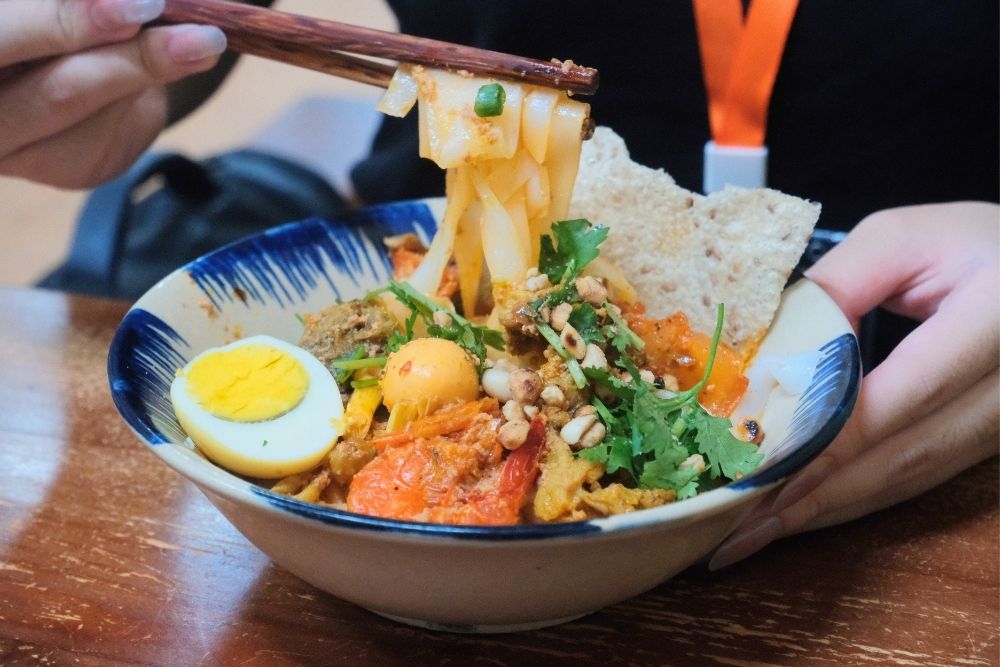
Rather than choosing a tiny stall that specialises in one dish for every meal, mix those experiences with larger restaurants offering several styles of food. This gives children, grandparents, and first-time visitors more choice while still allowing the family to experience Central Vietnamese cuisine. Asia Mystika’s Da Nang Food Guide is a useful starting point for understanding what to order and which dining styles suit families.
For fussy children or older relatives who prefer familiar food, there is no need to make every meal adventurous. Keep plain rice, noodles, cooked vegetables, soups, eggs, or simple grilled dishes available, and introduce unfamiliar dishes as shared plates rather than someone's only meal.
Grandparents may be less comfortable with unfamiliar street-food settings, particularly when food is displayed outdoors or seating is basic. You can still enjoy Da Nang's local flavours by choosing busy, established restaurants, ordering freshly cooked food, and saving more adventurous stalls for family members who actively want that experience. The aim is not to avoid local food but to choose a level of dining that makes everyone comfortable.
Vegetarian, vegan, halal-conscious, Jain, allergy-related, or other dietary needs become harder to manage when eight people only discuss them after sitting down at a restaurant. Collect requirements before travelling and send important restrictions to hotels, guides, and restaurants in advance.
Da Nang has dedicated chay vegetarian restaurants as well as Indian and halal-friendly options, but stricter requirements should always be confirmed directly rather than assumed. For vegetarian and Jain travellers, see Asia Mystika’s Indian and Vegetarian Restaurants in Da Nang.
For a birthday, anniversary, reunion, or simply the main family dinner of the trip, private or semi-private dining can be worth arranging. A reserved table or room allows grandparents to hear conversations more easily, children have more space, and dietary requirements can be agreed with the kitchen beforehand.
This can also become the natural point where a split family reconnects. Instead of expecting every generation to share every excursion, let dinner be the part of the day everyone plans to attend.
For Da Nang multigenerational travel, successful food planning is therefore less about finding one restaurant everyone loves and more about creating enough choice. Mix local discoveries with dependable meals, communicate dietary needs early, and save a few dinners as genuine family occasions.
For Da Nang multigenerational travel, the most reliable pace is one major activity per day, followed by a flexible afternoon. This gives children time to recharge, grandparents room to rest, and more energetic family members the option to continue without requiring the entire group to keep moving.
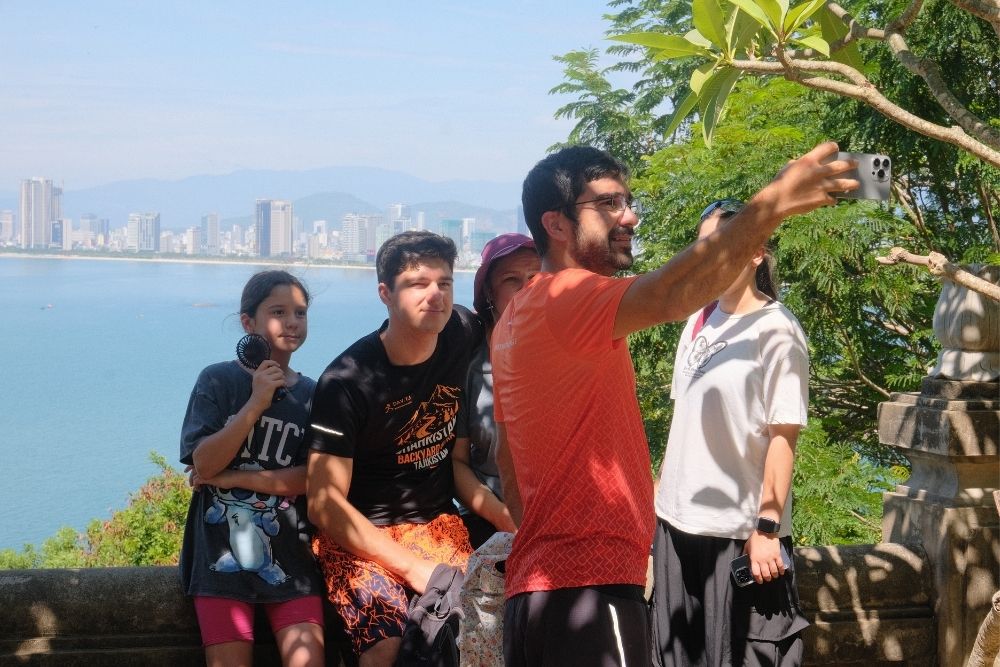
Treat Ba Na Hills, Marble Mountains, Hoi An, or a Hue excursion as the day's main event rather than trying to combine several headline attractions. Afterward, leave the schedule open for the resort pool, beach, spa, café, or simply an afternoon nap.
This does not mean doing less. It means protecting the activities that matter most from tired children, overheated grandparents, and a family that has stopped enjoying the itinerary by mid-afternoon.
During the hotter months, outdoor sightseeing is much easier early in the morning or later in the afternoon. Asia Mystika's Da Nang weather guide recommends using the middle of hot summer days for hotel rest, cafés, spa time, or the pool rather than long outdoor walks.
That rhythm suits three generations particularly well: explore before the heat builds, return to the resort for lunch and downtime, then meet again for dinner or an easy evening activity.
For seasonal temperatures, rain, and the best sightseeing windows, see our Best Time to Visit Da Nang guide.
Private transport becomes especially valuable for larger families because departure times, air-conditioning, and hotel returns can be adjusted around the group. Current Da Nang transport fleets commonly include 7-seat cars, 16-seat vans, and larger 29-seat vehicles, but advertised seat count should not be treated as usable family capacity once luggage is included. One current transfer provider, for example, limits a 7-seat vehicle to four passengers with luggage and a 16-seat van to eight.
If you are travelling with suitcases, a stroller, wheelchair, or child-restraint equipment, size up rather than filling every seat. Extra space often matters more than saving money on a smaller vehicle.
If the group needs both child restraints and mobility equipment, tell the transport provider before confirming the vehicle, including the children's ages and heights and whether a wheelchair folds.
Vietnam's current rules require an appropriate child safety device in applicable private cars for children under 10 years old and under 1.35 metres tall; passenger-transport vehicles are exempt from that particular requirement. Even where an exemption applies, families can still request a suitable child seat for safety and peace of mind.
Do not simply request “a car seat.” Confirm the child's size, how many restraints are needed, whether the seats are supplied by the operator, and whether the remaining luggage area can still accommodate a stroller or wheelchair.
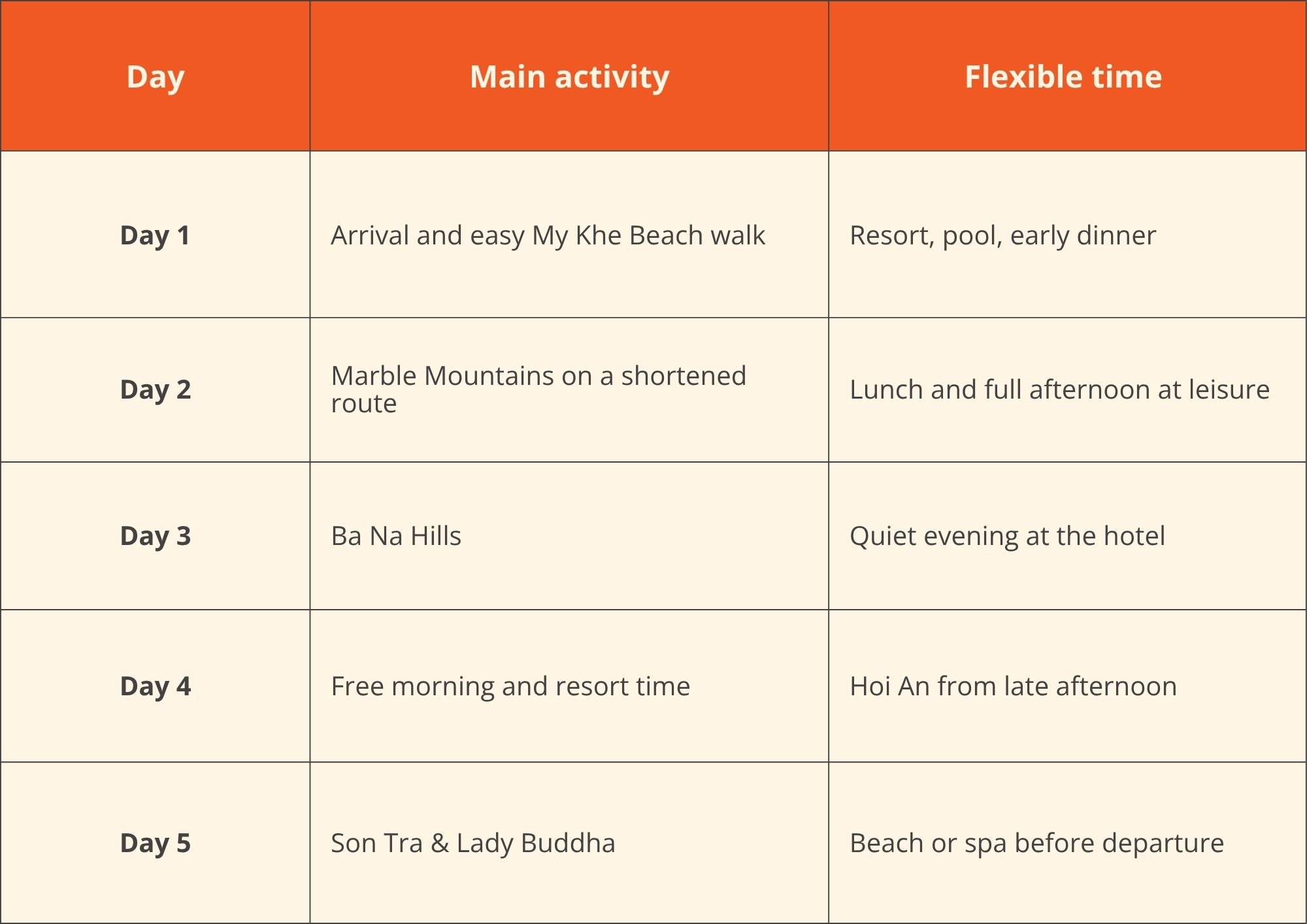
A five-day stay works best when you resist adding another excursion simply because a free morning appears on paper.
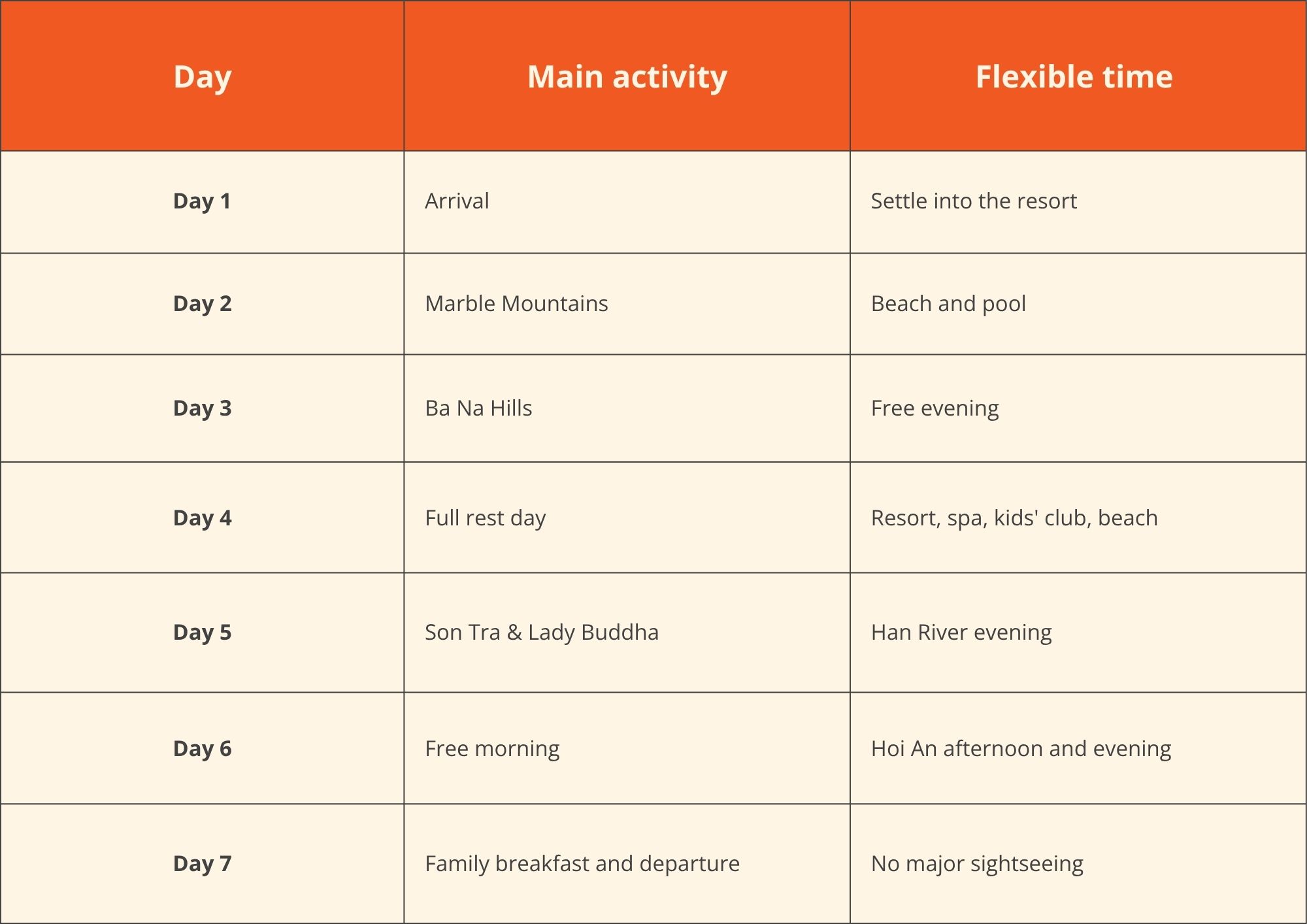
The extra two days should not automatically become two extra tours. For three generations, the real value of a seven-night-style itinerary is the ability to include a genuine rest day and still experience Da Nang without rushing.
A good Da Nang multigenerational travel itinerary should therefore feel slightly under-planned on paper. That empty space is intentional: it is where naps, pool time, changing weather, separate interests, and spontaneous family moments fit without forcing you to cancel the rest of the day.
The biggest mistake in Da Nang multigenerational travel is building a schedule that only works if every family member participates. A better approach is to design each day so people can rest, sleep in, or choose a different activity without affecting everyone else's plans.
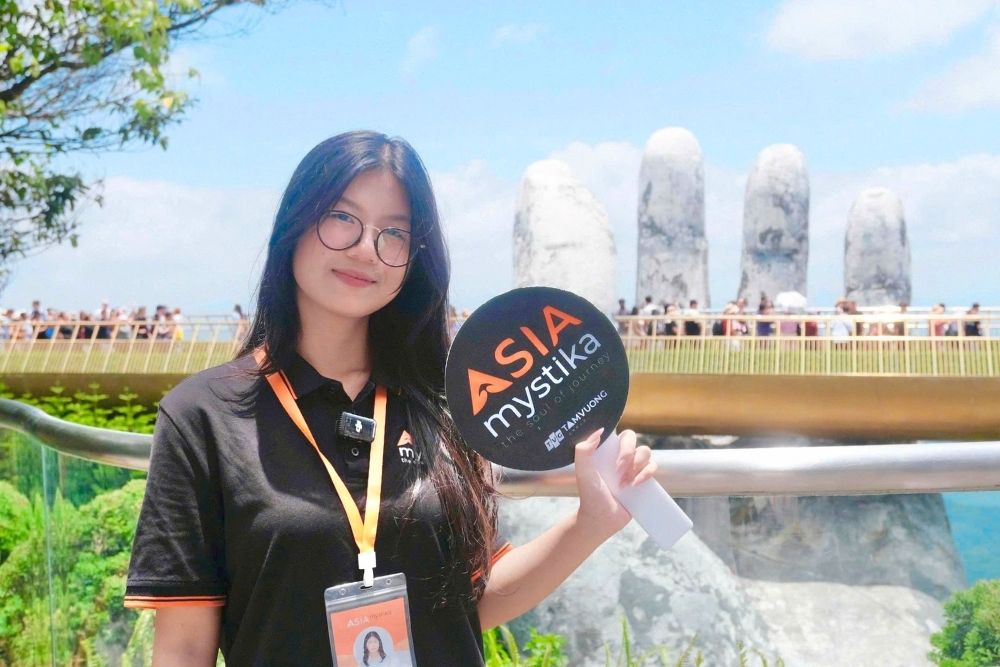
An Asia Mystika travel consultant explains: “The trick is never to plan a day that needs everybody. If grandma wants to sit by the pool and the teenagers want to sleep in, the day should still work. I build every family group trip with a morning that half of them can skip, and it is the reason nobody falls out by day four.”
The practical lesson is simple: make flexibility part of the itinerary from the beginning rather than treating it as a backup plan. Keep some mornings optional, use the resort as an easy meeting point, and bring everyone together for the moments that matter most, such as dinner, a sunset cruise, or a special family celebration.
For three generations travelling together, a successful itinerary is not the one where everyone sees the most. It is the one where nobody feels exhausted, left behind, or responsible for slowing everyone else down.
Yes. Da Nang multigenerational travel works especially well because major attractions are relatively close together, several offer lifts or cable cars, and beachfront resorts make it easy to combine sightseeing with rest.
Build each day around optional participation, so grandparents, children, or teenagers can skip an activity without disrupting everyone else. Plan shared meals as the main reunion point rather than expecting the whole family to sightsee together all day.
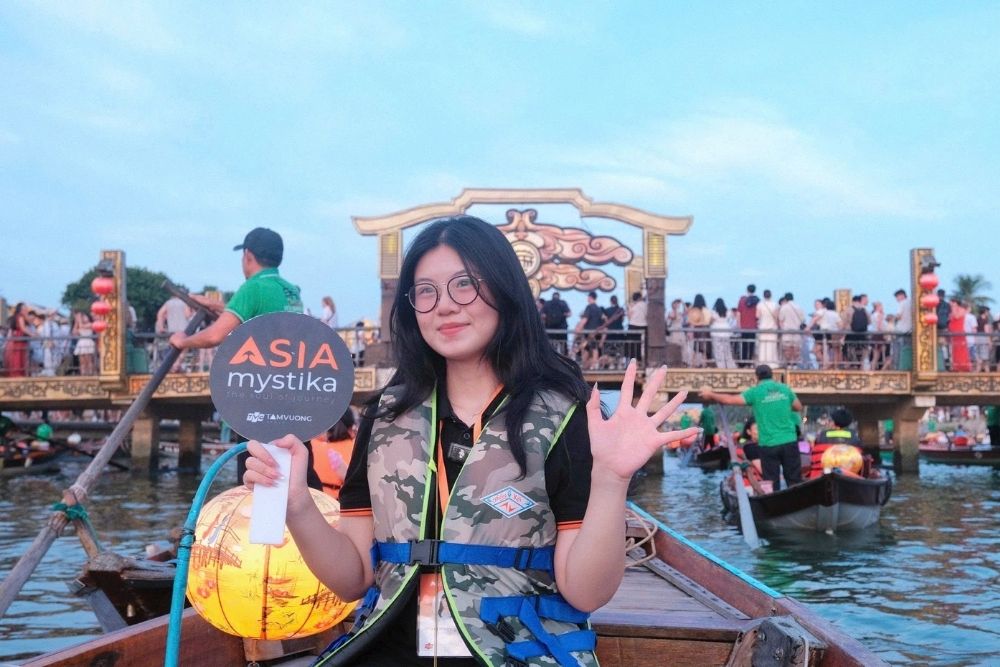
Ba Na Hills, My Khe Beach and promenade, and a Han River evening cruise generally suit the widest range of ages. They allow different generations to enjoy the same outing without requiring everyone to walk long distances or participate at the same intensity.
Yes, several Da Nang resorts offer connecting or multi-bedroom accommodation. Hyatt Regency Danang currently advertises connecting rooms, two-bedroom suites, residences, and larger family options, while InterContinental Danang lists connecting rooms on request and two-bedroom residences and villas; always confirm availability for your specific dates before booking.
For most families, five to seven nights gives the best balance. Plan roughly one main activity per day and, on a longer stay, include at least one completely free day for the resort, beach, pool, or spontaneous family time.
Successful Da Nang multigenerational travel is less about fitting in more sights and more about choosing a pace that works for everyone. Build in rest, optional activities, and time to reconnect over meals.
Asia Mystika Travel creates fully customizable Vietnam itineraries with local guides, flexible transport, no compulsory shopping, and no hidden extra fees. Tell us who is travelling, their ages, interests, and mobility needs, and we will shape the trip around your family.

Asia Mystika Travel is a Vietnamese local travel agency dedicated to bringing first-hand experience of lovely scenery, and distinctive indigenous cultures to every customer. With professional local tour guides and prestiged airline partners (4 domestic airlines and over 300+ international airlines), we offer unique local experience at an extremely reasonable price. All tours are 100% customizable, no shopping and no extra fee.
Ready to go? Start planning your custom Sapa itinerary with us
Who we are: Learn more about the local experts at Asia Mystika
WhatsApp: (+84) 866.22.7878
Email: sales@asiamystika.com
Website: www.asiamystika.com