 Hotline: +84 866 227 878
- SG$ Singapore Dollar
- A$ Australian Dollar
- £ British Pound Sterling
- C$ Canadian Dollar
- € Euro
- MYR Ringgit Malaysia
- US$ United States Dollar
- đ Vietnamese Dong


 Hotline/Whatsapp: +84 86 622 7878
 Email: sales@asiamystika.com
 About Us
 Destinations
 Travel Styles
 Travel Guide
 Blogs
Blogs
 News
News

Planning to visit the Sapa Culture Museum in 2026? Discover what to see inside, why it’s the best first stop in town, and how it helps you understand Sapa before trekking into the mountains.
Maybe a friend came back from northern Vietnam raving about mountain views, cloud-covered rice terraces, and women in vividly embroidered clothing carrying baskets down steep village paths. And now you’re planning your own trip to Sapa — but you’re not quite sure what you’re actually looking at once you arrive.
That’s normal.
At first glance, Sapa can feel visually overwhelming in the best possible way. But here’s the thing most travelers miss: Sapa makes much more sense once you understand the people behind the landscape.
That’s exactly why the Sapa Culture Museum is such an important stop.

Before you book a trekking guide, wander through Cat Cat Village, or take the cable car to Fansipan, this museum gives you the context you need. It helps you understand who lives here, how they’ve lived for generations, and why Sapa is far more than just a pretty mountain town.
While Sapa continues to modernize rapidly in 2026 — with new resorts, cafés, photo parks, and high-adrenaline attractions — the Sapa Culture Museum still acts as a quiet time capsule. It preserves the stories, tools, clothing, customs, and daily rhythms that shaped the region long before tourism arrived.
If you want to appreciate Sapa more deeply — not just photograph it — this is where you begin.
The Sapa Culture Museum was officially established in 2007 as part of a cultural preservation initiative. Its purpose was clear: to document and protect the traditions, tools, clothing, rituals, and everyday lives of the ethnic minority communities that shape Sapa’s identity — especially groups such as the Black H’Mong, Red Dao, Tày, Giáy, and Xa Phó.
That mission still matters today. In a town increasingly shaped by tourism and rapid development, the Sapa Culture Museum quietly does the work of preserving memory.
The first floor is where culture and craftsmanship meet in a very practical way.
One of the most important initiatives connected to this space is the Sapa Fair Craft project, which supports local women artisans by helping them sell handmade textile products directly to visitors.
This is worth paying attention to.
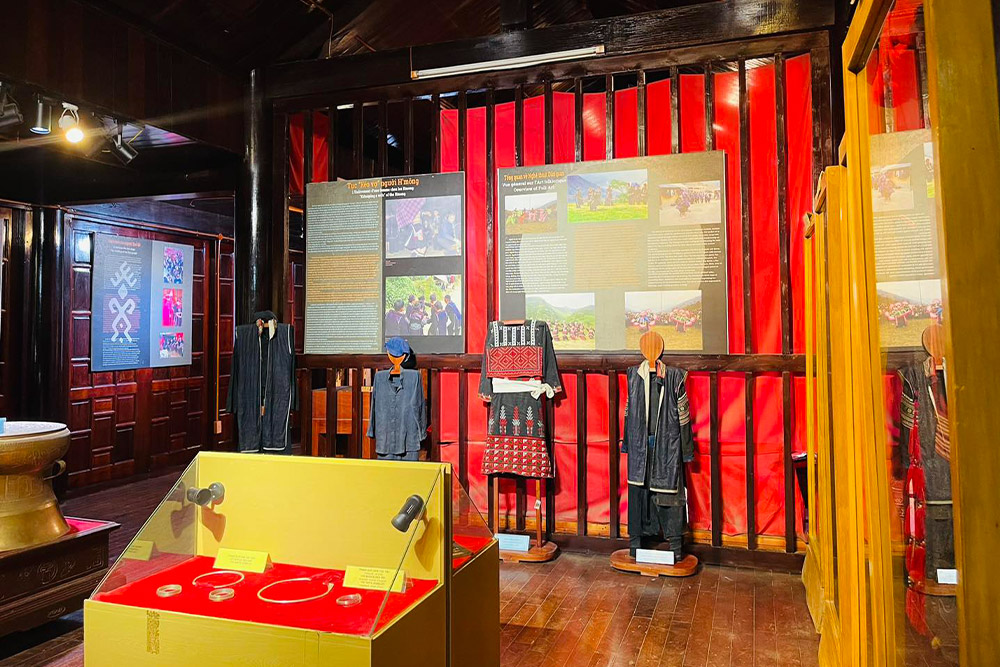
Because while Sapa is full of market stalls and souvenir corners, not everything sold in town is genuinely local. A lot of what you’ll see elsewhere can be mass-produced or brought in from outside the region. Here, the emphasis is on authentic handmade work.
You’ll typically find:
Embroidered skirts
Handwoven bags
Indigo-dyed fabric
Towels and small textile gifts
Traditional accessories made using local techniques
If you want to buy a souvenir that actually supports local communities — rather than a generic factory-made version — the Sapa Culture Museum is one of the most ethical places to do it.
The second floor is where the museum becomes more immersive.
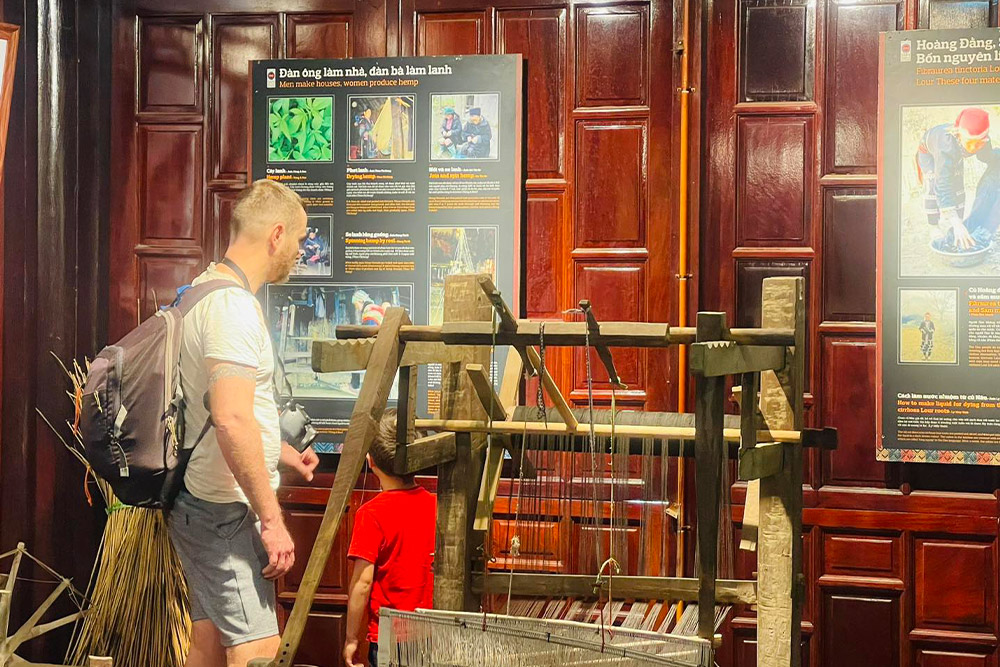
Here, you’ll find a collection of over 200 artifacts, archival materials, and visual displays that explain how different ethnic groups in the Sapa region have lived across generations.
The exhibition includes:
Traditional clothing and jewelry
Farming and household tools
Religious and spiritual objects
Photographs and historical documents
Dioramas showing scenes of village life and cultural rituals
One of the most useful features for travelers is the interactive map of local ethnic villages.
This is not just interesting — it’s practical.
It helps visitors understand:
Where the major communities are located
Which villages are home to which ethnic groups
How areas like Lao Chai, Ta Van, Ta Phin, and Y Linh Ho connect geographically
If you’re planning to trek independently or simply want to choose your route more intentionally, this map is one of the most underrated tools inside the Sapa Culture Museum.
In short, this museum doesn’t just show you “old objects.” It gives you a framework for understanding the land and the people before you go out and experience them yourself.
If you read through typical Sapa Culture Museum reviews, a clear pattern appears: most travelers are pleasantly surprised by how useful this place is.
People don’t usually describe it as “spectacular” or “must-see” in the dramatic, bucket-list sense. Instead, they describe it as worthwhile, informative, and unexpectedly grounding. The common takeaway is simple:
Spend 45 minutes to 1 hour here first, and the rest of Sapa will make much more sense.

That’s exactly the right mindset.
The museum works best not as a major attraction on its own, but as a smart first stop before you head into villages, markets, or trekking routes. It gives context to the clothes, customs, architecture, and communities you’ll keep seeing throughout your trip.
Sapa in 2026 can feel intense.
You’ve got:
Crowded cafés with mountain-view photo angles
Packed tourist streets near Sun Plaza
Curated “Instagram spots” full of queues and staged poses
That’s why the Sapa Culture Museum feels so refreshing.
It’s quiet. Reflective. Unhurried.
If you visit in the morning, especially before the town gets busy, it can act as a calm reset before diving into the more crowded side of Sapa. Think of it as your peaceful, thoughtful counterbalance to the commercial energy outside.
Once you finish the Sapa Culture Museum, the smartest thing to do is continue your day with places that build naturally on what you’ve just learned.
If the museum gives you the historical and cultural framework, Cat Cat Village lets you see parts of that culture still visible in daily life.
Yes, it’s touristy. But it’s also close, scenic, and beginner-friendly. After learning about traditional clothing, weaving, and village structures inside the museum, you’ll notice those details more clearly when walking through Cat Cat.
The museum gives context.
Cat Cat gives movement.
That’s why the two pair well.
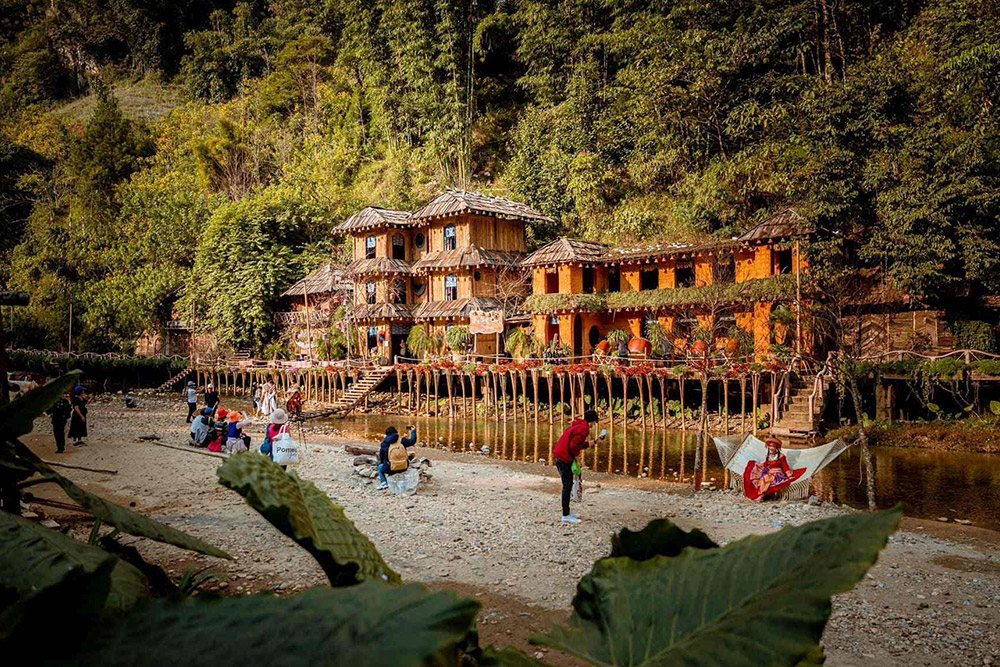
For travelers who want something more visual and contemporary after the museum, Moana Sapa offers the complete opposite energy.
This is Sapa’s highly curated, “Little Bali” photo complex, known for:
The Heaven Gate frame
Infinity-style photo sets
Giant hand sculptures
Open mountain backdrops
It’s not cultural in the same way. But it’s undeniably photogenic. Visiting both in one day creates an interesting contrast: the quiet authenticity of the Sapa Culture Museum, followed by the polished visual drama of modern tourism.
After the museum, the local markets become more interesting too.
Sapa Market (daytime) is where you’ll see:
Fresh vegetables from nearby villages
Herbs, mushrooms, and mountain produce
Daily life unfolding in a more practical, local way
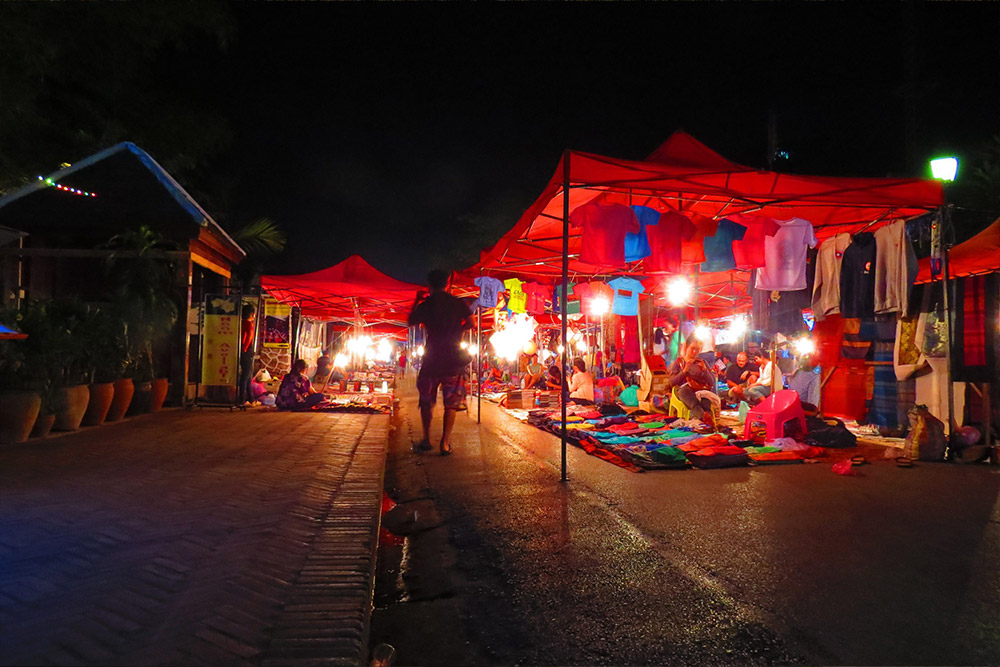
Later in the day, Sapa Night Market offers a different atmosphere:
Street food stalls
Warm snacks and grilled skewers
Handicrafts and embroidered textiles
A lively evening crowd gathering in the cool mountain air
Once you’ve visited the Sapa Culture Museum, these places stop being “just markets.” You begin to recognize the communities, materials, and traditions behind what you’re seeing.
And that’s what makes the museum so valuable — it changes how you experience the rest of Sapa.
Exploring the Sapa Culture Museum is completely free! Other free activities include walking around Sapa Lake, browsing the daytime Sapa Market, and hiking some of the un-ticketed trails around the town center.
The War Remnants Museum in Ho Chi Minh City is the most visited museum in Vietnam. However, for those traveling to the northern highlands, the Sapa Culture Museum is the premier cultural institution.
Sapa is famous for its spectacular valleys, terraced rice fields, Mount Fansipan (the "Roof of Indochina"), and the rich, diverse traditions of its ethnic minority communities.
Sapa comes from the Mandarin word "Sa Pả," which translates to "sand village" or "sandy beach," referencing the sandy area where locals originally gathered to trade before the town was fully established.
Sapa culture museum is open daily in two shifts: 7:30 AM to 11:30 AM, and 1:30 PM to 5:00 PM.
The Sapa Culture Museum ticket price is exactly zero—entry is completely free! (Be sure to bring a little cash if you wish to support the locals by purchasing souvenirs downstairs).
A trip to Sapa is not just about chasing beautiful mountain photos or standing above the clouds. It’s about understanding the people who have shaped those landscapes for generations.
The rice terraces, the textiles, the villages — they all carry stories. And the Sapa Culture Museum is where those stories begin to make sense.
Spending just one quiet hour here can completely change how you see everything that comes after. The villages feel more meaningful. The markets feel more authentic. Even the smallest details start to connect.
So before you head out to the night market, book a trekking guide, or jump into your next photo spot, take that hour. It’s free, it’s enriching, and it’s one of the smartest ways to start your journey in Sapa.
If you’d like to turn that experience into a well-planned trip — combining cultural stops, village treks, and the best viewpoints — Asia Mystika can help design a personalized itinerary around your travel style, so you don’t just visit Sapa, you actually understand it.
And if you found this guide helpful, share it with a friend who’s planning a Vietnam adventure. They’ll thank you later.
