 Hotline: +84 866 227 878
- SG$ Singapore Dollar
- A$ Australian Dollar
- £ British Pound Sterling
- C$ Canadian Dollar
- € Euro
- MYR Ringgit Malaysia
- US$ United States Dollar
- đ Vietnamese Dong


 Hotline/Whatsapp: +84 86 622 7878
 Email: sales@asiamystika.com
 About Us
 Destinations
 Travel Styles
 Travel Guide
 Blogs
Blogs

Planning to visit the Sapa Glass Bridge in 2026? We cover the Rong May Skywalk entrance fees, Klook ticket hacks, and if it's actually worth the trip.
Sapa used to be known for one thing: trekking through misty rice terraces and remote mountain villages. Today, that image still exists — but it now shares the spotlight with a new kind of attraction: high-altitude thrills.
Enter the Sapa glass bridge, officially known as the Rong May Glass Bridge Sapa, and often marketed as the Cloud Dragon Skywalk Sapa. Suspended high above the O Quy Ho Pass, this transparent walkway lets you step out into thin air with nothing but glass beneath your feet and clouds swirling below.
It’s dramatic. It’s slightly terrifying. And yes, it’s heavily commercialized.
Let’s be honest — this is not a hidden gem. It’s a full-scale tourist attraction built for photos, adrenaline, and social media. But that’s also exactly why it’s become one of the most talked-about experiences in Sapa.
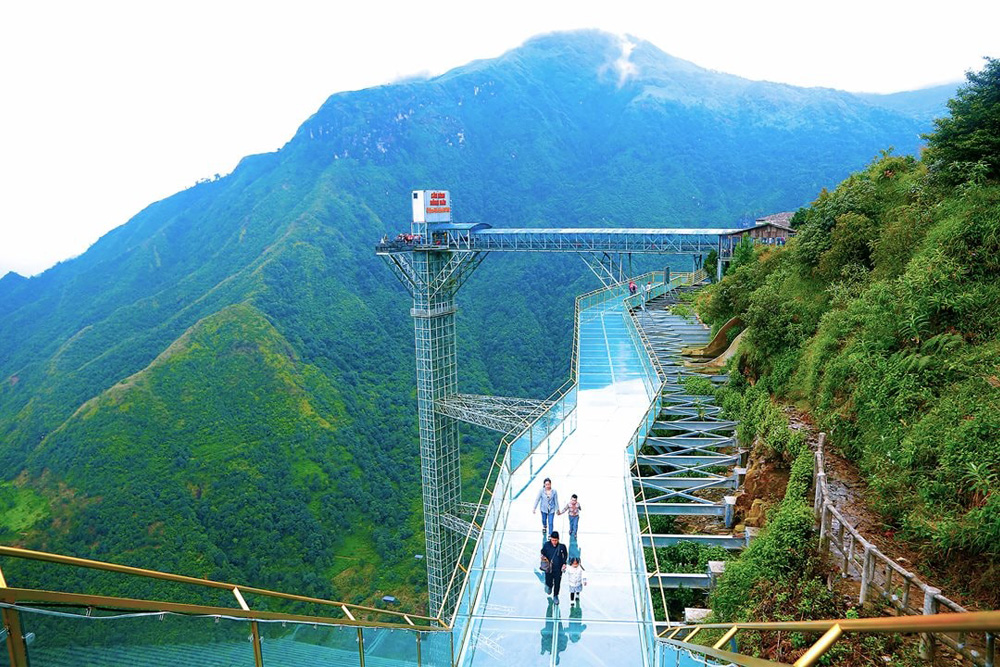
So is the glass bridge Sapa actually worth your time in 2026?
In this guide, we’ll break down everything you need to know — from updated entrance fees and how to skip long queues with ticket hacks, to whether it lives up to the hype once you’re actually standing 2,000 meters above the valley.
The first thing to know about the Sapa glass bridge Vietnam attraction is a small but important technicality: although it is marketed almost everywhere as a Sapa experience, the Rong May Glass Bridge Sapa complex actually sits at Heaven’s Gate on O Quy Ho Pass, in Tam Duong District, Lai Chau Province, not inside Sapa town itself. It is still very much visited from Sapa, which is why the branding sticks, but geographically it belongs to the neighboring province. Most guides place it around 30 to 40 minutes by road from central Sapa, depending on traffic and weather.
As for the Sapa glass bridge history, this is a relatively new attraction. The Rong May tourism complex began construction in 2017 and officially opened its first phase to visitors in 2019, with reports citing a total investment of around 200 billion VND. The project was built directly into the Hoang Lien Son mountain range, using a glass elevator and skywalk system to showcase uninterrupted views over some of the deepest valleys in Vietnam’s northwest.
Part of the thrill is exactly where it sits. The bridge and elevator rise at roughly 2,200–2,300 meters above sea level, which is why the experience feels so dramatic when clouds roll through the pass. On a clear day, you get huge mountain panoramas. On a foggy one, it feels like you are stepping into thin air.
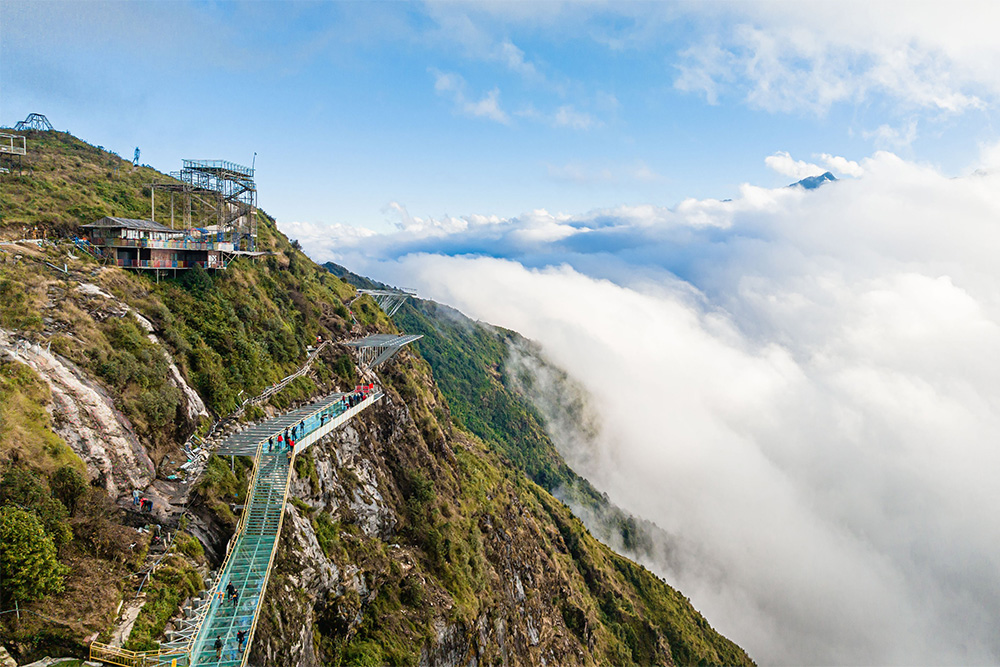
Getting there is straightforward. The most scenic option is to rent a motorbike and ride the O Quy Ho Pass yourself, which turns the journey into part of the attraction. The easier option is to hire a taxi or private car from Sapa, with current online travel sources commonly putting a round trip in roughly the 400,000 to 600,000 VND range depending on vehicle size, season, and waiting time
Walking onto the Cloud Dragon Skywalk Sapa is not just a sightseeing stop. It’s an experience designed to trigger both adrenaline and awe at the same time.
Your journey starts with one of the most unexpected parts: a fully transparent glass elevator built directly into the cliffside.
It rises approximately 225 meters vertically, giving you a slow, slightly nerve-wracking preview of what’s coming next. As the valley opens beneath your feet, this is often the moment when people realize this isn’t just another viewpoint.
At the top, you step onto the main attraction — the Sapa glass bridge itself.
The walkway extends about 60 meters out from the mountain, suspended at roughly 2,200 meters above sea level. The entire floor is transparent, so every step feels like you’re walking on air.
On clear days, you’ll see endless layers of mountains.
On cloudy days, it’s even more dramatic — the bridge floats above a sea of white mist, which is exactly why it’s called the “Cloud Dragon.”
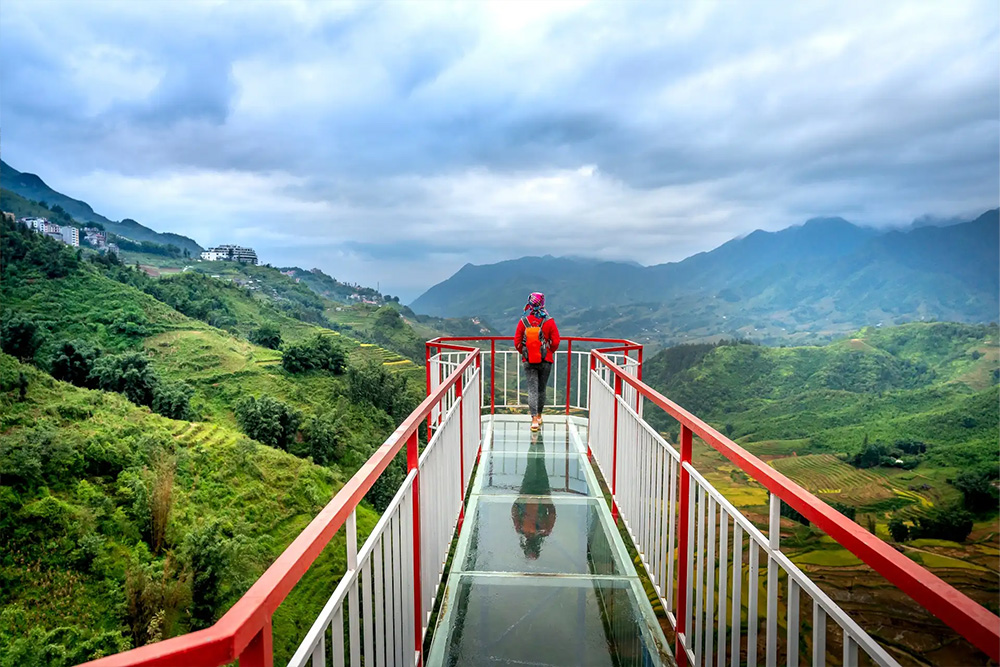
If you’ve seen Sapa glass bridge photos online, timing and styling make a huge difference.
Best time to visit:
7:30 AM – 9:00 AM: Best chance to catch clouds rolling beneath your feet
Around 4:00 PM: Soft golden light for sunset shots
What to wear:
Avoid skirts or loose clothing — the glass floor is fully visible
Choose bright colors (red, yellow, white) to stand out against fog and greenery
Wear comfortable shoes with grip (the surface can feel slippery in misty weather)
A small tip most people miss: don’t rush your photos. Wait for gaps between groups. A clean shot on the bridge makes a huge difference.
The experience itself is short. But if you time it right, the photos — and the feeling of standing above the clouds — are what make the trip memorable.
Planning your visit to the Rong May Glass Bridge Sapa is straightforward, but knowing the pricing and booking tricks can save you both time and hassle.
If you’re wondering, how much does it cost to go to the Sapa glass bridge? — here’s the current breakdown:
Adults: ~500,000 VND ($19 USD)
Includes round-trip glass elevator + access to the main skywalk
Children (1m – 1.4m): ~300,000 VND ($12 USD)
This is the standard Glass Bridge Sapa ticket, and it already covers the core experience.
Once inside, you’ll see extra adrenaline activities. These are optional and paid separately:
Ziplining: ~150,000 VND
Aerial “Death” Swing: ~150,000 VND
Suspension Bridge Walk: ~150,000 VND
Among these, ziplining is the most popular and generally gets the best feedback from visitors.
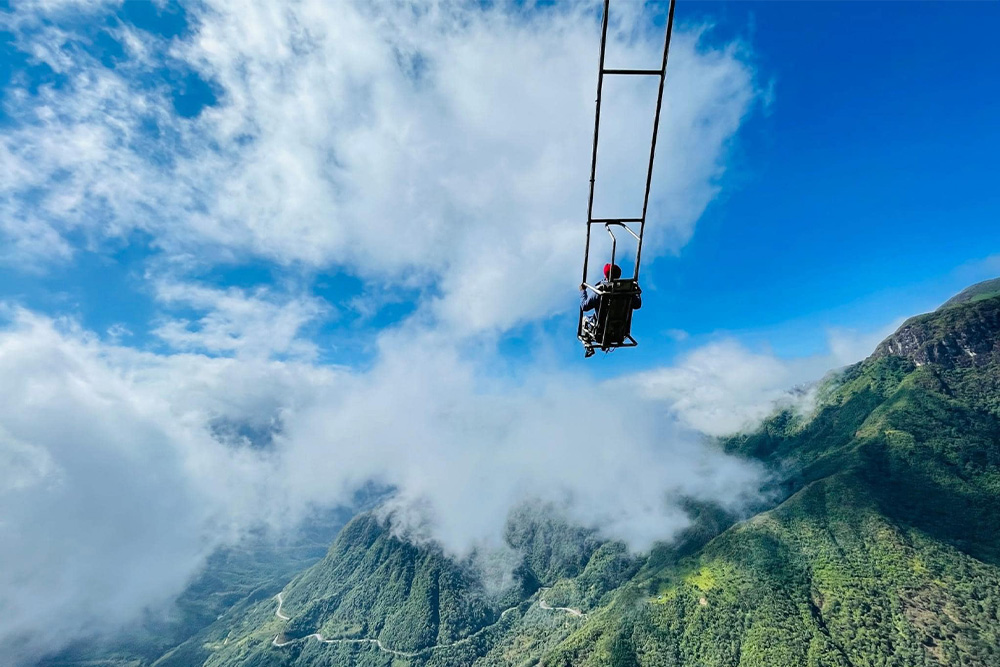
If you want a smoother experience, this is the key tip.
Booking your Sapa glass bridge Klook ticket in advance helps in two ways:
You can sometimes save 20,000 – 50,000 VND
More importantly, you can skip long ticket queues, especially during peak hours (10:00 AM – 1:00 PM)
At busy times, the physical ticket line can easily take 20–40 minutes, so having an e-ticket makes a real difference.
Pro tip:
If you don’t book online, bring cash. Card machines at the mountain often lose signal due to the remote location, and payments can fail.
Overall, the pricing is reasonable for a one-of-a-kind experience. The real value depends on timing your visit well and avoiding the crowds — which is where booking smartly makes all the difference.
So the real question is: Is the glass bridge in Sapa worth it?
The answer is not a simple yes or no. It depends entirely on timing and expectations.
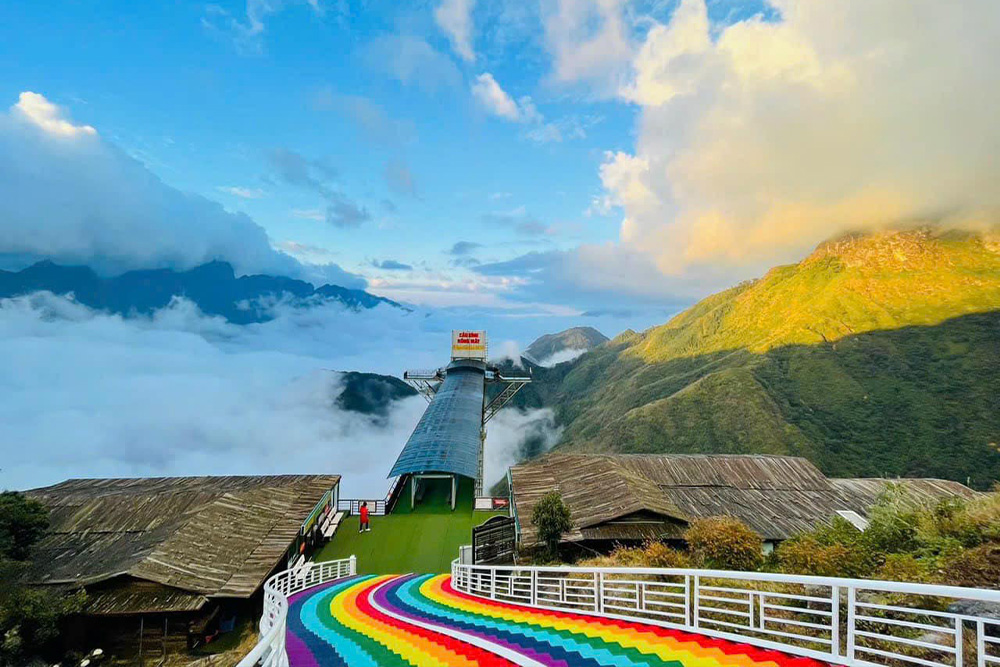
The Pros
Adrenaline factor: Walking on transparent glass at 2,000+ meters is a genuine thrill, even for seasoned travelers
360° mountain views: On a clear day, the O Quy Ho Pass looks absolutely massive and untouched
Photo potential: This is one of the most photogenic attractions in Northern Vietnam
Extra activities: The zipline offers surprisingly good value and adds more excitement beyond just walking the bridge
The Cons
Price: At around 500,000 VND, it’s one of the most expensive single attractions in the region
Weather risk: If there’s heavy fog or rain, visibility drops close to zero
Crowds: Midday visits can feel rushed and crowded, which takes away from the experience
The glass bridge Sapa experience is worth — but only under the right conditions.
Check the weather forecast carefully. Go early or late in the day. And treat it as a highlight activity, not just a quick stop.
On a clear day, it’s unforgettable.
On a foggy one, it’s just expensive glass.
If you want to make the visit smoother, Asia Mystika can help arrange a well-timed Sapa itinerary with private transport, flexible sightseeing, and weather-conscious planning, so you don’t end up paying for clouds and disappointment.
A lot of travelers mix up Vietnam’s most viral bridges, especially after seeing clips on TikTok and Instagram. If you’ve been wondering “Where is the Kissing Bridge in Vietnam?”, here’s the simple correction.
The Rong May Glass Bridge, also called the Sapa glass bridge, is the mountain skywalk near Sapa. It sits on O Quy Ho Pass in Lai Chau Province, about 17 km from Sapa town, and is the one with the glass elevator and transparent cliffside walkway.
The Golden Bridge is the one held up by two giant stone hands. It is not in Sapa. It is located at Sun World Ba Na Hills in Da Nang, in central Vietnam.
The Kiss Bridge or Kissing Bridge is also not in Sapa. It is located in Sunset Town, Phu Quoc Island, in southern Vietnam. So if that’s the bridge you’re after, you’ll need to swap mountain jackets for beachwear and book a flight south.
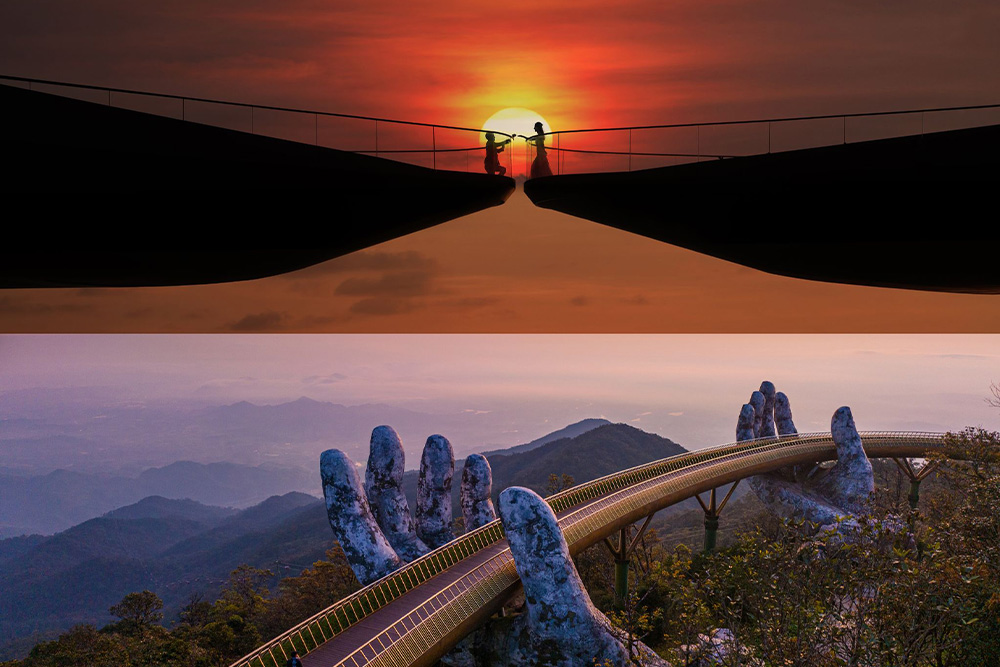
So the quick version is:
Glass bridge = Sapa / Lai Chau mountains
Golden Bridge = Da Nang
Kiss Bridge = Phu Quoc
Three famous bridges, three completely different regions of Vietnam.
In 2026, the standard ticket is 500,000 VND for adults and 300,000 VND for children from 1m to 1.4m. Children under 1m are free.
The attraction is generally open daily from around 7:00 AM to 5:30 PM or 6:00 PM, depending on the day and weather conditions. It’s best to go early for clearer views and fewer crowds.
Yes, if the weather is clear. The cliffside glass elevator, huge drop, and panoramic views over O Quy Ho Pass make it one of the most thrilling experiences near Sapa. But in heavy fog, the visibility can disappear completely.
The Kissing Bridge is not in Sapa. It is located in Sunset Town, Phu Quoc Island, in southern Vietnam.
Yes. Booking online through platforms like Klook is highly recommended because it offers instant confirmation and can help you avoid long ticket queues on the mountain.
The Rong May Glass Bridge is a striking modern attraction that contrasts perfectly with Sapa’s traditional trekking routes and rice-terrace culture. It is bold, commercial, and built for adrenaline — and that is exactly why it has become one of the most talked-about stops near Sapa.
My final tip: don’t do the bridge as a standalone trip. Combine it with a stop at Silver Waterfall (Thác Bạc) or even O Quy Ho Pass so the drive feels fully worthwhile.
If you want to avoid the usual timing mistakes, Asia Mystika can help plan the route, transport, and best weather window for you, so your Sapa day feels smooth rather than rushed. Tell us what your dream trip is like, and let us take care of everything else for you.
